


























Views
Downloads
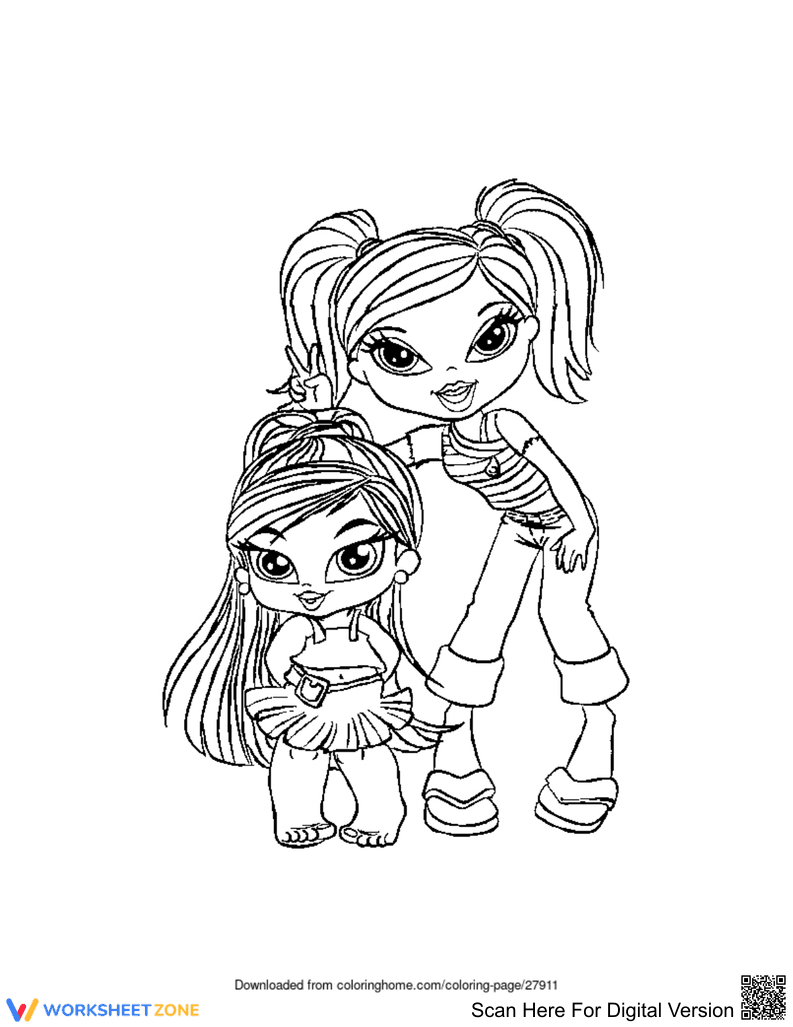

Grade K-5 Bratz — Printable No-Prep Coloring Worksheet
Paste this activity's link or code into your existing LMS (Google Classroom, Canvas, Teams, Schoology, Moodle, etc.).
Students can open and work on the activity right away, with no student login required.
You'll still be able to track student progress and results from your teacher account.
This printable Bratz coloring worksheet provides Kindergarten through Grade 5 students with a creative outlet to develop essential fine motor control. By engaging with familiar characters, learners practice grip stability and spatial awareness, which are foundational for early writing success. It serves as an ideal transition activity or a rewarding brain break during literacy blocks.
At a Glance
- Grade: K-5 · Subject: Arts & English
- Standard:
CCSS.ELA-LITERACY.L.K.1.A— Develop fine motor control and grip for writing readiness- Skill Focus: Fine motor skills & creativity
- Format: 1 page · 1 task · No answer key needed · PDF
- Best For: Morning work or early finishers
- Time: 15–20 minutes
What's Inside
The download features a high-quality, single-page illustration of two Bratz characters in a stylish pose. The clean line art is designed for easy coloring with crayons, colored pencils, or markers. There are no complex instructions, making it a truly independent activity that requires zero teacher setup beyond hitting the print button for the class.
Zero-Prep Workflow
- Print: Generate the single-page PDF in under 30 seconds for your entire group.
- Distribute: Hand out sheets to students during transitions or as a quiet reward.
- Review: Spend 1 minute observing pencil grip and spatial awareness as they work.
Total teacher preparation time is under 2 minutes, making this an ideal resource for emergency sub plans or unexpected schedule changes.
Standards Alignment
This activity aligns with `CCSS.ELA-LITERACY.L.K.1.A`, which focuses on the physical requirements of writing, including the development of small muscle movements in the hands. While primarily an artistic task, the precision required to color within lines directly supports the muscle memory needed for letter formation. This standard code can be copied directly into lesson plans, IEP goals, or district curriculum mapping tools.
How to Use It
Use this worksheet as a "soft start" morning activity to settle students as they arrive in the classroom. It also functions as a formative assessment tool; observe how students hold their coloring tools to identify those who may need additional occupational therapy support or pencil grips. Expected completion time ranges from 15 to 20 minutes depending on the student's detail level.
Who It's For
This resource is tailored for elementary students in Kindergarten through Grade 5 who are developing their manual dexterity. It is particularly effective for English Language Learners (ELLs) as a low-stress way to engage with classroom materials. Pair this with a character-description writing prompt or an anchor chart about adjectives to extend the lesson into a full ELA activity.
Research from Fisher & Frey (2014) emphasizes the importance of purposeful brain breaks and creative tasks in maintaining student engagement and reducing cognitive load during intensive instructional blocks. This Bratz coloring worksheet supports the development of fine motor skills, a critical precursor to the CCSS.ELA-LITERACY.L.K.1.A standard for writing readiness. By providing a familiar and high-interest subject, the worksheet encourages sustained attention and precision. According to NAEP data, students who demonstrate strong fine motor control in early childhood often show higher proficiency in written expression in later grades. This 1-page printable offers a low-barrier entry point for students to practice these essential physical skills while expressing individual creativity. It is a versatile tool for any primary classroom seeking to balance rigorous academic demands with necessary developmental play and motor practice. Teachers can assign this as a standalone task or as part of a larger arts-integrated literacy unit.


