


























Views
Downloads
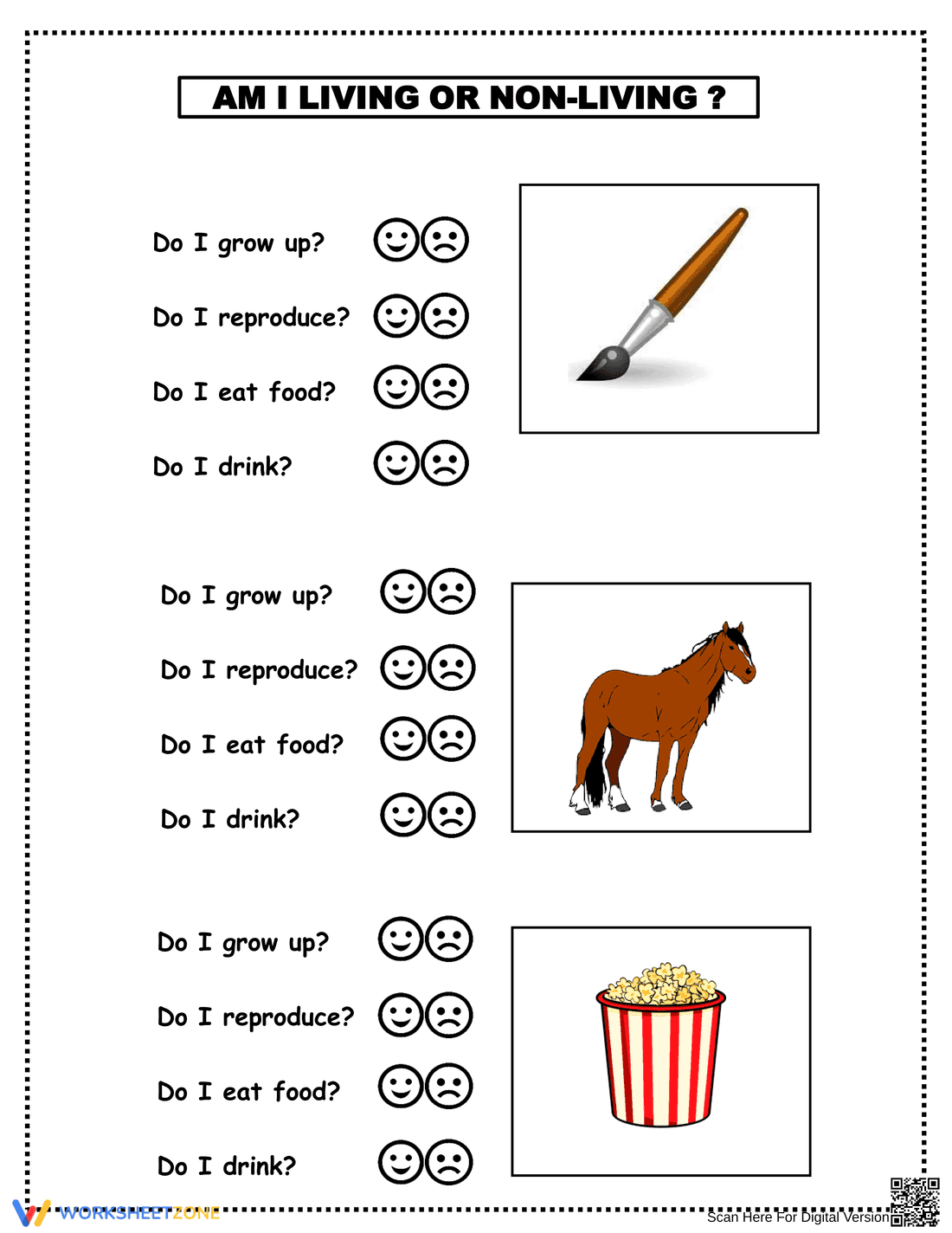

Grade K-2 Living and Non-living Things — Essential Worksheet
Paste this activity's link or code into your existing LMS (Google Classroom, Canvas, Teams, Schoology, Moodle, etc.).
Students can open and work on the activity right away, with no student login required.
You'll still be able to track student progress and results from your teacher account.
This Living and Non-living Things worksheet provides Kindergarten through Second Grade students with a highly visual framework to distinguish between biotic and abiotic elements. By evaluating specific characteristics such as growth, reproduction, and nutritional needs, learners develop a foundational understanding of biological classification. This Essential resource ensures students can independently categorize the world around them.
At a Glance
- Grade: K–2 · Subject: Science
- Standard:
K-LS1-1— Use observations to describe patterns of what living things need to survive- Skill Focus: Living vs. Non-living Characteristics
- Format: 1 page · 3 tasks · Answer key included · PDF
- Best For: Early childhood science centers and stations
- Time: 10–15 minutes
What's Inside
Inside this single-page PDF, you will find three visual prompts featuring a paintbrush, a horse, and popcorn. Each item is paired with a four-question checklist asking if the object grows, reproduces, eats, or drinks. Students use intuitive smiley face icons, making this accessible for pre-readers. A complete answer key is provided for immediate feedback.
Zero-Prep Workflow
The total teacher prep time for this activity is under 2 minutes, making it an excellent option for emergency sub plans. First, print the document (30 seconds) and distribute it to students for independent work. Second, students spend roughly 12 minutes observing the images and circling icons. Third, review the answers as a group (2 minutes) to confirm the distinction between living organisms and inanimate objects.
Standards Alignment
This resource is aligned to K-LS1-1. This standard requires students to use observations to describe patterns of what plants and animals need to survive. By asking about food and water, the worksheet addresses the fundamental needs of living things. This standard code can be copied directly into lesson plans, IEP goals, or district curriculum mapping tools.
How to Use It
Use this as an entry ticket for your life science lesson. Alternatively, it serves as a formative assessment after a nature walk. Observe if students correctly identify that eating food is a requirement for the horse but not for the paintbrush to gauge their mastery of biological needs and classification patterns.
Who It's For
This activity is ideal for Kindergarten through Second Grade students. It is effective for visual learners who benefit from the icon-based response system. For differentiation, pair this with a physical object sorting bin or an anchor chart listing the basic needs of living organisms to support learners who require additional scaffolds.
According to the methodology described by Fisher & Frey (2014), the use of visual scaffolds and structured checklists is vital for young learners as they begin to categorize complex scientific concepts like the distinction between living and non-living entities. This worksheet utilizes those exact principles by providing a repeatable four-question framework across different objects, allowing students to see patterns in biological data. By evaluating growth, reproduction, and metabolic needs (food and water), students engage with the K-LS1-1 standard in a concrete, observable way. Research suggests that these early classification skills are predictive of later success in more advanced life science units. This printable resource offers a focused, standard-aligned experience that builds critical thinking skills while maintaining a low cognitive load for emerging readers. It serves as a reliable tool for establishing the foundational vocabulary and conceptual markers required for elementary science mastery.


