


























0
Views
0
Downloads

0.0
0
Save
0 Likes
Identifying Living And Non-Living Things Activity
0 Views
0 Downloads
Paste this activity's link or code into your existing LMS (Google Classroom, Canvas, Teams, Schoology, Moodle, etc.).
Students can open and work on the activity right away, with no student login required.
You'll still be able to track student progress and results from your teacher account.
Information
Description
What It Is:
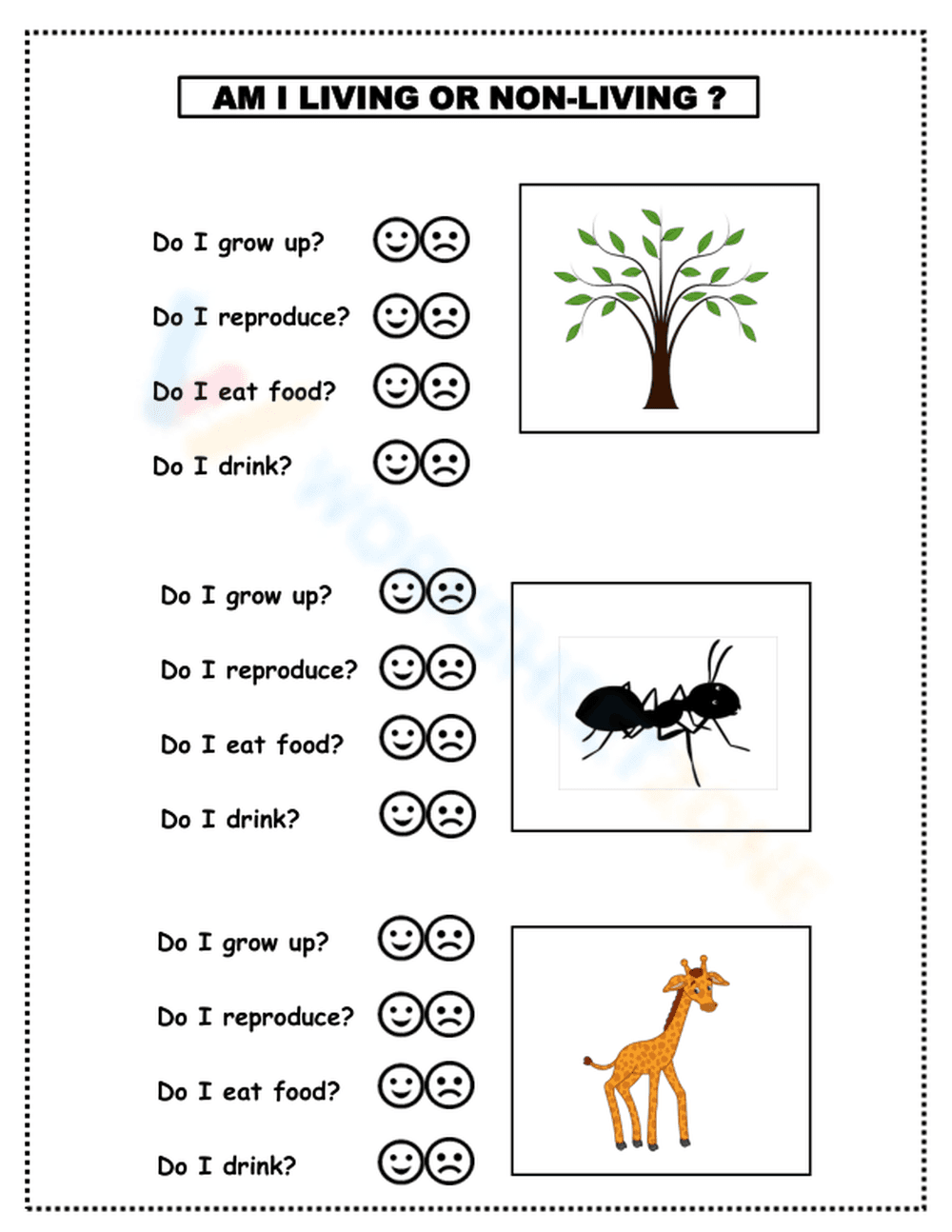
This science worksheet helps students explore the fundamental characteristics of life through three engaging examples: a tree, an ant, and a giraffe. Each section asks four key questions about growth, reproduction, nutrition, and hydration, accompanied by simple smile and frown icons for easy answering.
Why Use It:
It provides a clear, visual framework for students to understand what makes something a living organism. By evaluating specific criteria, children develop critical thinking skills and a foundational understanding of biology and the natural world.
How to Use It:
• Examine the illustration on the right side of each section.
• Read through the four questions regarding the basic needs and functions of that item.
• Circle the smiling face for 'yes' or the frowning face for 'no' to classify each subject.
Grade Suitability:
Best for Kindergarten and Grade 1.
• Younger kids focus on recognizing basic needs like food and water.
• Older students focus on the scientific concepts of growth and reproduction.
Target Users:
This worksheet is perfect for classroom teachers, homeschooling parents, and curious young scientists.
This science worksheet helps students explore the fundamental characteristics of life through three engaging examples: a tree, an ant, and a giraffe. Each section asks four key questions about growth, reproduction, nutrition, and hydration, accompanied by simple smile and frown icons for easy answering.
Why Use It:
It provides a clear, visual framework for students to understand what makes something a living organism. By evaluating specific criteria, children develop critical thinking skills and a foundational understanding of biology and the natural world.
How to Use It:
• Examine the illustration on the right side of each section.
• Read through the four questions regarding the basic needs and functions of that item.
• Circle the smiling face for 'yes' or the frowning face for 'no' to classify each subject.
Grade Suitability:
Best for Kindergarten and Grade 1.
• Younger kids focus on recognizing basic needs like food and water.
• Older students focus on the scientific concepts of growth and reproduction.
Target Users:
This worksheet is perfect for classroom teachers, homeschooling parents, and curious young scientists.


