


























Views
Downloads
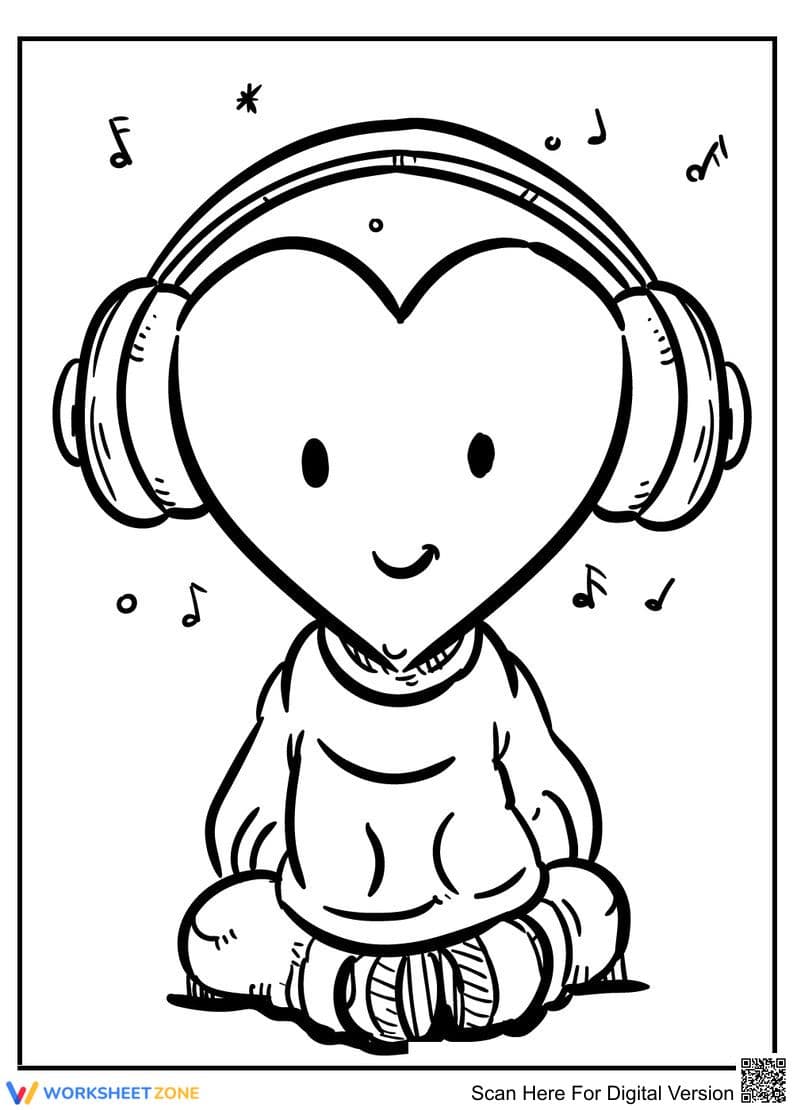

Heart Character Coloring Page | Printable K-5 Art
Paste this activity's link or code into your existing LMS (Google Classroom, Canvas, Teams, Schoology, Moodle, etc.).
Students can open and work on the activity right away, with no student login required.
You'll still be able to track student progress and results from your teacher account.
This printable heart character coloring page provides a creative outlet for elementary students to practice fine motor control and color theory. By engaging with this whimsical illustration of a heart-headed character listening to music, learners develop the hand-eye coordination necessary for early writing and artistic expression. It is a perfect supplemental activity for Valentine's Day or social-emotional learning units.
At a Glance
- Grade: K-5 · Subject: Arts & English
- Standard:
CCSS.ELA-LITERACY.SL.K.5— Add drawings or visual displays to descriptions to provide additional detail.- Skill Focus: Fine Motor Skills & Creative Expression
- Format: 1 page · 1 illustration · No answer key required · PDF
- Best For: Morning work or early finishers
- Time: 15–20 minutes
The download features a single, high-resolution coloring sheet depicting a charming character with a large heart for a head, complete with headphones and musical notes. The bold, clean lines are designed to accommodate various coloring mediums, from crayons and colored pencils to markers. This no-prep resource is ready for immediate distribution in any classroom setting.
Zero-Prep Workflow
- Print: Generate the desired number of copies for your group in under 30 seconds.
- Distribute: Hand out the pages along with coloring supplies, taking approximately 60 seconds.
- Review: Allow students to work independently while you conduct small-group instruction or manage administrative tasks.
This resource serves as an excellent emergency sub-plan component, requiring zero teacher setup time beyond basic printing.
Standards Alignment
This activity aligns with `CCSS.ELA-LITERACY.SL.K.5`, which encourages students to use visual displays to enhance their communication and descriptions. While primarily an artistic task, it supports the development of the pincer grasp and spatial awareness required for meeting foundational literacy standards. Both standard codes can be copied directly into lesson plans, IEP goals, or district curriculum mapping tools.
How to Use It
Use this worksheet during a "Brain Break" or as a transition activity between core subjects. It is particularly effective after a read-aloud session about emotions or music, allowing students to reflect on the themes through color. Formatively observe how students handle the coloring tools to identify those who may need additional fine motor support. Completion typically takes 15 to 20 minutes.
Who It's For
This resource is ideal for Kindergarten through 5th-grade students, especially those who benefit from tactile, creative tasks to regulate their focus. It pairs naturally with a social-emotional lesson on self-expression or a music appreciation unit. It is also a valuable tool for occupational therapists working on grip strength and control during 1-on-1 sessions.
The use of coloring activities in early childhood education is supported by research into fine motor development and its correlation with later academic success. According to Fisher & Frey (2014), integrating visual and creative tasks helps solidify the gradual release of responsibility by providing low-stakes independent practice that builds confidence. This worksheet, aligned to CCSS.ELA-LITERACY.SL.K.5, focuses on the plain-English skill of using visual displays to provide additional detail and expression. By engaging with the 1-page illustration, students refine the motor pathways essential for handwriting and complex drawing. Such activities are recognized by NAEP as foundational for developing the spatial reasoning skills necessary for both literacy and STEM subjects. This resource provides a structured yet open-ended environment for students to demonstrate their understanding of color and composition while meeting core developmental milestones.


