


























Views
Downloads
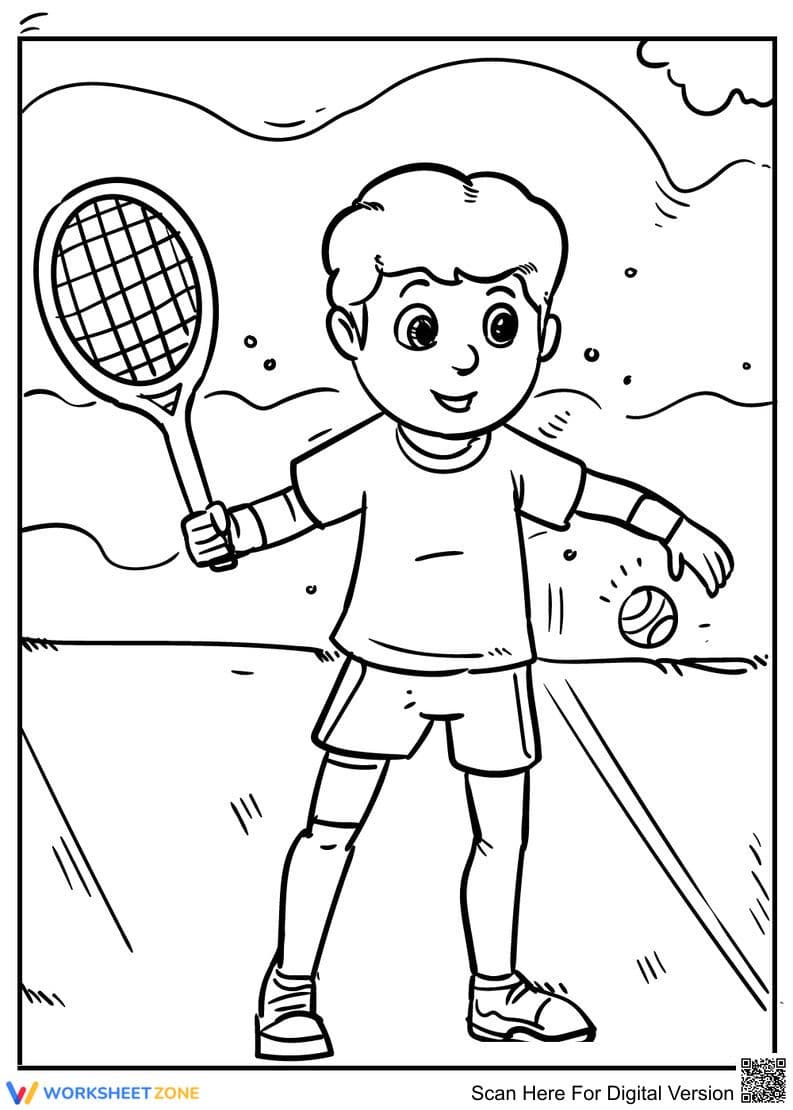

Tennis Boy Coloring Page | Essential Grade K-5 Printable
Paste this activity's link or code into your existing LMS (Google Classroom, Canvas, Teams, Schoology, Moodle, etc.).
Students can open and work on the activity right away, with no student login required.
You'll still be able to track student progress and results from your teacher account.
This printable tennis coloring page provides young learners with a creative outlet to develop essential fine motor control and hand-eye coordination. By engaging with the detailed illustration of a boy playing tennis, students practice precision and color selection while reinforcing sports-related vocabulary in a relaxed, low-stakes environment. It is a perfect addition to any primary classroom.
At a Glance
- Grade: K-5 · Subject: English & Arts
- Standard:
CCSS.ELA-LITERACY.L.K.1— Use fine motor skills to demonstrate command of basic writing readiness- Skill Focus: Fine Motor Control
- Format: 1 high-quality page · 1 task · No answer key included · PDF
- Best For: Early finishers, indoor recess, and transition times in the classroom
- Time: 15–20 minutes
What's Inside
This resource features a high-quality, single-page illustration of a young athlete on a tennis court. The line art is crisp and clear, designed to accommodate various coloring mediums such as crayons, colored pencils, or markers. The composition includes a foreground character, a tennis ball in motion, and background elements like clouds to encourage full-page engagement and artistic expression.
Zero-Prep Workflow
The zero-prep workflow for this activity is designed for maximum efficiency. First, print the single PDF page (30 seconds). Next, distribute the sheets to students during transition periods or as a quiet-time reward (30 seconds). Finally, review the completed work by having students name the colors used or describe the action in the picture (30 seconds). Total teacher prep time is under 2 minutes.
Standards Alignment
This activity aligns with `CCSS.ELA-LITERACY.L.K.1` by supporting the physical development necessary for writing. While primarily an artistic task, the grip and pressure control required to stay within the lines directly translate to letter formation and pencil mastery. Both standard codes can be copied directly into lesson plans, IEP goals, or district curriculum mapping tools.
How to Use It
Use this worksheet as a bridge activity between high-energy physical education and quiet classroom instruction. It serves as an excellent formative assessment for observing pencil grip and focus duration. Expect students to spend 15 to 20 minutes completing the scene, depending on their attention to detail and choice of coloring tools. It is also a reliable resource for substitute teacher folders.
Who It's For
This page is ideal for Kindergarten through 5th-grade students, particularly those needing extra practice with manual dexterity. It pairs naturally with a sports-themed read-aloud or an introductory lesson on healthy habits and physical activity. The simple yet engaging design makes it accessible for all learners regardless of their current artistic skill level.
Research from Fisher & Frey (2014) emphasizes the importance of purposeful down-time activities that reinforce fine motor skills without the pressure of formal assessment. This tennis-themed coloring page addresses the developmental need for hand-eye coordination, which is a prerequisite for the writing demands of CCSS.ELA-LITERACY.L.K.1. By providing a structured yet creative task, educators can support the I Do, We Do, You Do model by allowing students to work independently on a familiar, engaging subject. According to the RAND AIRS 2024 report, integrating visual arts into the primary curriculum improves student engagement and helps bridge the gap between physical play and academic focus. This 1-page printable offers a high-utility solution for busy classrooms, ensuring that even transition periods contribute to the student's overall motor development and vocabulary acquisition in a meaningful way. It provides a low-barrier entry point for students to practice the precision required for future literacy tasks.


