


























Views
Plays

Printable Letter Y Sounds Worksheet | Grade 1 Phonics
Paste this activity's link or code into your existing LMS (Google Classroom, Canvas, Teams, Schoology, Moodle, etc.).
Students can open and work on the activity right away, with no student login required.
You'll still be able to track student progress and results from your teacher account.
This focused phonics worksheet helps first-grade students master the tricky vowel sounds of the letter Y. By identifying whether Y makes a long "i" or long "e" sound in various words, young learners build essential decoding skills. The clear multiple-choice format ensures students can confidently practice and demonstrate their phonemic awareness.
At a Glance
- Grade: 1 · Subject: ELA
- Standard:
CCSS.ELA-LITERACY.RF.1.3— Apply grade-level phonics and word analysis skills- Skill Focus: Letter Y vowel sounds
- Format: 5 pages · 16 problems · Answer key included · PDF
- Best For: Independent phonics practice
- Time: 15–20 minutes
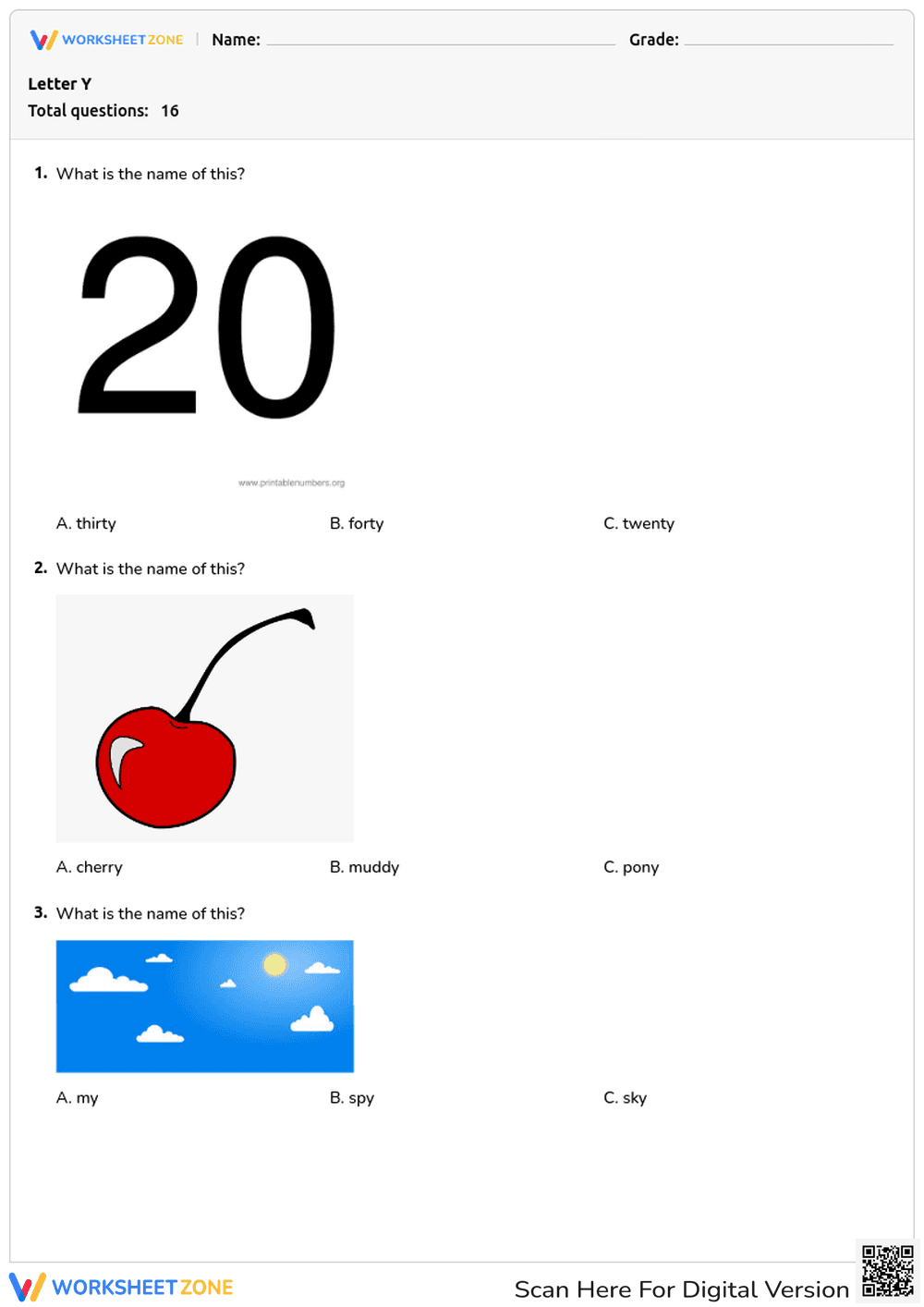
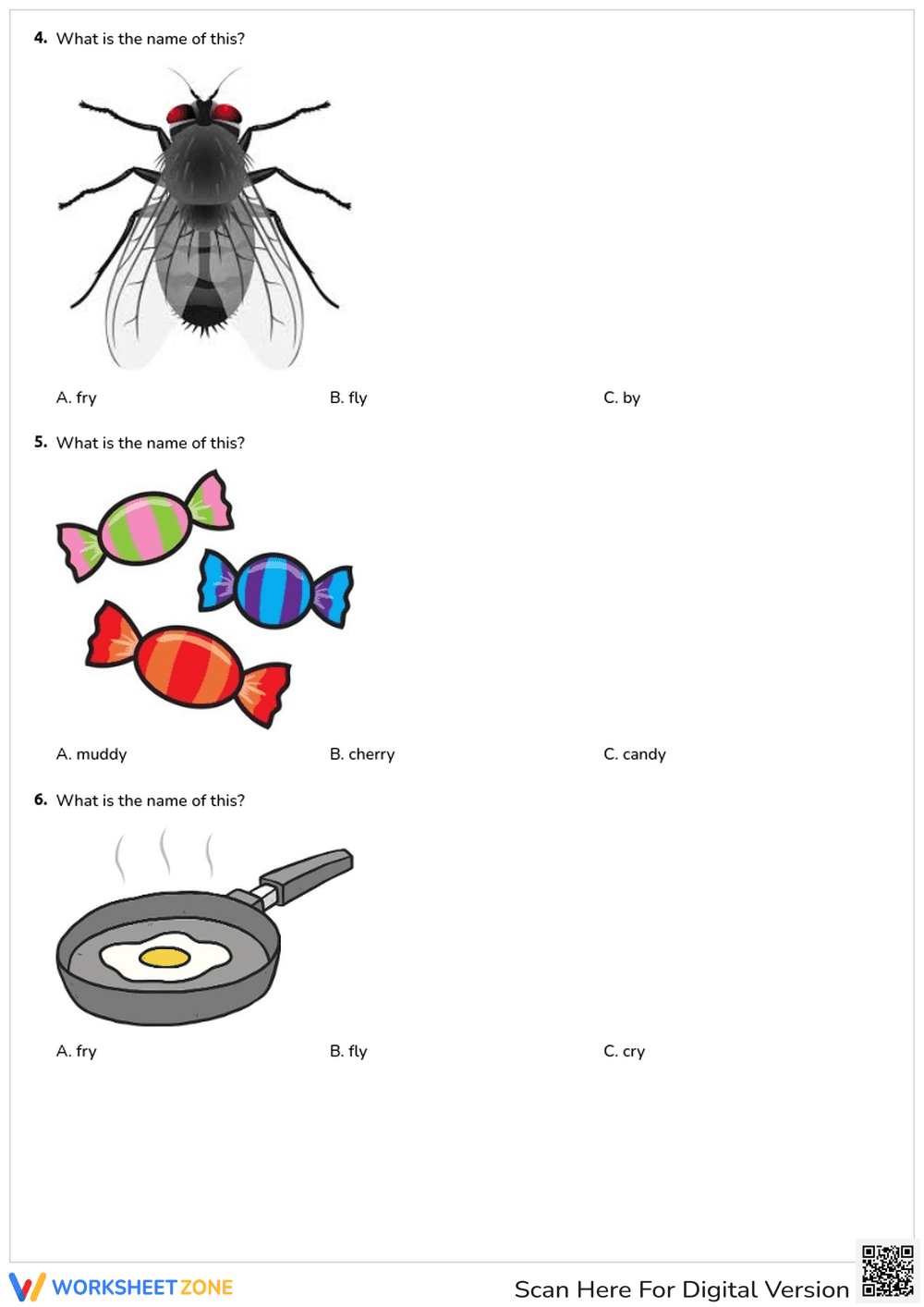
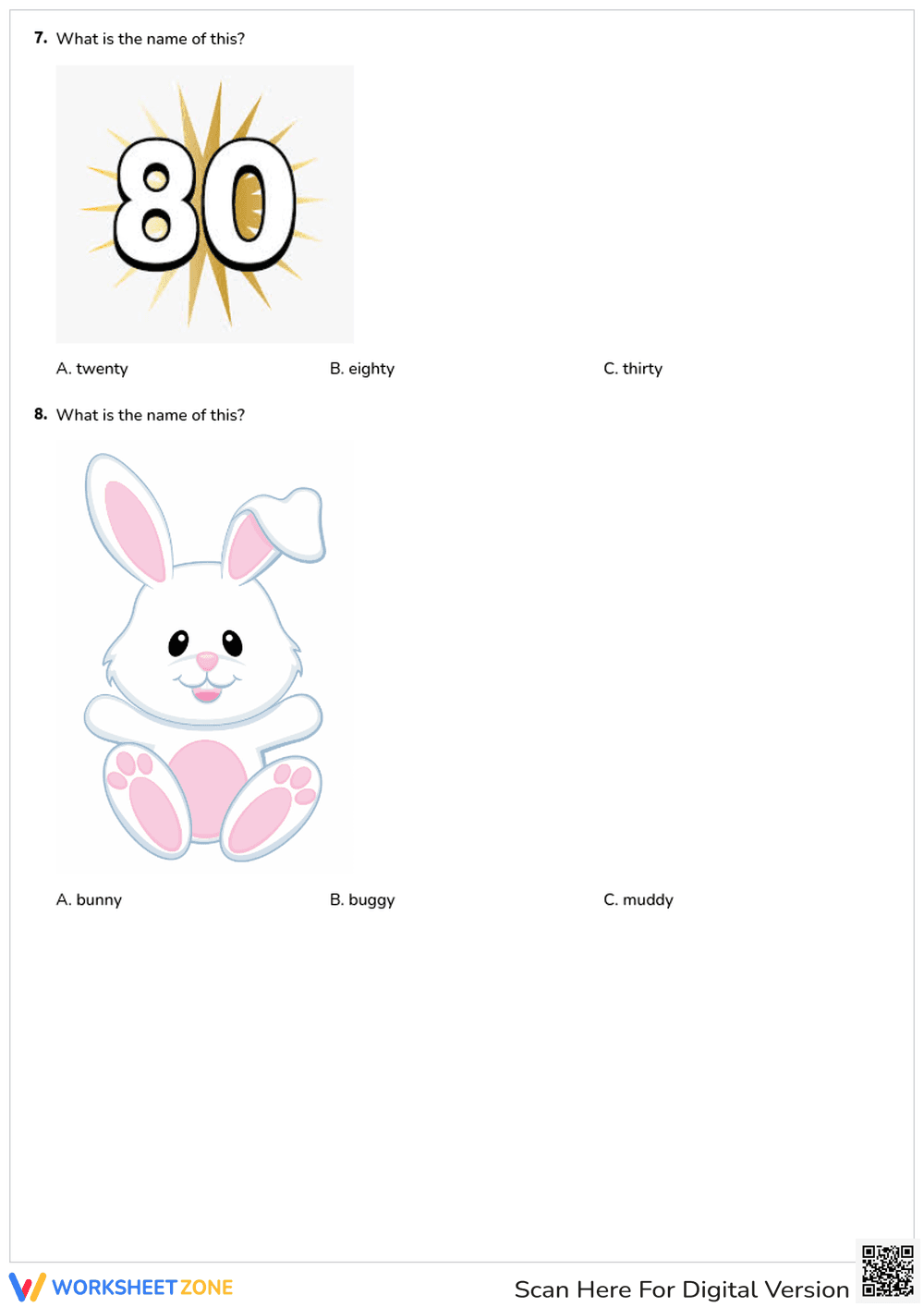
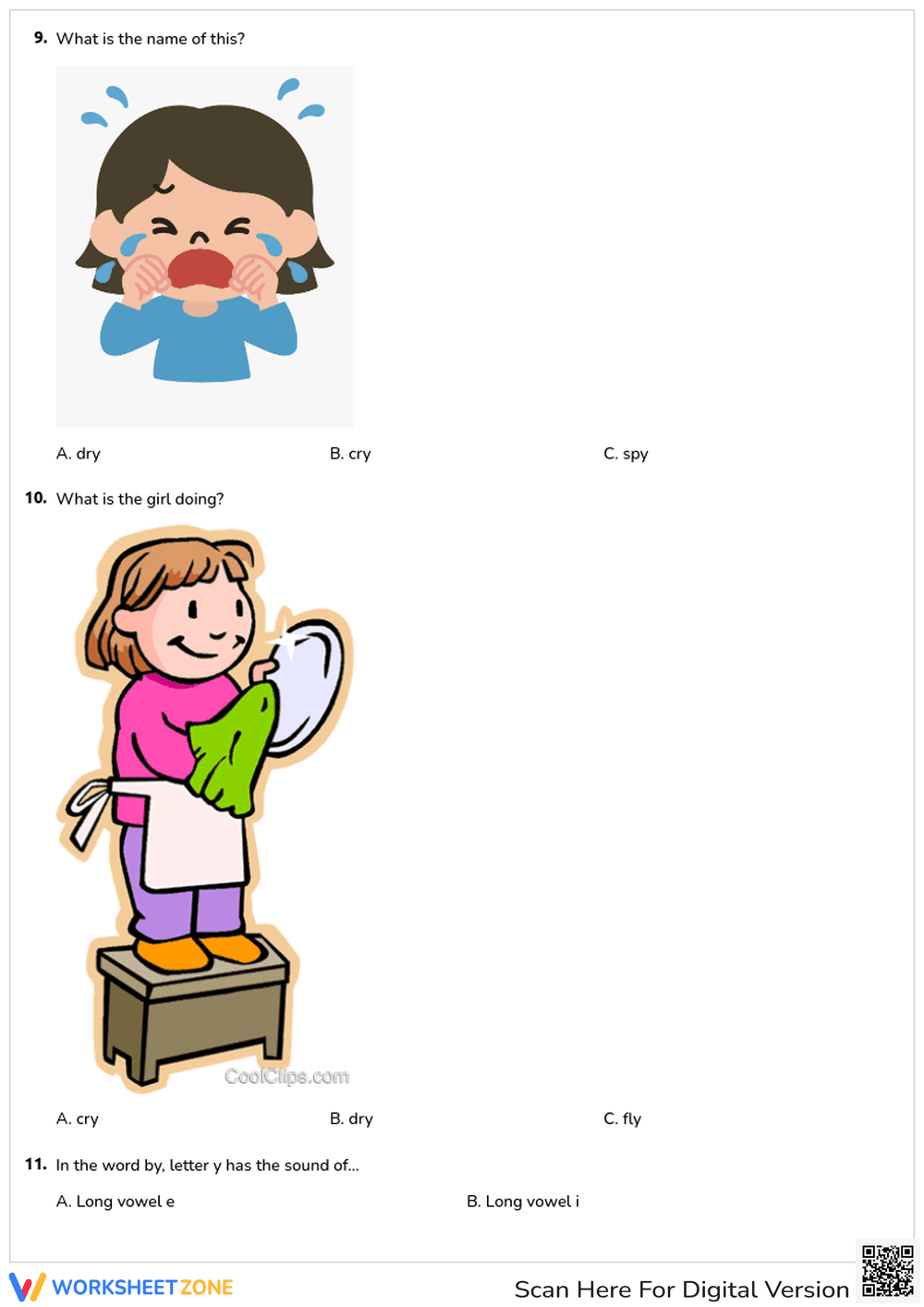
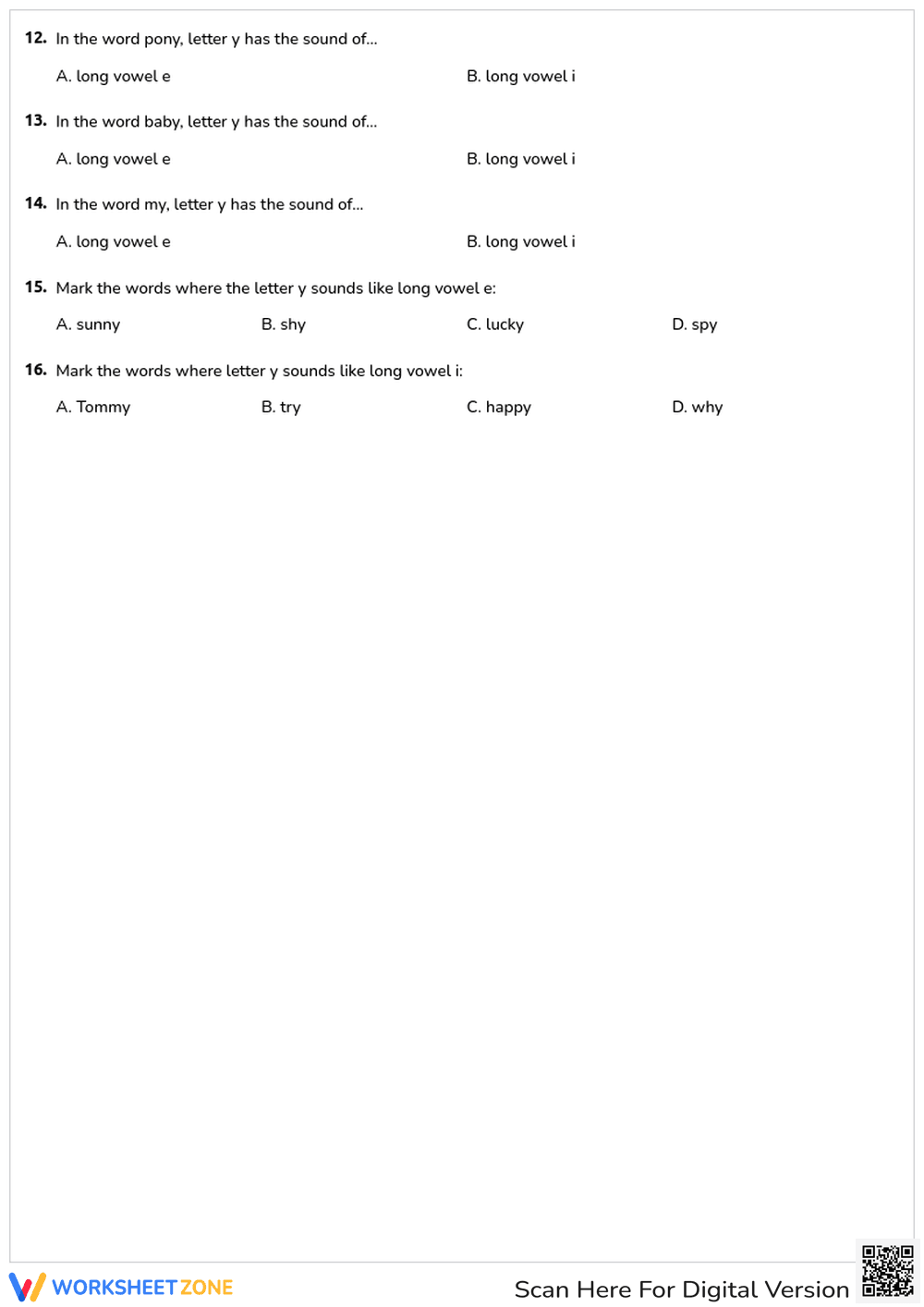
This comprehensive five-page resource features 16 multiple-choice questions designed to test phonics knowledge. The first section uses visual cues, asking students to match images to the correct spelling. The second section requires students to determine if the letter Y in words like "pony" and "my" produces a long "e" or long "i" sound. A complete answer key is provided.
Skill Progression
- Guided practice: Initial visual questions (1-10) provide picture support, connecting spoken vocabulary with written words ending in Y.
- Supported practice: Questions 11-14 ask students to categorize the vowel sound in familiar sight words, reinforcing phonetic rules.
- Independent practice: Final questions challenge students to identify words sharing the same Y sound without visual aids.
This gradual-release structure builds confidence from picture-supported decoding to abstract analysis.
Standards Alignment
This resource is directly aligned to CCSS.ELA-LITERACY.RF.1.3: Know and apply grade-level phonics and word analysis skills in decoding words. It specifically targets the ability to decode regularly spelled one-syllable words and recognize common vowel team conventions for representing long vowel sounds. Both standard codes can be copied directly into lesson plans, IEP goals, or district curriculum mapping tools.
How to Use It
Use this as independent practice after direct instruction on the two sounds of Y, or as a formative assessment during literacy centers. While students work, observe whether they rely on picture cues or independently sound out text options. Most students will complete the 16 questions within a 15 to 20-minute timeframe.
Who It's For
Designed for first-grade students developing foundational reading skills. It is helpful for visual learners who benefit from picture-to-word matching. For students needing support, pair this worksheet with an anchor chart detailing the rules for Y as a vowel.
Mastering the variable sounds of specific letters is a critical milestone in early literacy. According to Fisher & Frey (2014), explicit phonics instruction that isolates specific letter-sound correspondences significantly improves students' decoding fluency and overall reading comprehension. This worksheet directly supports CCSS.ELA-LITERACY.RF.1.3 by requiring students to apply grade-level phonics and word analysis skills to determine the correct vowel sound of the letter Y. By transitioning from image-supported vocabulary matching to abstract phonetic categorization, the 16 tasks provide a structured environment for students to internalize these essential spelling patterns. Consistent practice with these dual-sound letters reduces hesitation during independent reading, allowing young learners to focus their cognitive energy on meaning rather than decoding. This targeted approach ensures foundational reading skills are firmly established.


