


























Views
Downloads

Essential Letter B Cursive Worksheet | Grade 1 English
Paste this activity's link or code into your existing LMS (Google Classroom, Canvas, Teams, Schoology, Moodle, etc.).
Students can open and work on the activity right away, with no student login required.
You'll still be able to track student progress and results from your teacher account.
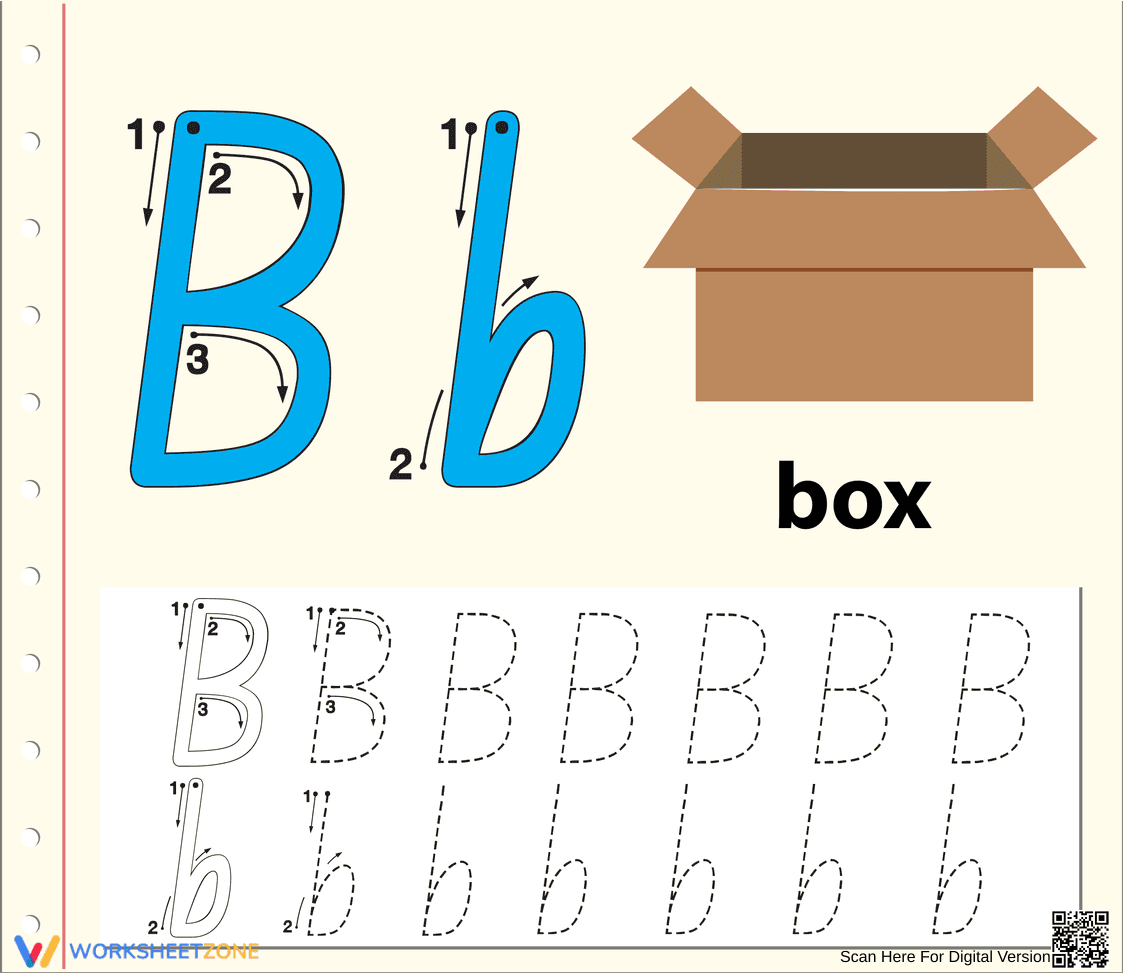
This Grade 1 cursive handwriting worksheet provides students with a structured environment to master the formation of the letter B. By combining visual stroke guides with repetitive tracing practice, learners develop the fine motor control necessary for fluid writing. The inclusion of a box illustration reinforces the phonetic connection between the letter and its sound.
At a Glance
- Grade: 1 · Subject: English
- Standard:
CCSS.ELA-LITERACY.L.1.1.A— Print all upper- and lowercase letters accurately using proper stroke sequences- Skill Focus: Cursive Letter B Formation
- Format: 1 page · 14 problems · Answer key not required · PDF
- Best For: Morning work or handwriting centers
- Time: 10–15 minutes
The worksheet features large, numbered stroke guides for both uppercase and lowercase cursive B. Below the instructional headers, students find two dedicated rows for tracing: seven instances of uppercase B and seven instances of lowercase b. The layout is clean and distraction-free, utilizing a single-page PDF format that requires no additional teacher preparation.
Teachers can integrate this resource into their daily routine in under 2 minutes. Simply print the single-page PDF, distribute it to students during handwriting blocks, and monitor their stroke direction in real-time. Because the worksheet includes self-explanatory numbered arrows, it functions perfectly as a sub-plan activity or an independent station task that requires minimal adult intervention.
This resource aligns with `CCSS.ELA-LITERACY.L.1.1.A`, which focuses on the command of the conventions of standard English capitalization and handwriting. While the standard specifies printing, this cursive extension supports advanced fine motor development and prepares students for upper-elementary writing requirements. Both standard codes can be copied directly into lesson plans, IEP goals, or district curriculum mapping tools.
Use this worksheet during the independent practice phase of a handwriting lesson after demonstrating the cursive loops on a whiteboard. It serves as an excellent formative assessment tool; observe students at task 4 or 5 to ensure they are following the numbered stroke sequence rather than drawing the letter shapes. Completion typically takes 12 minutes for a first-grade student.
This practice sheet is designed for first-grade students beginning their transition to cursive or those needing remedial fine motor support. It pairs naturally with an alphabet anchor chart or a direct instruction lesson on the letter B sound. It is also suitable for occupational therapy sessions focusing on grip and letter-line placement.
According to the RAND AIRS 2024 report, consistent handwriting practice is a foundational component of literacy development that directly impacts a student's ability to compose complex texts in later grades. This worksheet targets the specific skill of letter formation through the CCSS.ELA-LITERACY.L.1.1.A standard, ensuring students internalize the muscle memory required for the letter B. Research from Fisher & Frey (2014) emphasizes that scaffolded tracing, like the 14 tasks provided here, allows for the gradual release of responsibility from guided instruction to independent mastery. By utilizing numbered stroke guides, the resource reduces cognitive load, allowing Grade 1 learners to focus on precision and fluid movement. This systematic approach to handwriting is recognized by NAEP as a critical factor in developing writing fluency and overall academic success in early childhood education.


