


























Views
Downloads
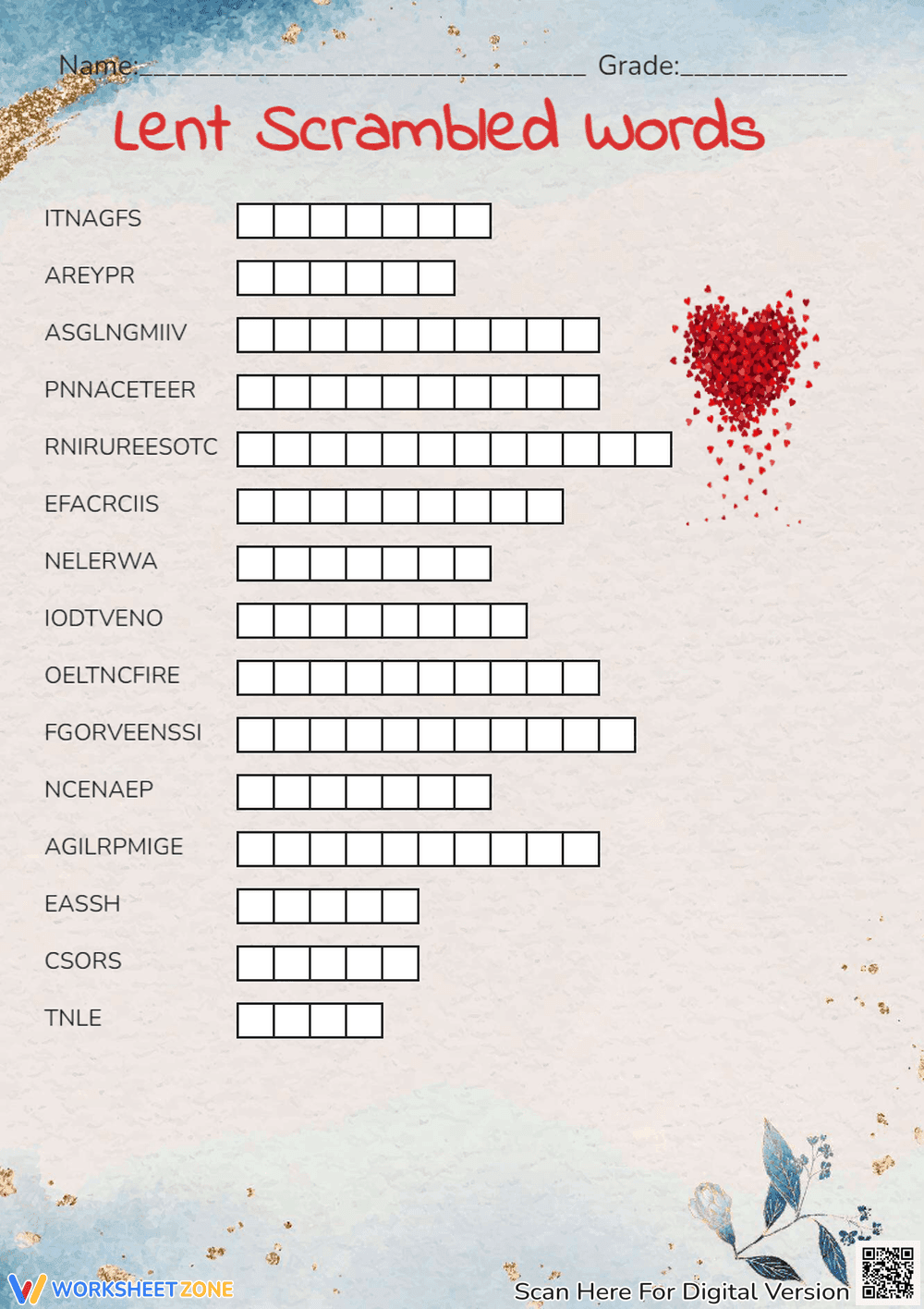

Lent Scrambled Words Worksheet | Grade 6 Essential
Paste this activity's link or code into your existing LMS (Google Classroom, Canvas, Teams, Schoology, Moodle, etc.).
Students can open and work on the activity right away, with no student login required.
You'll still be able to track student progress and results from your teacher account.
This Grade 6 Lent scrambled words worksheet provides students with 15 challenging vocabulary terms to unscramble. By engaging with thematic words like repentance and sacrifice, learners strengthen their spelling accuracy and word recognition skills. It serves as an ideal seasonal activity for reinforcing cultural literacy and language development during the Lenten period.
At a Glance
- Grade: 6 · Subject: ELA
- Standard:
CCSS.ELA-LITERACY.L.6.4— Determine or clarify the meaning of unknown and multiple-meaning words and phrases- Skill Focus: Vocabulary and Spelling
- Format: 1 page · 15 problems · Answer key included · PDF
- Best For: Seasonal bell-ringers or early finishers
- Time: 15–20 minutes
The resource features a single-page layout containing 15 scrambled terms related to the Lenten season. Each item includes a clear letter-box scaffold to help students visualize the word length and letter placement. The worksheet includes a comprehensive answer key for quick grading and is formatted as a high-quality PDF for immediate printing and distribution in any classroom setting.
This resource is designed for a three-step zero-prep workflow. First, print the single-page PDF in under 30 seconds. Second, distribute the sheets to students as they enter the room or finish an assessment. Third, review the answers using the provided key for immediate feedback. Total teacher preparation time is under two minutes, making it an excellent sub-plan addition or a quick filler during transition periods.
Primary alignment is to `CCSS.ELA-LITERACY.L.6.4`, which focuses on vocabulary acquisition and spelling patterns. Students must use structural analysis to decode the scrambled letters into meaningful academic and thematic terms. This cognitive manipulation of letters reinforces the orthographic mapping of complex words. Both standard codes can be copied directly into lesson plans, IEP goals, or district curriculum mapping tools.
Use this worksheet during the first ten minutes of class as a thematic bell-ringer to settle the group. It also functions effectively as a formative assessment to check student familiarity with seasonal terminology before a reading unit. Expected completion time ranges from 15 to 20 minutes depending on student spelling proficiency. For an extra challenge, ask students to use three of the unscrambled words in a complete sentence on the back of the page.
This activity is tailored for Grade 6 students but is adaptable for middle school learners needing spelling support. It pairs naturally with a thematic reading passage about cultural traditions or a vocabulary anchor chart. The scaffolded boxes provide necessary support for English Language Learners and students with diverse learning needs who benefit from visual cues regarding word length.
According to research from Fisher & Frey (2014), word-level activities like scrambles and puzzles support the word consciousness necessary for long-term vocabulary retention. This Grade 6 worksheet targets CCSS.ELA-LITERACY.L.6.4 by requiring students to manipulate letter sequences to form 15 specific thematic terms. By focusing on the Lenten season, the activity bridges the gap between cultural knowledge and linguistic precision. Studies in the RAND AIRS 2024 report suggest that high-interest, low-stakes vocabulary practice increases student engagement and reduces anxiety during language acquisition tasks. This resource provides a structured environment for students to practice spelling complex words such as resurrection and pilgrimage without the pressure of a formal assessment. The inclusion of a clear answer key ensures that students receive immediate corrective feedback, a critical component of the gradual release of responsibility model.


