


























Views
Downloads
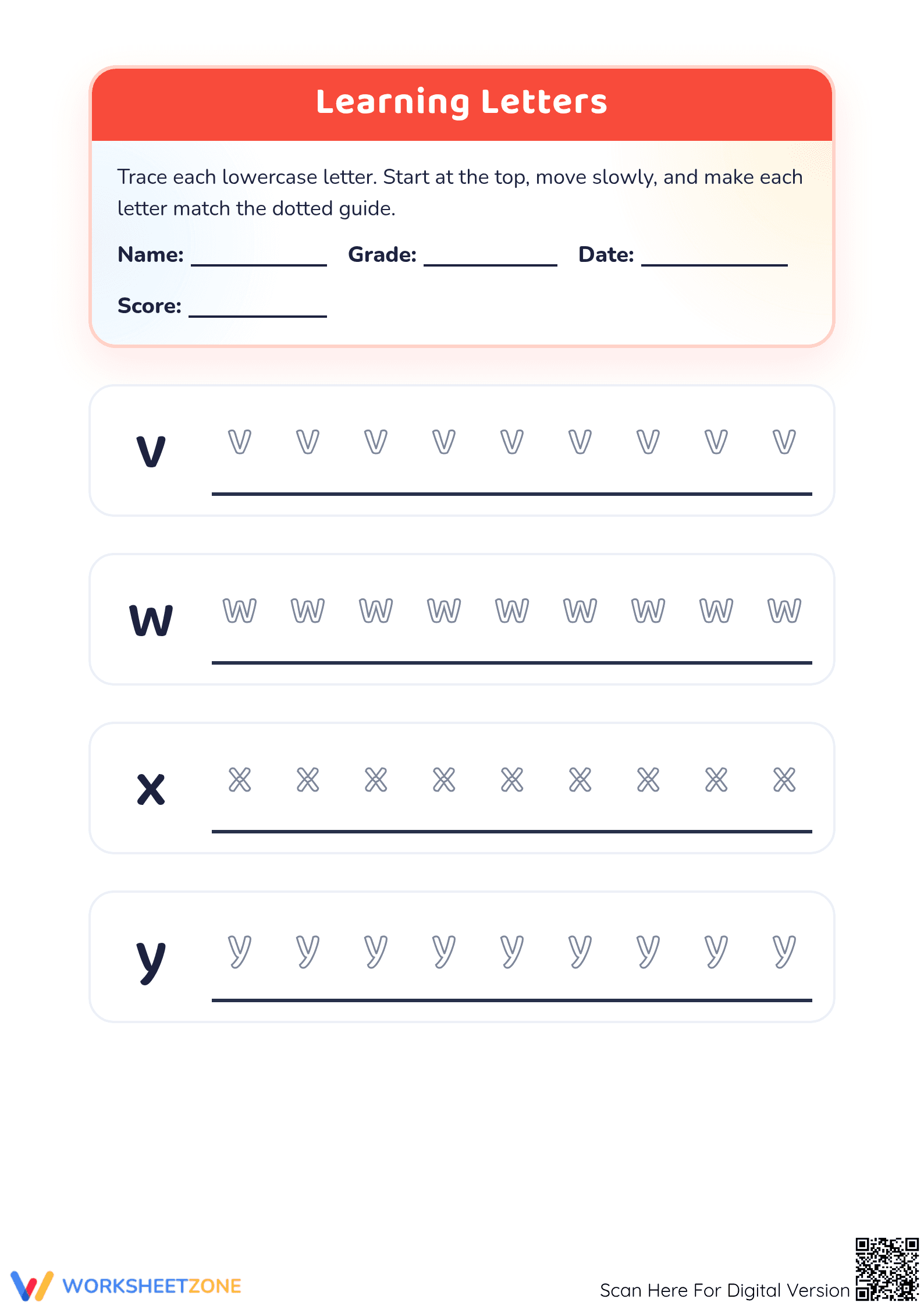


Learning Letters v-z: Printable Grade K ELA Worksheet
Paste this activity's link or code into your existing LMS (Google Classroom, Canvas, Teams, Schoology, Moodle, etc.).
Students can open and work on the activity right away, with no student login required.
You'll still be able to track student progress and results from your teacher account.
This printable worksheet provides essential handwriting practice for young learners mastering lowercase letters v through z. By focusing on fine motor precision and letter formation, students develop the foundational skills necessary for fluent writing. It offers a structured environment for repetitive tracing, ensuring that each letter stroke becomes second nature before advancing to independent composition.
At a Glance
- Grade: Kindergarten · Subject: English Language Arts
- Standard:
CCSS.ELA-LITERACY.L.K.1.A— Print many upper- and lowercase letters correctly through guided tracing of the final alphabet sequence- Skill Focus: Lowercase Letter Formation (v-z)
- Format: 2 pages · 46 tasks · Answer key included · PDF
- Best For: Daily morning work, literacy centers, and fine motor intervention
- Time: 15–20 minutes
What's Inside
This two-page PDF packet features clear, dotted-line guides for the lowercase letters v, w, x, y, and z. Each page includes a bolded reference letter followed by a row of nine tracing opportunities to build muscle memory. The second page introduces a dedicated extra practice line, allowing students to select a letter and attempt writing it independently without the dotted support, fostering a gradual transition to unassisted penmanship.
Zero-Prep Workflow
Implementing this resource requires minimal effort, making it ideal for busy classrooms or unexpected substitute situations. Teachers can print the two-page document in under 30 seconds, distribute it immediately to students, and conduct a quick visual review of stroke direction in less than a minute. Total preparation time remains under two minutes, allowing educators to focus on providing individual feedback during the 15-minute instructional block.
Standards Alignment
The primary focus is CCSS.ELA-LITERACY.L.K.1.A, which requires students to "Print many upper- and lowercase letters." This worksheet specifically targets the final sequence of the lowercase alphabet, ensuring comprehensive coverage of the standard. This standard code can be copied directly into lesson plans, IEP goals, or district curriculum mapping tools to provide evidence of targeted handwriting instruction.
How to Use It
Use this worksheet during the "You Do" phase of a gradual release model following a direct demonstration of letter strokes. It serves as an excellent formative assessment tool; teachers can observe pencil grip and stroke order while students work. Additionally, it can be sent home as an essential practice activity to reinforce the day's lesson or used as a quiet-time activity for early finishers.
Who It's For
Designed for Preschoolers, Kindergarteners, and Grade 1 students needing remedial support, this resource accommodates various developmental stages. It is particularly effective for students with fine motor delays who benefit from high-contrast visual cues. For a complete lesson, pair this with an alphabet anchor chart or a tactile sand-tracing activity to provide a multi-sensory learning experience.
Effective handwriting instruction for lowercase letters v-z is critical for early literacy, as physical letter production correlates directly with word recognition and reading fluency. According to the Fisher & Frey (2014) framework for gradual release of responsibility, structured tracing provides the necessary scaffolds to move students from guided participation to independent mastery. This worksheet aligns with CCSS.ELA-LITERACY.L.K.1.A by providing 46 distinct tracing and writing opportunities that reinforce correct stroke sequence. Research suggests that repetitive, focused practice on late-alphabet letters prevents the common reversal errors often seen in developing writers. By integrating this essential resource into daily routines, educators ensure that students meet rigorous state standards while building the mechanical stamina required for future writing success. This printable guide is a proven tool for establishing the muscle memory needed for academic achievement.


