


























Views
Downloads

Essential Alphabet Practice: Letters h-n | Grade K Printable
Paste this activity's link or code into your existing LMS (Google Classroom, Canvas, Teams, Schoology, Moodle, etc.).
Students can open and work on the activity right away, with no student login required.
You'll still be able to track student progress and results from your teacher account.
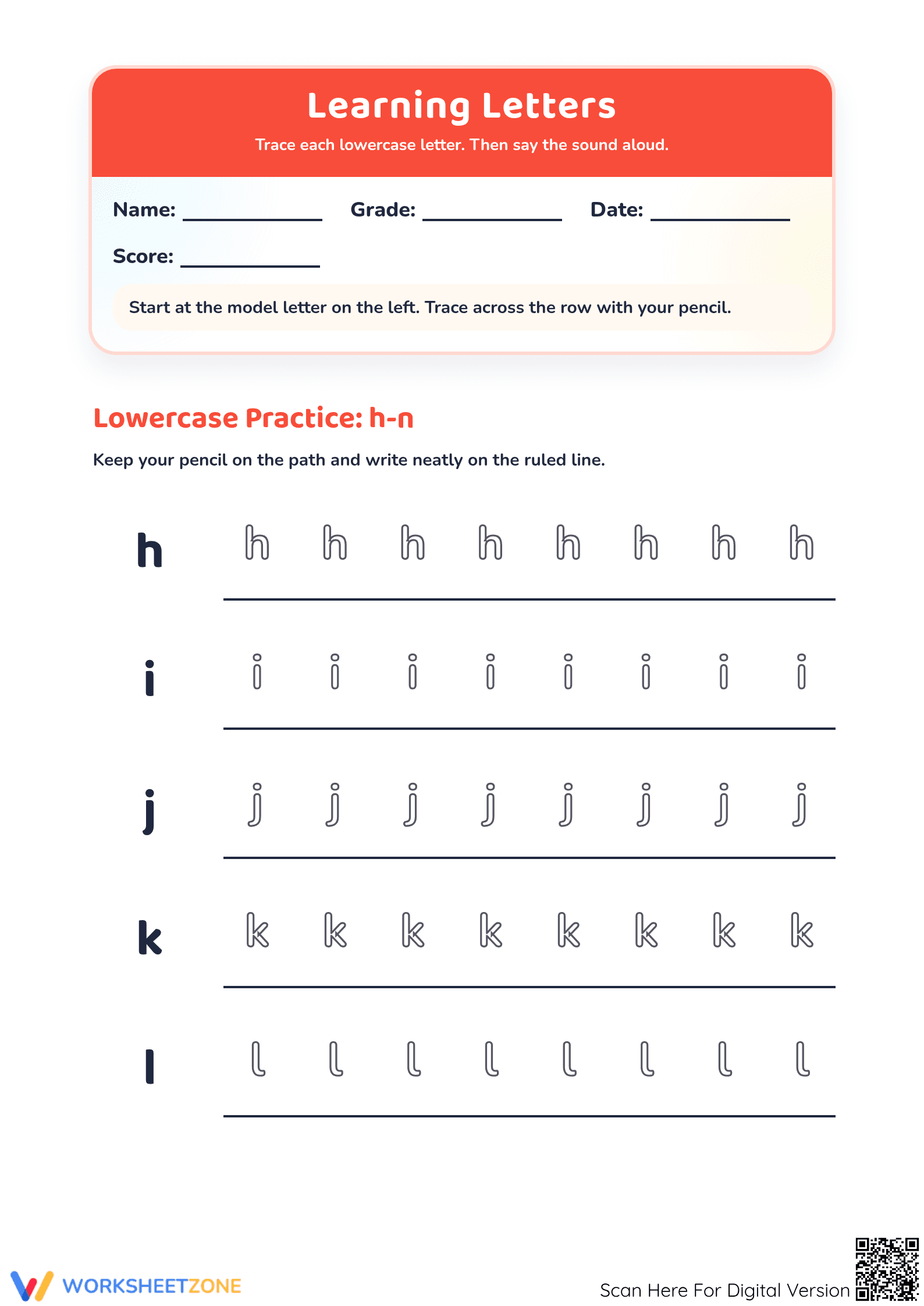
This essential alphabet worksheet helps young learners master lowercase letters h through n through focused tracing and sound recognition. Students develop the fine motor skills necessary for neat handwriting while reinforcing letter-sound correspondence. It provides a structured path for early writers to gain confidence before moving to independent composition in kindergarten or first grade.
At a Glance
- Grade: Kindergarten · Subject: ELA Alphabet
- Standard:
CCSS.ELA-LITERACY.RF.K.1.D— Recognize and name all lowercase letters of the alphabet h through n- Skill Focus: Lowercase tracing and phonetic sounds
- Format: 2 pages · 7 letter sets · No-prep printable · PDF
- Best For: Literacy centers and morning work practice
- Time: 15–20 minutes
What's Inside
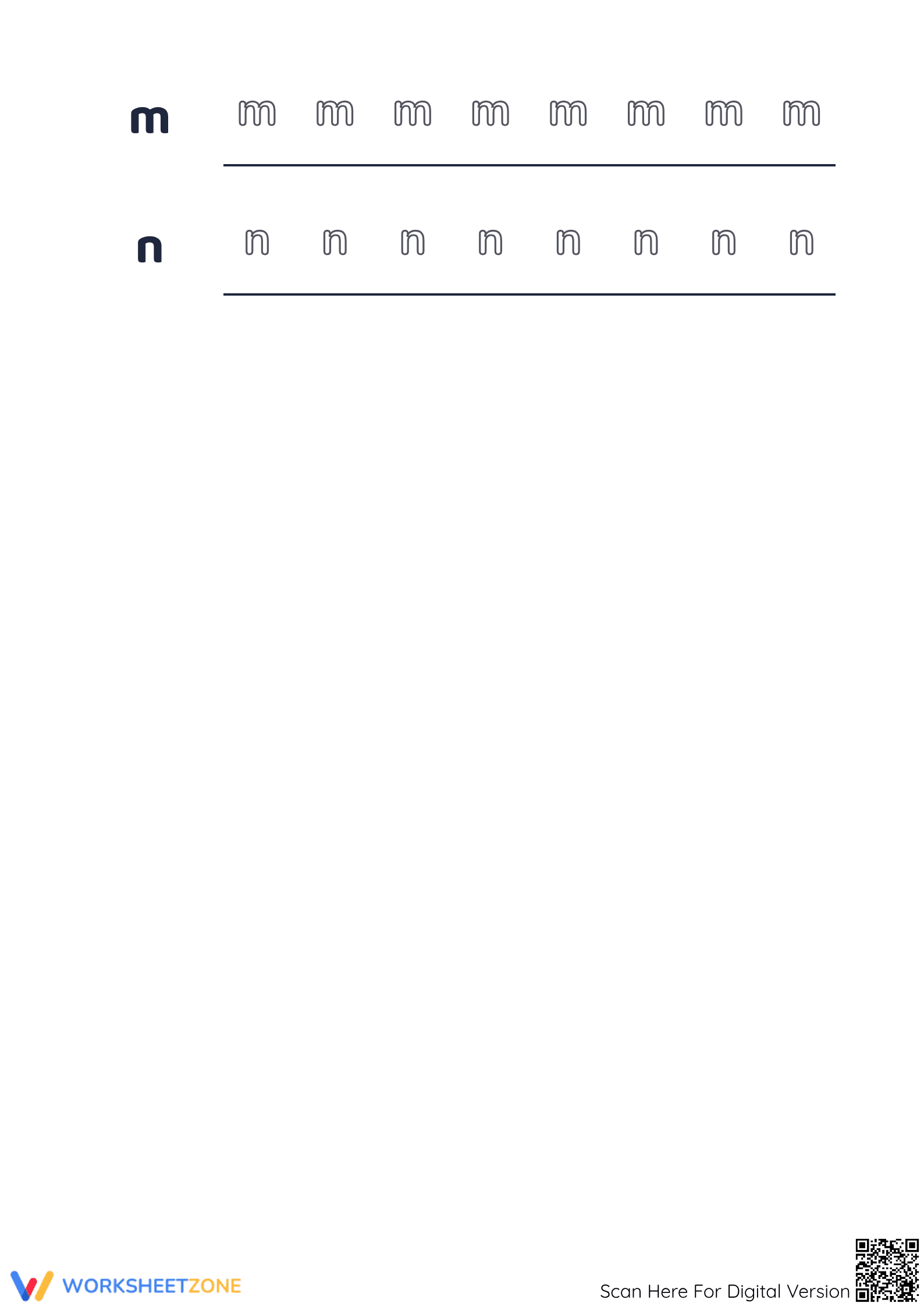
This two-page packet features dedicated practice rows for the lowercase letters h, i, j, k, l, m, and n. Each section includes a bold model letter on the left to serve as a visual guide, followed by multiple dashed-line tracing opportunities. The layout uses ruled lines to ensure students learn proper letter height and baseline placement, accompanied by clear instructions to say sounds aloud.
Zero-Prep Workflow
This resource is designed for immediate classroom integration with three simple steps. First, print the two-page PDF (30 seconds). Second, distribute the sheets to students with pencils (1 minute). Third, review completed tracing for stroke accuracy (5 minutes). Total teacher preparation time is under 2 minutes, making this an ideal solution for emergency sub plans or quick filler activities.
Standards Alignment
The primary standard CCSS.ELA-LITERACY.RF.K.1.D is satisfied as students recognize and name the lowercase letters h-n. Supporting standard CCSS.ELA-LITERACY.L.K.1.A is also addressed through the physical act of printing many of the letters correctly on ruled lines. These standard codes can be copied directly into lesson plans, IEP goals, or district curriculum mapping tools to track foundational literacy benchmarks.
How to Use It
Use this as a guided practice tool following a direct instruction session on letter sounds. It serves as an excellent formative assessment for observing pencil grip and stroke order. Most students will complete both pages in approximately 15 to 20 minutes, making it ideal for a rotational literacy center or as a quiet morning work activity that requires minimal teacher supervision.
Who It's For
This worksheet is specifically designed for preschool, kindergarten, and first-grade students who are developing foundational writing skills. It is particularly beneficial for learners who need additional fine motor support or those in English Language Learner (ELL) programs. Pair this resource with an alphabet anchor chart or a direct instruction lesson to provide a multi-sensory learning experience.
CCSS.ELA-LITERACY.RF.K.1.D focuses on the foundational requirement for students to recognize and name all lowercase letters of the alphabet, a critical precursor to decoding and reading fluency. According to research highlighted by Fisher & Frey (2014) on the gradual release of responsibility, scaffolded tracing provides the necessary stages of motor development. By repeating the letter forms h through n on ruled lines, students internalize the specific vertical and curved strokes required for legible handwriting. This intentional practice prevents the formation of poor writing habits that can hinder later fluency. Educational data from NAEP suggests that early mastery of letter-sound correspondence is a primary predictor of third-grade reading success. This worksheet provides a controlled environment for that mastery, ensuring that students can identify and produce the seven targeted characters accurately before progressing to complex word formations and sentence structure in the later primary grades.


