


























Views
Downloads
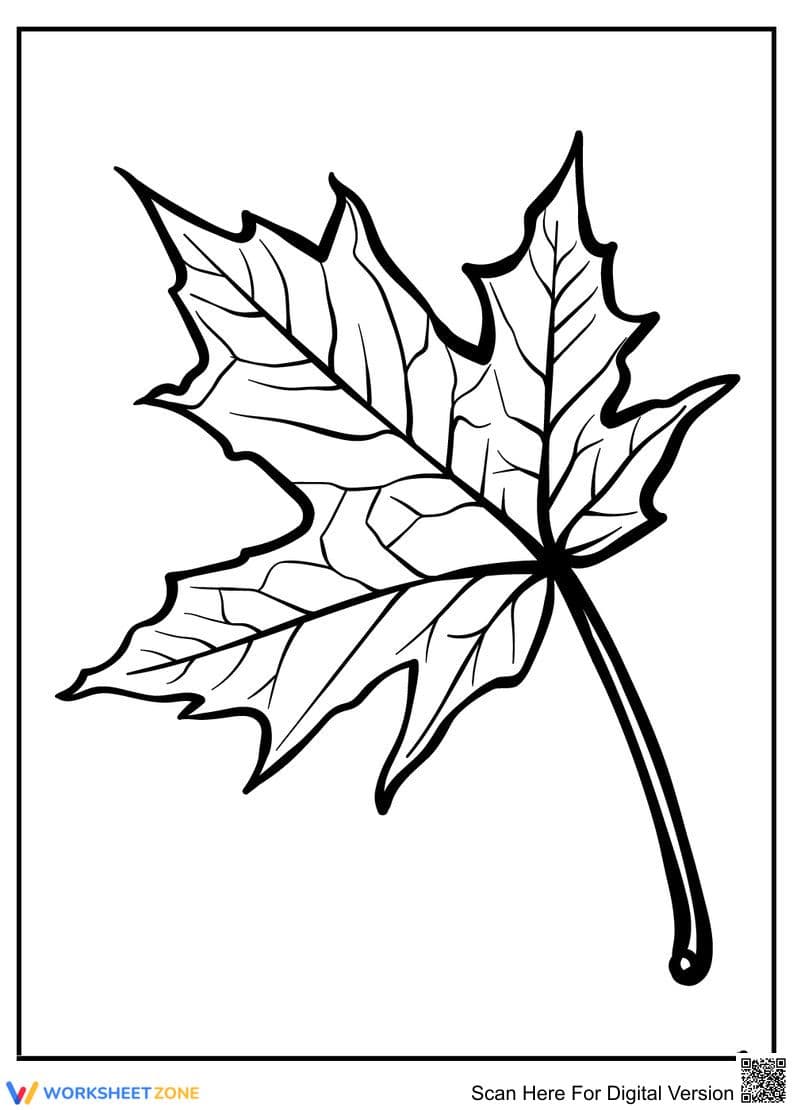

Printable Leaf Coloring Page | Grades K-5 Nature Art
Paste this activity's link or code into your existing LMS (Google Classroom, Canvas, Teams, Schoology, Moodle, etc.).
Students can open and work on the activity right away, with no student login required.
You'll still be able to track student progress and results from your teacher account.
This printable leaf coloring worksheet provides a high-quality botanical illustration for students to explore nature through art. By focusing on the intricate vein patterns of a maple leaf, learners develop fine motor control while engaging in scientific observation. It serves as a perfect supplement to autumn-themed lessons or biology units.
At a Glance
- Grade: K-5 · Subject: Arts & Science
- Standard:
K-LS1-1— Observe and describe patterns of what plants and animals need to survive- Skill Focus: Fine motor skills & botanical observation
- Format: 1 page · 1 task · No answer key required · PDF
- Best For: Early finisher activity or science centers
- Time: 15–20 minutes
What's Inside
Inside this resource, you will find a single-page, high-resolution line drawing of a maple leaf. The illustration features clear, bold outlines and detailed internal vein structures, making it suitable for various mediums including crayons, colored pencils, or watercolors. The minimalist design ensures that students focus entirely on the artistic and observational task at hand without distracting elements.
Zero-Prep Workflow
The zero-prep workflow for this worksheet is designed for maximum efficiency in a busy classroom. First, print the single-page PDF (30 seconds). Second, distribute the sheets along with coloring materials to your students (1 minute). Finally, review the completed work by having students identify the leaf parts or display them on a nature-themed bulletin board. Total teacher preparation time is under 2 minutes, making it an ideal sub plan addition.
Standards Alignment
This activity aligns with `K-LS1-1`, where students use observations to describe patterns in the natural world. While primarily an art activity, it supports the NGSS requirement for students to look closely at plant structures. This standard code can be copied directly into lesson plans, IEP goals, or district curriculum mapping tools to justify the inclusion of creative arts in the science block.
How to Use It
Use this worksheet during a "Signs of Autumn" unit or as a quiet-time activity following a nature walk. For a formative assessment, observe how students handle their coloring tools; look for proper pencil grip and the ability to stay within the complex boundaries of the leaf's lobes. It typically takes 15 to 20 minutes for a primary student to complete with care.
Who It's For
This resource is ideal for preschool through 5th-grade students, particularly those needing extra practice with hand-eye coordination. It pairs naturally with a classroom leaf collection or a read-aloud book about the changing seasons. It is also an excellent choice for substitute teacher folders due to its self-explanatory nature and universal appeal across elementary grade levels.
Research from Fisher & Frey (2014) emphasizes the importance of visual representation and fine motor engagement in early childhood development. This K-LS1-1 aligned worksheet facilitates botanical observation, allowing students to internalize the structural patterns of plants through the tactile act of coloring. By focusing on a single, detailed leaf, the activity encourages sustained attention and precision, which are foundational skills for both scientific inquiry and artistic expression. According to the NAEP frameworks, integrating arts into core subjects like science helps bridge the gap between abstract concepts and physical reality for young learners. This printable resource provides a structured yet creative way to meet these developmental milestones without requiring extensive teacher setup or specialized materials. It remains a staple for educators seeking to bridge sensory learning with standard-aligned content in a high-utility, low-stress format.


