


























Views
Downloads


Grade 2 Language Arts Revision — Essential No-Prep Worksheet
Paste this activity's link or code into your existing LMS (Google Classroom, Canvas, Teams, Schoology, Moodle, etc.).
Students can open and work on the activity right away, with no student login required.
You'll still be able to track student progress and results from your teacher account.
This comprehensive Grade 2 Language Arts revision worksheet provides a robust review of foundational literacy skills, from phonics and grammar to vocabulary and punctuation. Students engage with thirty-one diverse tasks designed to reinforce their understanding of long vowel patterns, noun classification, and sentence mechanics. By completing these exercises, learners solidify their command of essential English conventions.
At a Glance
- Grade: 2 · Subject: ELA
- Standard:
CCSS.ELA-LITERACY.L.2.1— Identify long vowel sounds, classify nouns, and apply correct terminal punctuation.- Skill Focus: Comprehensive Grammar & Phonics
- Format: 3 pages · 31 problems · Answer key included · PDF
- Best For: End-of-unit review and morning work
- Time: 25–35 minutes
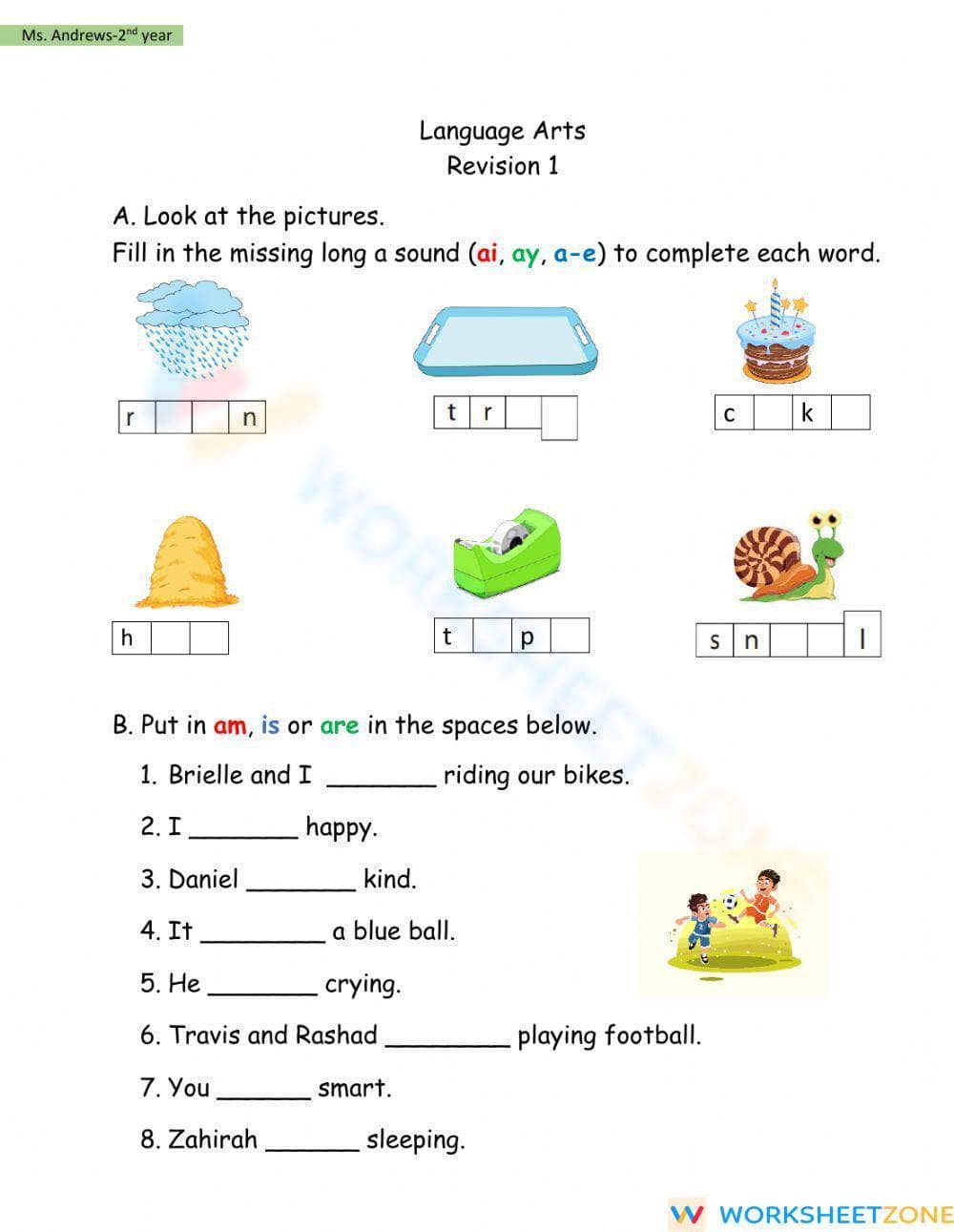
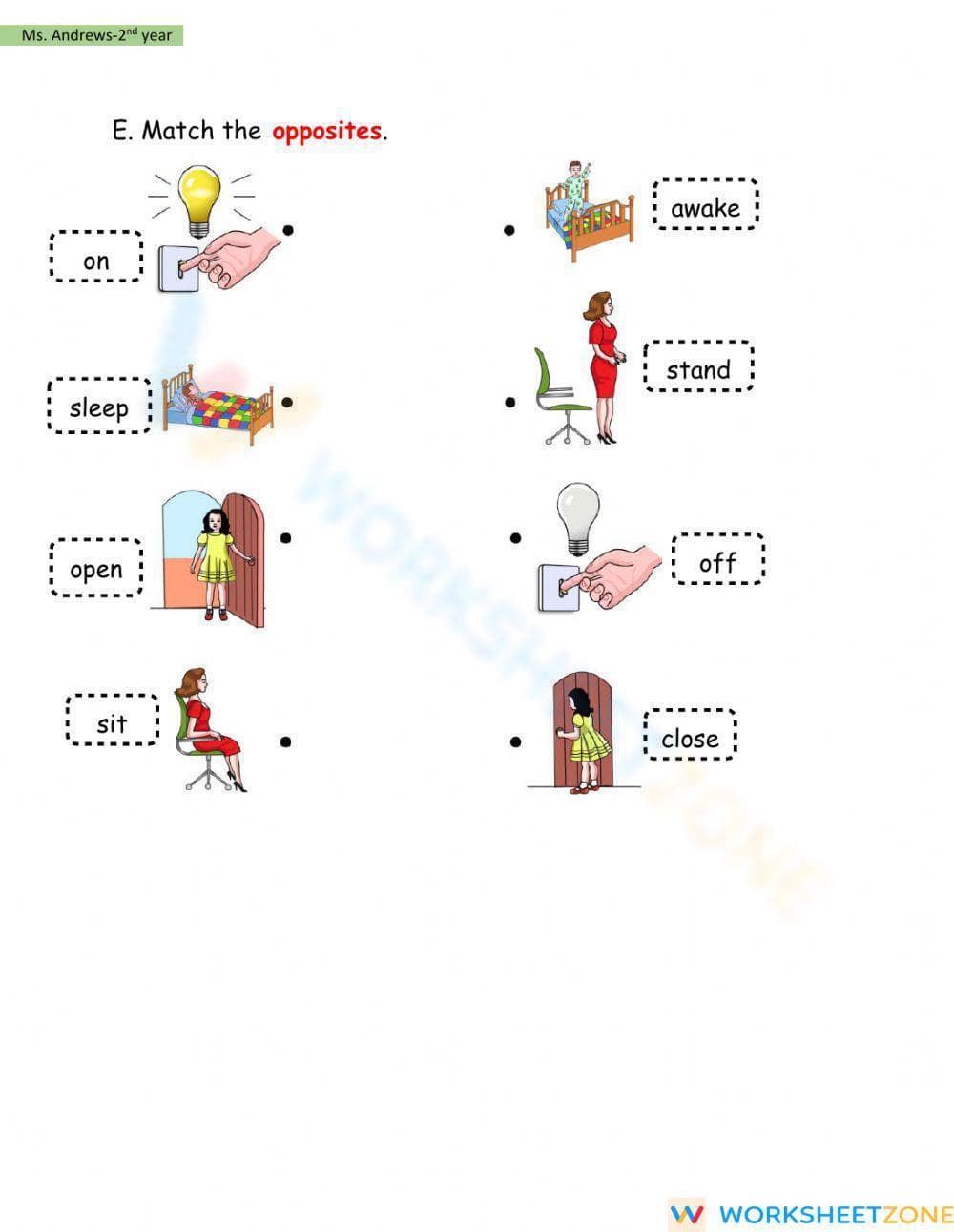
Inside this three-page packet, educators will find a logically structured progression of five distinct activities. The worksheet begins with phonics practice focusing on long 'a' vowel teams, followed by subject-verb agreement exercises utilizing the verbs am, is, and are. The second page features a noun sorting mat and a terminal punctuation check, while the final page challenges students to match semantic opposites with visual support.
The zero-prep workflow for this resource is designed for maximum efficiency. Teachers can print the three-page PDF in seconds, distribute copies for independent work, and review answers using the included key. This requires zero minutes of advance preparation, making it an ideal choice for emergency sub plans or quick morning work sessions that maintain instructional rigor without adding to the teacher workload.
This resource is primary aligned to CCSS.ELA-LITERACY.L.2.1, which requires students to demonstrate command of the conventions of standard English grammar and usage. It also supports standards related to phonics (RF.2.3) and punctuation (L.2.2). Both standard codes can be copied directly into lesson plans, IEP goals, or district curriculum mapping tools to ensure full instructional compliance.
Use this worksheet as a formative assessment after completing a unit on grammar and phonics to identify students who may need additional scaffolding. It is particularly effective during the first twenty minutes of a literacy block as a "Do Now" activity. For an observation tip, watch for students who struggle to categorize abstract nouns versus concrete animals and places during the sorting task.
This resource is designed for Grade 2 students but is also suitable for Grade 1 learners ready for a challenge or Kindergarten students working on advanced phonemic awareness. The inclusion of clear illustrations and word banks provides necessary differentiation for English Language Learners (ELL) and students with IEP accommodations. It pairs naturally with any standard ELA anchor chart or classroom literacy center.
Aligned to the CCSS.ELA-LITERACY.L.2.1 standard, this revision packet addresses the foundational grammar and phonics skills necessary for second-grade literacy success. Research from Fisher & Frey (2014) emphasizes that cumulative review—where students interact with previously learned material like noun classification, subject-verb agreement, and phonemic awareness—is critical for long-term retention and mastery. This worksheet provides thirty-one targeted opportunities for students to demonstrate their command of English conventions, ranging from vowel team identification (long a sounds) to the proper application of terminal punctuation in declarative and interrogative sentences. By integrating multiple strands of the ELA framework into a single, cohesive three-page document, the resource facilitates a high-density learning experience that reinforces the interconnected nature of language arts. Educators can utilize this comprehensive tool to identify specific gaps in student understanding before moving into more complex syntactic structures, ensuring that every learner has a stable foundation in essential literacy mechanics.


