


























Views
Downloads


Aligned RL.5.1 Worksheet: Lafff RADD Questions – Grade 5
Paste this activity's link or code into your existing LMS (Google Classroom, Canvas, Teams, Schoology, Moodle, etc.).
Students can open and work on the activity right away, with no student login required.
You'll still be able to track student progress and results from your teacher account.
Master evidence-based writing with this "Lafff" RADD questions worksheet. This Grade 5 resource utilizes the Restate-Answer-Detail-Detail strategy to ensure students cite textual evidence with precision. It is specifically designed to accompany the Journeys Lesson 17 story, "Lafff," helping students bridge the critical gap between basic reading comprehension and rigorous academic writing.
At a Glance
- Grade: 5 · Subject: English Language Arts
- Standard:
RL.5.1— Quote accurately from a text to support inferences and explicit explanations- Skill Focus: Evidence-Based Writing (RADD Strategy)
- Format: 4 pages · 3 tasks · Answer key included · PDF
- Best For: Lesson 17 reading comprehension and assessment
- Time: 25–35 minutes
What's Inside
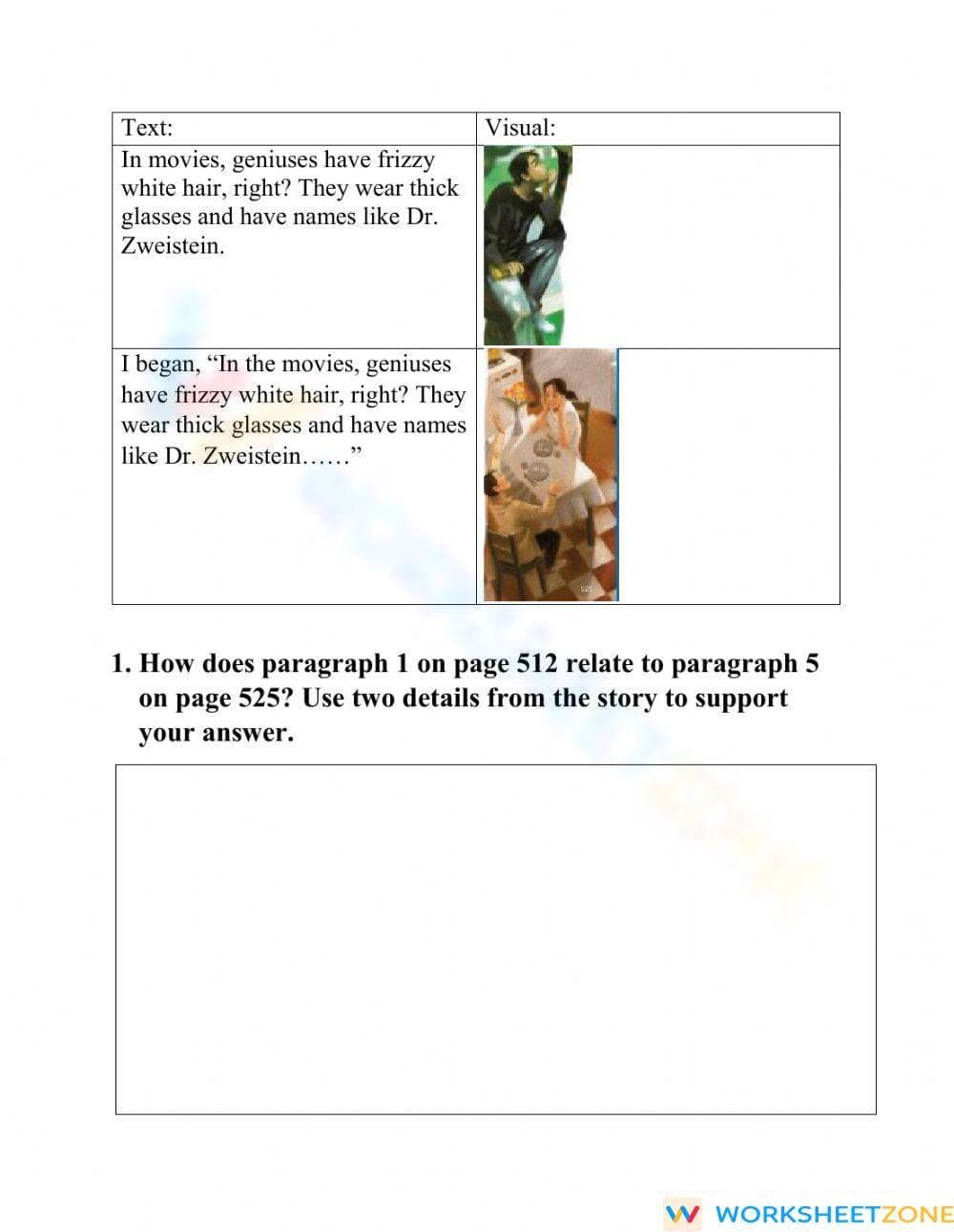
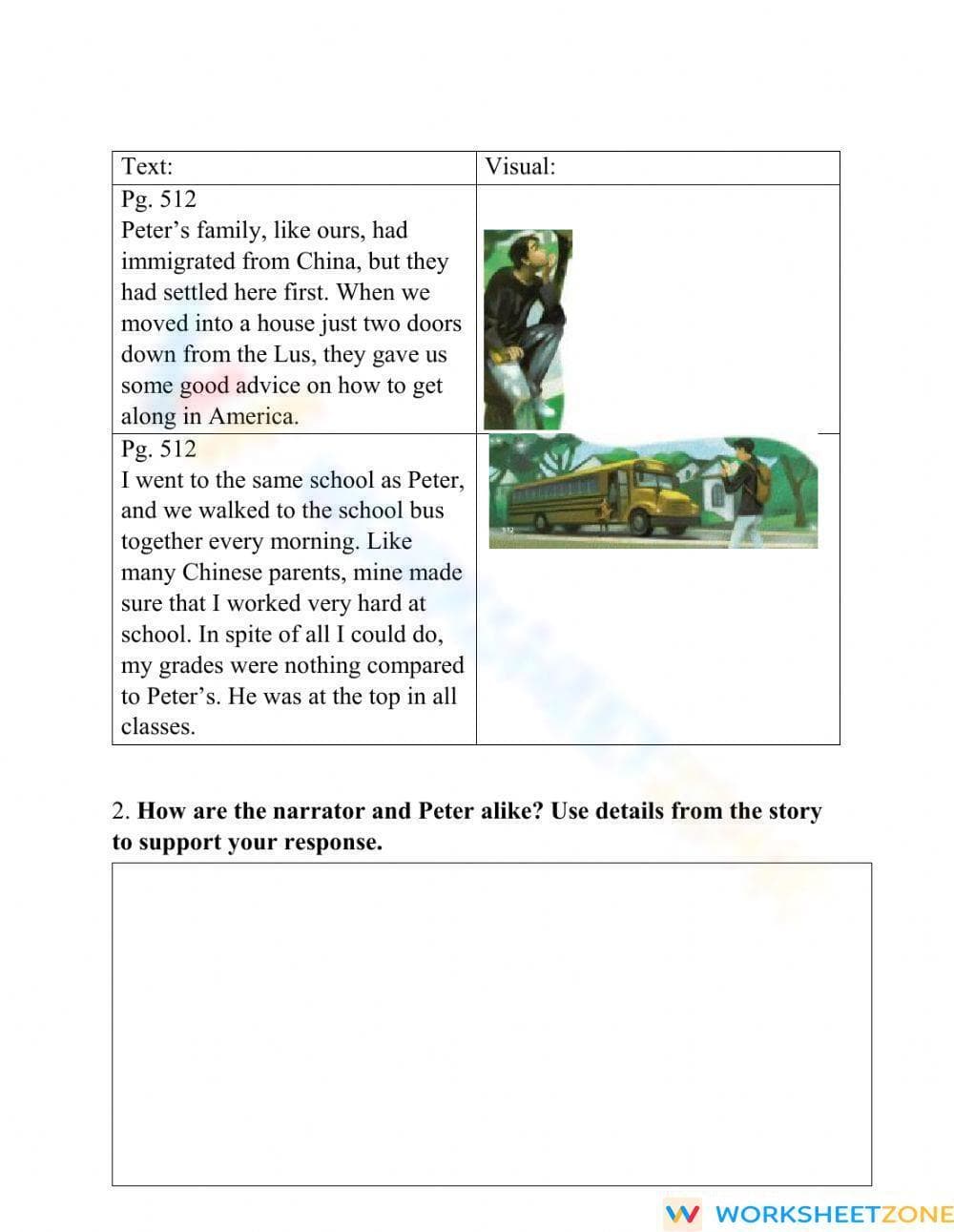
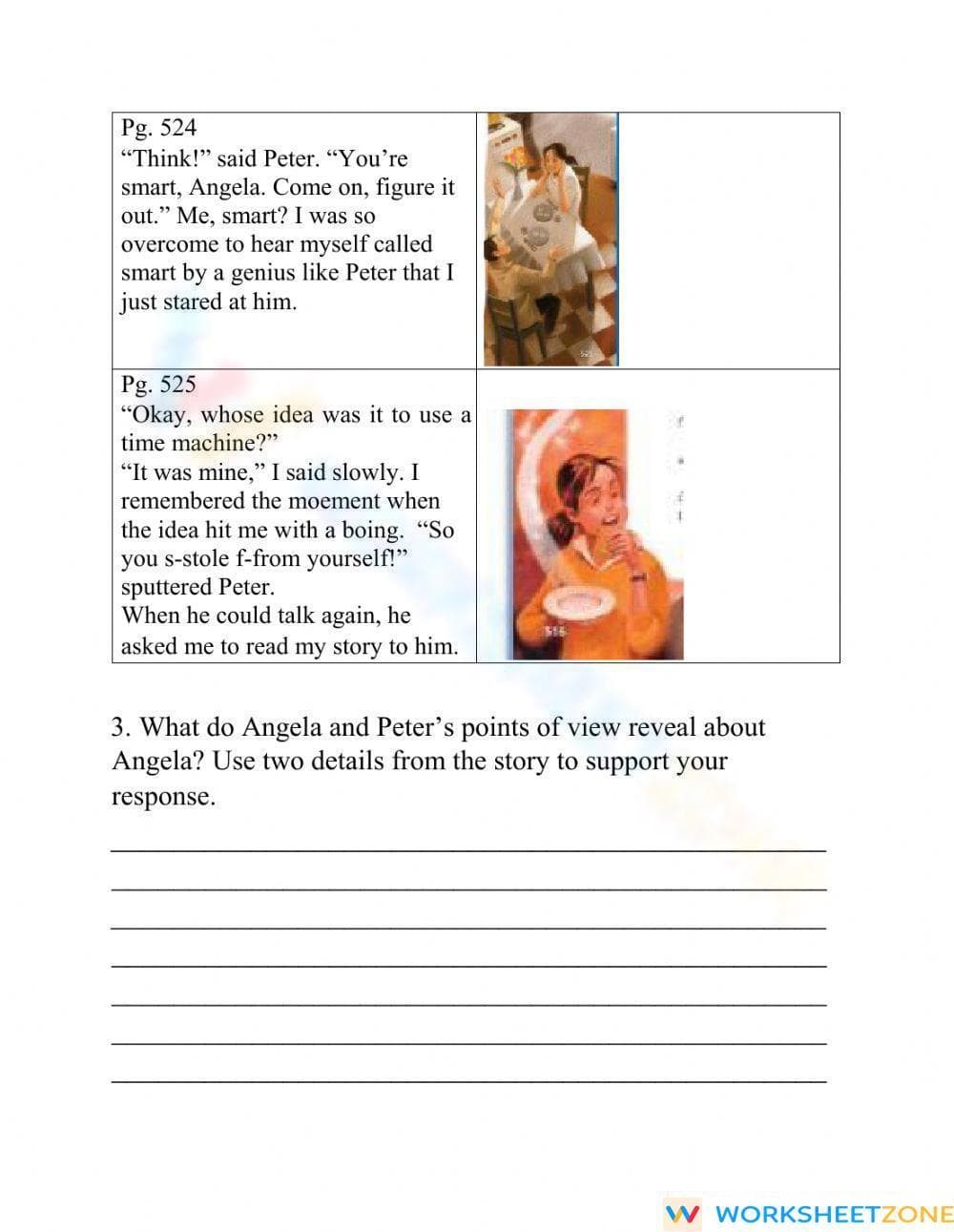
This resource includes 3 multi-part response questions across 4 pages. Each task provides dedicated space for applying the RADD strategy, ensuring students provide multiple details. The worksheet features visual cues from "Lafff" and specific page references (pg. 512, 524, 525) to guide students back to the source material for accurate quoting.
Mastery Evidence
The RADD framework serves as a structured rubric for meeting CCSS.ELA-LITERACY.RL.5.1. Tasks are sequenced to move from analyzing text-visual relationships to character comparisons and point-of-view analysis. By requiring exactly two details for specific responses, teachers can objectively score mastery based on evidence sufficiency and accuracy during the Lesson 17 unit.
Standards Alignment
The primary focus is `CCSS.ELA-LITERACY.RL.5.1`, which requires students to quote accurately from a text when explaining or drawing inferences. The worksheet also supports RL.5.6 by asking students to analyze how different points of view reveal character traits. These standard codes can be copied directly into lesson plans, IEP goals, or district curriculum mapping tools.
How to Use It
Employ this worksheet during the independent practice phase of the Lesson 17 unit. It works effectively as a formative assessment to monitor how well students transition from verbal discussion to written evidence. Teachers should observe if students are successfully restating the prompt within their answers. Expect completion within 25 to 35 minutes depending on student writing speed.
Who It's For
This worksheet is optimized for Grade 5 students studying the Journeys curriculum, though it remains accessible for Grade 4 or Grade 6 learners needing evidence-based writing practice. It pairs naturally with the story "Lafff" and an anchor chart for the RADD strategy. Differentiation is achieved through the structured writing frames that support struggling writers.
The implementation of the RADD (Restate, Answer, Detail, Detail) mnemonic within this RL.5.1 worksheet aligns with the findings of Fisher & Frey (2014) regarding the importance of scaffolds in close reading. By requiring two distinct details from the story "Lafff," the worksheet moves students beyond superficial reading toward deep textual analysis. Research from EdReports (2024) indicates that high-quality ELA materials must provide explicit opportunities for students to build evidence-based claims. This worksheet addresses that need by structuring the writing space to accommodate the multi-step RADD process. Furthermore, the inclusion of specific page references (such as pg. 512 and 525) mirrors the "look-back" strategies advocated in NAEP proficiency frameworks. This rigorous approach ensures that Grade 5 learners develop the transferable skills necessary for middle school literary analysis while maintaining the specific focus required by CCSS.ELA-LITERACY.RL.5.1 mastery.


