




























Views
Downloads

Bandwagon Propaganda Worksheet | Grade 8 ELA Printable

Paste this activity's link or code into your existing LMS (Google Classroom, Canvas, Teams, Schoology, Moodle, etc.).
Students can open and work on the activity right away, with no student login required.
You'll still be able to track student progress and results from your teacher account.
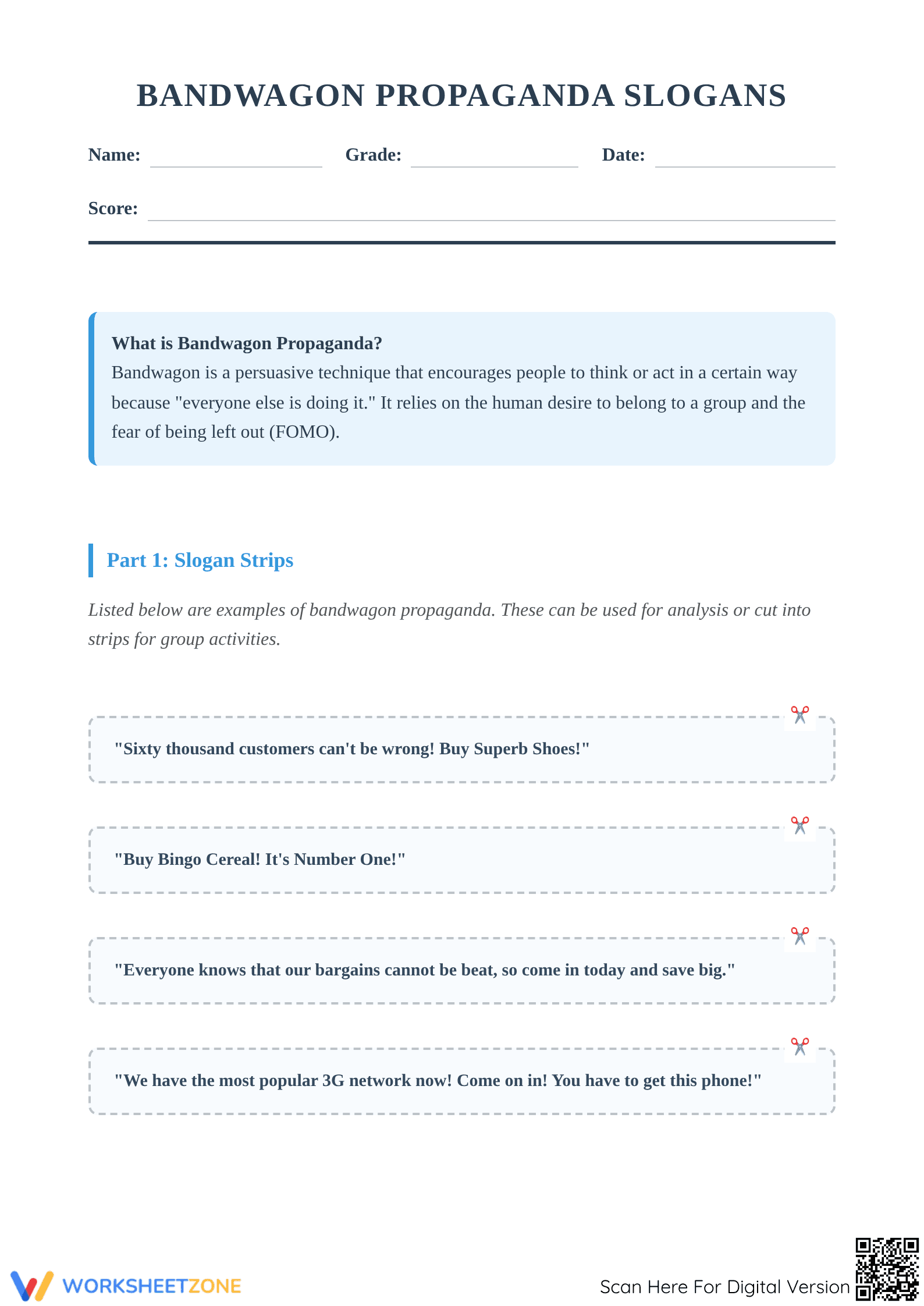
This Grade 8 ELA worksheet helps students identify and analyze the bandwagon propaganda technique in everyday advertising. By examining realistic slogans, middle schoolers learn how advertisers use the fear of missing out to persuade consumers, building critical media literacy and reading comprehension skills.
At a Glance
- Grade: 8 · Subject: ELA
- Standard:
L-8-4-3— Analyze how persuasive techniques influence audiences- Skill Focus: Bandwagon Propaganda
- Format: 4 pages · 5 problems · Answer key included · PDF
- Best For: Independent practice or group work
- Time: 25–35 minutes
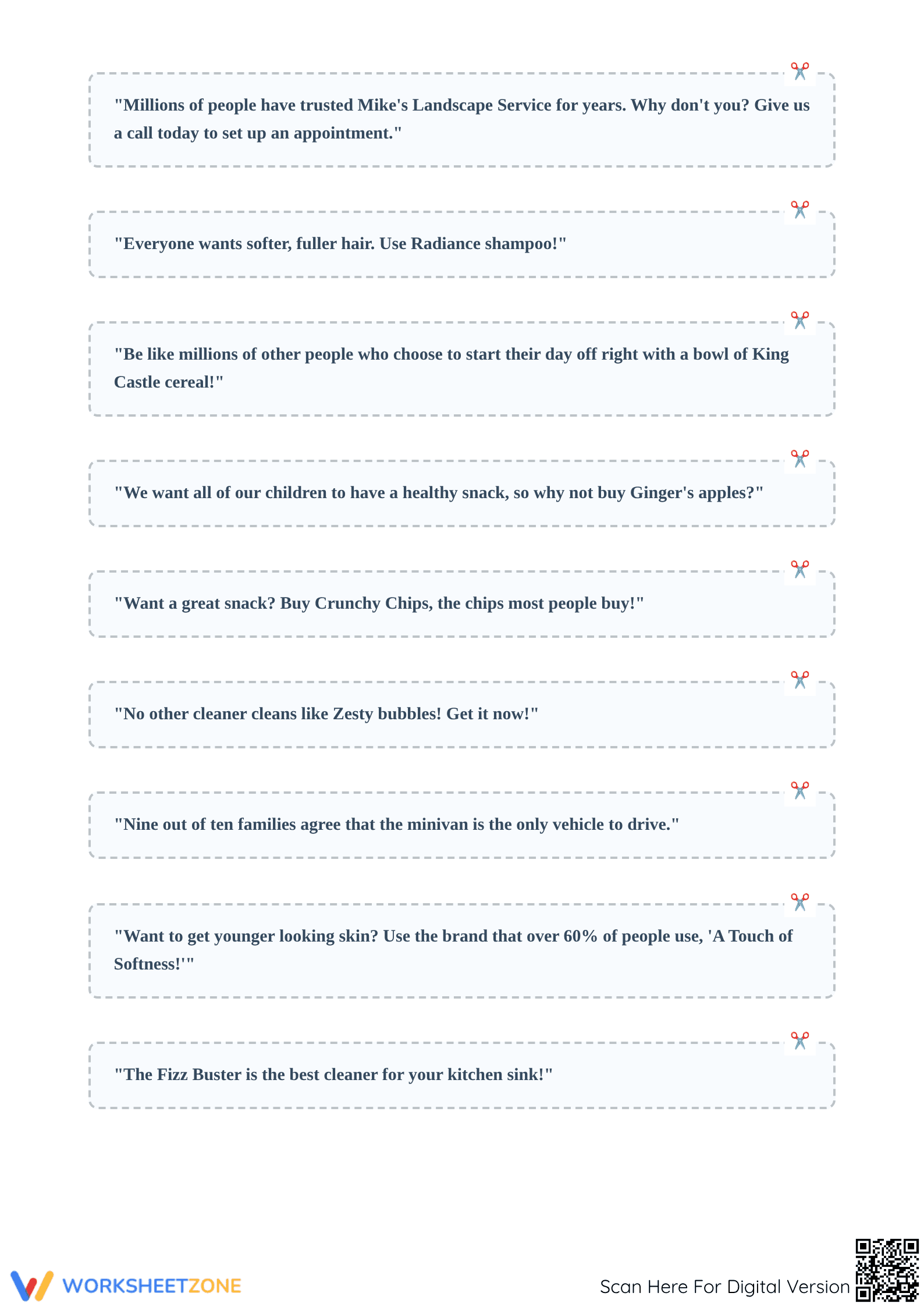
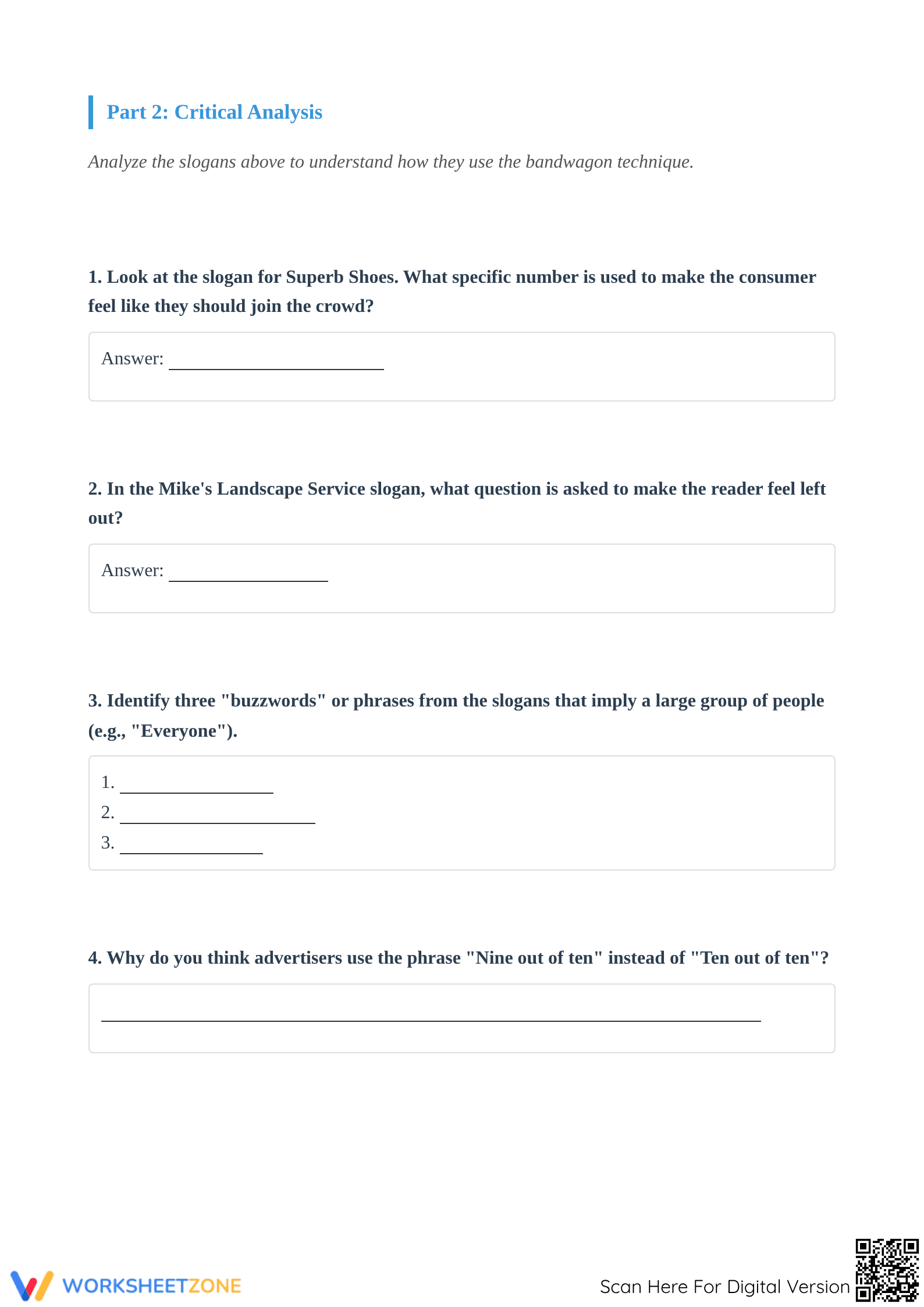
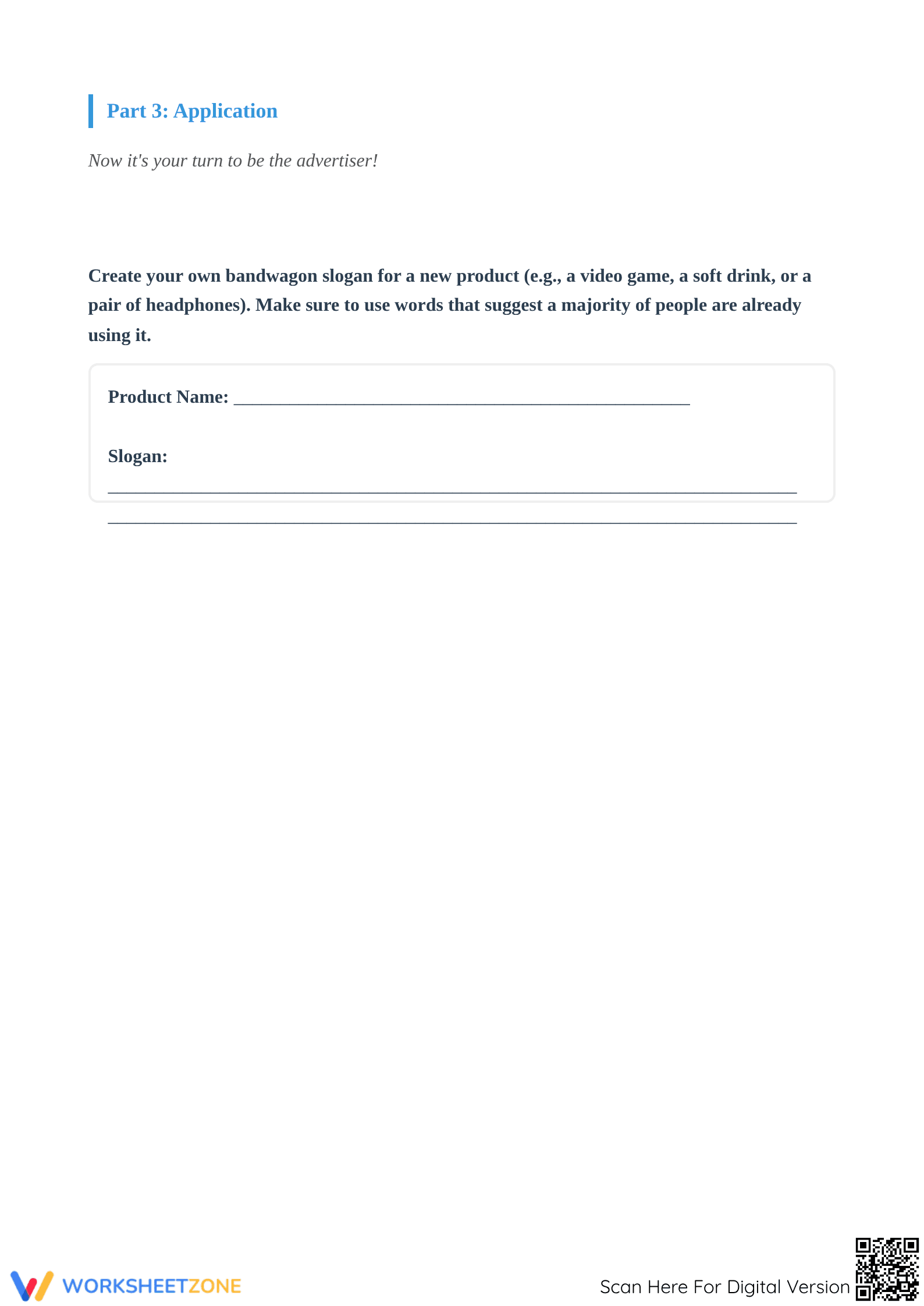
This comprehensive resource includes four pages of structured activities. The first two pages feature twelve distinct slogan strips that can be analyzed on the page or cut out for interactive group sorting. Page three contains four critical analysis questions requiring students to identify specific buzzwords and persuasive strategies. The final page offers an application task where students create their own original bandwagon slogan for a fictional product. A complete answer key is provided for easy grading.
Skill Progression
- Guided practice: Students begin by reading the definition of bandwagon propaganda and reviewing twelve clear examples of the technique in action.
- Supported practice: Four critical analysis questions prompt learners to identify specific buzzwords, numbers, and rhetorical questions used in the provided slogans.
- Independent practice: The final application task challenges students to synthesize their learning by acting as advertisers and writing their own persuasive slogan.
This gradual-release approach ensures students fully grasp the concept before applying it independently.
Standards Alignment
This resource is aligned to L-8-4-3, focusing on identifying and understanding the use of the bandwagon technique in persuasive texts. It supports broader reading comprehension goals by asking students to evaluate how specific word choices and rhetorical strategies impact meaning and tone. Both standard codes can be copied directly into lesson plans, IEP goals, or district curriculum mapping tools.
How to Use It
This worksheet is highly versatile for middle school ELA classrooms. Use the slogan strips as a hands-on sorting activity during direct instruction, or assign the entire packet as independent practice after introducing persuasive techniques. As a formative assessment tip, review students' answers to the critical analysis questions to ensure they can pinpoint exactly which words create the "fear of missing out" effect. The complete activity takes approximately 25 to 35 minutes to finish.
Who It's For
This activity is designed for Grade 8 students developing their media literacy and rhetorical analysis skills. The clear, relatable examples make it accessible for diverse learners, while the creative application task provides a natural extension for advanced students. Pair this worksheet with a broader unit on logical fallacies, persuasive writing, or an anchor chart detailing various propaganda techniques.
Teaching students to recognize persuasive techniques like those outlined in standard L-8-4-3 is essential for developing critical media literacy. When students analyze how persuasive techniques influence audiences, they become more discerning consumers of information. According to a RAND AIRS 2024 report, middle school students who engage in structured analysis of media messages and rhetorical strategies demonstrate a significant improvement in their overall reading comprehension and critical thinking abilities. By breaking down the specific buzzwords and emotional appeals used in bandwagon propaganda, educators can help learners understand the mechanics of persuasion. This targeted practice not only supports academic standards but also equips students with the analytical tools necessary to evaluate claims and arguments in their daily lives, fostering a more informed and thoughtful approach to both academic texts and real-world media.


