


























0
Views
0
Downloads

0.0
0
Save
0 Likes
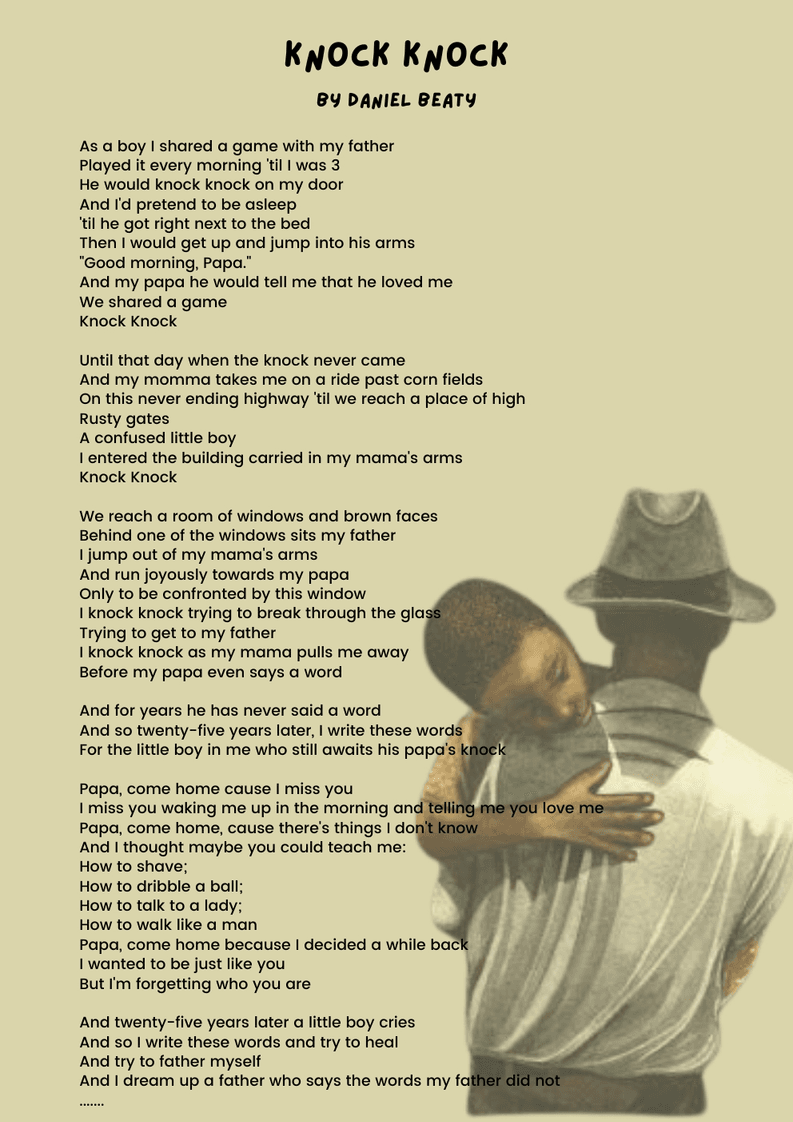
“Knock Knock” by Daniel Beaty – Poetry Reading & Analysis Worksheet
0 Views
0 Downloads
Paste this activity's link or code into your existing LMS (Google Classroom, Canvas, Teams, Schoology, Moodle, etc.).
Students can open and work on the activity right away, with no student login required.
You'll still be able to track student progress and results from your teacher account.
Information
Description
What It Is:
A powerful poetry reading and analysis worksheet featuring Daniel Beaty’s emotional spoken-word poem “Knock Knock.” The poem explores themes such as fatherhood, loss, identity, resilience, and healing, making it an impactful choice for high-school literary study. Students read the full poem to practice close reading, annotation, and thematic analysis.
Why Use It:
This worksheet helps students examine modern spoken-word poetry, interpret strong emotional imagery, analyze tone, and discuss complex family relationships. The poem’s narrative structure and performance roots allow for rich discussion, reflective writing, and advanced analytical practice.
How to Use It:
• Assign for close reading and annotation during a poetry, identity, or spoken-word unit.
• Have students identify figurative language, symbolism, repetition, narrative shifts, and themes.
• Pair with Daniel Beaty’s live performance for a multimedia comparison activity.
• Use as a prompt for reflective or analytical writing based on family, growth, or resilience.
Grade Suitability:
Best suited for Grades 9–11.
• Strong fit for high-school poetry and performance studies.
• Supports social-emotional learning through discussions on family dynamics and healing.
Target Users:
High-school ELA teachers, poetry instructors, tutors, and students exploring contemporary spoken-word poetry and narrative emotional expression.
A powerful poetry reading and analysis worksheet featuring Daniel Beaty’s emotional spoken-word poem “Knock Knock.” The poem explores themes such as fatherhood, loss, identity, resilience, and healing, making it an impactful choice for high-school literary study. Students read the full poem to practice close reading, annotation, and thematic analysis.
Why Use It:
This worksheet helps students examine modern spoken-word poetry, interpret strong emotional imagery, analyze tone, and discuss complex family relationships. The poem’s narrative structure and performance roots allow for rich discussion, reflective writing, and advanced analytical practice.
How to Use It:
• Assign for close reading and annotation during a poetry, identity, or spoken-word unit.
• Have students identify figurative language, symbolism, repetition, narrative shifts, and themes.
• Pair with Daniel Beaty’s live performance for a multimedia comparison activity.
• Use as a prompt for reflective or analytical writing based on family, growth, or resilience.
Grade Suitability:
Best suited for Grades 9–11.
• Strong fit for high-school poetry and performance studies.
• Supports social-emotional learning through discussions on family dynamics and healing.
Target Users:
High-school ELA teachers, poetry instructors, tutors, and students exploring contemporary spoken-word poetry and narrative emotional expression.


