


























Views
Downloads

Essential Kindergarten Sight Word Flashcards
Paste this activity's link or code into your existing LMS (Google Classroom, Canvas, Teams, Schoology, Moodle, etc.).
Students can open and work on the activity right away, with no student login required.
You'll still be able to track student progress and results from your teacher account.
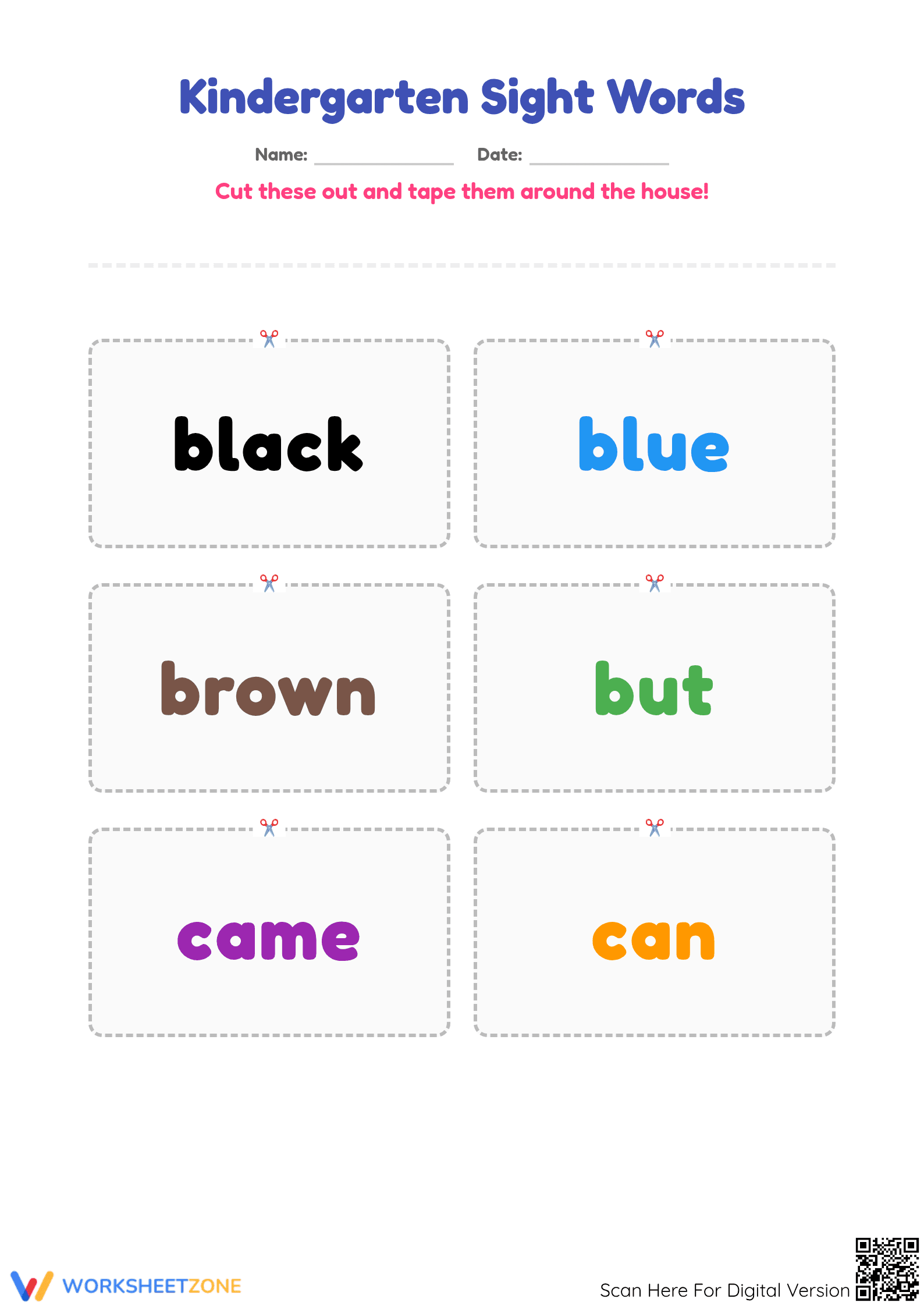
Master high-frequency vocabulary with these Kindergarten sight word flashcards. Designed for immediate classroom or home use, this resource helps students recognize and memorize essential words like "black," "blue," and "can." By providing a tactile, visual way to interact with language, students build the foundational reading fluency required for early literacy success.
At a Glance
- Grade: Kindergarten · Subject: English
- Standard:
CCSS.ELA-LITERACY.RF.K.3.C— Read common high-frequency words by sight- Skill Focus: Sight Word Recognition
- Format: 2 pages · 12 flashcards · No-prep · PDF
- Best For: Daily literacy centers and home practice
- Time: 5–10 minutes
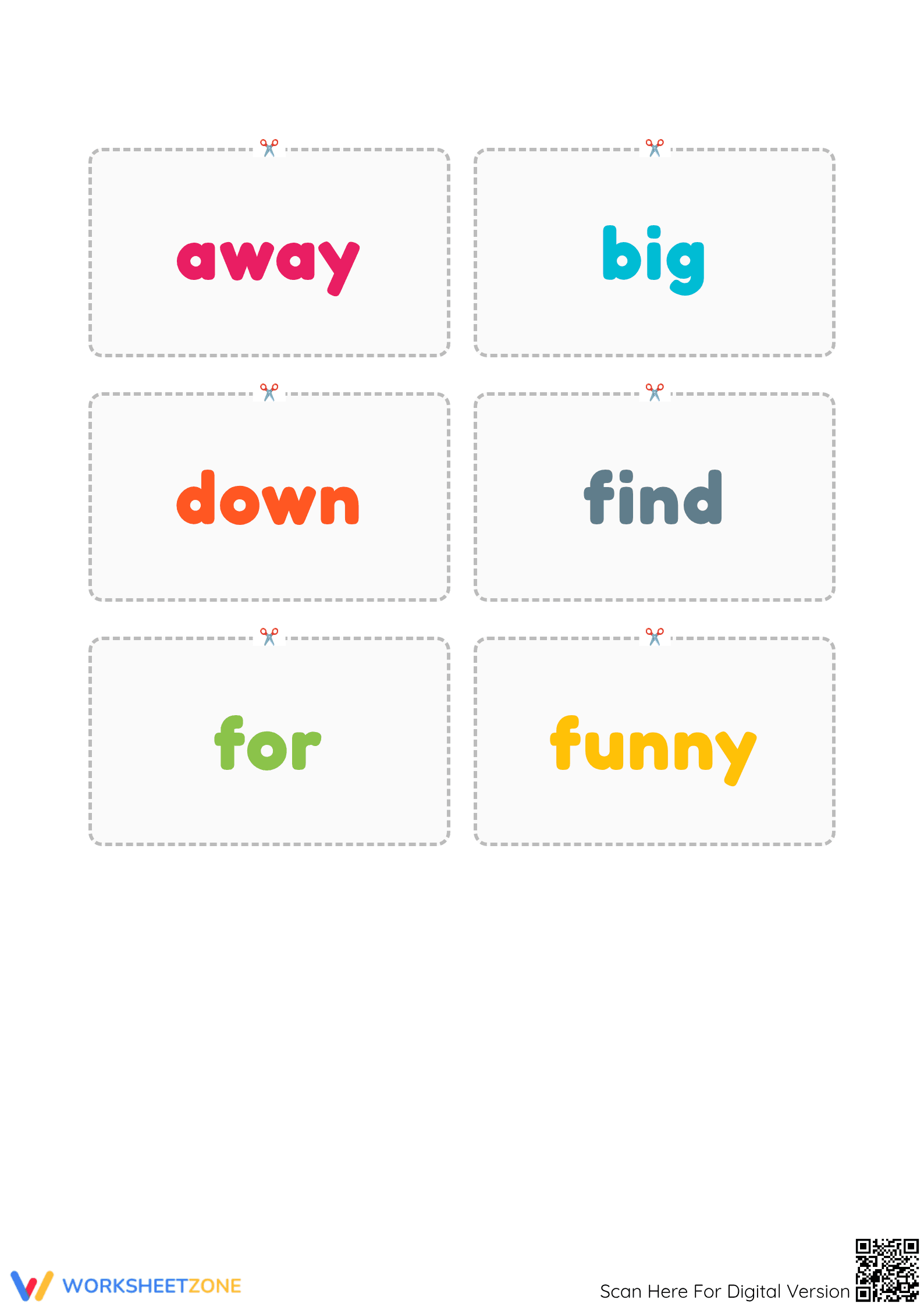
This 2-page PDF features 12 high-contrast sight word flashcards. Each card is bordered with clear scissor-cut lines for easy preparation. The set includes common color words and verbs such as "black," "blue," "brown," "but," "came," "can," "away," "big," "down," "find," "for," and "funny." The bold, colorful typography is specifically designed to capture the attention of young learners and aid in visual retention.
Zero-Prep Workflow
- Print: Select the 2-page PDF and print on standard cardstock for maximum durability (30 seconds).
- Distribute: Hand out sheets to students for a cutting activity or use them as a whole-class visual aid (30 seconds).
- Review: Cut along the dotted lines and begin flashcard drills or "around the room" labeling (1 minute).
Total teacher prep time is under 2 minutes, making this an ideal resource for morning work or emergency sub plans.
This resource aligns with CCSS.ELA-LITERACY.RF.K.3.C: "Read common high-frequency words by sight (e.g., the, of, to, you, she, my, is, are, do, does)." By focusing on memorization rather than phonetic decoding, these cards support the development of automaticity in early readers. Both standard codes can be copied directly into lesson plans, IEP goals, or district curriculum mapping tools.
Use these cards during morning meeting as a "word of the day" introduction or as a formative assessment tool during small-group reading rotations. Teachers can observe which words students recognize instantly versus those requiring more exposure. Expected completion for a full drill session is 5–10 minutes.
This set is ideal for Kindergarten students, English Language Learners (ELL), and students receiving Tier 2 literacy intervention. It pairs naturally with a sight word anchor chart or a leveled reader passage that features these specific high-frequency words to reinforce learning in context.
According to the RAND AIRS 2024 report on early literacy, the development of sight word automaticity is a critical predictor of future reading comprehension. This worksheet targets CCSS.ELA-LITERACY.RF.K.3.C by providing 12 high-frequency words for Kindergarten students to master through visual repetition and environmental labeling. Research from Fisher & Frey (2014) emphasizes that "word walls" and portable flashcards facilitate the transition from decoding to fluent reading. By utilizing these printable cards, educators provide the necessary scaffolding for students to recognize words that often defy standard phonetic rules. This resource serves as a foundational tool in any comprehensive ELA curriculum, ensuring that young learners meet essential benchmarks for high-frequency word recognition. The 2-page format is optimized for rapid deployment in diverse classroom settings, supporting both independent study and teacher-led instruction.


