


























Views
Downloads

Printable Jumbled Sentences Worksheet | Kindergarten ELA
Paste this activity's link or code into your existing LMS (Google Classroom, Canvas, Teams, Schoology, Moodle, etc.).
Students can open and work on the activity right away, with no student login required.
You'll still be able to track student progress and results from your teacher account.
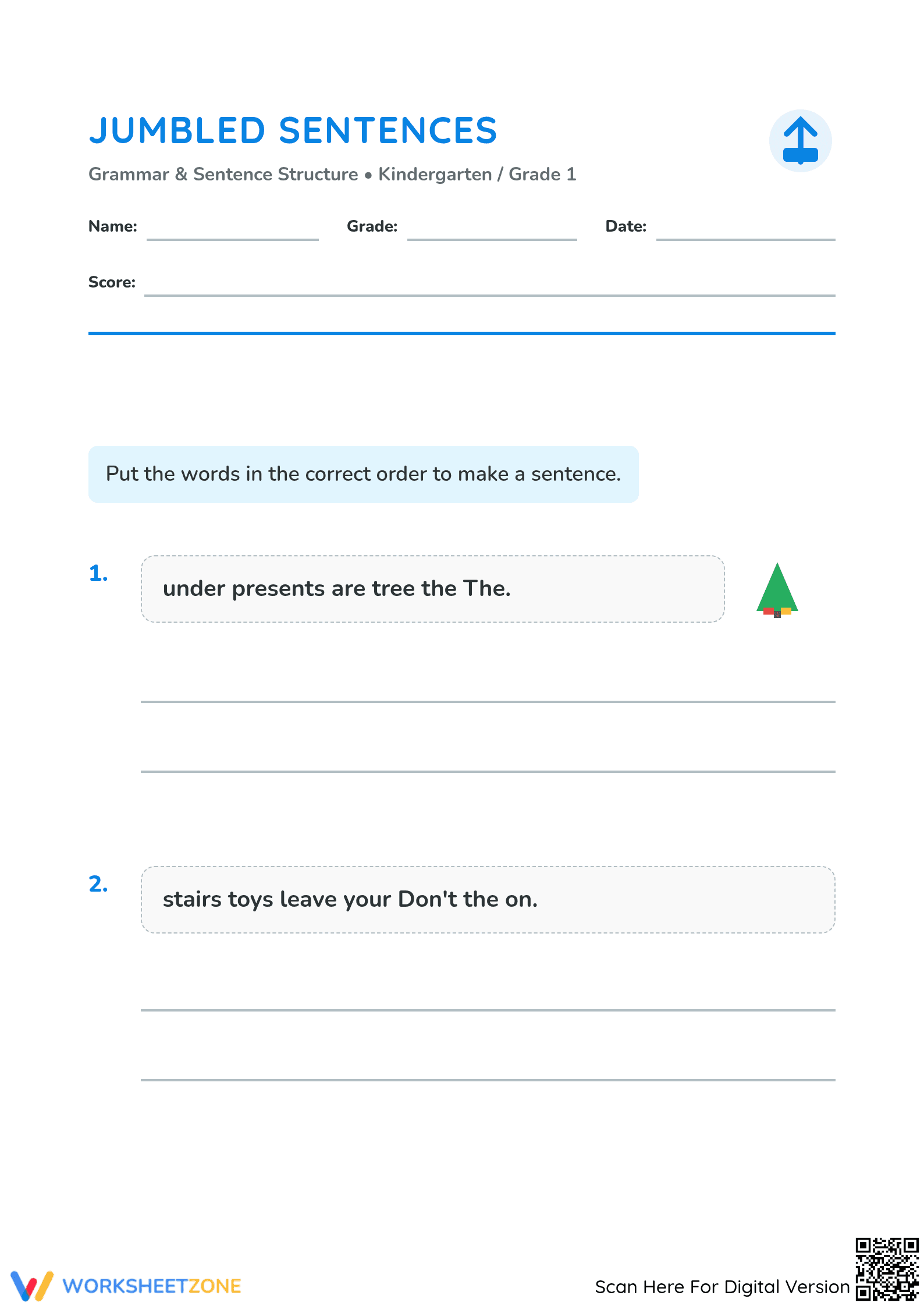
Mastering sentence structure is a foundational milestone for early writers. This Kindergarten Jumbled Sentences worksheet provides a structured environment where students manipulate word order to form coherent thoughts. By rearranging scrambled words into complete sentences, learners develop a concrete understanding of syntax and grammar, leading to improved reading comprehension and writing confidence in primary grades.
At a Glance
- Grade: Kindergarten · Subject: English Language Arts
- Standard:
CCSS.ELA-LITERACY.L.K.1.F— Rearrange words to produce and expand complete sentences in shared activities- Skill Focus: Sentence Structure and Word Order
- Format: 4 pages · 10 problems · Answer key included · PDF
- Best For: Independent practice or literacy centers
- Time: 15–20 minutes
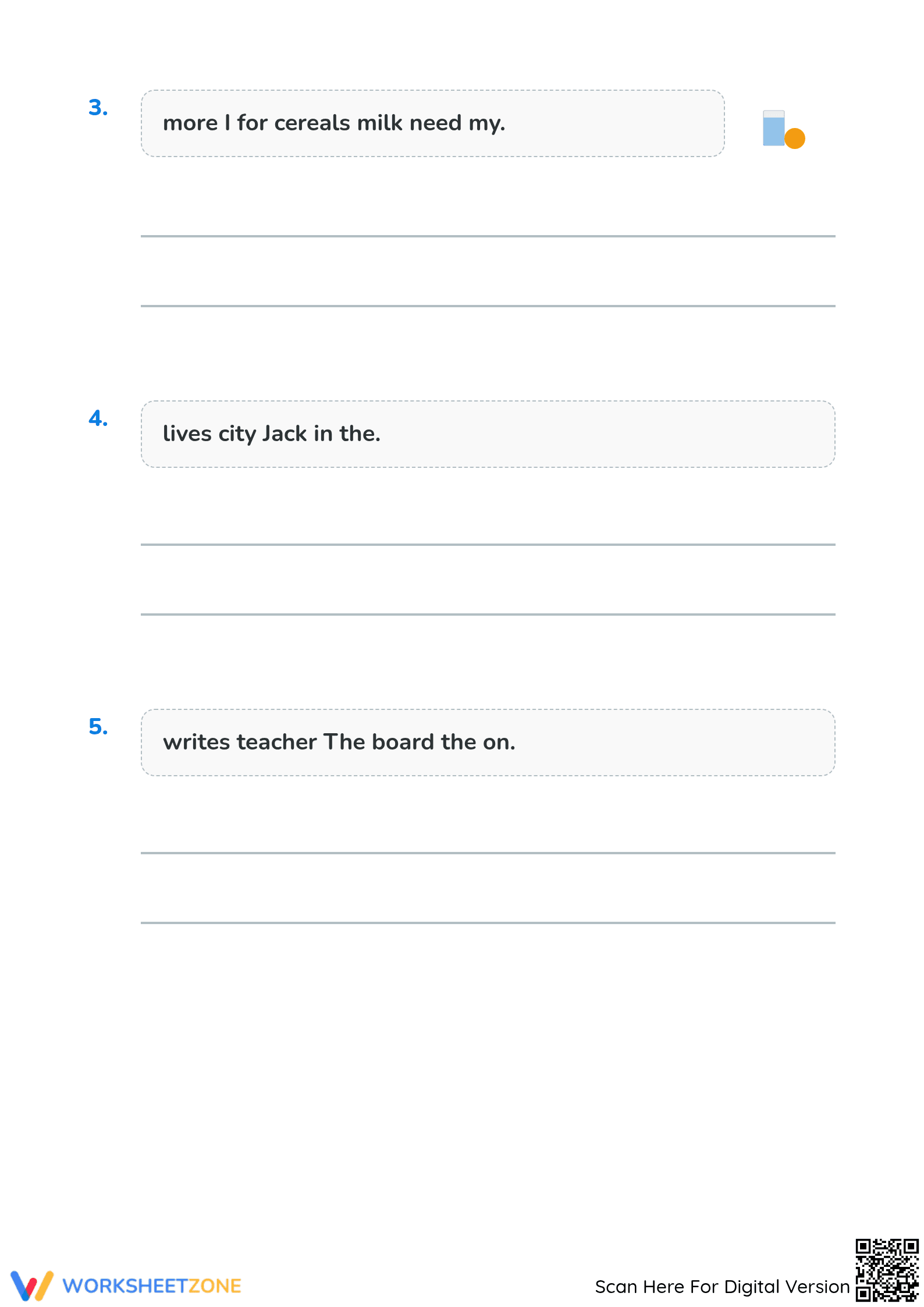
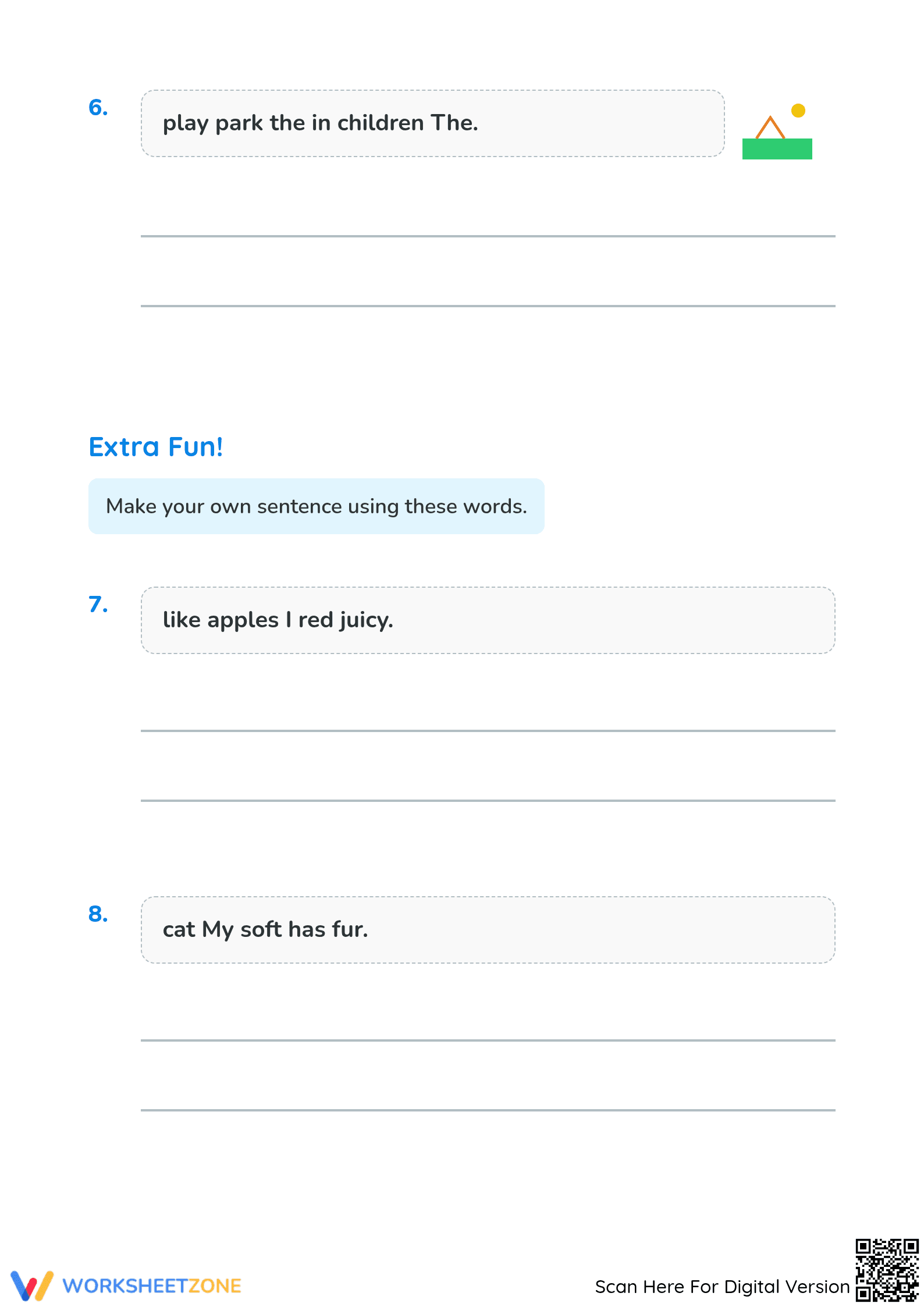
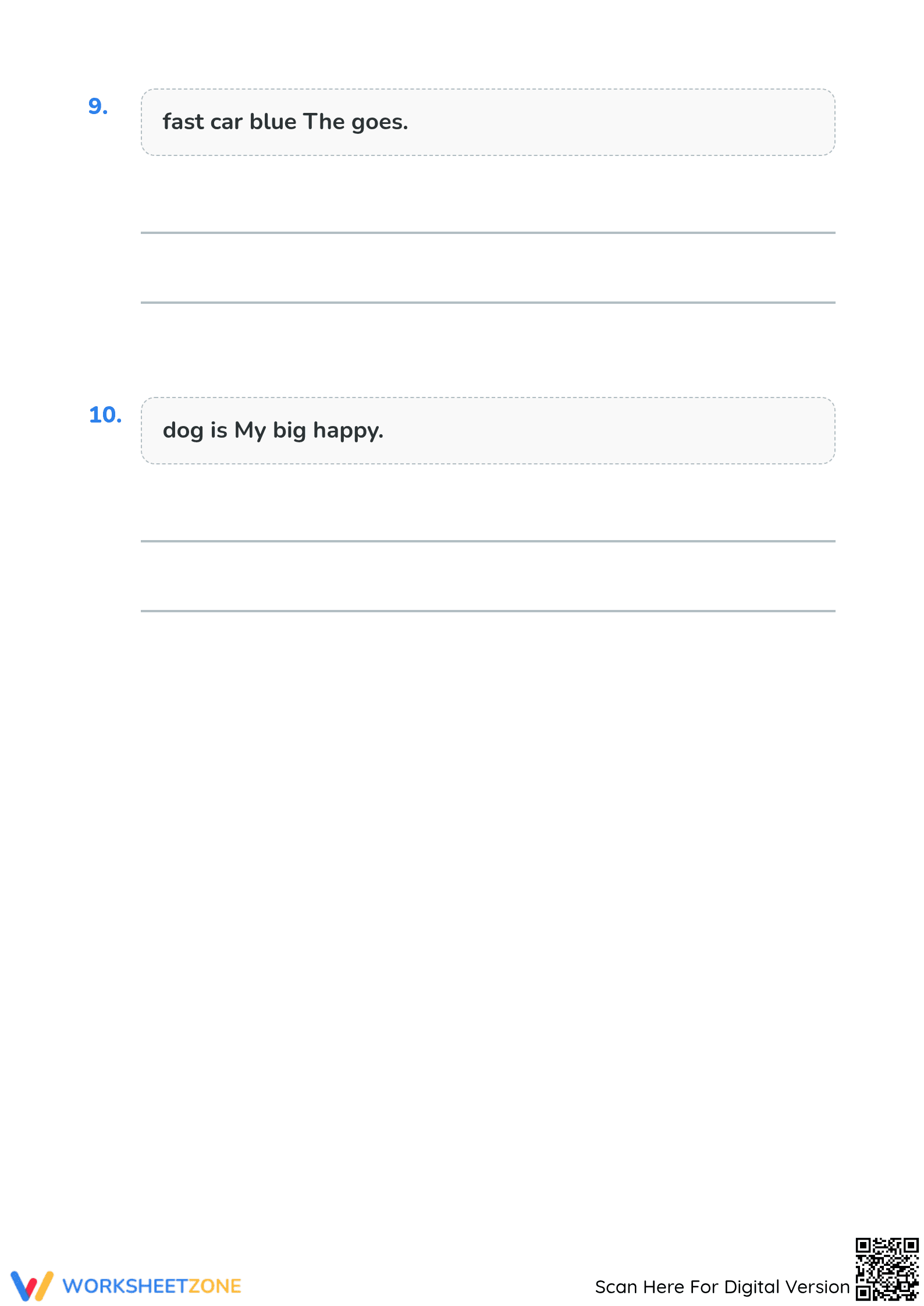
This comprehensive 4-page PDF contains 10 carefully curated sentence unscrambling tasks. Each page features clear, large-print jumbled words followed by designated primary-ruled lines for handwriting practice. The document includes a full answer key, ensuring quick verification of student work. Visual cues and a clean layout minimize distractions, making it ideal for young learners practicing early literacy skills.
This resource is designed for immediate classroom implementation with a three-step workflow. First, print the document directly from your browser in less than 30 seconds. Next, distribute the pages to your literacy small groups or whole-class setting. Finally, review the completed work using the included answer key in under 1 minute. Total teacher preparation time is less than 2 minutes, making it a perfect tool for busy educators.
The primary focus is `CCSS.ELA-LITERACY.L.K.1.F`, which requires students to "produce and expand complete sentences in shared language activities." By physically seeing how word order changes meaning, students satisfy the core requirements of standard English grammar conventions. This standard code can be copied directly into lesson plans, IEP goals, or district curriculum mapping tools to track student progress throughout the academic year.
Integrate this worksheet during the "You Do" phase of a gradual release lesson on sentence components. As a formative assessment, observe students as they identify the capitalized word to start their sentence and the punctuation mark to end it. Expect completion within a 20-minute block. It also serves as an excellent sub-plan activity due to its self-explanatory nature and clear, concise directions that students can follow independently.
This worksheet is primarily for Kindergarten students but offers excellent remedial support for Grade 1 learners needing extra grammar practice. It pairs naturally with a pocket chart sentence-building lesson or a shared reading of a predictable text. The primary-ruled lines support students with fine motor challenges who require specific guidance for letter height, spacing, and alignment as they translate scrambled words into legible sentences.
According to Fisher & Frey (2014), the use of sentence frames and jumbled tasks is a proven strategy for scaffolded literacy instruction. This Kindergarten jumbled sentences worksheet directly addresses the CCSS.ELA-LITERACY.L.K.1.F standard by requiring students to actively manipulate syntax. Research indicates that explicit practice with sentence structure in early childhood significantly correlates with later proficiency in complex writing tasks. By providing 10 distinct opportunities for word rearrangement, this resource ensures that learners internalize the logic of English grammar before moving to independent paragraph construction. The inclusion of an answer key further supports immediate feedback, a critical component of effective formative assessment in primary education. This worksheet serves as a high-leverage tool for educators seeking to bridge the gap between word recognition and fluent sentence production in a zero-prep, printable format that maximizes instructional time and student engagement.


