




























Views
Downloads

Essential Grade 1 Living Things — No-Prep Science Worksheet

Paste this activity's link or code into your existing LMS (Google Classroom, Canvas, Teams, Schoology, Moodle, etc.).
Students can open and work on the activity right away, with no student login required.
You'll still be able to track student progress and results from your teacher account.
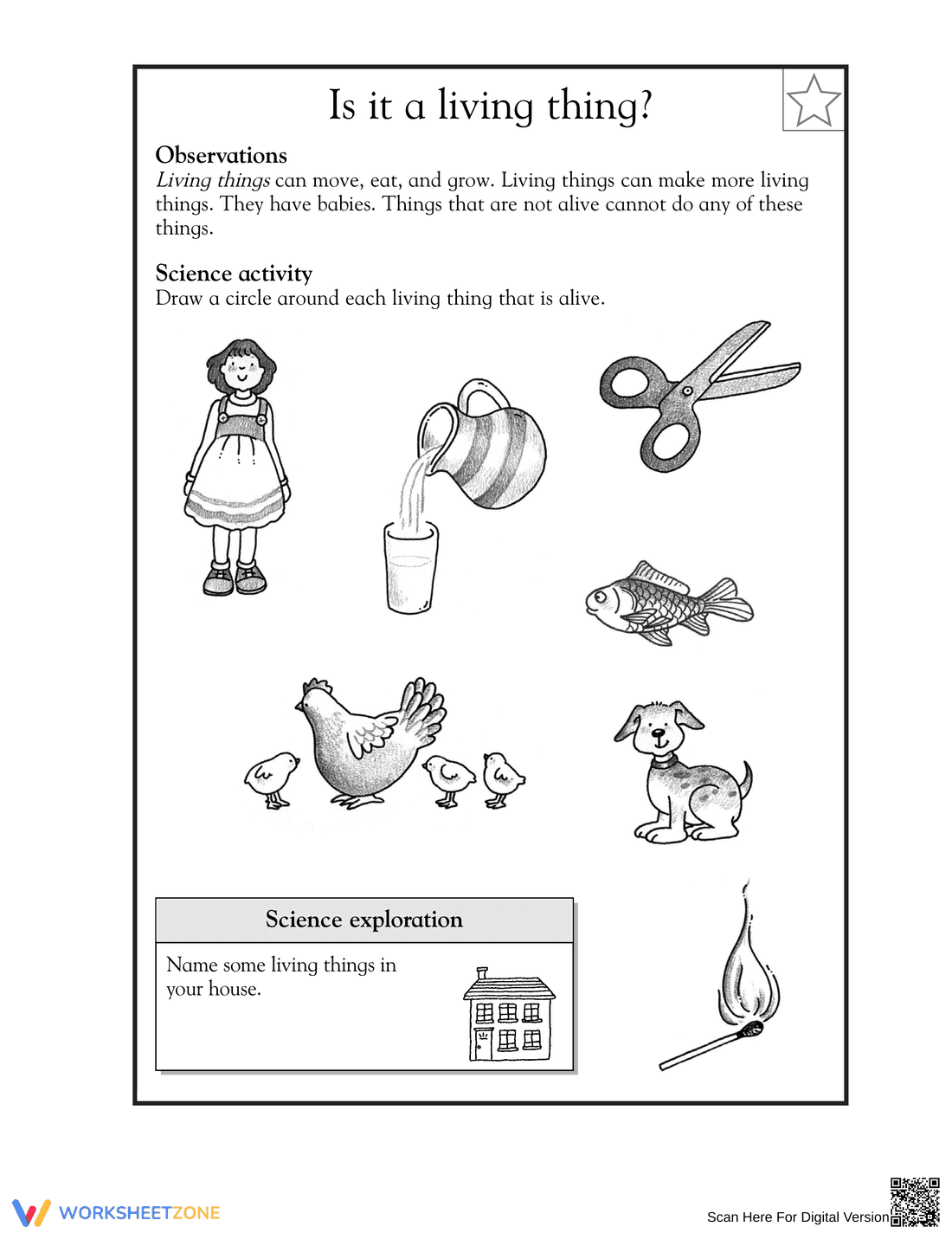
This Grade 1 worksheet helps learners master biological classification. By identifying characteristics such as movement, growth, and reproduction, students distinguish between living and non-living things. This activity builds a foundational understanding of life sciences and encourages careful observation of the natural world.
At a Glance
- Grade: 1 · Subject: Living Things
- Standard:
1-LS1-1— Identify patterns in living things to determine their basic survival and growth needs- Skill Focus: Classification of living vs. non-living things
- Format: 1 page · 8 problems · Answer key included · PDF
- Best For: Introductory science lesson or independent practice
- Time: 15–20 minutes
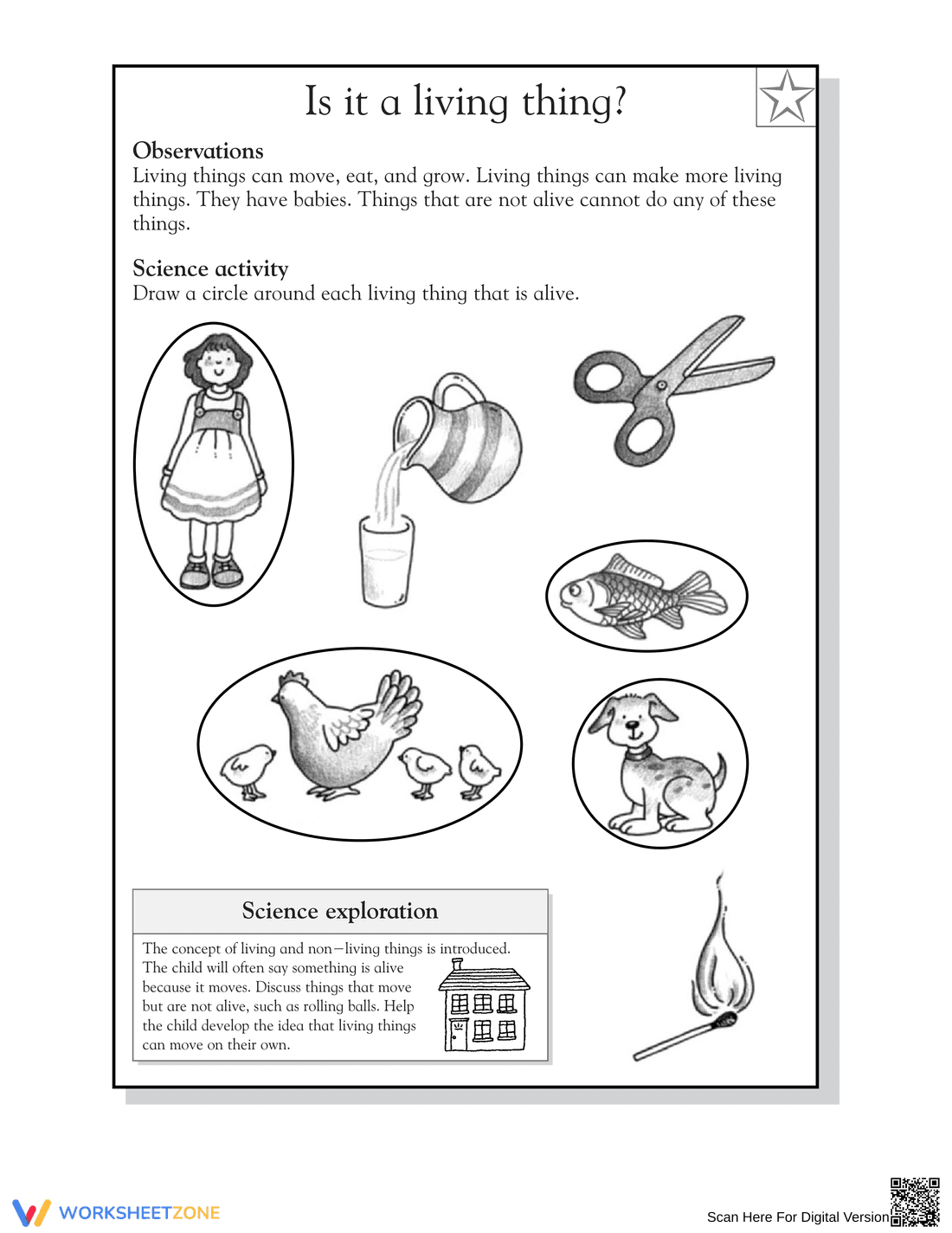
The worksheet defines the traits of living things: movement, eating, growing, and reproduction. The "Science activity" presents eight illustrations—including animals, people, and objects—requiring students to circle those that are alive. The "Science exploration" prompts students to find living things at home, bridging theory and application.
Designed for immediate integration with preparation time under two minutes. First, print the single-page PDF (30 seconds). Next, distribute and review the four life characteristics listed at the top (1 minute). Finally, use the provided answer key for a quick five-minute review to check for understanding. It is an ideal solution for emergency sub plans or bell-ringer activities.
Aligned to 1-LS1-1, this resource requires students to use observations to describe patterns of what living things need to survive. It supports NGSS Life Science disciplinary core ideas. This standard code can be copied directly into lesson plans, IEP goals, or district curriculum mapping tools to ensure instructional compliance.
Use this as a formative assessment after introducing what makes something "alive." Have students independently categorize the images. Observe if they correctly identify the fish and dog while excluding the scissors. For an extension, have students explain why fire isn't alive despite moving and growing, providing a valuable opportunity for scientific inquiry.
Tailored for first and second-grade students exploring biology, this is effective for visual learners and English Language Learners due to clear illustrations. Teachers can pair this with a nature walk or an anchor chart listing life traits to provide a multi-modal learning experience for diverse classroom populations.
According to a ScienceDirect TpT Analysis, high-quality science worksheets for early elementary are most effective when combining visual literacy with core conceptual definitions. This worksheet targets the 1-LS1-1 standard by requiring students to apply the plain-English skill of identifying organisms through biological patterns like growth and reproduction. Research indicates that scaffolded classification tasks, like the eight problems here, help cement the "living vs. non-living" distinction—a critical prerequisite for understanding ecosystems. By moving from guided observations to independent classification and home-based exploration, this resource follows best practices for cognitive retention in young scientists. This summary confirms the worksheet's instructional rigor and life science alignment, making it an excellent fit for modern primary education environments.


