


























1 / 7
0
Views
0
Downloads

Save
0 Likes
Share
Intro to Mole Ratio: Stoichiometry Worksheet
0 Views
0 Downloads
Paste this activity's link or code into your existing LMS (Google Classroom, Canvas, Teams, Schoology, Moodle, etc.).
Students can open and work on the activity right away, with no student login required.
You'll still be able to track student progress and results from your teacher account.
Information
Description
What It Is:
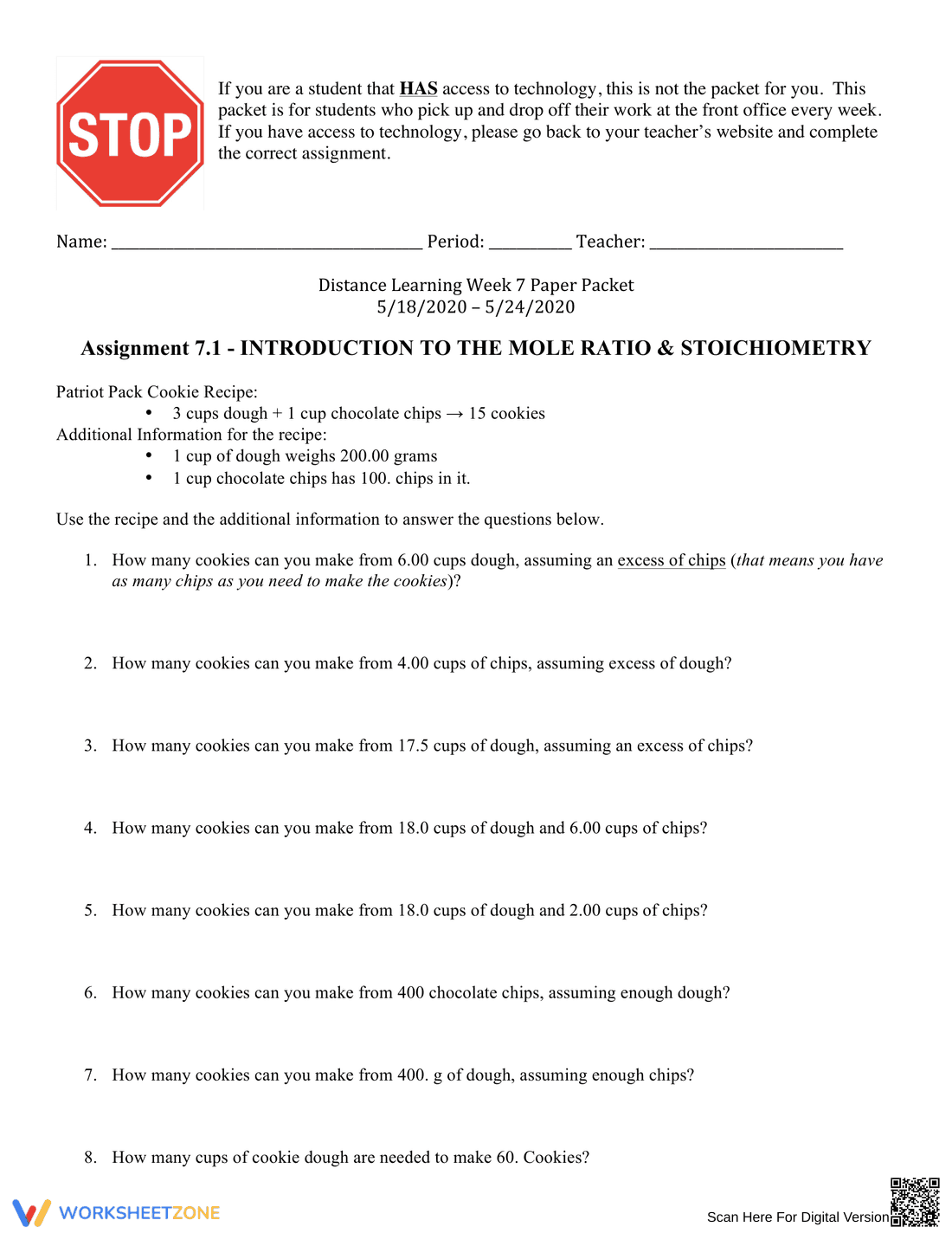
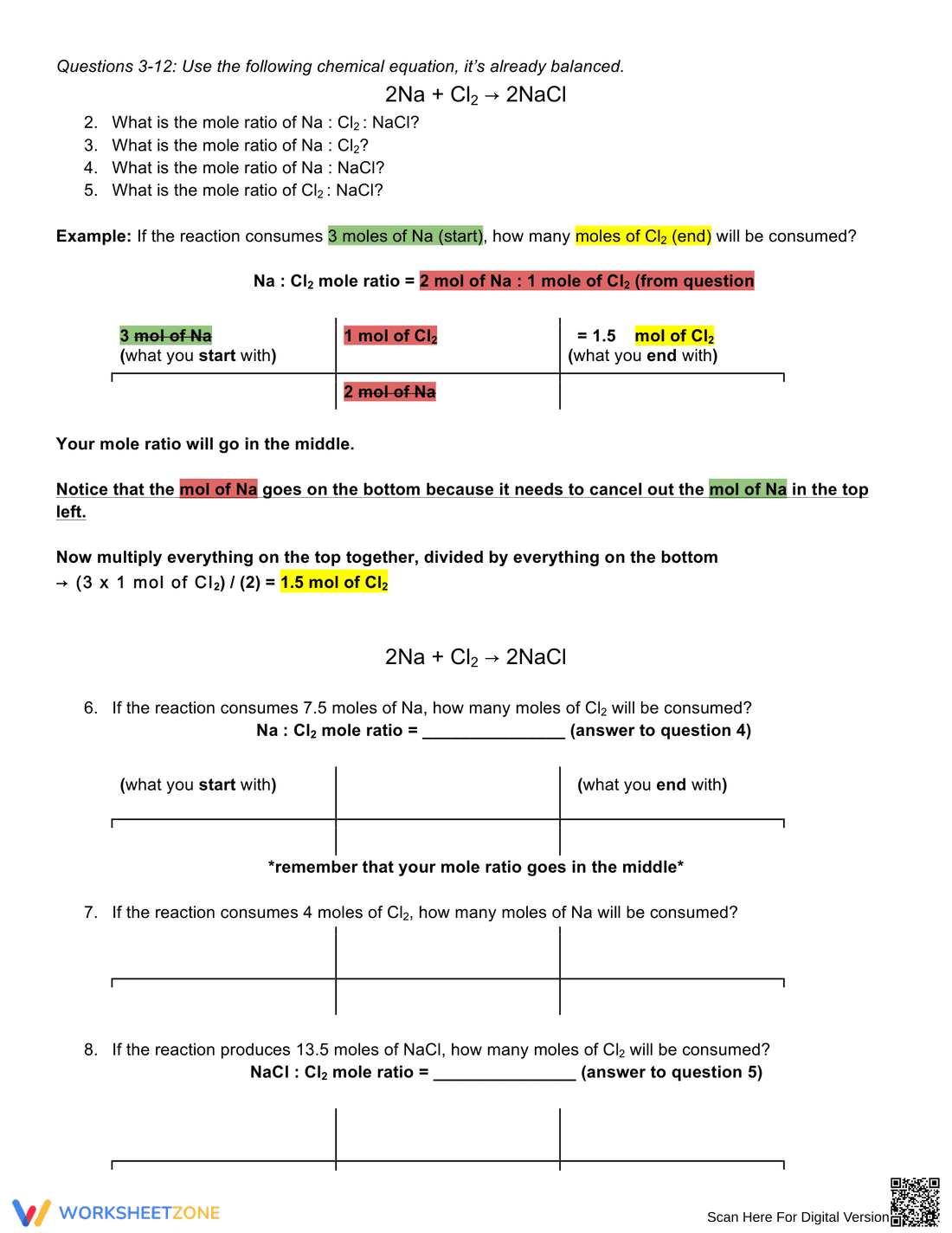
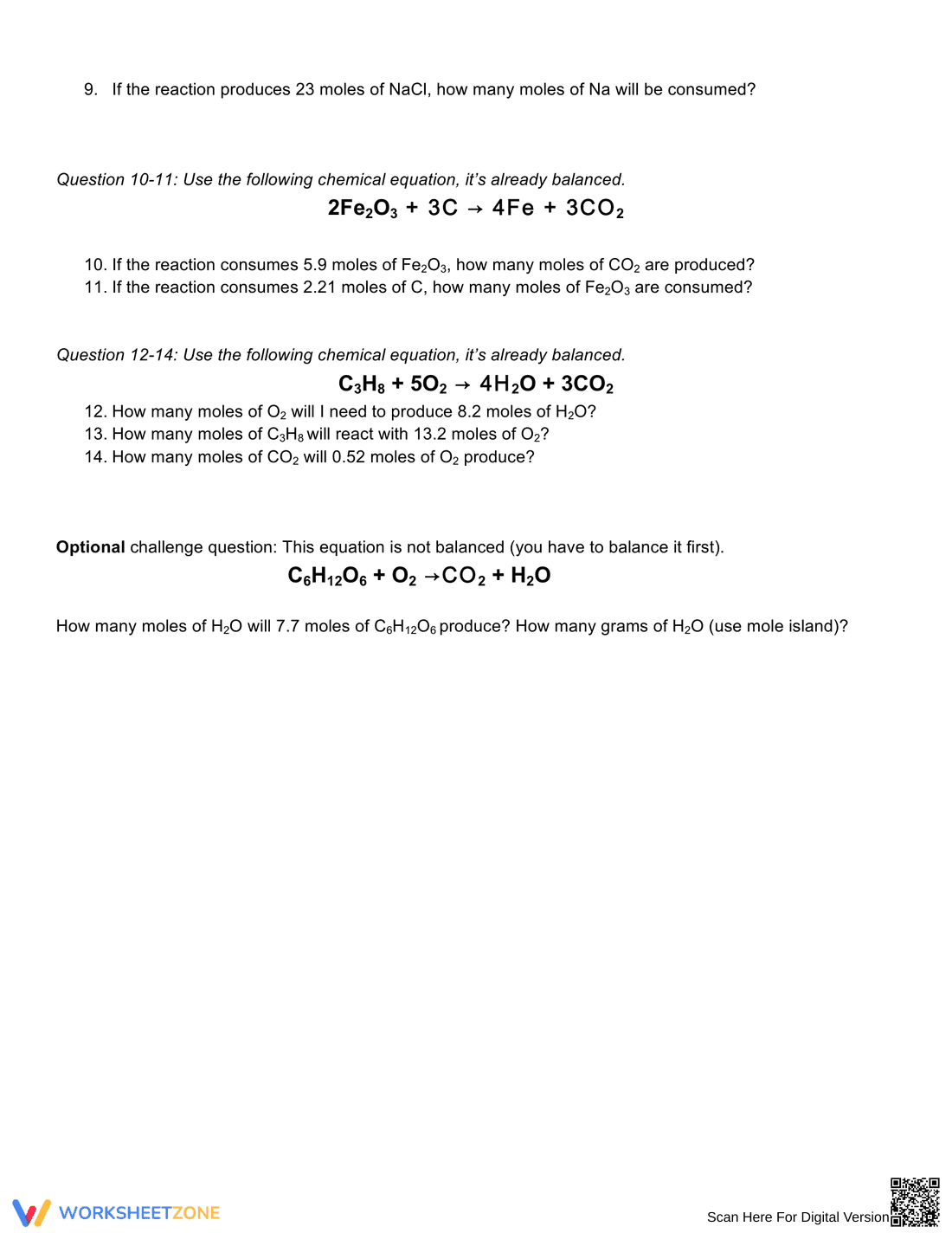
This is a distance learning worksheet titled 'Introduction to the Mole Ratio & Stoichiometry'. It presents a cookie recipe (3 cups dough + 1 cup chocolate chips -> 15 cookies) and additional information about the recipe, such as the weight of 1 cup of dough (200.00 grams) and the number of chips in 1 cup of chocolate chips (100 chips). The worksheet includes eight word problems requiring students to use the recipe and additional information to calculate the number of cookies that can be made with different amounts of dough and chocolate chips.
Grade Level Suitability:
This worksheet is suitable for high school, specifically grades 11-12. The content focuses on stoichiometry and mole ratios, which are advanced chemistry concepts typically taught in high school chemistry courses. The calculations involve unit conversions and proportional reasoning, making it appropriate for students with a solid foundation in algebra and basic chemistry principles.
Why Use It:
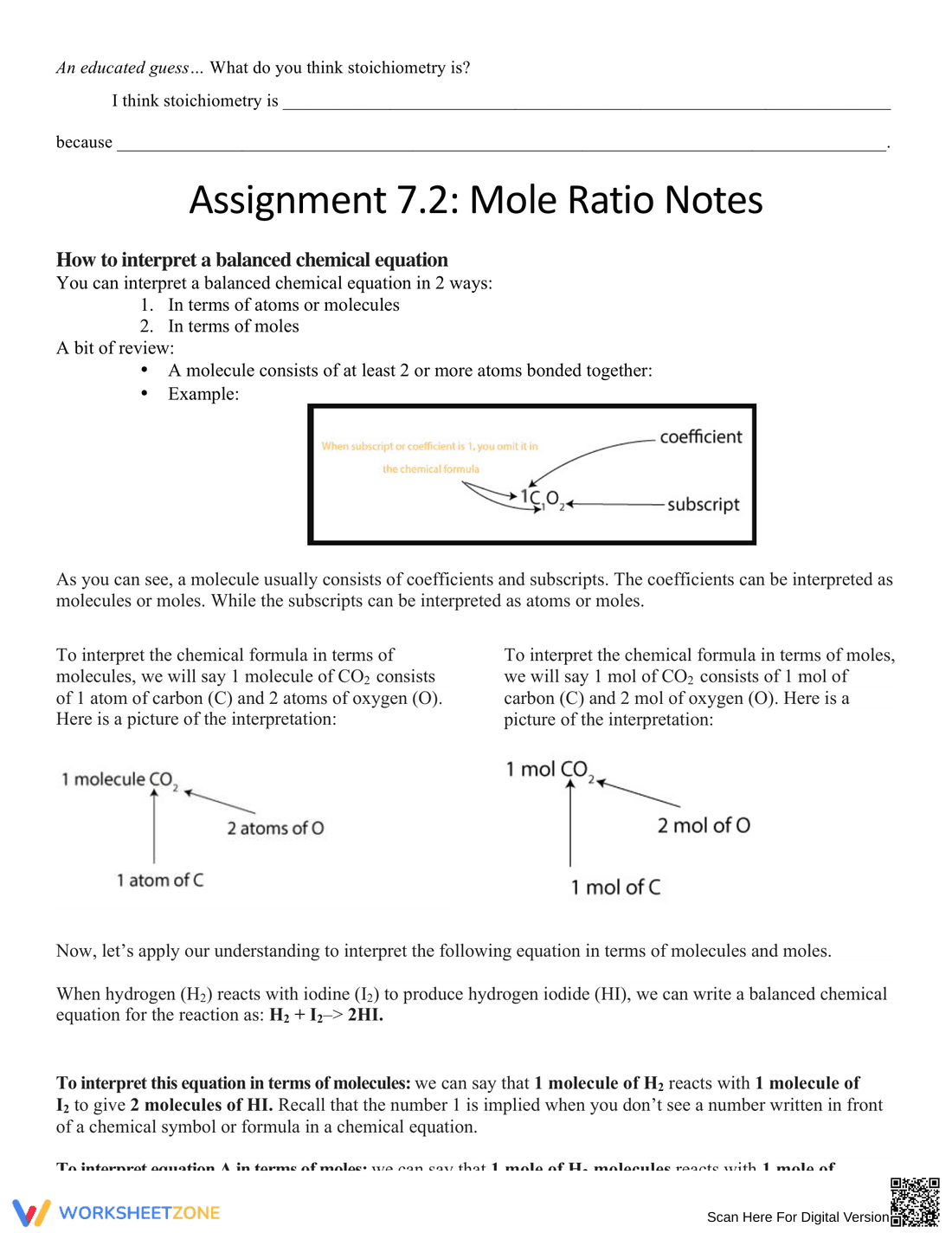
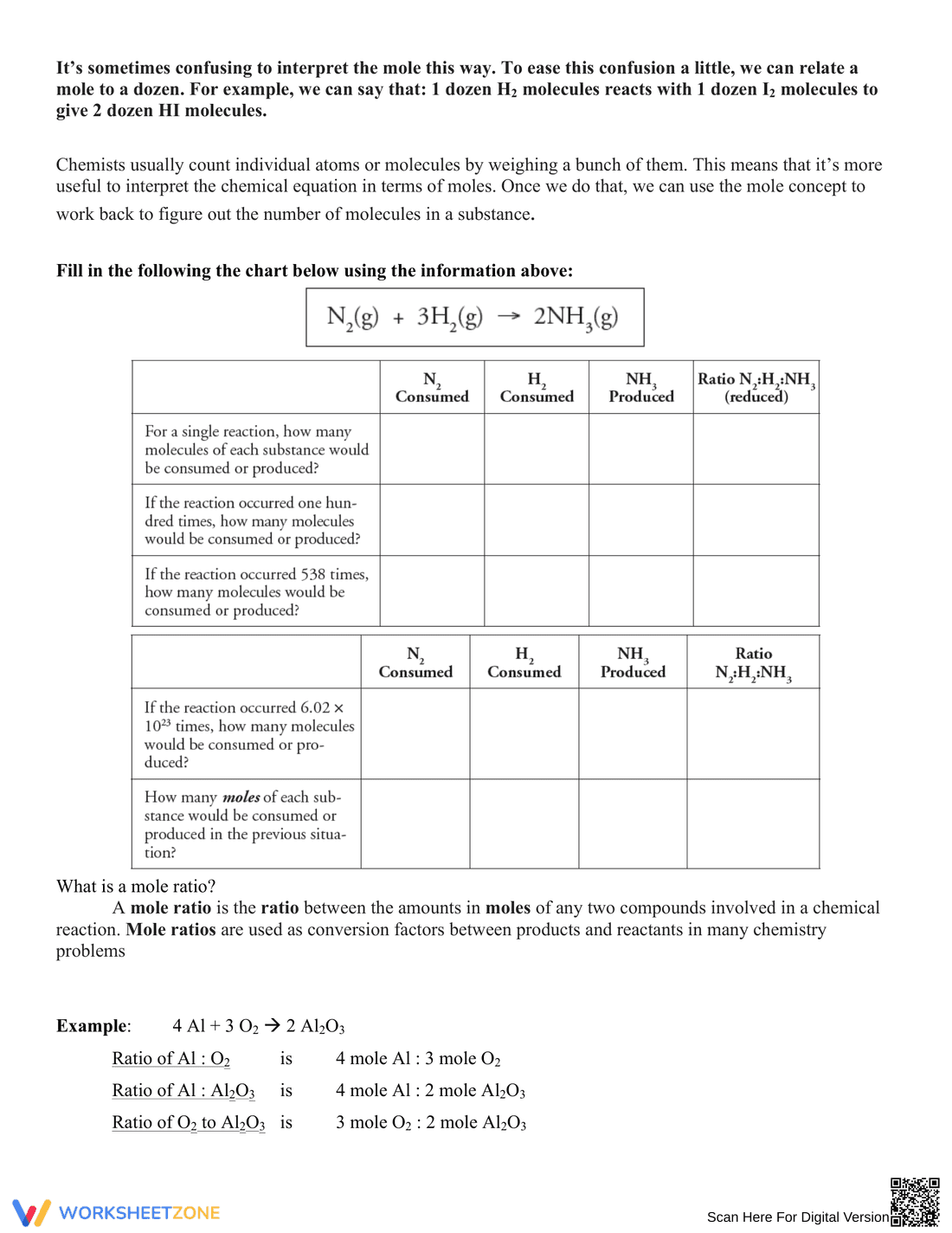
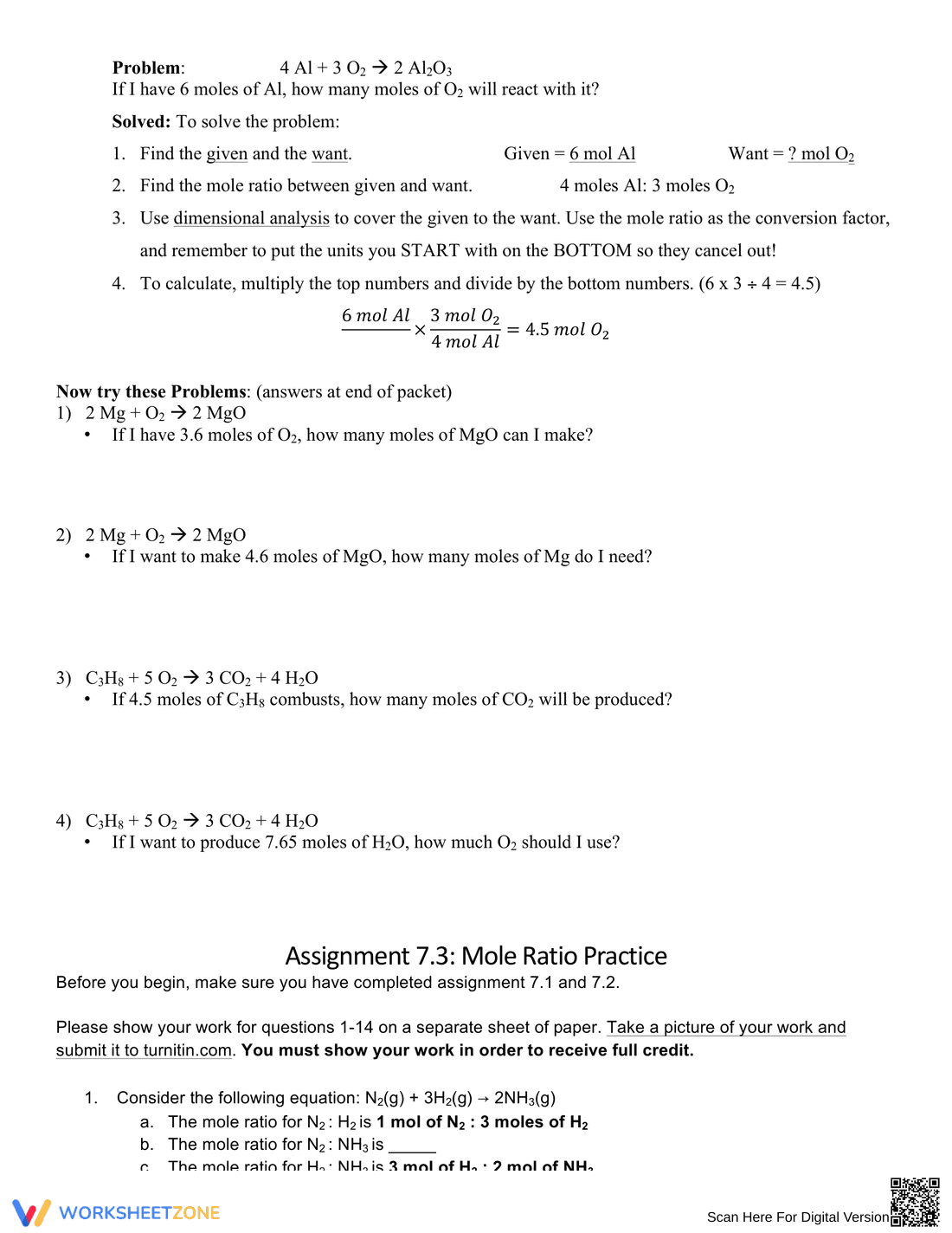
This worksheet provides a practical application of stoichiometry concepts using a relatable example: making cookies. It helps students understand mole ratios, unit conversions (grams to cups), and limiting reactants in a real-world context. It reinforces problem-solving skills and the ability to apply scientific principles to everyday situations.
How to Use It:
Students should first read the cookie recipe and the additional information provided. Then, they should carefully analyze each word problem to determine what is being asked. Using the recipe ratio and the provided information (grams per cup, chips per cup), they should perform the necessary calculations to determine the number of cookies that can be made in each scenario. Students should show their work and include units in their answers.
Target Users:
The target users for this worksheet are high school chemistry students, particularly those learning about stoichiometry, mole ratios, and limiting reactants. It is also suitable for students who need extra practice with unit conversions and applying mathematical concepts to chemistry problems.
This is a distance learning worksheet titled 'Introduction to the Mole Ratio & Stoichiometry'. It presents a cookie recipe (3 cups dough + 1 cup chocolate chips -> 15 cookies) and additional information about the recipe, such as the weight of 1 cup of dough (200.00 grams) and the number of chips in 1 cup of chocolate chips (100 chips). The worksheet includes eight word problems requiring students to use the recipe and additional information to calculate the number of cookies that can be made with different amounts of dough and chocolate chips.
Grade Level Suitability:
This worksheet is suitable for high school, specifically grades 11-12. The content focuses on stoichiometry and mole ratios, which are advanced chemistry concepts typically taught in high school chemistry courses. The calculations involve unit conversions and proportional reasoning, making it appropriate for students with a solid foundation in algebra and basic chemistry principles.
Why Use It:
This worksheet provides a practical application of stoichiometry concepts using a relatable example: making cookies. It helps students understand mole ratios, unit conversions (grams to cups), and limiting reactants in a real-world context. It reinforces problem-solving skills and the ability to apply scientific principles to everyday situations.
How to Use It:
Students should first read the cookie recipe and the additional information provided. Then, they should carefully analyze each word problem to determine what is being asked. Using the recipe ratio and the provided information (grams per cup, chips per cup), they should perform the necessary calculations to determine the number of cookies that can be made in each scenario. Students should show their work and include units in their answers.
Target Users:
The target users for this worksheet are high school chemistry students, particularly those learning about stoichiometry, mole ratios, and limiting reactants. It is also suitable for students who need extra practice with unit conversions and applying mathematical concepts to chemistry problems.


