




























1 / 5
0
Views
0
Downloads

0.0
0
Save
0 Likes
Share
Interpreting Nutrient Cycles: An Engaging Worksheet
0 Views
0 Downloads

Paste this activity's link or code into your existing LMS (Google Classroom, Canvas, Teams, Schoology, Moodle, etc.).
Students can open and work on the activity right away, with no student login required.
You'll still be able to track student progress and results from your teacher account.
Information
Description
What It Is:
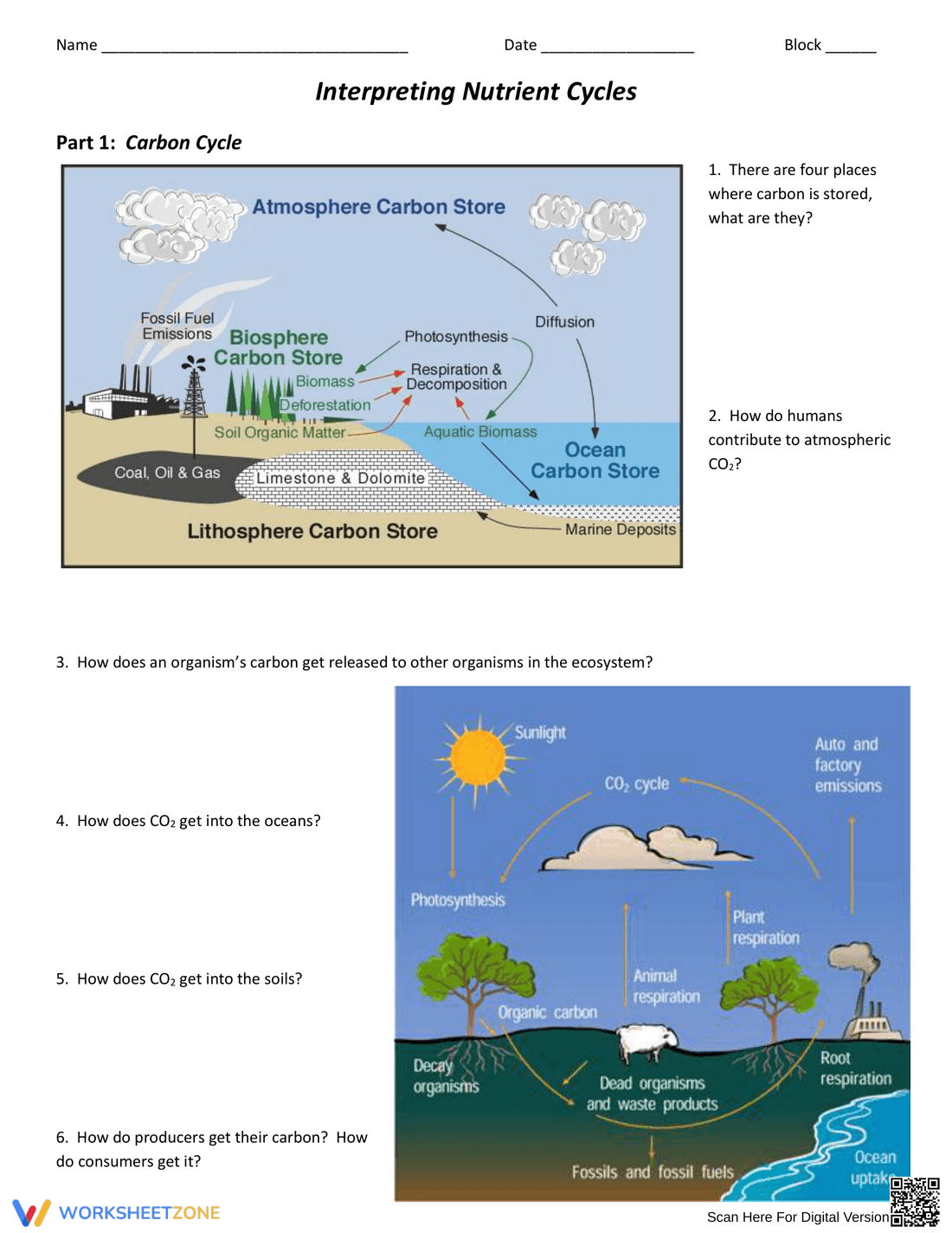
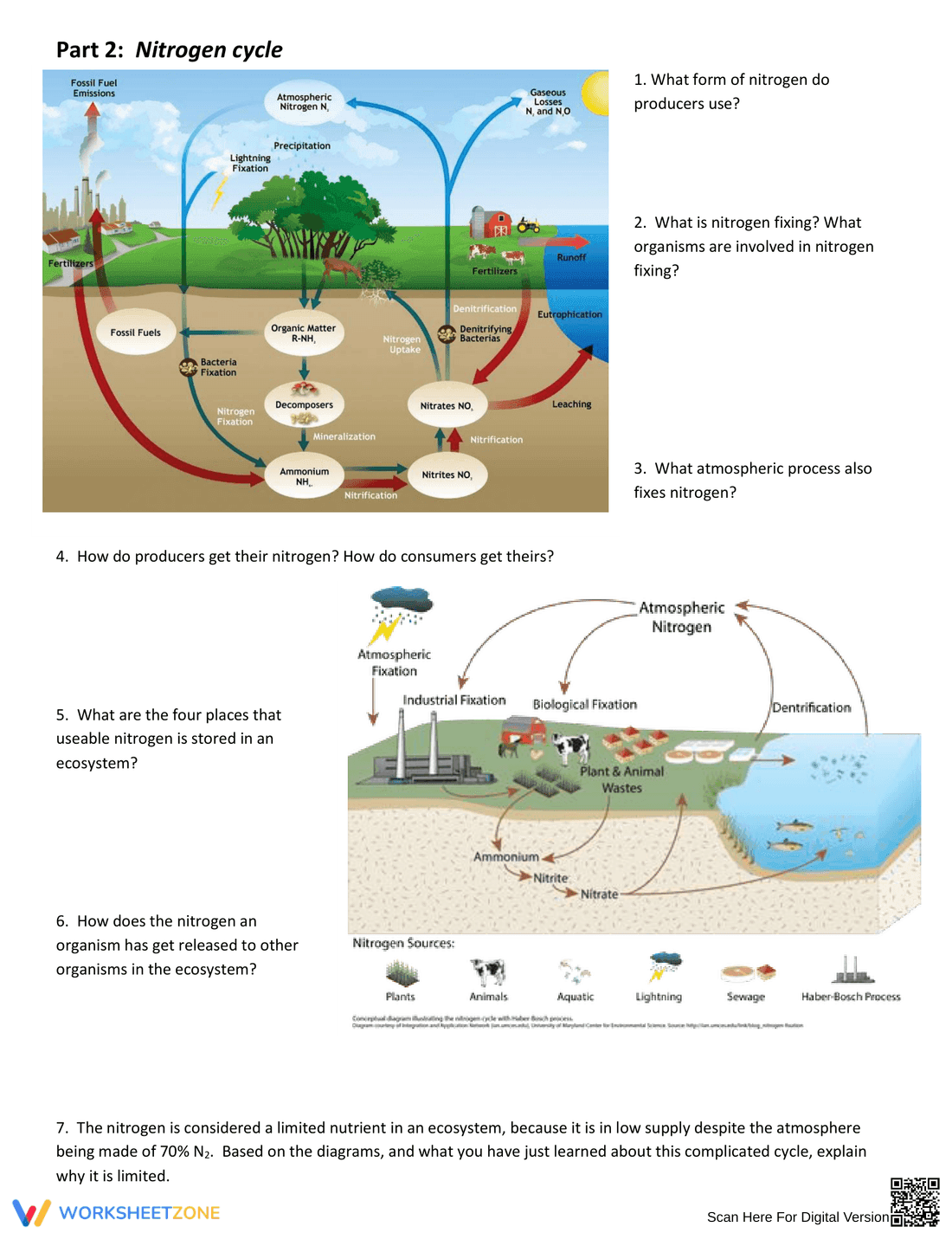
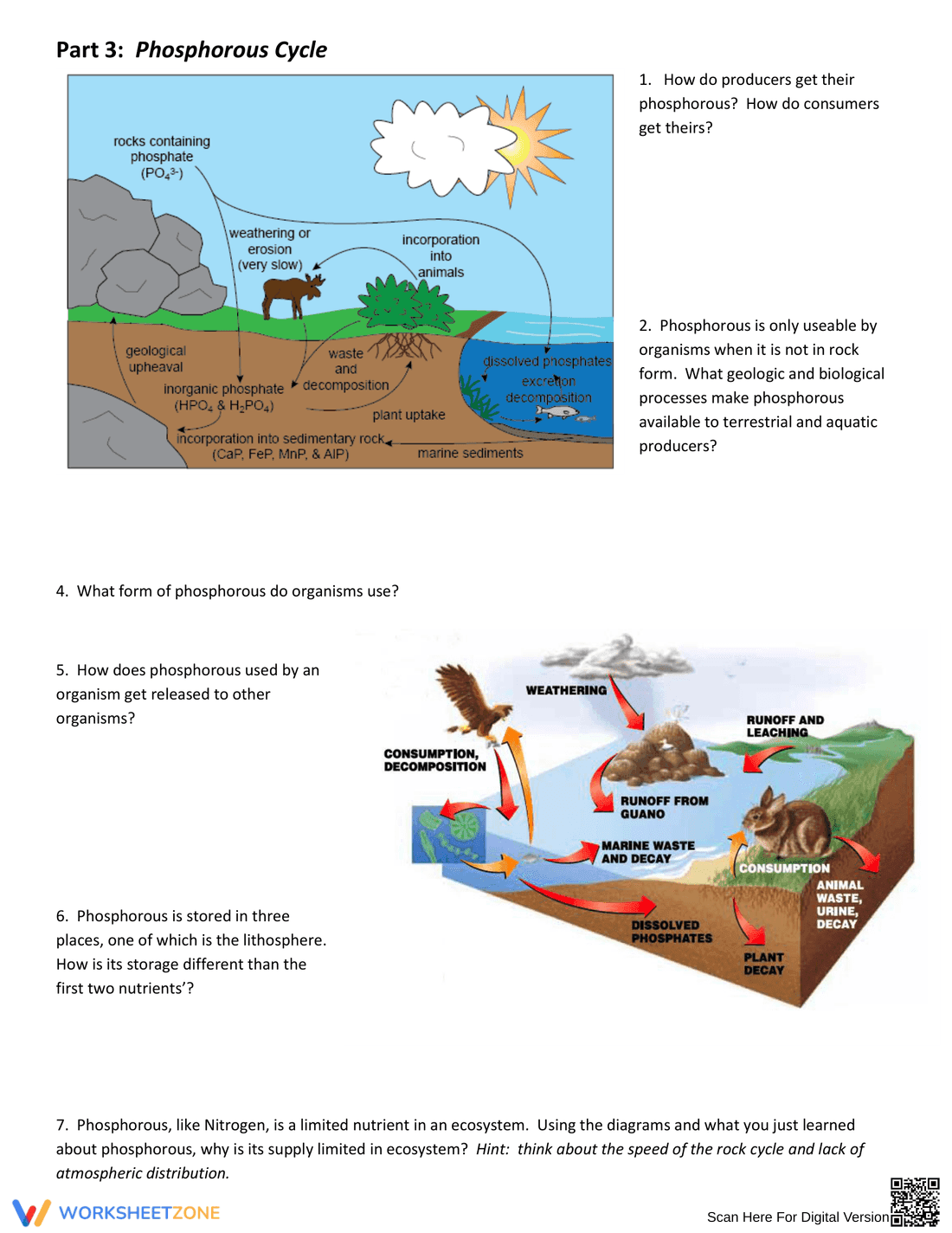
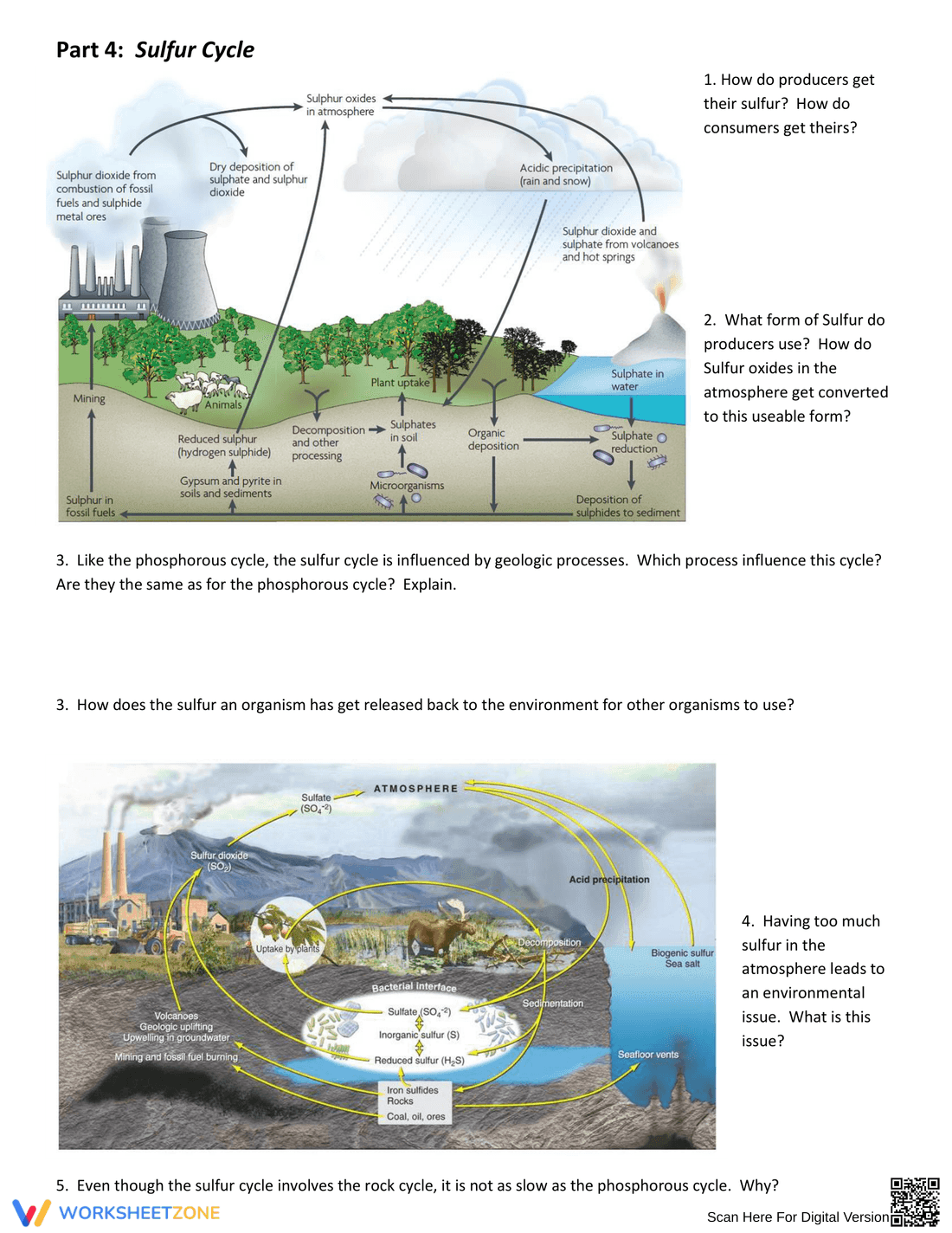
This is an educational worksheet titled 'Interpreting Nutrient Cycles' focusing on the carbon cycle. It includes diagrams illustrating the carbon cycle with labels such as 'Atmosphere Carbon Store,' 'Biosphere Carbon Store,' 'Ocean Carbon Store,' and 'Lithosphere Carbon Store.' The worksheet also presents questions about the carbon cycle, such as identifying the four places where carbon is stored and how humans contribute to atmospheric CO2. Further questions explore how carbon is released in an ecosystem and how CO2 enters oceans and soils, as well as how producers and consumers obtain carbon.
Grade Level Suitability:
This worksheet appears suitable for grades 6-9. The complexity of the carbon cycle and the vocabulary used (e.g., photosynthesis, respiration, decomposition) suggest a middle school level understanding of science concepts. The questions require students to analyze the diagram and apply their knowledge of the carbon cycle.
Why Use It:
This worksheet helps students understand the complex processes of the carbon cycle and the interconnectedness of various environmental systems. It promotes critical thinking by requiring students to interpret diagrams and answer analytical questions. It reinforces vocabulary related to nutrient cycles and the impact of human activities on the environment.
How to Use It:
Students can use the provided diagrams to answer the questions. They should carefully study the labels and arrows in the diagrams to understand the flow of carbon between different stores. The worksheet can be used as an individual assignment, a group activity, or as part of a larger lesson on nutrient cycles. Encourage students to use external resources for research as needed.
Target Users:
The target users are middle school students studying earth science, environmental science, or biology. It is also suitable for high school students reviewing basic ecological concepts. Teachers can use it as an assessment tool or as a supplemental learning activity.
This is an educational worksheet titled 'Interpreting Nutrient Cycles' focusing on the carbon cycle. It includes diagrams illustrating the carbon cycle with labels such as 'Atmosphere Carbon Store,' 'Biosphere Carbon Store,' 'Ocean Carbon Store,' and 'Lithosphere Carbon Store.' The worksheet also presents questions about the carbon cycle, such as identifying the four places where carbon is stored and how humans contribute to atmospheric CO2. Further questions explore how carbon is released in an ecosystem and how CO2 enters oceans and soils, as well as how producers and consumers obtain carbon.
Grade Level Suitability:
This worksheet appears suitable for grades 6-9. The complexity of the carbon cycle and the vocabulary used (e.g., photosynthesis, respiration, decomposition) suggest a middle school level understanding of science concepts. The questions require students to analyze the diagram and apply their knowledge of the carbon cycle.
Why Use It:
This worksheet helps students understand the complex processes of the carbon cycle and the interconnectedness of various environmental systems. It promotes critical thinking by requiring students to interpret diagrams and answer analytical questions. It reinforces vocabulary related to nutrient cycles and the impact of human activities on the environment.
How to Use It:
Students can use the provided diagrams to answer the questions. They should carefully study the labels and arrows in the diagrams to understand the flow of carbon between different stores. The worksheet can be used as an individual assignment, a group activity, or as part of a larger lesson on nutrient cycles. Encourage students to use external resources for research as needed.
Target Users:
The target users are middle school students studying earth science, environmental science, or biology. It is also suitable for high school students reviewing basic ecological concepts. Teachers can use it as an assessment tool or as a supplemental learning activity.


