




























Views
Downloads
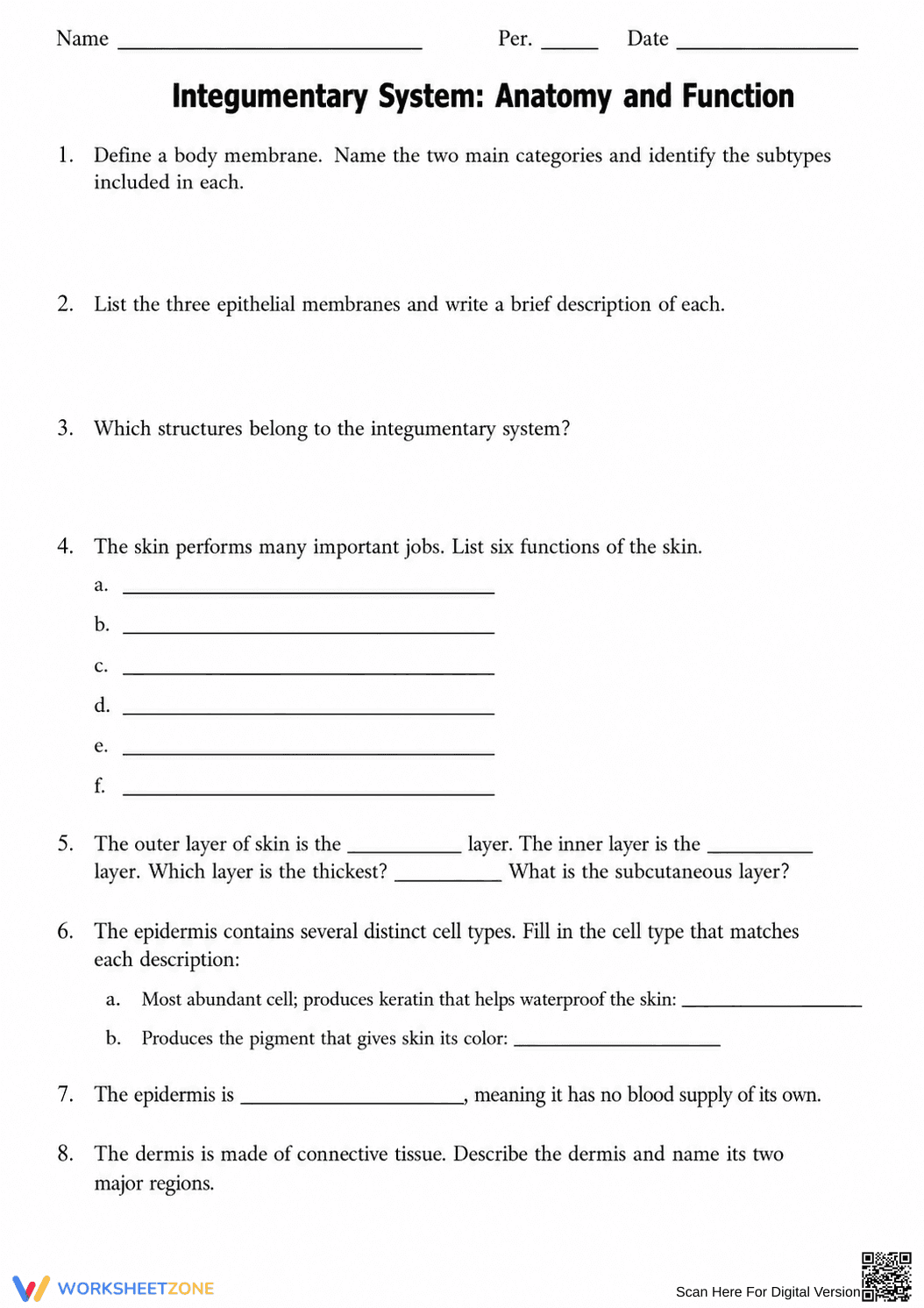
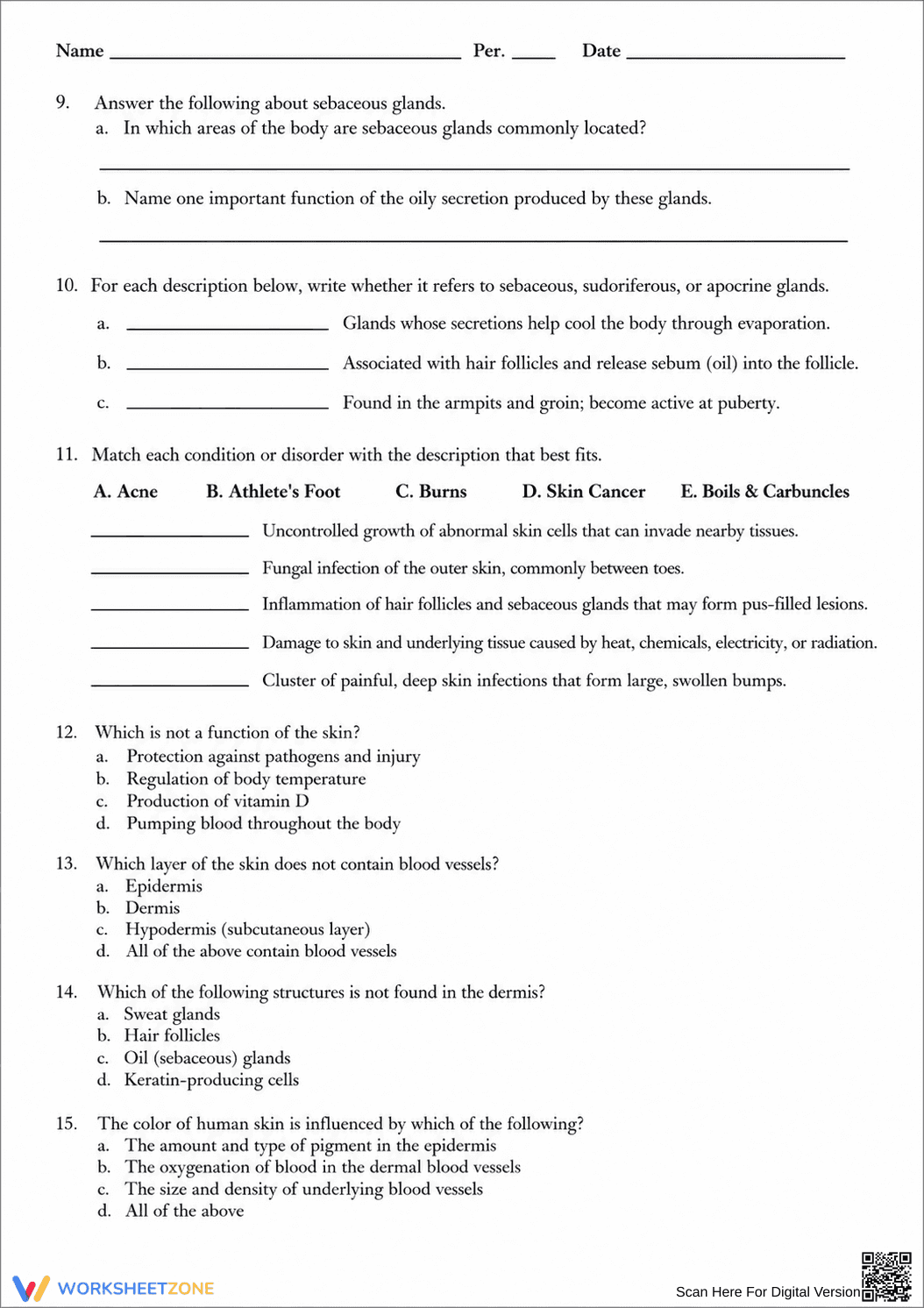
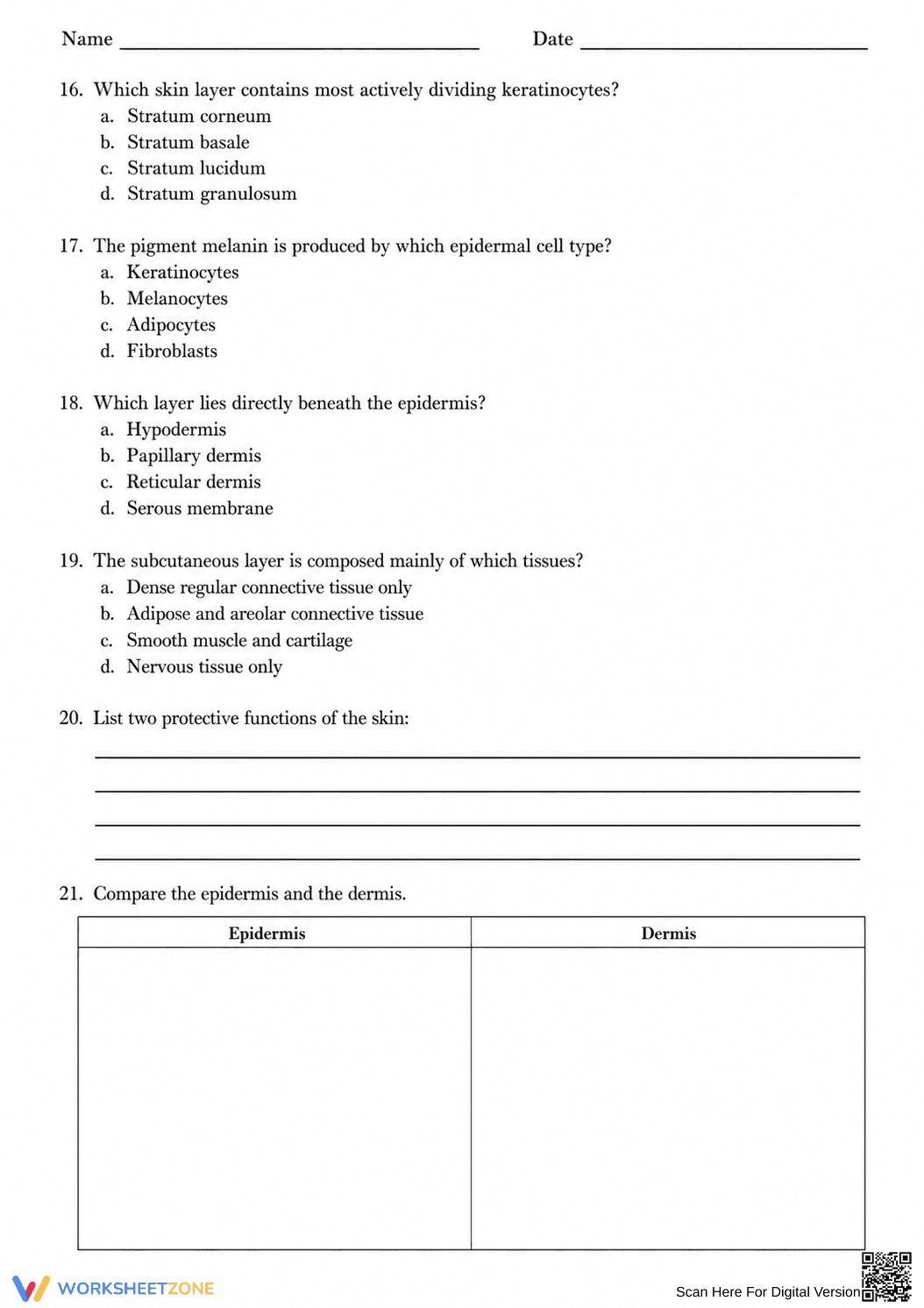
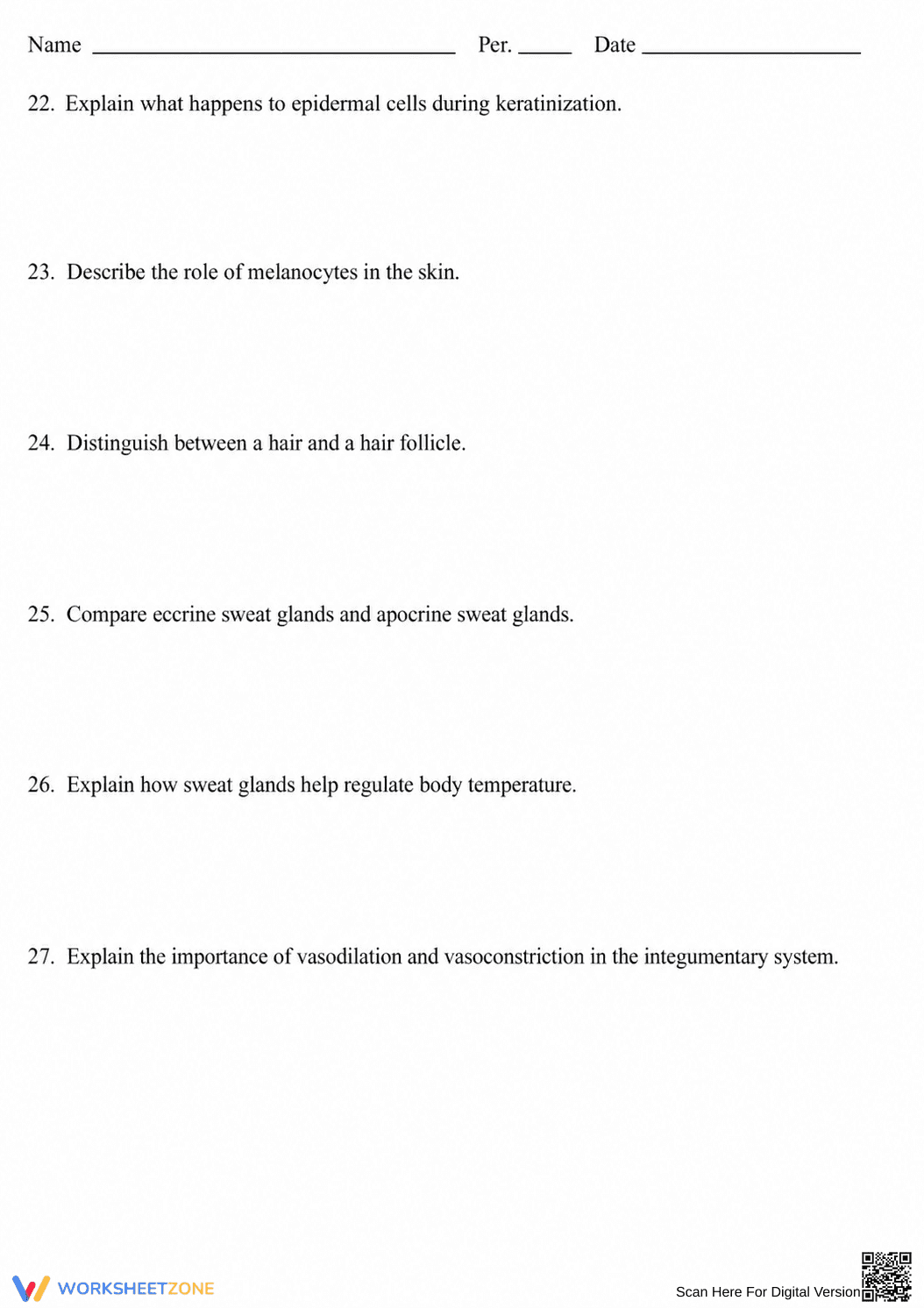

Grade 7 Integumentary System — Printable No-Prep Worksheet

Paste this activity's link or code into your existing LMS (Google Classroom, Canvas, Teams, Schoology, Moodle, etc.).
Students can open and work on the activity right away, with no student login required.
You'll still be able to track student progress and results from your teacher account.
This comprehensive worksheet helps students master the anatomy and function of the integumentary system. By completing these structured exercises, learners will identify key skin layers, understand cellular functions, and explain how glands regulate body temperature, ensuring a deep comprehension of this biological subsystem.
At a Glance
- Grade: 7 · Subject: Science
- Standard:
MS-LS1-3— Explain how the body is a system of interacting subsystems- Skill Focus: Integumentary System Anatomy
- Format: 4 pages · 27 problems · PDF
- Best For: Independent review or sub plans
- Time: 30–45 minutes
This four-page resource features 27 diverse tasks designed to thoroughly assess student knowledge. The packet includes fill-in-the-blank prompts, matching sections for skin conditions, multiple-choice questions, and short-answer explanations. Students will also complete a comparison table contrasting the epidermis and dermis. The varied question types ensure students remain engaged while demonstrating their understanding of complex terminology.
Designed for immediate classroom implementation, this resource requires minimal teacher setup:
- Print (1 minute): Simply download the PDF and print the four-page packet double-sided to save paper.
- Distribute (1 minute): Hand out the worksheets at the beginning of the period or leave them in a highly visible spot for a substitute teacher.
- Review (5 minutes): Go over the instructions briefly, highlighting the comparison table and short-answer expectations.
With under two minutes of total prep time, this packet is an ideal zero-prep solution for busy educators or emergency sub plans.
This material aligns with the Next Generation Science Standards, specifically focusing on MS-LS1-3: "Use argument supported by evidence for how the body is a system of interacting subsystems composed of groups of cells." It reinforces the concept that the skin, hair, and glands work together to protect the body and maintain homeostasis. Both standard codes can be copied directly into lesson plans, IEP goals, or district curriculum mapping tools.
Teachers can deploy this packet as an independent practice assignment following direct instruction on human body systems. It serves perfectly as a comprehensive homework packet or an in-class review session before a unit exam. For a formative assessment observation tip, educators should monitor how students complete the epidermis and dermis comparison table; this will quickly reveal if they grasp the structural differences between the layers. Expected completion time ranges from 30 to 45 minutes depending on the student's reading level.
This resource is primarily designed for middle school life science students, particularly those in seventh grade studying human anatomy. To support differentiation, teachers can allow students who need accommodations to use their textbook or an anchor chart while answering the more complex short-answer questions. It pairs exceptionally well with a direct instruction lesson on homeostasis or a hands-on lab examining skin cell slides under a microscope.
Aligning instructional materials with rigorous scientific frameworks is essential for developing robust biological literacy. This resource supports MS-LS1-3 by requiring students to explain how the body is a system of interacting subsystems. According to a recent ScienceDirect TpT Analysis, providing students with varied question formats—such as matching, multiple-choice, and structured short-answer tasks—significantly improves their ability to retain complex anatomical vocabulary and conceptual relationships. By engaging with these specific task types, learners move beyond rote memorization to actively process how the integumentary system maintains homeostasis and protects underlying tissues. Structured practice packets that require both identification and functional explanation ensure that students build the necessary cognitive pathways to succeed in advanced high school biology courses. This comprehensive approach guarantees that foundational life science concepts are firmly established.


