


























Views
Downloads

Grade 7 Integumentary System — Printable No-Prep Worksheet
Paste this activity's link or code into your existing LMS (Google Classroom, Canvas, Teams, Schoology, Moodle, etc.).
Students can open and work on the activity right away, with no student login required.
You'll still be able to track student progress and results from your teacher account.
This comprehensive integumentary system worksheet provides a thorough exploration of the anatomy and physiology of the skin, hair, and nails. Students will master complex biological concepts through structured reading passages and targeted comprehension tasks. By the end of the lesson, learners will accurately identify skin layers and explain vital functions like temperature regulation.
At a Glance
- Grade: 7 · Subject: Life Science
- Standard:
MS-LS1-3— Explain how the body is a system of interacting subsystems composed of cells- Skill Focus: Integumentary System Anatomy
- Format: 6 pages · 45 problems · Answer key included · PDF
- Best For: Middle school biology unit review
- Time: 45–60 minutes
What's Inside
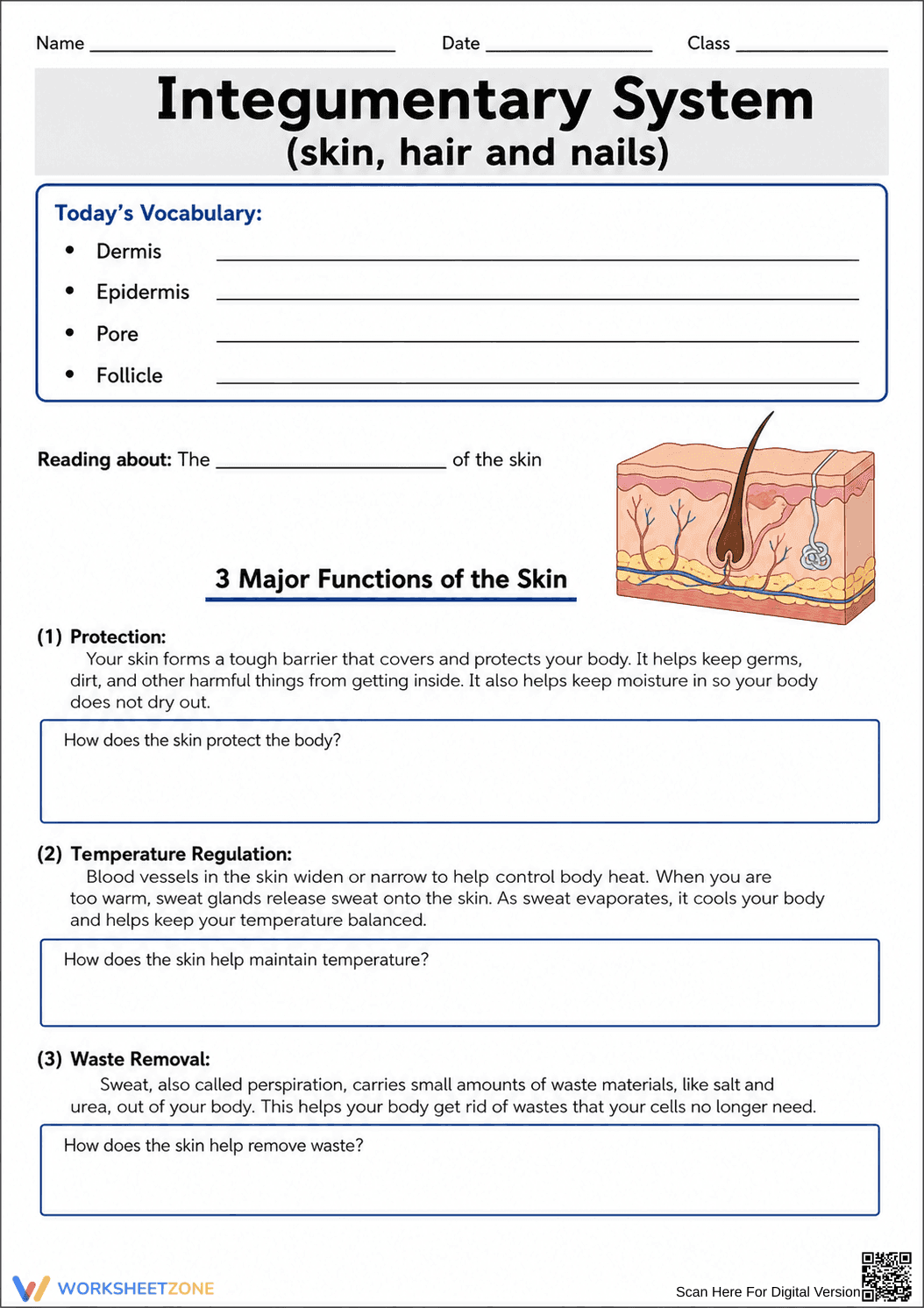
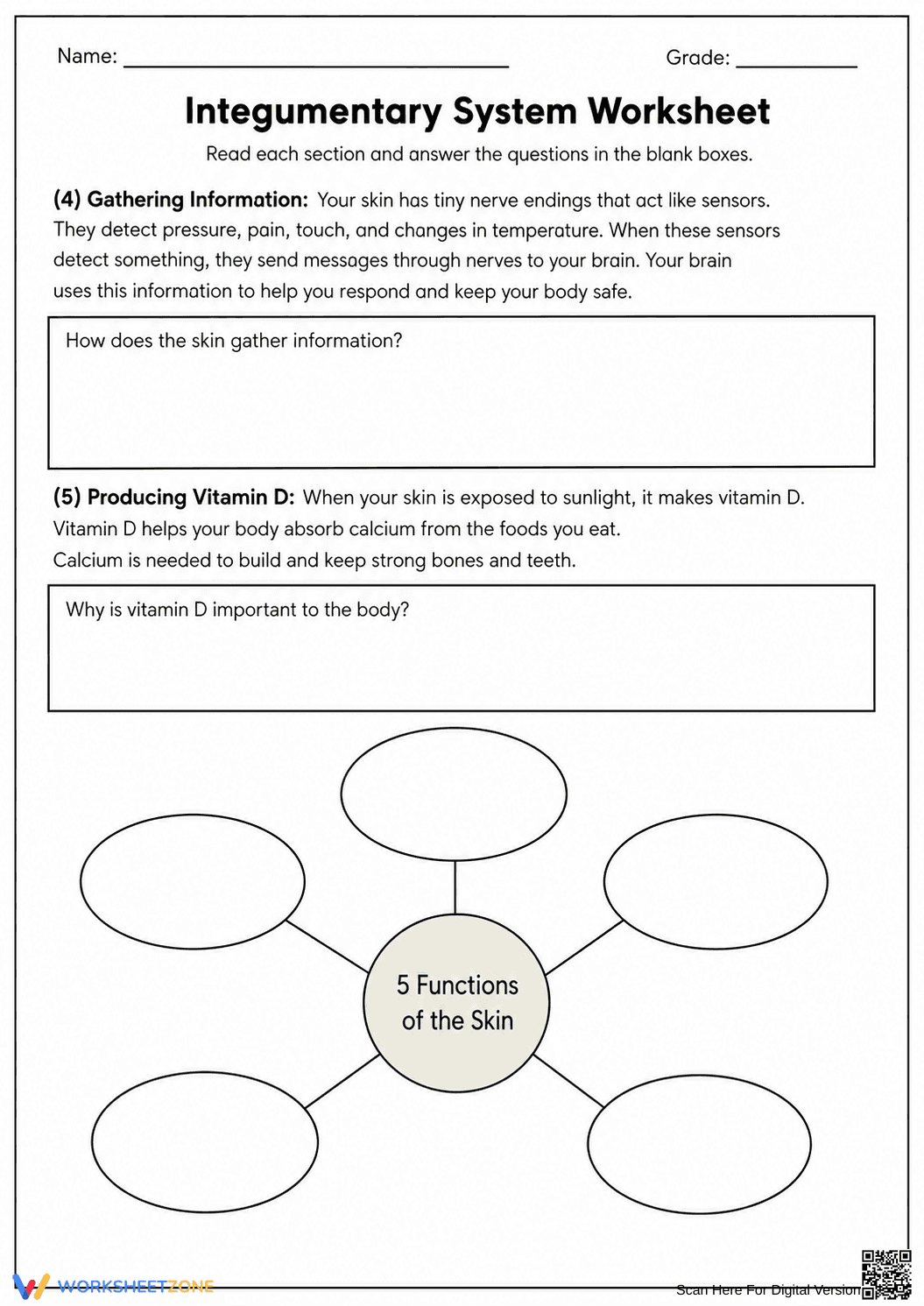
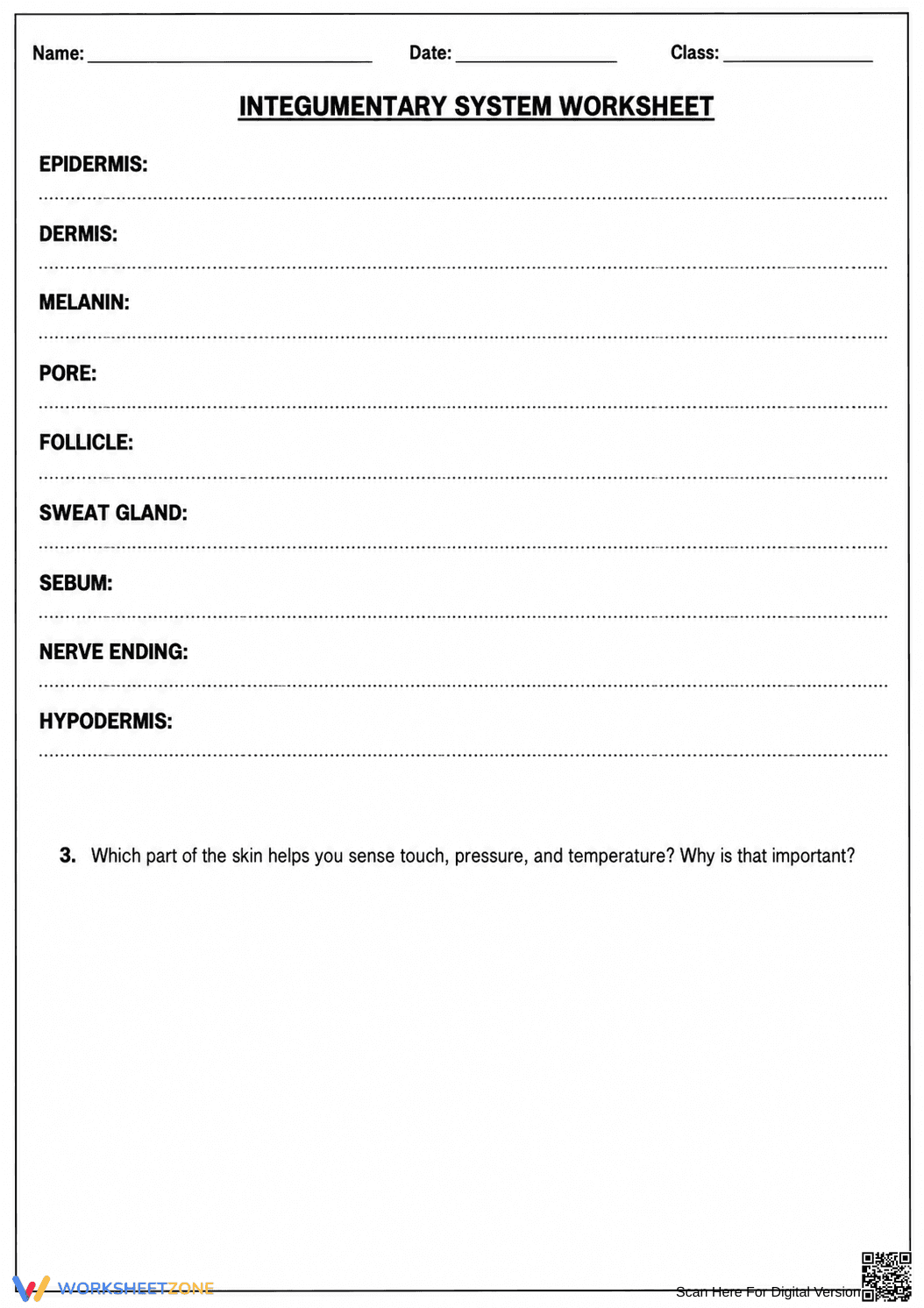
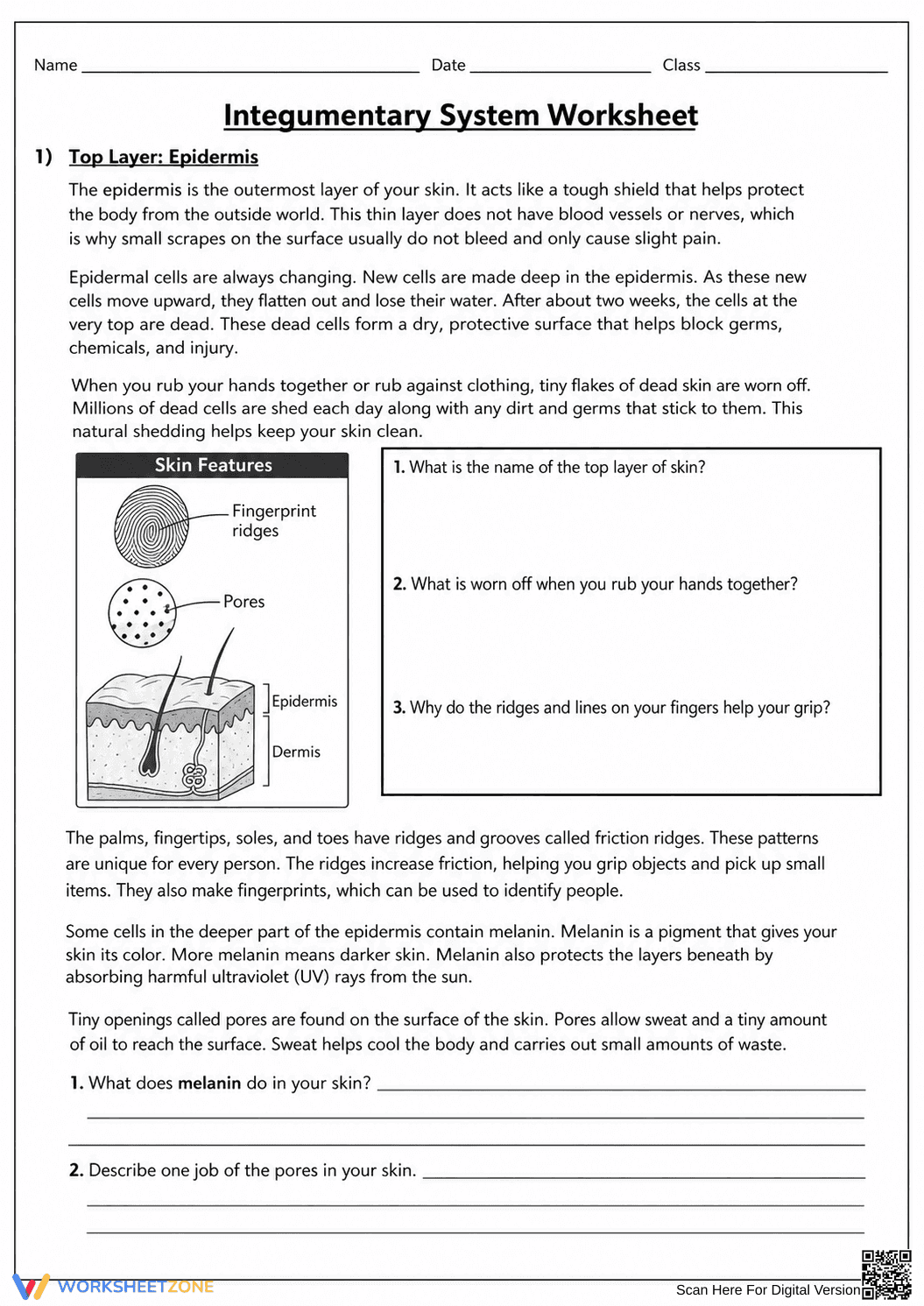
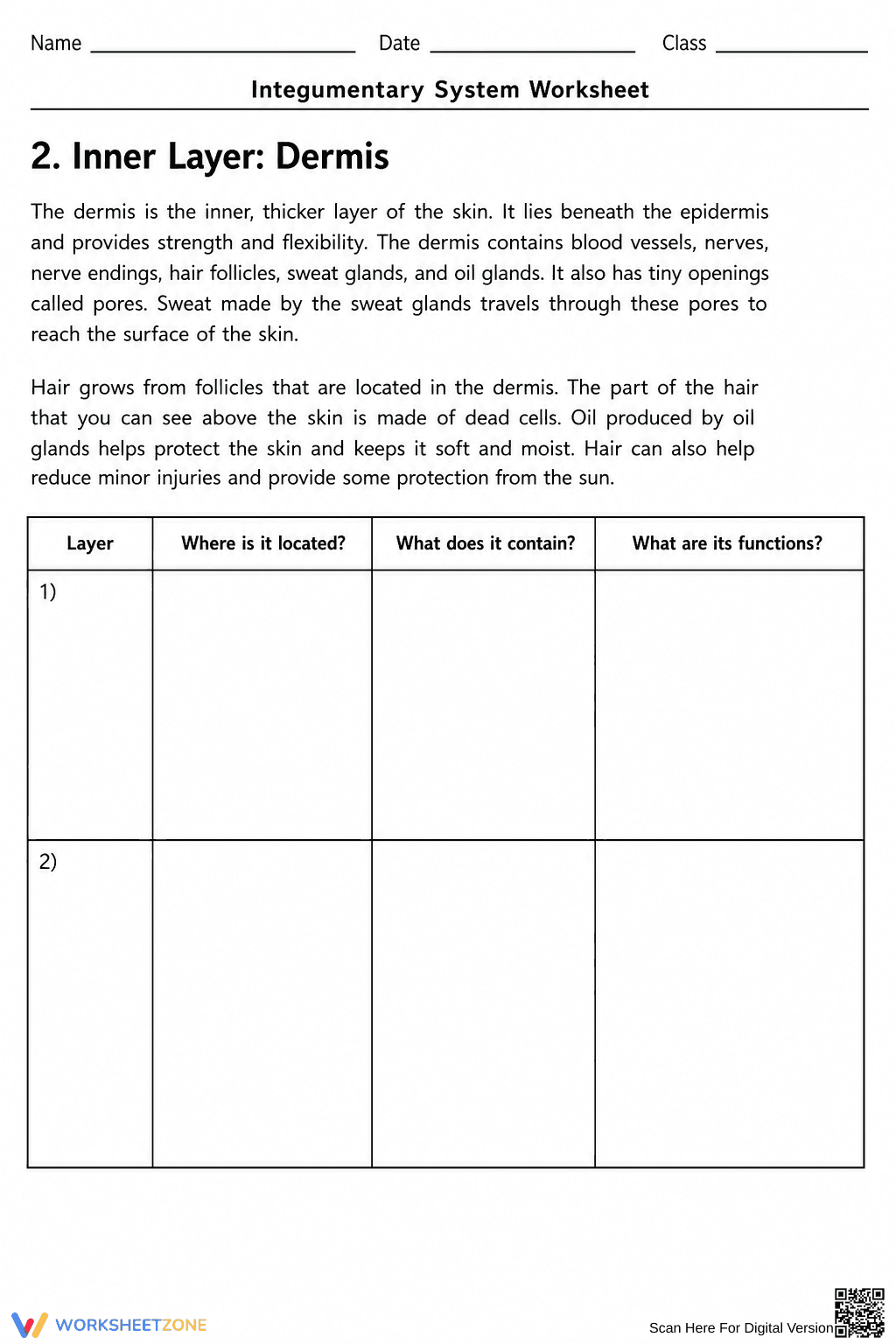
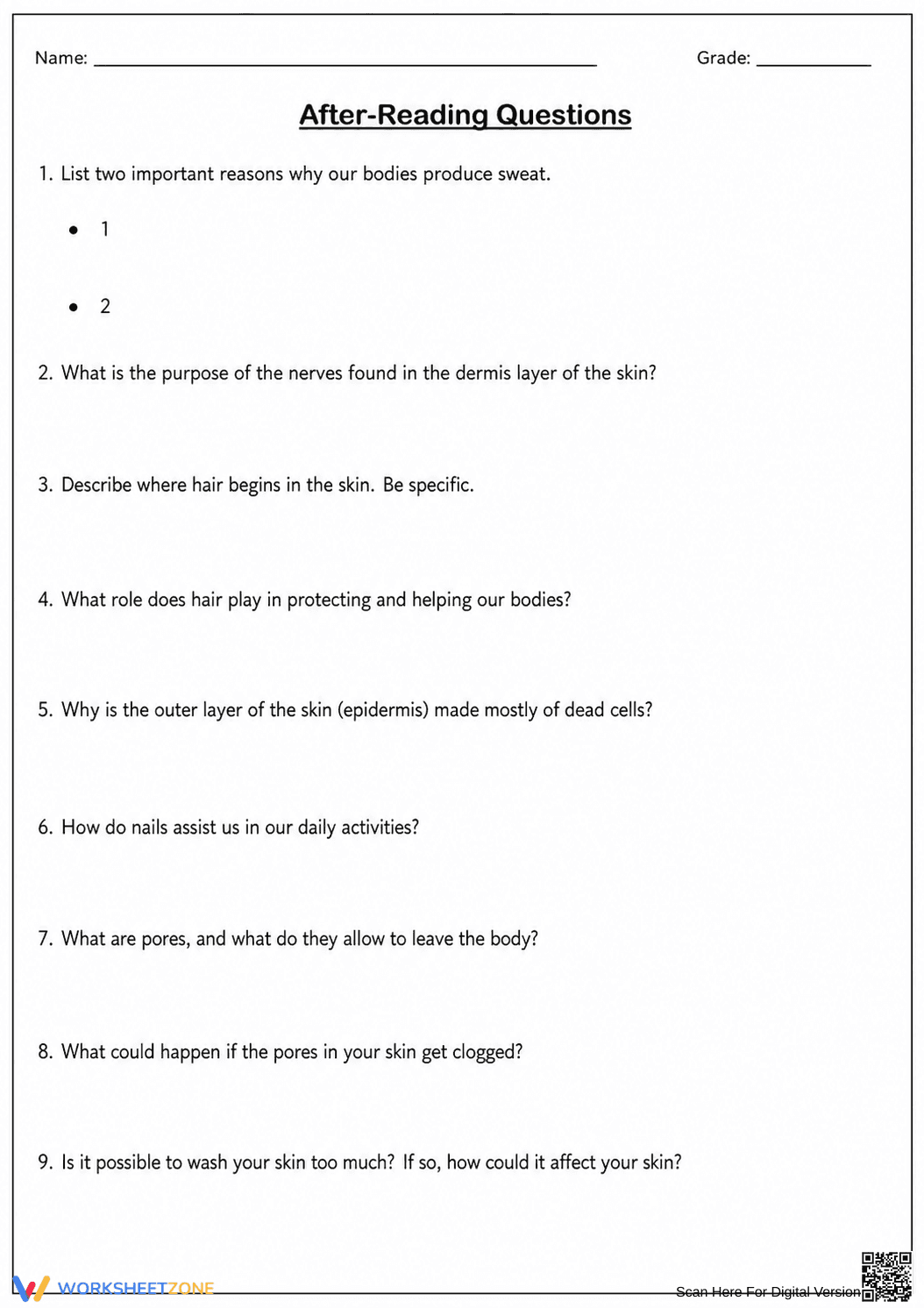
This 6-page packet features detailed reading sections on the epidermis and dermis, a vocabulary bank with 13 key terms, and a graphic organizer for the five major skin functions. It includes a comprehensive table for structural analysis and 9 high-level after-reading questions to ensure total conceptual mastery of the human body's largest organ system.
Zero-Prep Workflow
This resource is designed for immediate classroom implementation through three simple steps. First, Print the 6-page PDF and generate enough copies for your student roster (30 seconds). Second, Distribute the packets as a self-contained instructional unit or emergency sub plan (1 minute). Third, Review student progress using the included answer key to facilitate quick grading or peer-review sessions (5 minutes). Total teacher prep time is under 2 minutes.
Standards Alignment
This resource aligns with `MS-LS1-3`: "Use argument supported by evidence for how the body is a system of interacting subsystems composed of groups of cells." It specifically addresses how the integumentary system interacts with the nervous and excretory systems. Both standard codes can be copied directly into lesson plans, IEP goals, or district curriculum mapping tools.
How to Use It
Assign this worksheet during the "Explain" phase of a 5E lesson cycle to reinforce direct instruction on human body systems. It also serves as an excellent formative assessment tool; observe student responses to the "After-Reading Questions" to identify misconceptions about cellular waste removal. Expected completion time for the full packet is 45 to 60 minutes.
Who It's For
Designed for middle school students in grades 6 through 8 studying life science or introductory biology. It is particularly effective for visual learners who benefit from the included diagrams and graphic organizers. Pair this with a 3D skin model or an interactive digital anatomy atlas for a multi-sensory learning experience that supports diverse classroom needs.
According to the RAND AIRS 2024 report on instructional materials, high-quality science worksheets that integrate reading comprehension with technical vocabulary significantly improve student retention of complex biological systems. This resource targets the MS-LS1-3 standard, focusing on the plain-English skill of explaining how the skin acts as a protective and regulatory subsystem within the human body. By utilizing a structured 6-page format that moves from basic vocabulary to higher-order analysis, the worksheet aligns with Fisher & Frey’s (2014) gradual release of responsibility framework. Research indicates that providing students with multiple modalities—such as the graphic organizers and data tables found here—supports diverse learners in mastering NGSS-aligned content. This self-contained packet ensures that educators can deliver rigorous, standards-based instruction with minimal preparation, facilitating deeper student engagement with the integumentary system's essential functions and structures.


