




























Views
Downloads

Integumentary System Worksheet | Essential Grade 6-7 Science

Paste this activity's link or code into your existing LMS (Google Classroom, Canvas, Teams, Schoology, Moodle, etc.).
Students can open and work on the activity right away, with no student login required.
You'll still be able to track student progress and results from your teacher account.
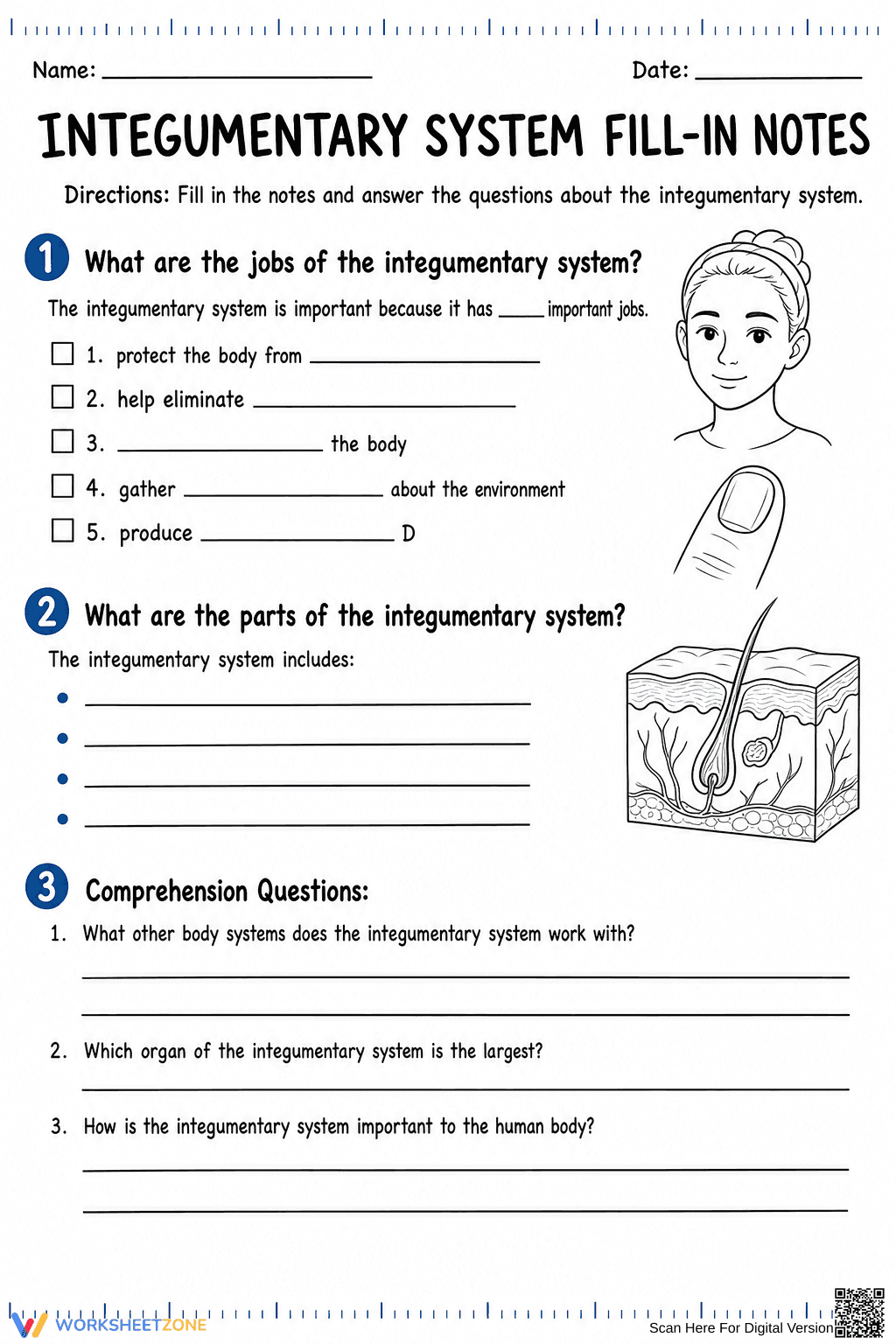
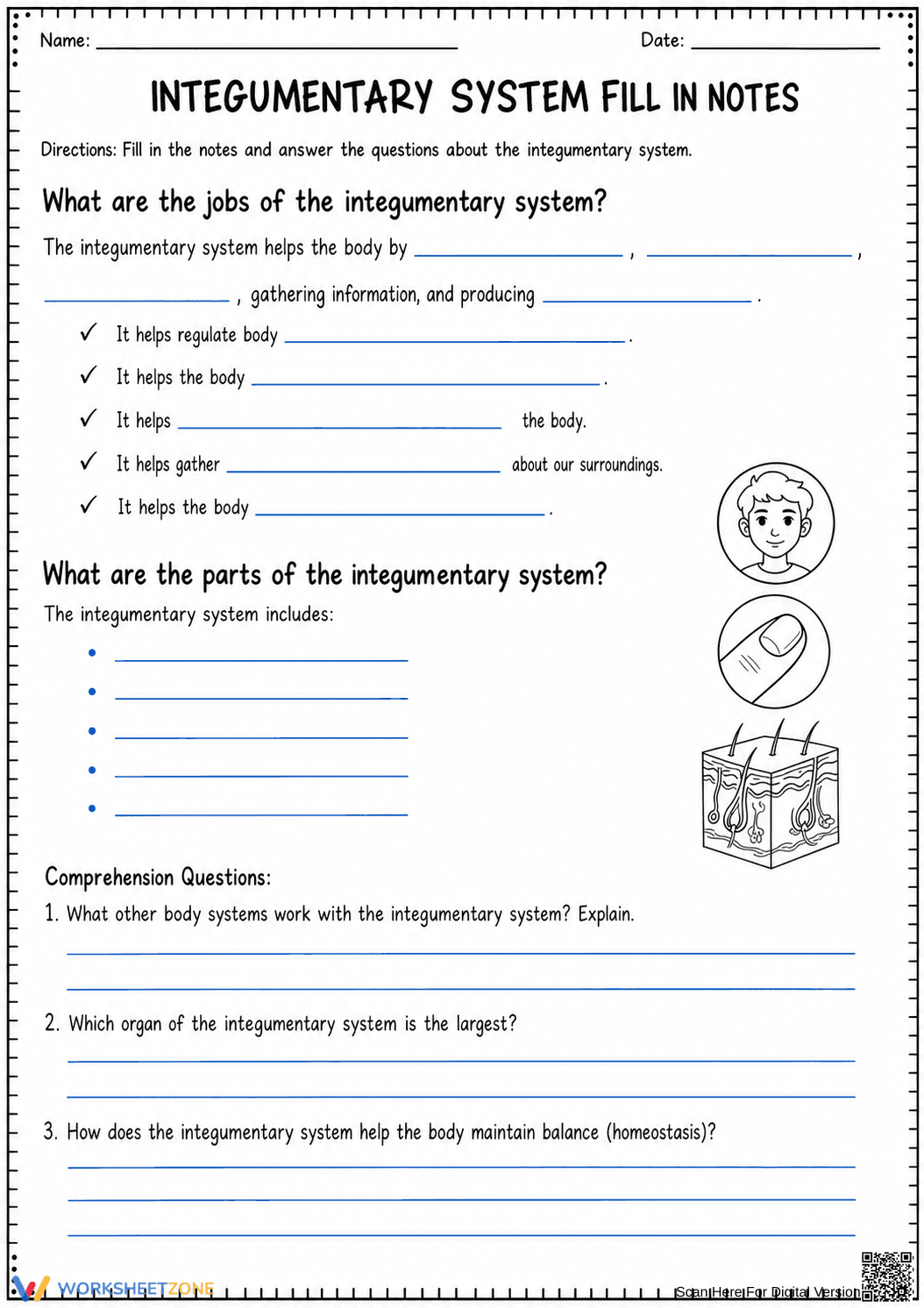
This integumentary system worksheet provides a structured framework for students to identify the primary functions and anatomical components of the human skin. By completing guided notes and answering targeted comprehension questions, learners develop a clear understanding of how the skin protects the body and maintains homeostasis. It is an effective tool for reinforcing life science curriculum.
At a Glance
- Grade: 6-7 · Subject: Science
- Standard:
MS-LS1-3— Explain how body systems are made of interacting subsystems- Skill Focus: Integumentary system anatomy and physiology
- Format: 1 page · 12 problems · Answer key included · PDF
- Best For: Middle school life science review
- Time: 15–20 minutes
What's Inside
The resource contains three distinct sections designed to build conceptual mastery. The first section focuses on the five primary jobs of the system, including protection and waste elimination. The second section requires students to list the anatomical parts of the system, supported by clear diagrams of the skin and nails. Finally, three comprehension questions challenge students to explain system interactions and homeostasis.
Zero-Prep Workflow
This resource is designed for immediate classroom implementation with a total teacher prep time of under 2 minutes. Follow these three steps:
- Print (30 seconds): Select the version that aligns with your specific textbook and print copies for the class.
- Distribute (30 seconds): Hand out the sheets as a guided note-taking tool during your direct instruction lecture.
- Review (1 minute): Use the comprehension questions as a quick exit ticket to verify student understanding.
The self-explanatory layout also makes this an ideal emergency sub plan for life science units.
Standards Alignment
The primary alignment is MS-LS1-3, which requires students to provide evidence for how the body is a system of interacting subsystems. This worksheet specifically addresses the integumentary system's role as a protective barrier and its interaction with the nervous system. This standard code can be copied directly into lesson plans, IEP goals, or district curriculum mapping tools.
How to Use It
Use this worksheet as a guided note-taking tool during a direct instruction presentation on the human body. Alternatively, assign it as a post-lesson review to evaluate student retention of key vocabulary. During the activity, observe if students can correctly link the diagrams to the written functions, which serves as a valuable formative assessment of their visual literacy and anatomical knowledge.
Who It's For
This resource is designed for middle school students in grades 6 through 8 who are studying human anatomy. It is particularly helpful for students who benefit from scaffolded writing tasks and visual aids. Pair this worksheet with a detailed skin cross-section anchor chart or a short video on the layers of the epidermis for a comprehensive lesson.
The integumentary system serves as the primary interface between the human body and the external environment, making it a critical component of MS-LS1-3 standards. This worksheet utilizes scaffolded fill-in-the-blank notes to reduce cognitive load while students process complex physiological functions such as thermoregulation, protection, and sensory reception. According to Fisher & Frey (2014), the use of guided notes during initial instruction supports the gradual release of responsibility by providing a structural framework for new vocabulary and concepts. By requiring students to identify specific parts like the epidermis and dermis alongside their functional jobs, the resource reinforces the relationship between structure and function. Research from the RAND AIRS 2024 report suggests that high-quality, standards-aligned science materials that incorporate visual diagrams and active recall questions significantly improve retention of anatomical systems in middle school learners. This resource provides the necessary scaffolding for mastery.


