




























Views
Downloads
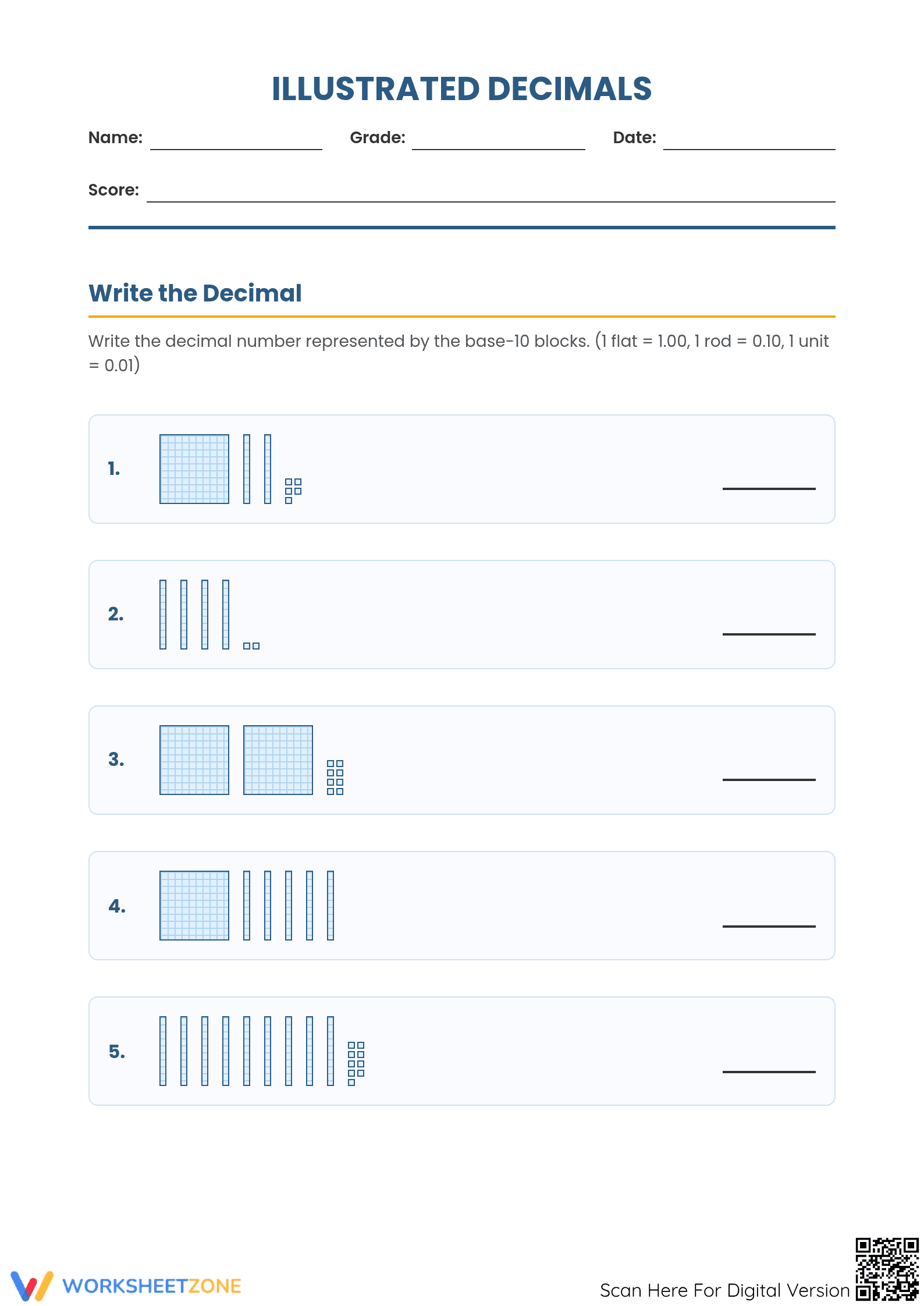
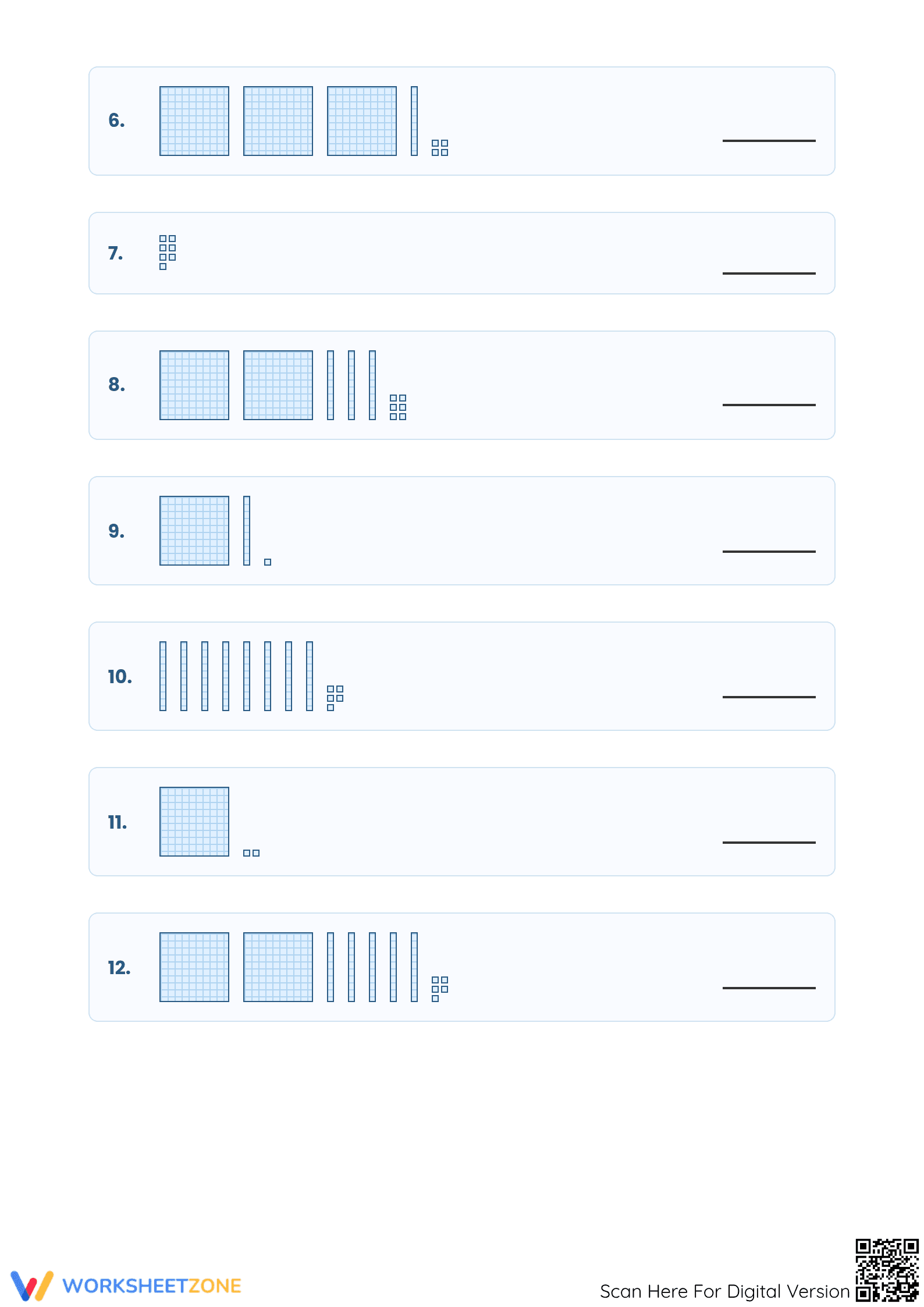
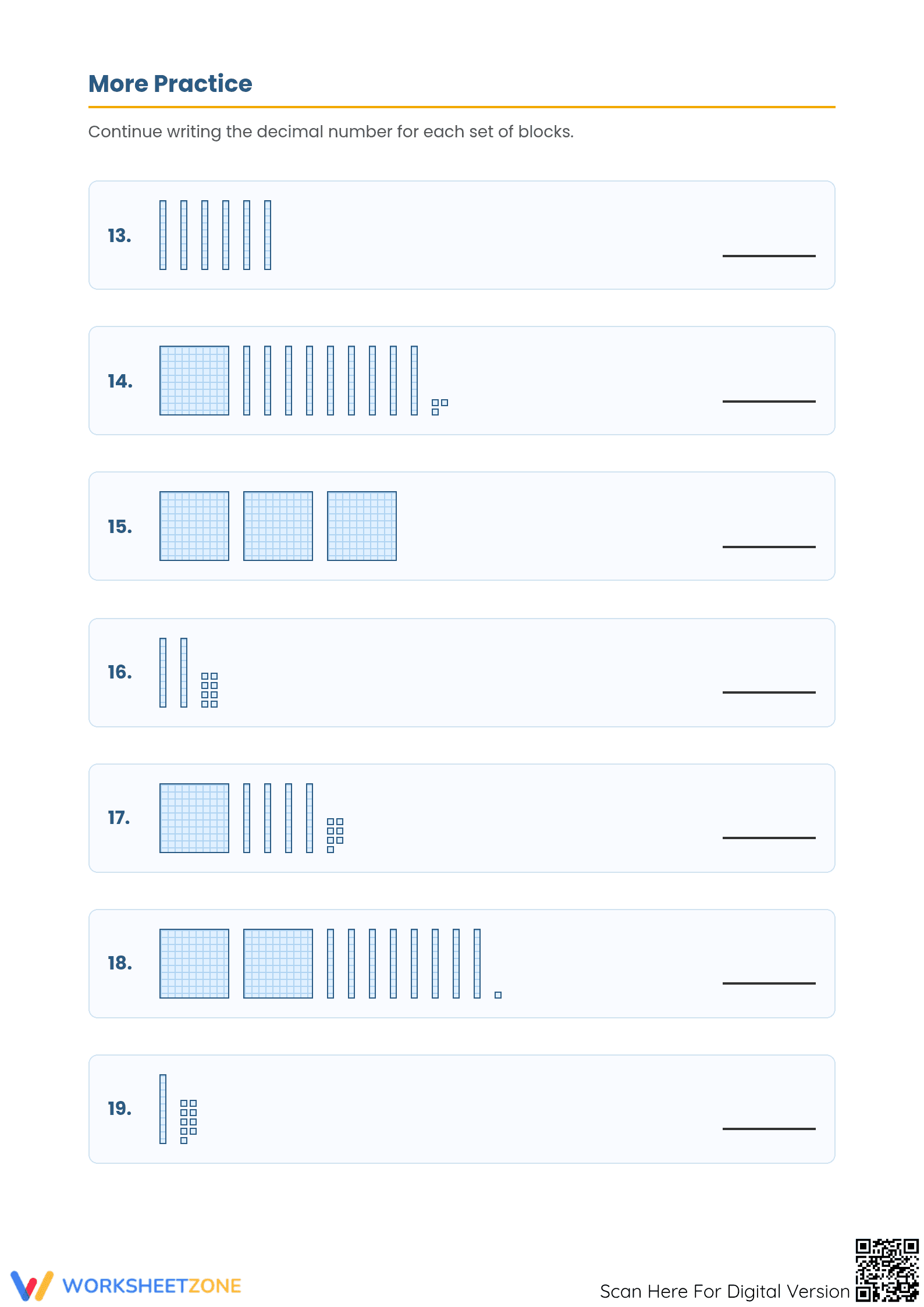
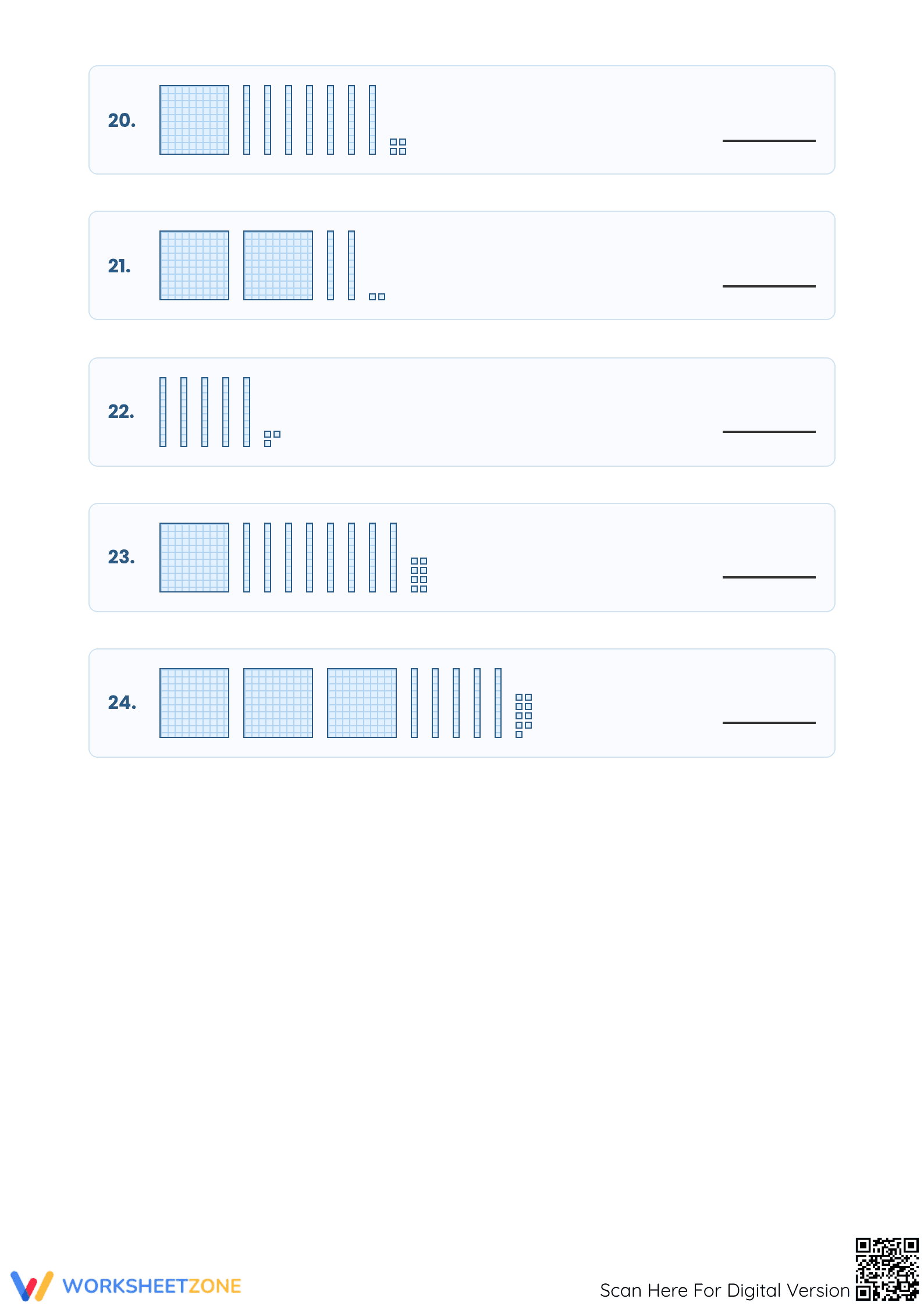

Printable Decimals Worksheet | Grade 4 Math

Paste this activity's link or code into your existing LMS (Google Classroom, Canvas, Teams, Schoology, Moodle, etc.).
Students can open and work on the activity right away, with no student login required.
You'll still be able to track student progress and results from your teacher account.
Master Decimals with Visual Models
Build a foundational understanding of decimals with this essential worksheet for fourth-grade students. This two-page printable resource provides focused practice on representing decimals and their corresponding fractions using visual models. Students will strengthen their number sense by connecting abstract numbers to concrete representations, a key step in mastering decimals.
At a Glance
- Grade: 4 · Subject: Math
- Standard:
CCSS.MATH.CONTENT.4.NF.C.6— Use decimal notation for fractions with denominators 10 or 100.- Skill Focus: Representing Decimals and Fractions
- Format: 2 pages · 20 problems · Answer key included · PDF
- Best For: Independent practice, homework, or formative assessment
- Time: 15–25 minutes
What's Inside
This resource contains a two-page worksheet with 20 problems designed to reinforce decimal concepts. The first section asks students to write the fraction and decimal for a shaded hundredths grid, while the second challenges them to shade a grid to match a given decimal. A complete two-page answer key is included for easy grading.
A Clear Path to Understanding Decimals
The worksheet follows a logical progression that supports students as they build confidence. This gradual-release structure is perfect for ensuring all learners can access the material.
- Guided Practice: Students begin by analyzing pre-shaded hundredths grids. This visual-first approach helps them connect the concepts of fractions and decimals.
- Supported Practice: The task then shifts, requiring students to interpret a given decimal and represent it visually by shading the grid themselves.
- Independent Practice: With 20 problems, the worksheet offers ample opportunity for students to work independently in class or as homework.
This approach ensures a smooth transition from guided learning to independent application.
Standards-Aligned for Your Classroom
This worksheet is directly aligned with Common Core standard CCSS.MATH.CONTENT.4.NF.C.6, which requires students to use decimal notation for fractions with denominators of 10 or 100. The tasks provide direct practice for this specific skill, making it a valuable tool for standards-based instruction. The standard code can be copied directly into lesson plans or curriculum maps.
How to Use This Worksheet
This versatile resource can be used as independent practice after a lesson or as a homework assignment to reinforce concepts. For a quick formative assessment, observe students as they complete the first few problems to identify any misconceptions about decimal place value. Most students will complete the worksheet in 15 to 25 minutes.
Who It's For
Designed for fourth-grade students, this worksheet is also suitable for advanced third-graders or fifth-graders needing review. The clear visual models make it accessible for all learners. Pair this worksheet with base-ten blocks to provide a hands-on learning connection for students who need extra support.
This resource provides targeted practice on connecting fractions and decimals. Educational research emphasizes the importance of linking visual models to abstract notation to build deep understanding (Fisher & Frey, 2014). This worksheet directly supports that principle. By asking students to translate between shaded grids, fractions, and decimals, it reinforces the concept that both represent parts of a whole, a key requirement of standard CCSS.MATH.CONTENT.4.NF.C.6. The 20 problems offer the repetition needed for procedural fluency, a core component of mathematical proficiency. Providing students with structured opportunities to practice this conversion is a proven method for building a durable understanding of the number system and preparing them for more complex mathematics.


