




























Views
Plays

HS-PS4-2 Worksheet: ICT Self-Assessment — College Aligned

Paste this activity's link or code into your existing LMS (Google Classroom, Canvas, Teams, Schoology, Moodle, etc.).
Students can open and work on the activity right away, with no student login required.
You'll still be able to track student progress and results from your teacher account.
This comprehensive ICT self-assessment provides college-level students with a rigorous evaluation of their technical knowledge. By covering hardware troubleshooting and network configurations, the worksheet ensures learners can identify critical infrastructure issues. It serves as a diagnostic tool for measuring baseline competency in modern information technology environments.
At a Glance
- Grade: College · Subject: ICT
- Standard:
HS-PS4-2— Evaluate digital transmission and storage of information to solve technical problems- Skill Focus: Hardware & Networking
- Format: 3 pages · 19 problems · Answer key included · PDF
- Best For: Introductory computer science or IT certification prep
- Time: 30–45 minutes
What's Inside
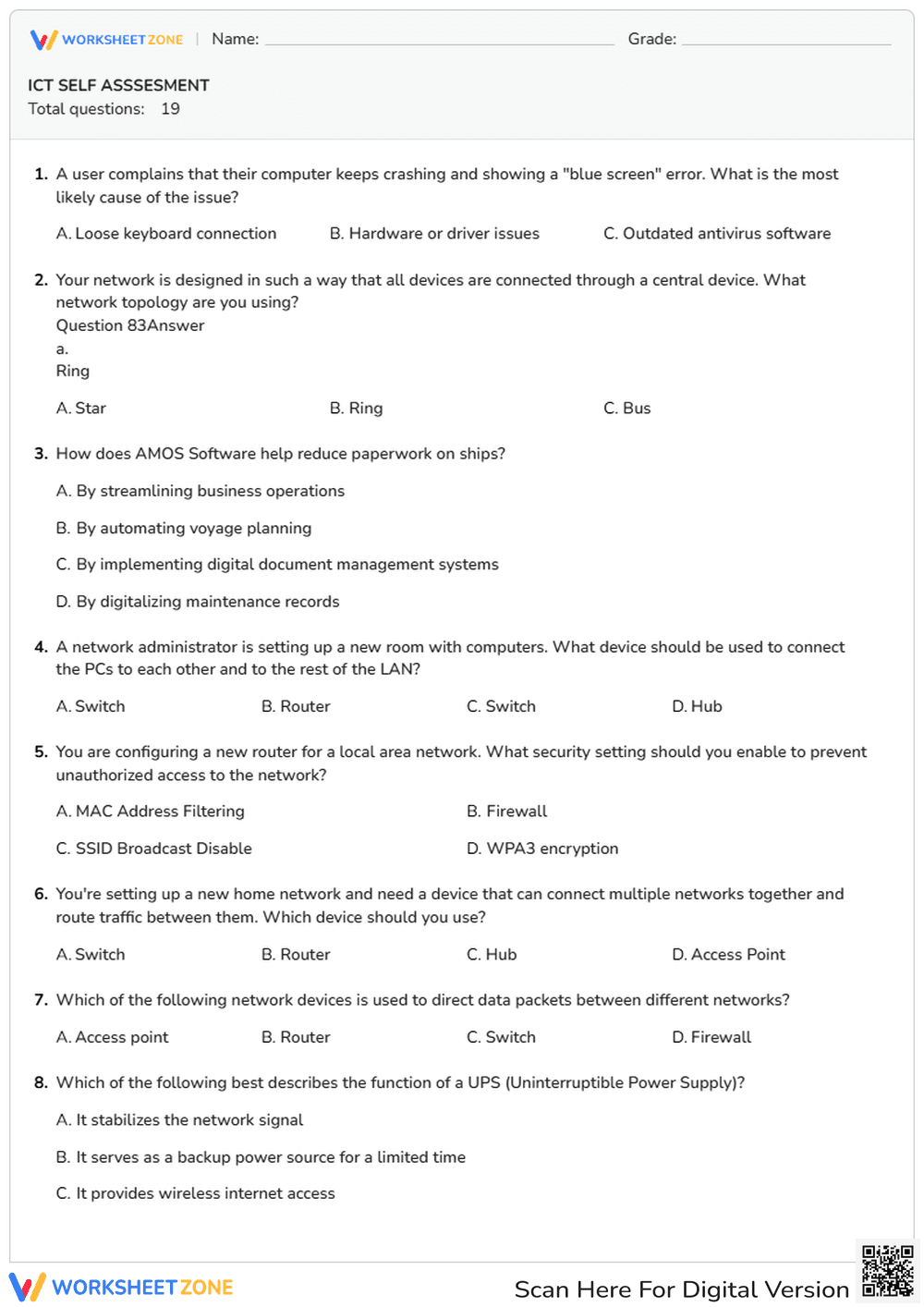
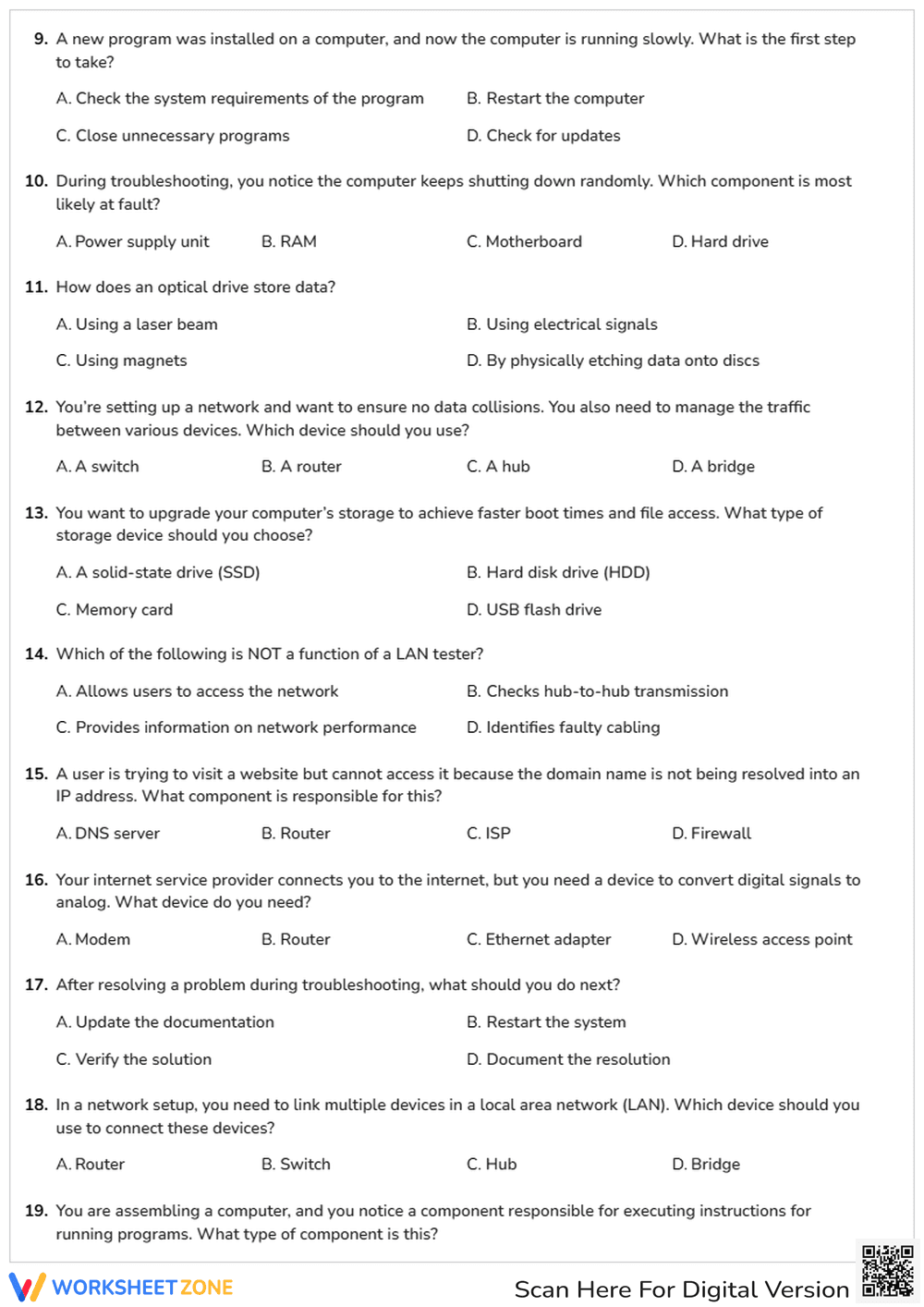
The document contains 19 multiple-choice questions spread across three pages. It features a mix of theoretical knowledge and practical troubleshooting scenarios. Students will encounter questions regarding network topologies, security protocols like WPA3, and the specific functions of hardware such as UPS systems, SSDs, and DNS servers.
Mastery Evidence
The assessment provides clear evidence of mastery across three performance tiers. Questions 1 through 7 evaluate "Approaching" proficiency by testing basic hardware identification. Questions 8 through 15 measure "Meeting" proficiency through network configuration scenarios. The final questions represent "Exceeding" proficiency by requiring students to troubleshoot complex system interactions. Scores can be entered directly into gradebooks or used for IEP progress notes to document technical competency.
Standards Alignment
This resource is aligned with `HS-PS4-2`, which focuses on evaluating the technical aspects of digital information storage and transmission. It also supports `CCSS.ELA-LITERACY.RST.11-12.3` by requiring students to follow technical procedures for troubleshooting hardware and software issues. Both standard codes can be copied directly into lesson plans, IEP goals, or district curriculum mapping tools.
How to Use It
Use this worksheet as a formative assessment at the end of a networking unit to gauge student mastery. Instructors should observe how students handle the troubleshooting scenarios in questions 1, 9, and 10 to identify gaps in logical deduction. Completion typically takes 30 to 45 minutes, making it an ideal mid-session activity or a comprehensive homework assignment following direct instruction on system architecture.
Who It's For
This assessment is designed for college students enrolled in introductory Information Technology or Computer Science courses. It is also highly effective for adult learners preparing for entry-level IT certifications. The technical vocabulary and scenario-based questions pair naturally with an introductory networking textbook or a hands-on lab session involving physical hardware identification.
According to the RAND AIRS 2024 report, structured self-assessments in technical fields significantly improve long-term retention of procedural knowledge. This ICT worksheet utilizes the HS-PS4-2 standard to bridge the gap between theoretical networking concepts and real-world hardware application. By requiring students to analyze 19 distinct technical problems, the resource reinforces the cognitive pathways necessary for effective troubleshooting. Research from Fisher & Frey (2014) suggests that such targeted practice is essential for developing the expertise required in high-stakes technical environments. The inclusion of diverse topics—ranging from optical drive storage to WPA3 encryption—ensures that learners develop a holistic understanding of the ICT field. This printable guide provides the necessary scaffolding for students to transition from novice learners to competent technology practitioners through rigorous, standards-aligned evaluation.


