


























Views
Downloads
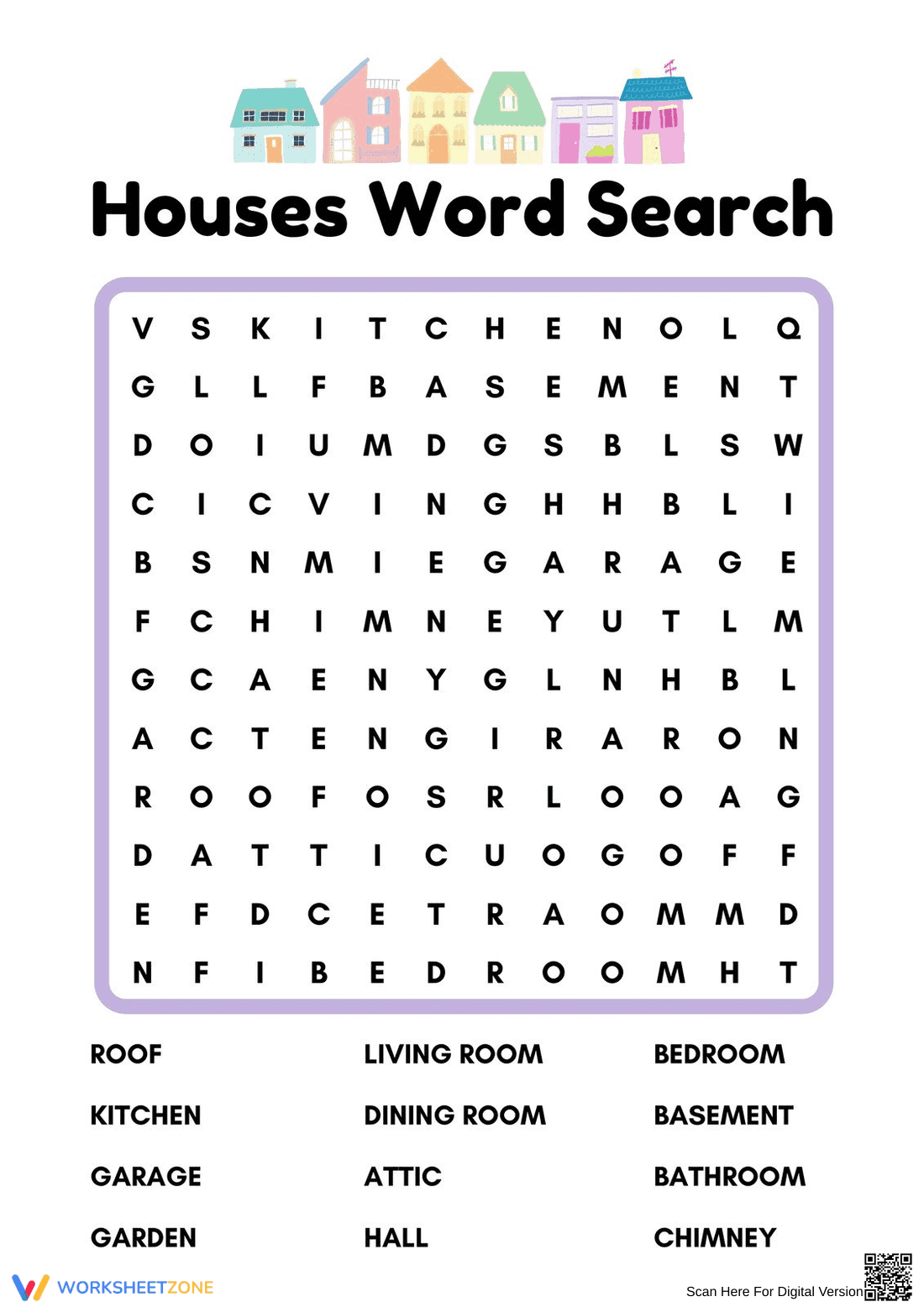

Houses Word Search Worksheet | Grade 2 Printable
Paste this activity's link or code into your existing LMS (Google Classroom, Canvas, Teams, Schoology, Moodle, etc.).
Students can open and work on the activity right away, with no student login required.
You'll still be able to track student progress and results from your teacher account.
This engaging word search worksheet helps students build essential vocabulary related to parts of a house. By actively scanning for specific terms, young learners reinforce spelling and word recognition in a fun format. It provides immediate visual feedback as students locate each hidden word.
At a Glance
- Grade: 2 · Subject: ELA
- Standard:
CCSS.ELA-LITERACY.L.2.6— Acquire and use basic grade-level vocabulary- Skill Focus: Vocabulary and Spelling
- Format: 1 page · 12 problems · Answer key included · PDF
- Best For: Independent practice or morning work
- Time: 10–15 minutes
Inside this resource, educators will find a single-page puzzle featuring a clear letter grid. The activity includes a word bank with twelve common house-related terms, such as kitchen, basement, and chimney. A complete answer key is provided for quick grading. The clean layout features a colorful house illustration to capture student interest.
This resource is designed for a smooth classroom experience with zero teacher setup required. Print (1 minute): Download the PDF and print copies. Distribute (1 minute): Hand out the sheets with highlighters. Review (3 minutes): Use the answer key to quickly verify work. Total teacher prep time is under two minutes, making this an ideal option for emergency sub plans.
This activity is aligned to CCSS.ELA-LITERACY.L.2.6: Use words and phrases acquired through conversations, reading and being read to, and responding to texts. It also supports foundational reading skills by requiring students to decode and recognize familiar spelling patterns. Both standard codes can be copied directly into lesson plans, IEP goals, or district curriculum mapping tools.
Teachers can utilize this word search as an effective morning work activity to settle students into the day while activating their prior knowledge of everyday vocabulary. Alternatively, it serves as an excellent fast-finisher task during a broader language arts block. As a formative assessment tip, observe how students search for words: those who look for the first two letters sequentially are demonstrating stronger phonemic awareness and spelling retention than those scanning randomly. Expect most students to complete the puzzle within 10 to 15 minutes.
This worksheet is primarily designed for second-grade students, though it is highly effective for English Language Learners (ELLs) building basic conversational vocabulary. To differentiate, teachers can provide struggling readers with a highlighter to mark the first letter of each target word in the grid beforehand. This puzzle pairs perfectly with a read-aloud book about homes or a direct instruction lesson on descriptive writing about where students live.
Integrating targeted vocabulary practice through structured puzzles significantly reinforces word retention and spelling accuracy in early elementary classrooms. According to a recent EdReports 2024 analysis of foundational literacy materials, students who engage in repeated visual scanning exercises demonstrate improved automaticity in word recognition. This specific activity targets CCSS.ELA-LITERACY.L.2.6, requiring learners to acquire and use basic grade-level vocabulary in a focused context. By searching for familiar terms like "bedroom" and "garage," students strengthen the neural pathways associated with orthographic mapping. This process is critical for transitioning from phonetic decoding to fluent reading. Furthermore, the low-stakes nature of a word search reduces affective filters, allowing students to build confidence while mastering essential everyday terminology. Regular inclusion of such activities supports comprehensive literacy development and provides educators with a reliable tool for reinforcing core language standards.


