


























Views
Downloads

Printable Histograms and Bar Graphs Grade 6 Math Guide
Paste this activity's link or code into your existing LMS (Google Classroom, Canvas, Teams, Schoology, Moodle, etc.).
Students can open and work on the activity right away, with no student login required.
You'll still be able to track student progress and results from your teacher account.
Mastering Data Representation
This Grade 6 Math worksheet helps students master the crucial distinction between histograms and bar graphs. By analyzing categorical versus numerical data, learners build a solid foundation for advanced statistics. Students will move from identifying basic characteristics to interpreting real-world data sets, ensuring they can choose the correct representation for any given scenario.
At a Glance
- Grade: 6 · Subject: Math
- Standard:
CCSS.MATH.CONTENT.6.SP.B.4— Display numerical data in plots on a number line including histograms and box plots- Skill Focus: Distinguishing between categorical and numerical data representation
- Format: 4 pages · 15 problems · Answer key included · PDF
- Best For: Middle school introduction to statistical data representation and analysis
- Time: 30–45 minutes
What's Inside
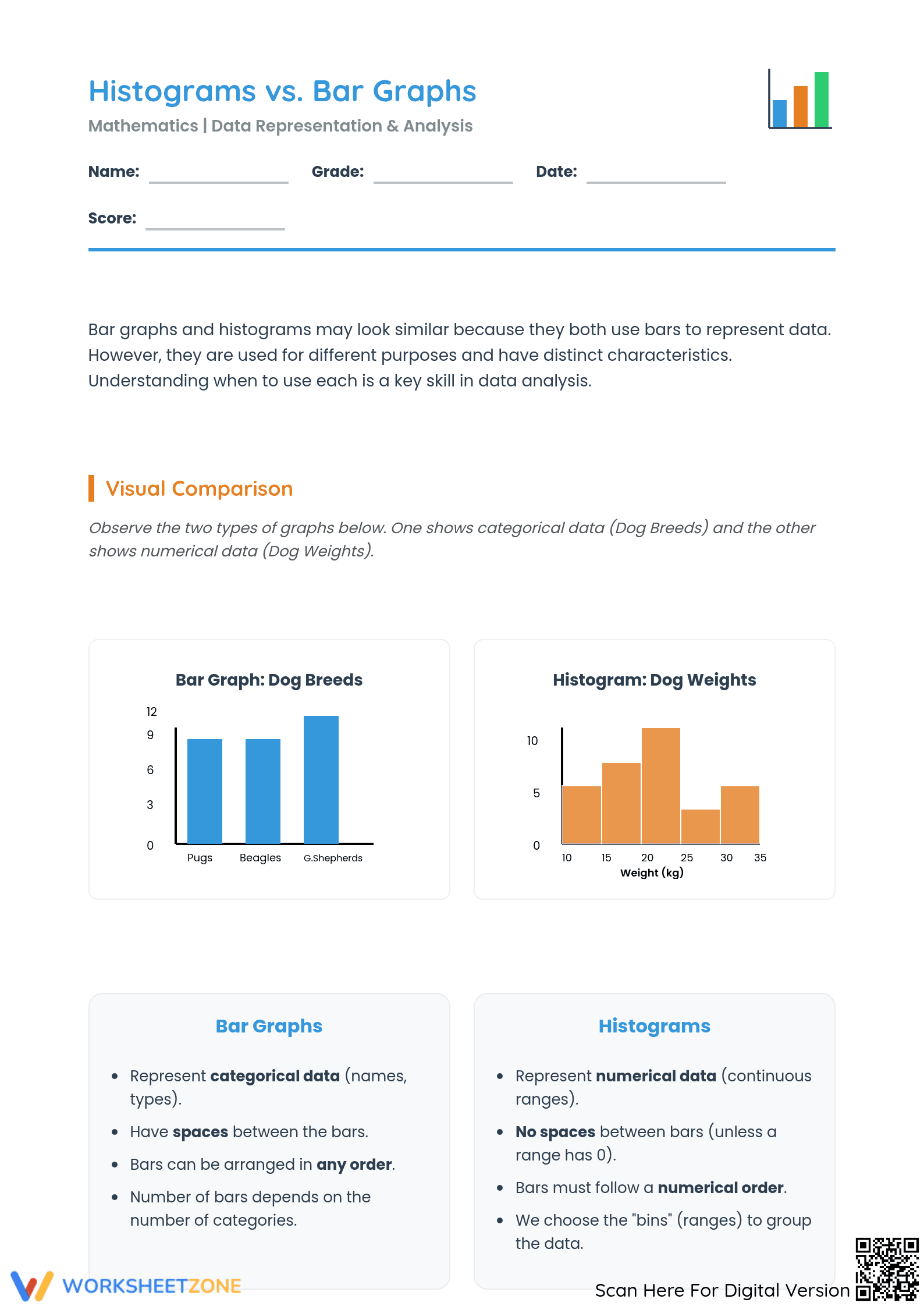
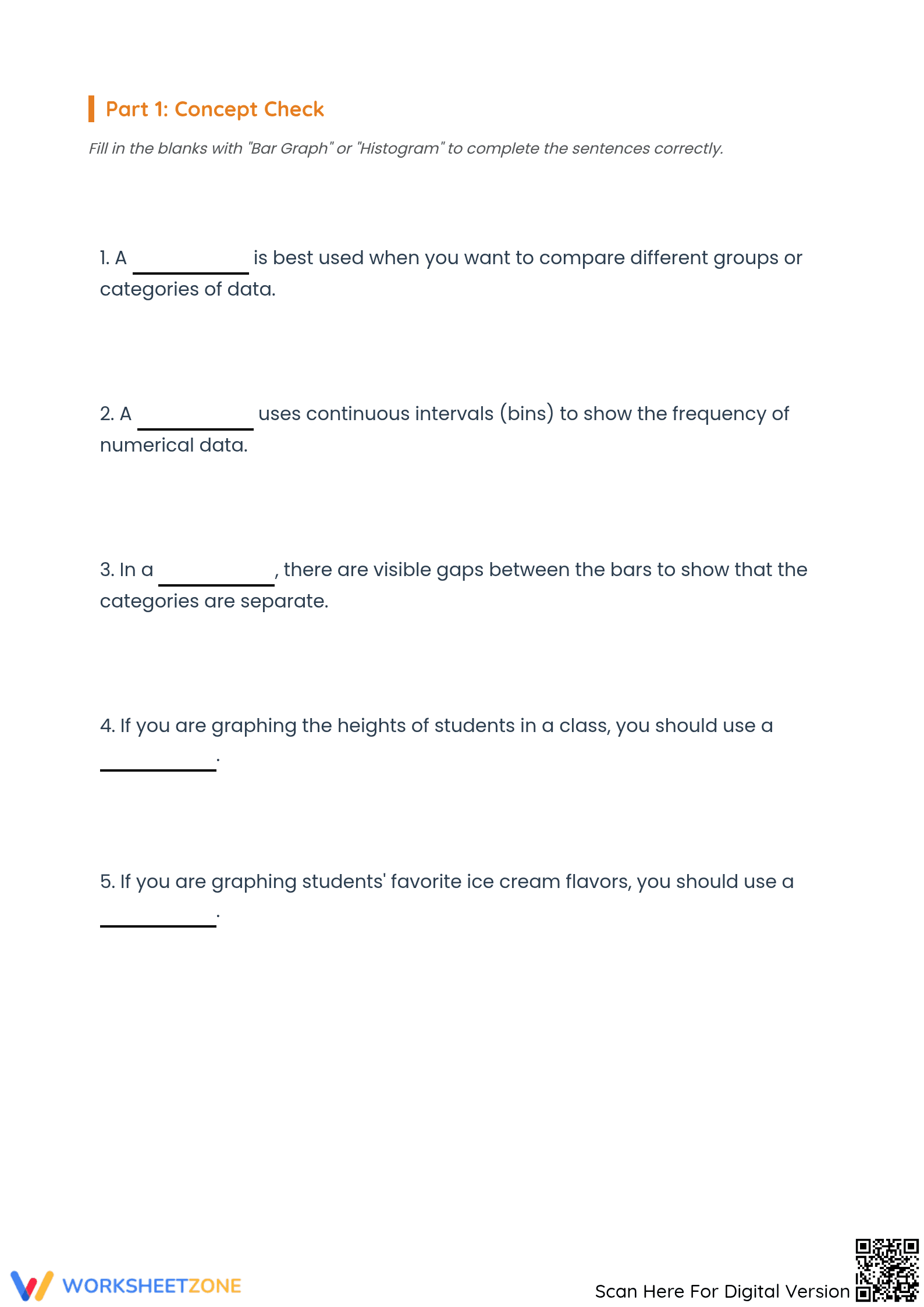
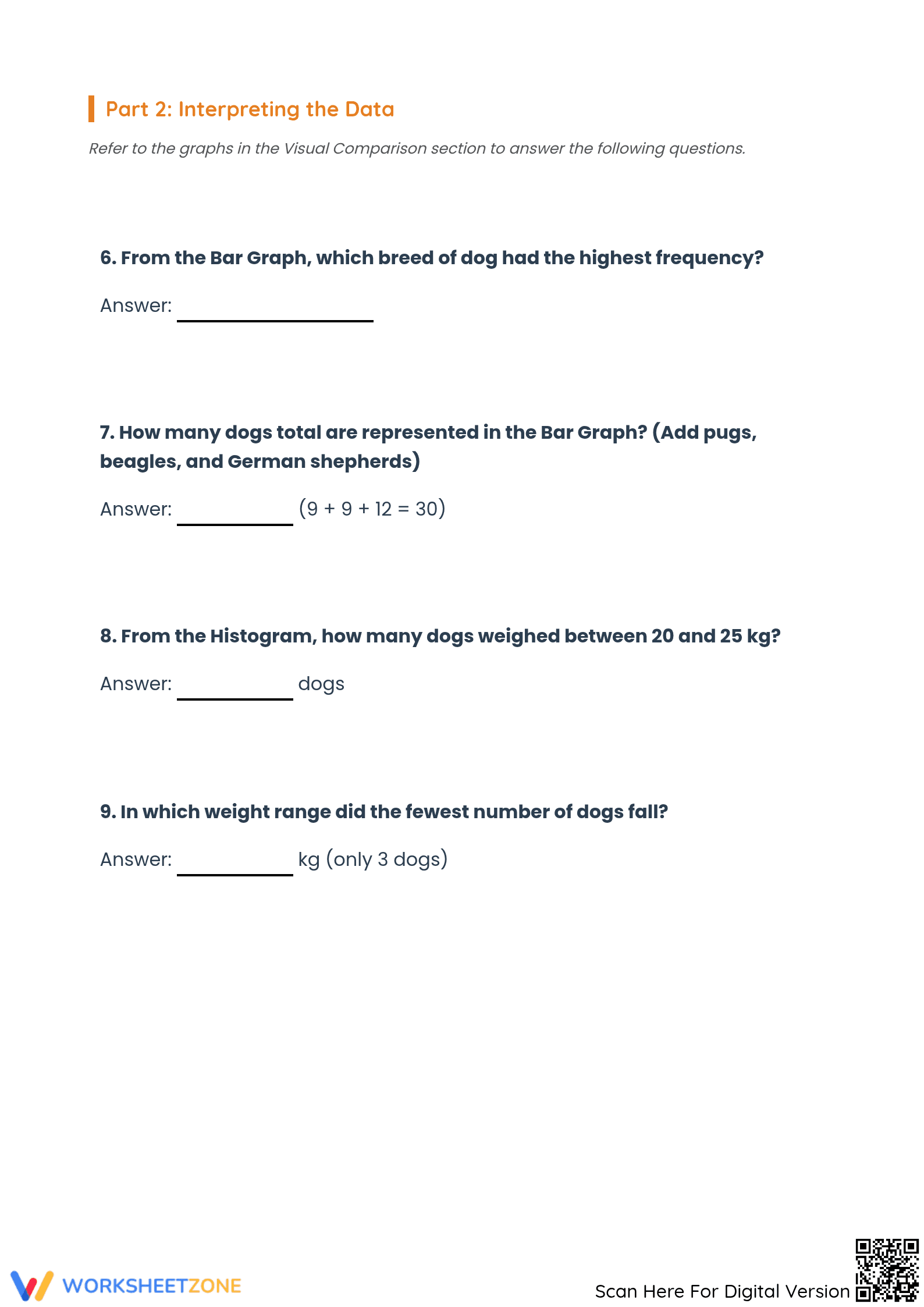
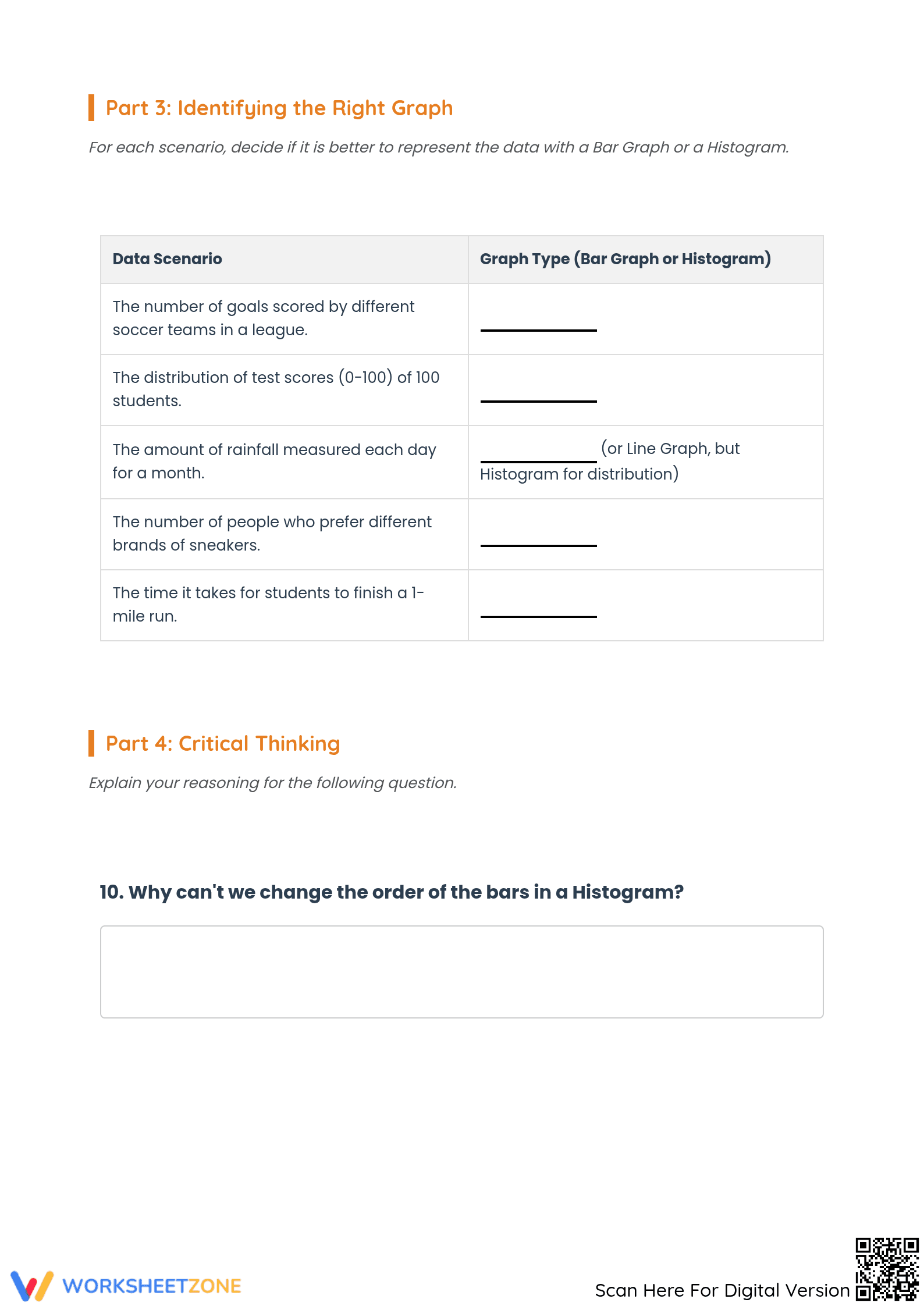
Inside this comprehensive 4-page packet, you will find a clear visual comparison guide followed by three distinct practice sections. The worksheet includes a "Concept Check" fill-in-the-blank activity, data interpretation questions based on dog breed and weight charts, and a scenario-matching table. A final critical thinking prompt challenges students to explain the logic behind histogram bar ordering. A full answer key is provided for quick grading.
Zero-Prep Workflow
The zero-prep workflow for this resource is designed for efficiency. Print the 4-page PDF for your class, which takes less than 30 seconds. Next, distribute the packets during your data unit; the clear graphics mean students can begin with minimal intervention. Finally, review the answers using the provided key in under five minutes. This makes it an ideal choice for emergency sub plans or independent station rotations.
Standards Alignment
The primary focus is CCSS.MATH.CONTENT.6.SP.B.4, which requires students to display numerical data in plots on a number line, specifically histograms. This resource also supports 6.SP.B.5.A by asking students to report the number of observations from various graphs. Both standard codes can be copied directly into lesson plans, IEP goals, or district curriculum mapping tools.
How to Use It
Use this worksheet as a "bridge" lesson after students have mastered simple bar graphs but before they begin constructing their own histograms. It works exceptionally well as a guided practice activity where students discuss the visual differences in small groups. During instruction, observe if students can explain why the gaps between bars in the dog breed graph represent distinct categories while the touching bars in the weight graph represent a continuous scale.
Who It's For
This resource is tailored for Grade 6 students who are transitioning into more complex data analysis. It is highly effective for visual learners and students who benefit from structured comparison charts. To extend the lesson, pair this worksheet with a live data collection activity where students measure classroom heights or weights and determine which graph type best represents their findings.
Integrating high-quality visual aids into mathematics instruction is supported by Fisher & Frey (2014), who emphasize the importance of scaffolding complex data concepts through comparative analysis. This worksheet aligns with those research-based practices by providing a structured progression from recognition to critical evaluation. By requiring students to justify the fixed order of histogram bins, the resource moves toward genuine conceptual understanding of continuous numerical data. Adherence to CCSS.MATH.CONTENT.6.SP.B.4 ensures that students meet rigorous national expectations for Grade 6 statistics. The inclusion of 15 tasks provides the necessary repetition for skill internalization while the 4-page format allows for a comprehensive exploration of the topic. This instructional design mirrors recommendations for increasing statistical literacy in middle school students, providing a robust tool for both initial teaching and formative assessment.


