


























Views
Downloads

Printable High-Frequency Words Worksheet | Grade K ELA
Paste this activity's link or code into your existing LMS (Google Classroom, Canvas, Teams, Schoology, Moodle, etc.).
Students can open and work on the activity right away, with no student login required.
You'll still be able to track student progress and results from your teacher account.
Mastering Sight Words for Early Readers
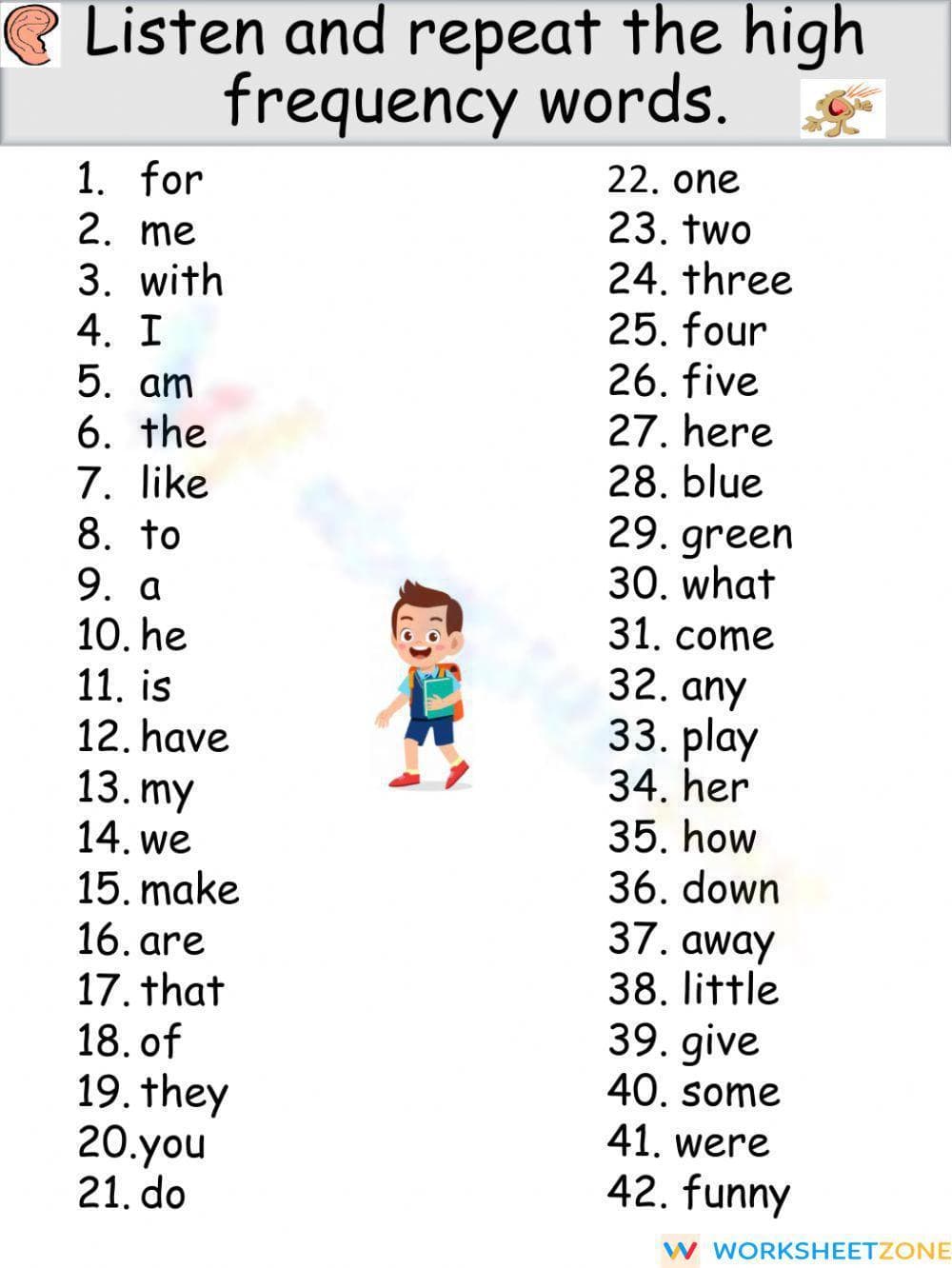
This worksheet offers a clear, focused list of 42 essential high-frequency words for Kindergarten and early Grade 1 students. Designed for listening and repetition, it serves as a foundational tool to help young learners automatically recognize the most common words in English, paving the way for improved reading fluency and comprehension.
At a Glance
- Grade: K – 1 · Subject: ELA / Reading
- Standard:
CCSS.ELA-LITERACY.RF.K.3c— Read common high-frequency words by sight.- Skill Focus: High-Frequency Word Recognition
- Format: 1 page · 42 words · No answer key needed · PDF
- Best For: Sight word drills, literacy centers, reference chart
- Time: 5–10 minutes
What's Inside
This single-page PDF presents a numbered list of 42 high-frequency words, clearly organized into two columns for easy reading. The clean, simple layout features large, legible font perfect for emergent readers. No answer key is required, as the worksheet is designed for direct practice and repetition of the words provided.
A Progression to Automaticity
While this is a list, it supports a gradual-release model for teaching sight words.
- Guided Practice (I Do): The teacher first models the pronunciation of each word, pointing to it as they say it clearly.
- Supported Practice (We Do): The teacher and students say the words together. Point-and-say games build recognition as the teacher calls out a word and students find it on the list.
- Independent Practice (You Do): Students use the sheet as a reference to practice reading the words on their own or with a partner, building automaticity and confidence.
This progression helps transition learners from listening and repeating to independent recognition.
Standards Alignment
This worksheet is directly aligned with a critical early literacy standard: CCSS.ELA-LITERACY.RF.K.3c: "Read common high-frequency words by sight." Mastering these foundational words is a prerequisite for more complex reading tasks and supports fluency standards in subsequent grades. The standard code can be copied directly into lesson plans or curriculum maps.
How to Use It
Use this versatile list as a warm-up before a guided reading session or as a resource in a literacy center. For a quick formative check, ask a student to read a column and note any hesitations for targeted practice. A full read-through can be done in 5-10 minutes, making it a fast and efficient practice tool for building foundational reading skills.
Who It's For
This resource is ideal for Kindergarten students beginning their sight word journey and for First Graders needing reinforcement. The clear, uncluttered format is beneficial for all learners. Pair this worksheet with a set of flashcards for hands-on practice or use it as a reference chart posted in the classroom or at a student's desk.
Developing automaticity with high-frequency words is one of the most effective accelerators for early reading fluency. This worksheet, targeting standard CCSS.ELA-LITERACY.RF.K.3c, provides focused practice on the foundational vocabulary students will encounter in over 50% of all reading materials. Research consistently shows that when students can read these words by sight, their cognitive resources are freed up to focus on decoding more complex words and comprehending the text's meaning. As noted in the RAND AIRS 2024 review of early literacy interventions, explicit and repeated exposure to a core set of sight words is a high-impact strategy that correlates with significant gains in reading speed and accuracy. By providing a structured list for listening, repetition, and independent practice, this resource supports a critical component of evidence-based reading instruction and directly contributes to building confident, capable readers from their first year of school.


