


























1 / 4
0
Views
0
Plays




0.0
0
Save
0 Likes
Share
Understanding Sound Waves and Hearing
0 Views
0 Plays
Paste this activity's link or code into your existing LMS (Google Classroom, Canvas, Teams, Schoology, Moodle, etc.).
Students can open and work on the activity right away, with no student login required.
You'll still be able to track student progress and results from your teacher account.
Information
Description
What It Is:
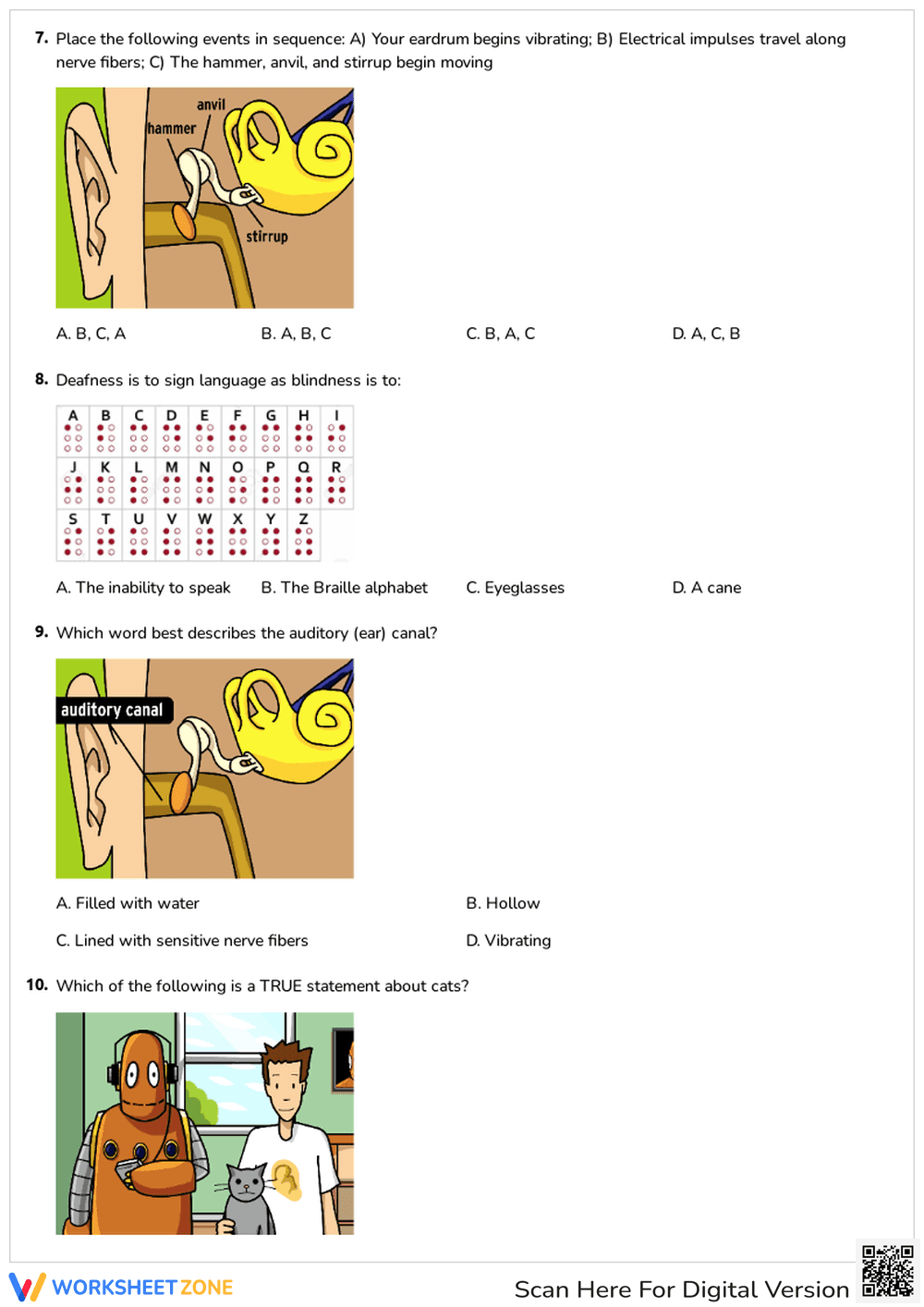
This is an educational diagram of the inner ear. It labels three key parts of the ear: the hammer, the anvil, and the stirrup. The diagram shows the relationship of these bones to the outer ear and other structures in the inner ear.
Grade Level Suitability:
This worksheet is suitable for grades 3-6. The simple diagram and clear labels make it easy for elementary and middle school students to understand the basic anatomy of the inner ear.
Why Use It:
This worksheet helps students learn the names and locations of the hammer, anvil, and stirrup within the ear. It promotes understanding of the ear's structure and its role in hearing.
How to Use It:
Use this diagram as a visual aid during a lesson about the human ear. Students can use it to identify and label the different parts of the inner ear. It can also be used for review or as a reference during other activities.
Target Users:
This worksheet is beneficial for elementary and middle school students learning about human anatomy and the senses, particularly the sense of hearing. It is also useful for teachers looking for visual aids to supplement their lessons.
This is an educational diagram of the inner ear. It labels three key parts of the ear: the hammer, the anvil, and the stirrup. The diagram shows the relationship of these bones to the outer ear and other structures in the inner ear.
Grade Level Suitability:
This worksheet is suitable for grades 3-6. The simple diagram and clear labels make it easy for elementary and middle school students to understand the basic anatomy of the inner ear.
Why Use It:
This worksheet helps students learn the names and locations of the hammer, anvil, and stirrup within the ear. It promotes understanding of the ear's structure and its role in hearing.
How to Use It:
Use this diagram as a visual aid during a lesson about the human ear. Students can use it to identify and label the different parts of the inner ear. It can also be used for review or as a reference during other activities.
Target Users:
This worksheet is beneficial for elementary and middle school students learning about human anatomy and the senses, particularly the sense of hearing. It is also useful for teachers looking for visual aids to supplement their lessons.


