


























Views
Downloads
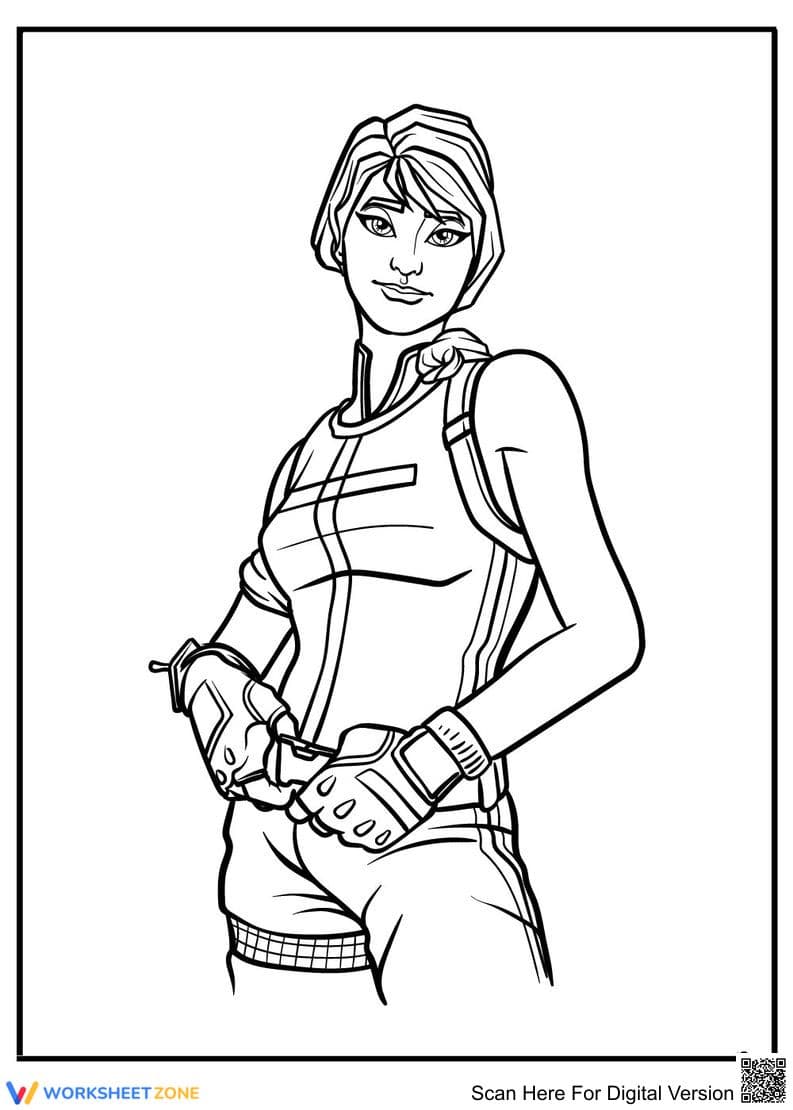

Fortnite Headhunter Coloring Page | Printable Ready
Paste this activity's link or code into your existing LMS (Google Classroom, Canvas, Teams, Schoology, Moodle, etc.).
Students can open and work on the activity right away, with no student login required.
You'll still be able to track student progress and results from your teacher account.
This printable Headhunter coloring worksheet provides students with a high-interest creative outlet to develop essential fine motor control and hand-eye coordination. By engaging with a familiar character, learners practice precision and color selection, resulting in a completed visual display that supports descriptive language development and artistic expression in the early elementary classroom.
At a Glance
- Grade: K-2 · Subject: Arts & English
- Standard:
CCSS.ELA-LITERACY.SL.K.5— Add drawings to descriptions to provide additional detail- Skill Focus: Fine motor development
- Format: 1 page · 1 task · Answer key N/A · PDF
- Best For: Morning work or early finishers
- Time: 15–20 minutes
The resource consists of a single-page, high-resolution line art illustration of the popular character Headhunter. The design features clear, bold outlines suitable for crayons, colored pencils, or markers. There are no complex instructions, making it an ideal independent activity for young learners. The layout includes ample white space for students to add their own background details or labels, encouraging further creative expansion.
Zero-Prep Workflow
- Print: Generate the single-page PDF for your entire class in under 30 seconds.
- Distribute: Hand out the sheets during transition periods, as a reward, or for indoor recess (30 seconds).
- Review: Observe completed work to check for grip strength and color boundary awareness (60 seconds).
This streamlined process requires less than 2 minutes of teacher preparation, making it an excellent choice for emergency sub plans or quiet time activities.
Standards Alignment
This worksheet aligns with `CCSS.ELA-LITERACY.SL.K.5`, which encourages students to add drawings or other visual displays to descriptions to provide additional detail. While primarily an artistic task, it serves as a scaffold for oral storytelling and descriptive writing. This standard code can be copied directly into lesson plans, IEP goals, or district curriculum mapping tools.
How to Use It
Use this worksheet during the independent practice phase of a lesson on descriptive adjectives. Ask students to color the character and then orally describe the colors they chose using complete sentences. It also functions as a formative assessment tool; observe how students handle small-muscle movements to identify those who may need additional occupational therapy support. Completion typically takes 15 to 20 minutes.
Who It's For
This resource is designed for Kindergarten through 2nd-grade students, though older fans of the game will find it engaging. It is particularly effective for English Language Learners (ELLs) to practice color vocabulary. Pair this worksheet with a character description anchor chart or a short writing prompt to extend the learning into a full literacy block.
Integrating high-interest visual tasks like this Headhunter coloring page aligns with the findings of Fisher & Frey (2014), who emphasize the importance of using non-linguistic representations to support student engagement and cognitive processing. Research indicates that fine motor activities in early childhood are strong predictors of later academic success in reading and writing. By providing a familiar context—in this case, a popular gaming character—educators lower the affective filter, allowing students to focus on precision and creative decision-making. According to the RAND AIRS 2024 report, incorporating student interests into daily classroom routines significantly increases task persistence. This worksheet serves as a bridge between recreational interest and academic skill-building, specifically supporting the CCSS.ELA-LITERACY.SL.K.5 standard by providing the visual foundation for descriptive communication and detail-oriented observation.


