Why Paragraph-Level Handwriting Practice Matters
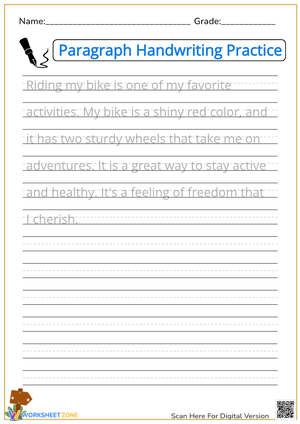
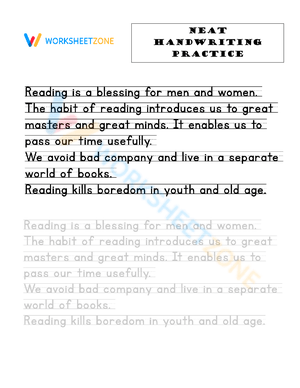
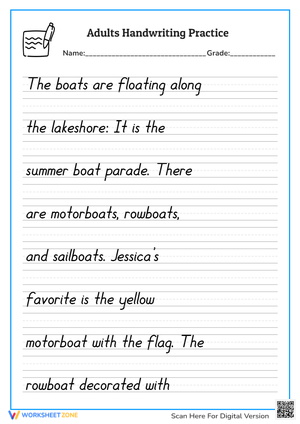
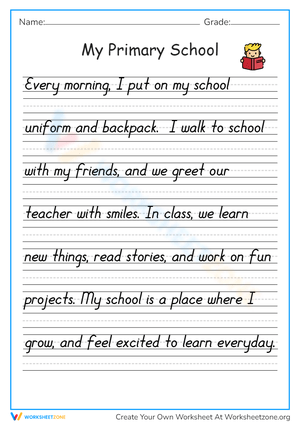
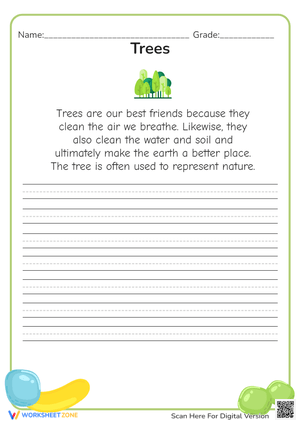
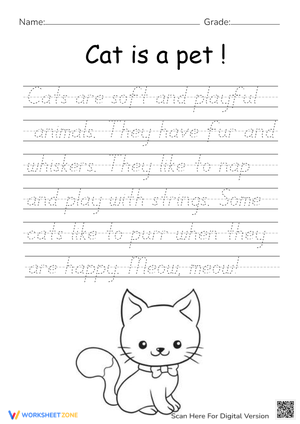
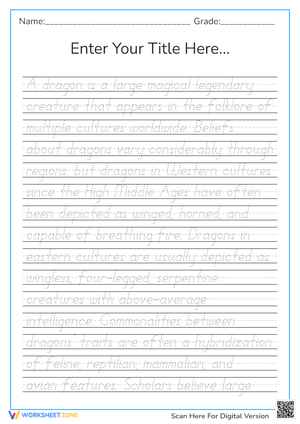
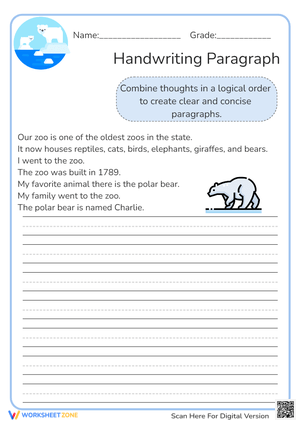
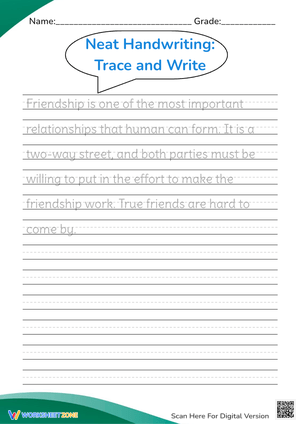
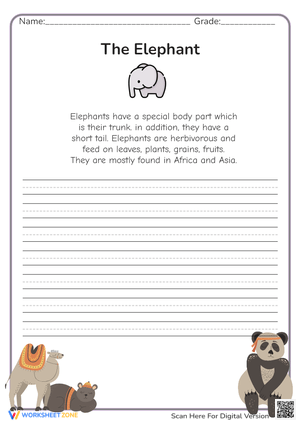
Single letters and word lists get students started, but real writing happens in connected sentences. A handwriting practice paragraph asks students to hold consistent size, slant, and spacing across several lines at once, which is exactly where legibility tends to break down. When a child copies a full paragraph, they manage margins, return sweeps, and word spacing without a teacher resetting the page every few strokes. That sustained demand is what builds the automaticity students need before handwriting stops competing with their ideas during independent writing.
Think of paragraph copywork as the bridge between isolated letter drills and open-ended composition. Letter formation practice teaches the shape; paragraph practice teaches the endurance and layout control that make a science response or a personal narrative readable. For US elementary teachers juggling tight schedules, that bridge matters because one short activity can reinforce motor skills and content at the same time.
Knowing When Students Are Ready to Move Up
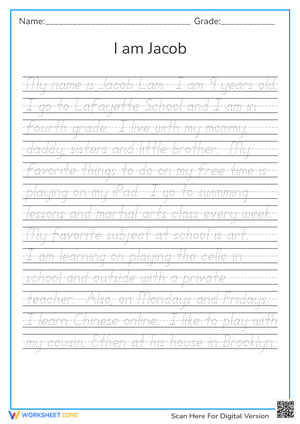
Not every student is ready to jump from word lists to paragraphs, and pushing too early usually produces cramped, illegible work. Look for a few readiness signals before you assign paragraph-length practice. Students should form most lowercase letters correctly from memory, place letters on the baseline without heavy reminders, and leave consistent space between words at the phrase level.
- Letters sit on the baseline with roughly even height.
- Word spacing stays consistent across a full sentence.
- The student copies two or three sentences without fatigue or loss of control.
- Reversals of common letters like b and d are rare.
When those pieces are in place, a paragraph becomes a reasonable next step rather than a source of frustration. If a student meets some but not all of the signals, start with a three-sentence paragraph and grow from there.
What the Research Says About Handwriting Time
Here's the tension most teachers feel but rarely see quantified: the amount of handwriting instruction has collapsed even as evidence for explicit practice has grown stronger. Reviews of handwriting instruction report that recommended daily instruction time fell from about 40 minutes in 1904 to roughly 15 minutes by the 1980s, and many schools now teach it in short bursts introduced in late second or third grade. Paragraph copywork is one efficient way to protect a few of those minutes and make them count.
According to Exploring the Dosage of Handwriting Curricula Among School-Aged Children (Iris Publishers), formal handwriting programs studied averaged about 33.6 minutes per session, three sessions per week, across roughly 13 weeks, totaling close to 93 hours of intervention. That scale shows brief, consistent practice adds up over a term.
Explicit instruction is worth those minutes. A meta-analysis of handwriting fluency research from 2000 to 2020 found that structured, explicit handwriting instruction produces measurable fluency gains for preschool and elementary students, not just neater pages.
Classroom Implementation
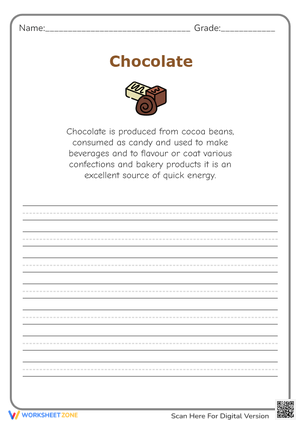
You don't need a full block to make paragraph practice stick. A predictable five to ten minute routine, three or four times a week, mirrors the cadence the dosage research describes and fits inside morning work or the start of writing workshop.
- Post a short model paragraph and read it aloud so students track meaning while they copy.
- Have students self-check one target skill each day, such as spacing or letter height.
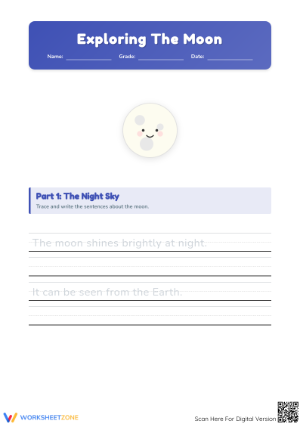
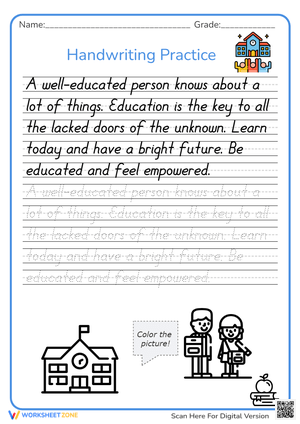
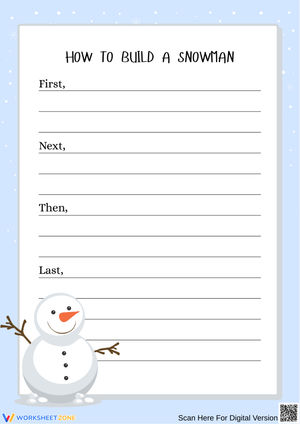
- Tie the paragraph to current content, like a science definition or a social studies fact, so the minutes do double duty.
- Keep a dated folder of paragraphs to show growth to families and specialists.
Rotating the target skill keeps the task from feeling like busywork. One day students focus on even letter size; the next, on the gap between words. Naming a single focus makes feedback fast and concrete.
Differentiating for Fine Motor and IEP Goals
Students with fine motor delays or handwriting goals on an IEP or 504 plan often need the same paragraph broken into smaller, more supported pieces. The goal is legible, sustainable writing, not speed. Shorten the passage, widen the line spacing, and let students use a pencil grip or slant board if that steadies control.
- Offer a two-sentence version of the class paragraph for students building stamina.
- Use highlighted baselines or boxed spacing to cue placement.
- Allow rest breaks so hand fatigue doesn't erode letter quality.
- Track a single measurable target, such as consistent letter size, to align with progress monitoring.
Occupational therapists supporting your classroom can help set realistic targets and suggest positioning fixes. Sharing dated paragraph samples gives them concrete evidence to work from.
Paragraph Copywork as a Formative Check
A completed paragraph is a quick, low-stakes window into a student's handwriting control. Because the text is the same for everyone, differences in spacing, sizing, and slant stand out clearly. Scan a set of paragraphs and you can group students for targeted small-group practice in minutes.
Use a simple three-point check: is it on the baseline, is spacing consistent, is the slant steady? You aren't grading creativity here, so feedback stays focused on motor control and layout. That clarity makes it easy to show students exactly what to adjust next time.
Cursive vs. Print Paragraph Practice
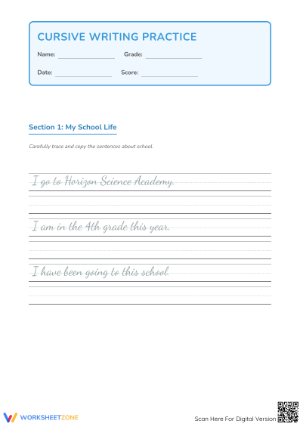
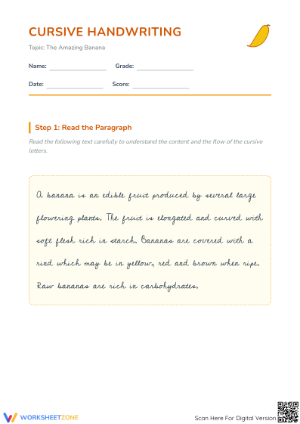
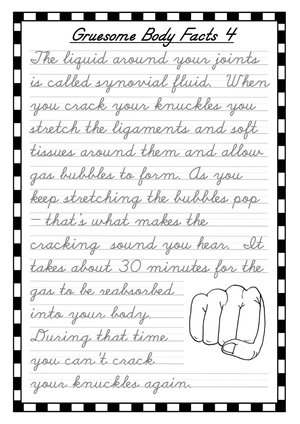
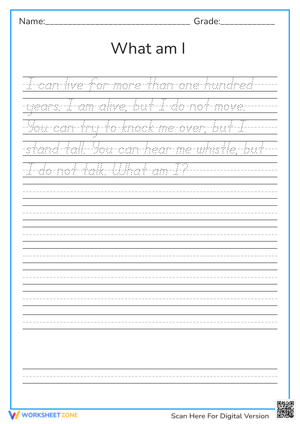
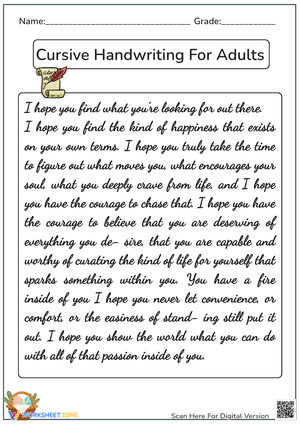
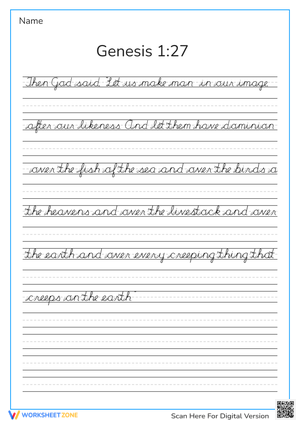
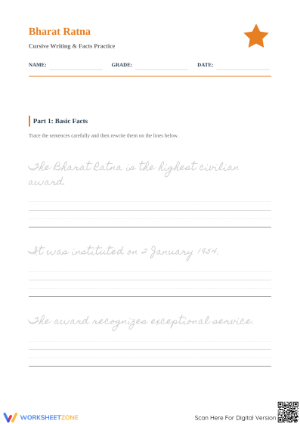
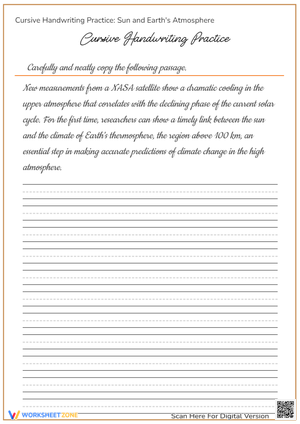
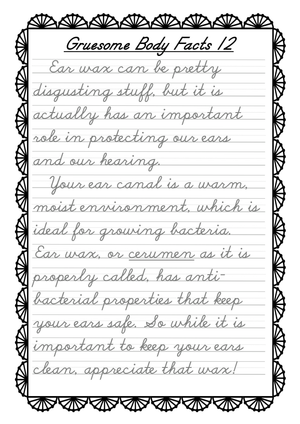
Whether to practice paragraphs in print or cursive depends on your grade level and your school's sequence. Print paragraphs suit younger students still stabilizing letter formation, while cursive paragraphs help older students who have learned connected letters and need practice joining them across a full passage. In schools that still teach cursive, instruction often lands in late second or third grade with only ten to fifteen minutes a day, so paragraph copywork can stretch that limited time.
If you're introducing cursive at the paragraph level, start with sentences that reuse familiar letter joins before moving to mixed content. Keep print available for students who still need it for legible content-area work, since the priority is readable writing across subjects, not a single style.
Frequently Asked Questions
1. What grade should start paragraph-level handwriting practice?
Most students are ready in second or third grade, once they form lowercase letters from memory and keep consistent word spacing across a sentence. Readiness matters more than age, so use the signals above rather than a fixed grade.
2. How often should teachers assign handwriting practice paragraphs?
Three to four short sessions a week works well and echoes the roughly three-sessions-per-week cadence seen in dosage research. Five to ten focused minutes per session is enough to build stamina without crowding out other instruction.
3. How do I know a student is ready to move from words to paragraphs?
Watch for consistent baseline placement, steady word spacing, and the ability to copy two or three sentences without fatigue. When those hold up, a short paragraph is a reasonable next step.
4. Can paragraph practice double as content-area review?
Yes. Copying a science definition, a vocabulary sentence, or a social studies fact lets students rehearse content while practicing handwriting, making the minutes count twice.
5. How should I adapt paragraphs for fine motor delays or IEP goals?
Shorten the passage, widen line spacing, add baseline cues, and allow rest breaks. Track one measurable target, such as letter size, so the practice aligns with progress monitoring.












 Interactive Worksheet Maker
 Quiz Maker
 Word Search Maker
 Crossword Puzzle Maker
 Word Scramble Generator
 Sentence Scramble Generator
 Handwriting Worksheet Generator
 Name Tracing Generator
 Fill In The Blank Generator