




























Views
Downloads
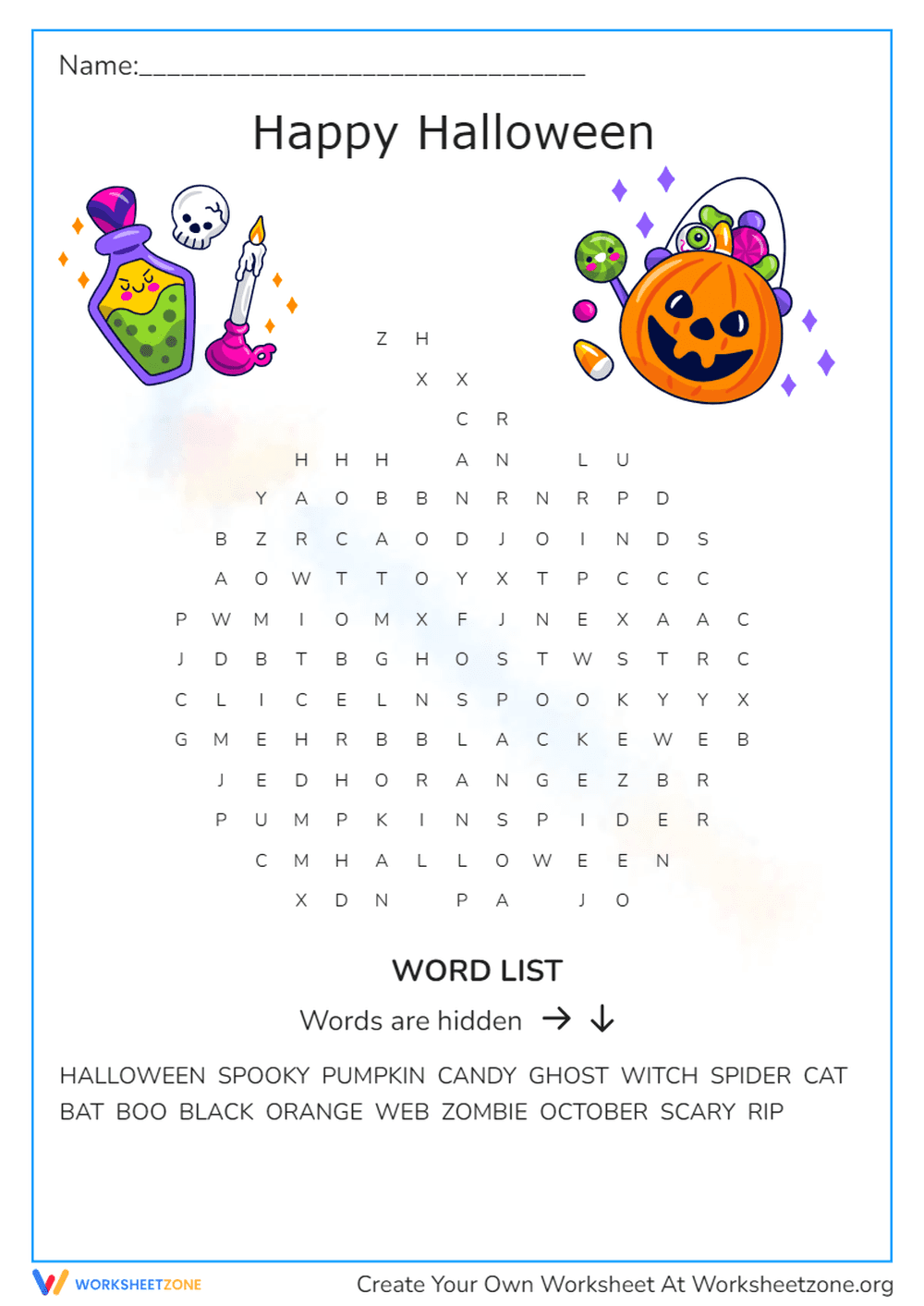

Halloween Word Search: Printable Grade 1 ELA Activity

Paste this activity's link or code into your existing LMS (Google Classroom, Canvas, Teams, Schoology, Moodle, etc.).
Students can open and work on the activity right away, with no student login required.
You'll still be able to track student progress and results from your teacher account.
This printable Halloween word search worksheet helps first-grade students build essential word recognition and spelling skills. By searching for themed vocabulary words, learners reinforce letter-sound correspondences and expand their seasonal vocabulary. This engaging activity supports early reading development while keeping students focused during seasonal transitions.
At a Glance
- Grade: Grade 1 · Subject: English Language Arts
- Standard:
CCSS.ELA-LITERACY.L.1.6— Use words and phrases acquired through reading and conversations- Skill Focus: Word recognition and spelling
- Format: 1 page · 18 problems · Answer key not included · PDF
- Best For: Morning work or seasonal vocabulary practice
- Time: 15–20 minutes
This single-page PDF features a grid of letters containing 18 hidden Halloween-themed words. The word list includes common seasonal terms like "pumpkin," "ghost," "witch," and "candy." Words are hidden horizontally and vertically to match the developmental level of first-grade readers. Clear directional arrows indicate the search directions, providing a helpful visual scaffold for young learners.
The zero-prep workflow makes this resource ideal for busy educators. First, print the single-page PDF, which takes less than 1 minute. Next, distribute the sheets to students, requiring zero setup time. Finally, review the completed word searches individually or as a group, taking about 5 minutes. The total teacher preparation time is under 2 minutes, making this an excellent option for emergency sub plans or transition activities.
Standards Alignment
This activity aligns directly with the Common Core State Standard CCSS.ELA-LITERACY.L.1.6, which focuses on acquiring and using grade-appropriate words and phrases. It also supports foundational reading skills by encouraging students to recognize spelling patterns in context. Both standard codes can be copied directly into lesson plans, IEP goals, or district curriculum mapping tools.
How to Use It
Use this worksheet as a warm-up activity during morning arrival to settle students and focus their attention. Alternatively, assign it as a quiet independent task after direct phonics instruction to reinforce word shape recognition. During the activity, observe how students scan the grid to assess their visual tracking skills. Most first graders will complete the search in 15 to 20 minutes.
Who It's For
This worksheet is designed for first-grade students developing early literacy and word recognition skills. It offers excellent spelling practice for general education classrooms, English language learners, and students receiving special education services. Pair this activity with a read-aloud Halloween story or a seasonal vocabulary anchor chart to deepen word comprehension.
According to a study by Fisher & Frey (2014) on vocabulary acquisition, structured word play and word-finding activities reinforce orthographic mapping in early readers. This worksheet targets word recognition by requiring students to match letter sequences from the word list to the grid, strengthening visual memory and spelling pathways. By focusing on 18 thematic vocabulary words, the activity supports the standard CCSS.ELA-LITERACY.L.1.6, helping students transition from phonetic decoding to automatic word recognition. Integrating seasonal vocabulary tasks into the weekly routine provides a low-stakes environment for students to practice scanning text, which directly correlates with improved reading fluency. Educators can confidently integrate this resource into their phonics and spelling curriculum, knowing it aligns with evidence-based practices for early childhood literacy development.


