


























Views
Downloads
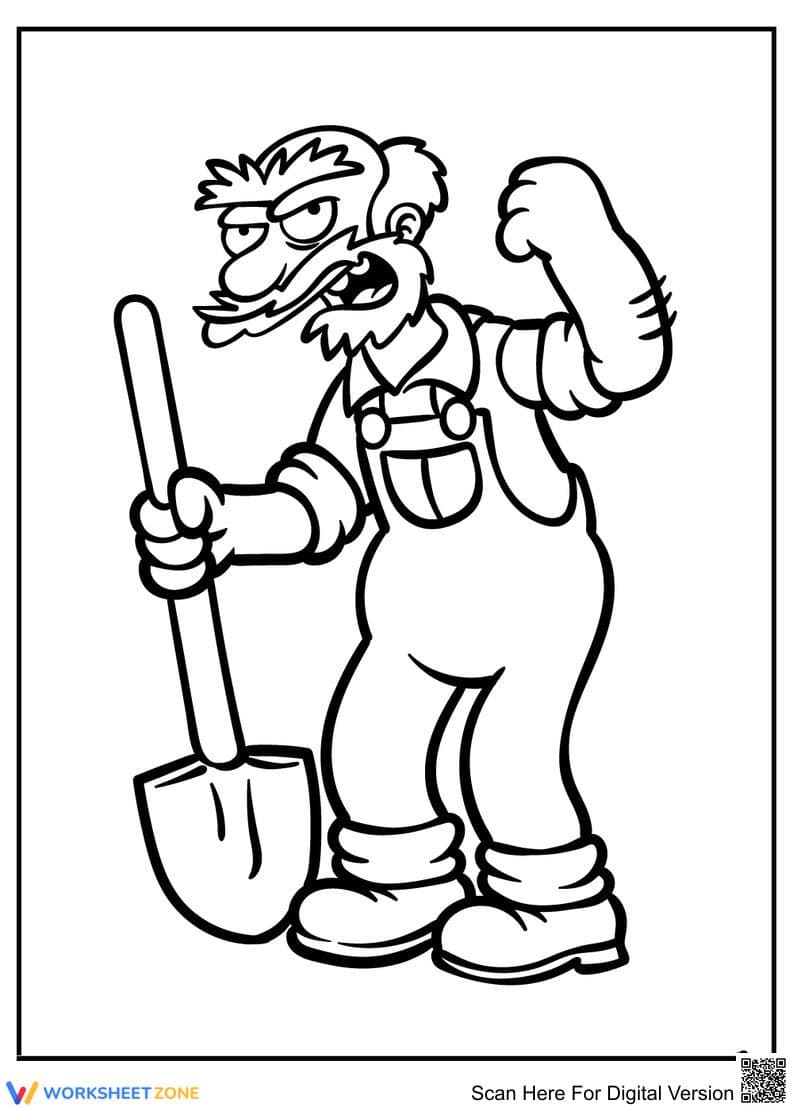

Groundskeeper Willy Coloring Page | Essential Printable
Paste this activity's link or code into your existing LMS (Google Classroom, Canvas, Teams, Schoology, Moodle, etc.).
Students can open and work on the activity right away, with no student login required.
You'll still be able to track student progress and results from your teacher account.
This Groundskeeper Willy coloring page provides a high-interest creative outlet for students to develop fine motor control and character recognition. By engaging with a familiar cartoon figure, learners practice precision in their artistic movements while connecting with media literacy themes. It serves as a versatile tool for early finishers or as a thematic supplement to character-based lessons.
At a Glance
- Grade: K–5 · Subject: Arts & Crafts
- Standard:
CCSS.ELA-LITERACY.RL.K.3— Identify characters and major events in a story or media- Skill Focus: Fine motor skills & character identification
- Format: 1 page · 1 task · No answer key required · PDF
- Best For: Early finishers and creative brain breaks
- Time: 15–20 minutes
What's Inside
This single-page PDF features a high-resolution line drawing of the iconic character Groundskeeper Willy. The illustration includes clear, bold outlines to assist younger students in staying within the lines, while providing enough detail for older students to experiment with shading and texture. The character is depicted with his signature shovel, offering a contextual clue for character-trait discussions and vocabulary building regarding occupations.
Zero-Prep Workflow
- Print: Generate the single-page PDF for your class in seconds.
- Distribute: Hand out the sheets with crayons or markers; no complex instructions are needed.
- Review: Use the finished art as a springboard for a 2-minute discussion on character traits or setting.
This workflow requires under 2 minutes of teacher preparation, making it an ideal sub plan filler or transition activity.
Standards Alignment
This resource aligns with `CCSS.ELA-LITERACY.RL.K.3`, which requires students to identify characters, settings, and major events. While primarily an artistic activity, it supports the visual identification of a specific character from a narrative series. This standard code can be copied directly into lesson plans, IEP goals, or district curriculum mapping tools to justify creative time within an ELA or Arts framework.
How to Use It
Use this worksheet as a formative assessment of fine motor development during a "choice time" block. Observe how students handle coloring tools and their attention to detail. Alternatively, assign it as a quiet-time activity following a lesson on character archetypes or occupations. It typically takes 15 to 20 minutes for a student to complete a full-color version, providing a predictable window for teacher administrative tasks.
Who It's For
This page is designed for elementary students in grades K-5, but it is accessible to any fan of the series. It is particularly effective for students who require sensory-friendly, low-pressure tasks to reset between intensive academic blocks. Pair this with a character trait anchor chart to bridge the gap between art and literary analysis for diverse learners.
According to the RAND AIRS 2024 report, integrating high-interest visual media into the classroom can significantly increase student engagement and persistence in task completion. This Groundskeeper Willy coloring page utilizes the CCSS.ELA-LITERACY.RL.K.3 standard to bridge the gap between popular culture and academic character identification. Research by Fisher & Frey (2014) emphasizes that visual representations are essential for scaffolding the understanding of character traits and narrative roles in early childhood and elementary education. By providing a clear, recognizable figure, this worksheet allows students to practice fine motor skills while reinforcing their ability to distinguish specific characters within a broader media context. The 1-page format ensures that the activity remains focused and manageable, fitting easily into a standard instructional block without overwhelming the learner. This resource serves as a practical application of media literacy and artistic expression in a zero-prep format.


