


























Views
Plays




Grade 3-5 Greek Myths — Essential Printable Quiz
Paste this activity's link or code into your existing LMS (Google Classroom, Canvas, Teams, Schoology, Moodle, etc.).
Students can open and work on the activity right away, with no student login required.
You'll still be able to track student progress and results from your teacher account.
This Grade 3-5 Greek mythology worksheet provides a comprehensive knowledge check on the most influential figures and stories from ancient Greece. Students demonstrate their understanding of character traits and mythological origins by matching descriptions to iconic gods, goddesses, and heroes. This assessment ensures students can accurately identify the cultural foundations of Western literature.
At a Glance
- Grade: 3-5 · Subject: ELA
- Standard:
CCSS.ELA-LITERACY.RL.3.2— Recount myths from diverse cultures and determine their central message- Skill Focus: Greek Mythology Identification
- Format: 5 pages · 10 problems · Answer key included · PDF
- Best For: Quick formative assessment or unit review
- Time: 15–20 minutes
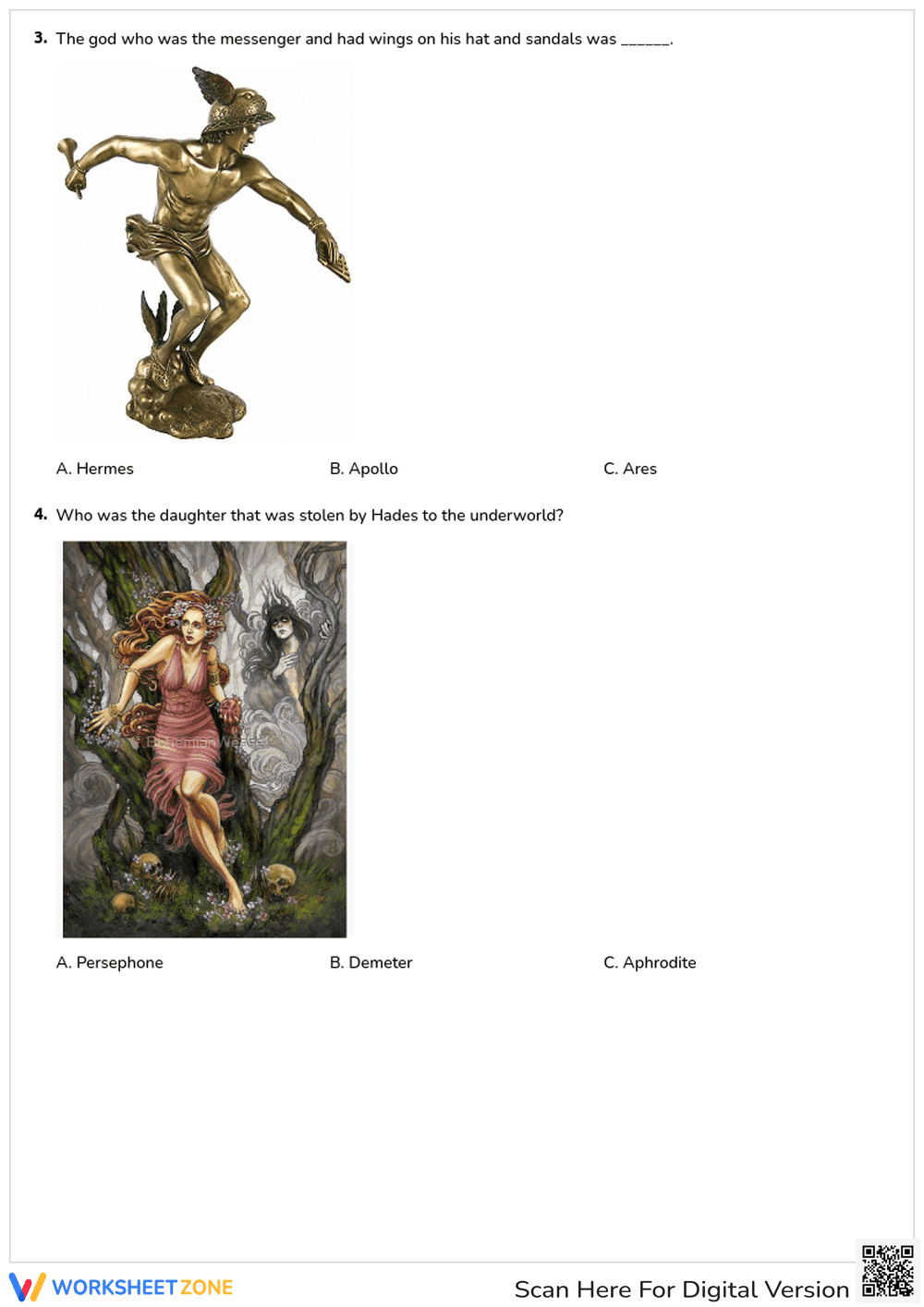
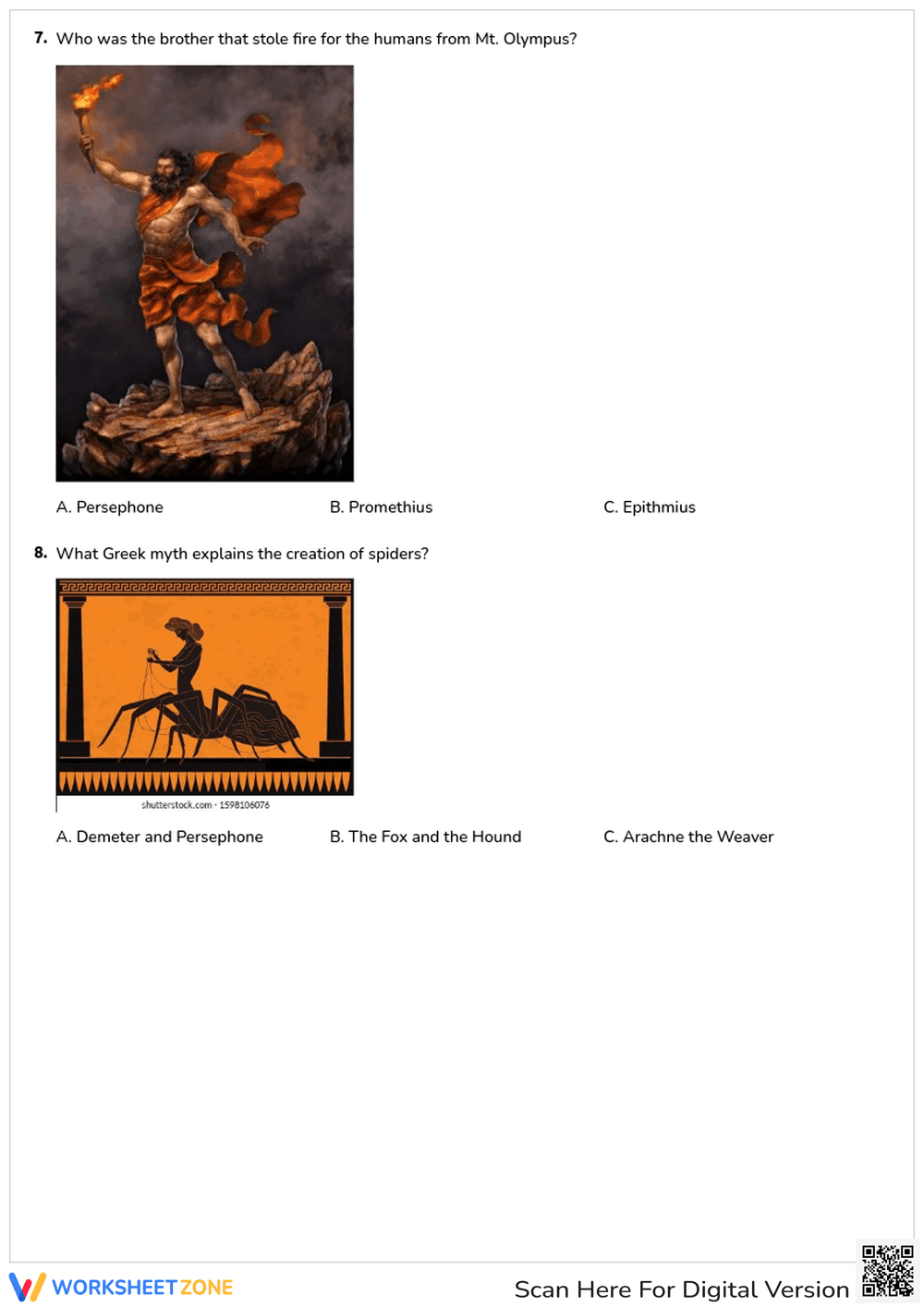
The packet contains 10 structured multiple-choice questions spread across 5 pages. Each question is paired with a high-quality visual illustration to support reading comprehension and visual literacy. The tasks cover essential myths including Pandora’s Box, the theft of fire by Prometheus, and the origin of the Olympic games. A clear answer key is provided for rapid grading and feedback.
This resource is designed for a zero-prep workflow to maximize instructional time. Step 1: Print the 5-page PDF (30 seconds). Step 2: Distribute to students as a quiet-work activity or formal quiz (1 minute). Step 3: Review the 10 multiple-choice questions using the included answer key for immediate feedback (5 minutes). Total teacher preparation time is under 2 minutes, making this an ideal solution for emergency sub plans or unexpected schedule shifts.
This resource is primary aligned to `CCSS.ELA-LITERACY.RL.3.2`: "Recount stories, including fables, folktales, and myths from diverse cultures; determine the central message, lesson, or moral and explain how it is conveyed through key details in the text." It also supports vocabulary acquisition in the L.3.4 strand. Both standard codes can be copied directly into lesson plans, IEP goals, or district curriculum mapping tools.
Use this worksheet as a summative assessment at the end of a mythology unit or as a formative check-in after reading specific myths. During the activity, observe if students rely on the visual cues or the text descriptions to identify characters. This observation helps determine which students may need additional support with text-dependent evidence. Completion typically takes 15 to 20 minutes.
This resource is tailored for elementary students in grades 3 through 5, particularly those who benefit from visual aids and clear, concise questioning. It serves as an excellent companion to a primary mythology text or an anchor chart featuring the Olympian family tree. It is also suitable for English Language Learners (ELL) due to the strong image-to-text correlation.
The CCSS.ELA-LITERACY.RL.3.2 standard requires students to recount stories, including myths from diverse cultures, and determine the central message or lesson. This Greek Myths Unit 4 Knowledge worksheet facilitates this by requiring students to identify key characters and plot elements, such as the origin of spiders or the seasonal shifts associated with Demeter. According to the RAND AIRS 2024 report, high-quality instructional materials that integrate visual scaffolds with text-based inquiry significantly improve retention of cultural literacy in elementary learners. By connecting iconic imagery with specific mythological facts, this resource supports the cognitive retrieval of complex narrative structures. The 10-question format provides a reliable data point for educators to assess whether students have mastered the foundational knowledge necessary for deeper thematic analysis. This alignment ensures that students are not merely memorizing names but are building the cultural schema required for advanced literary comprehension in later grades.


