


























Views
Downloads
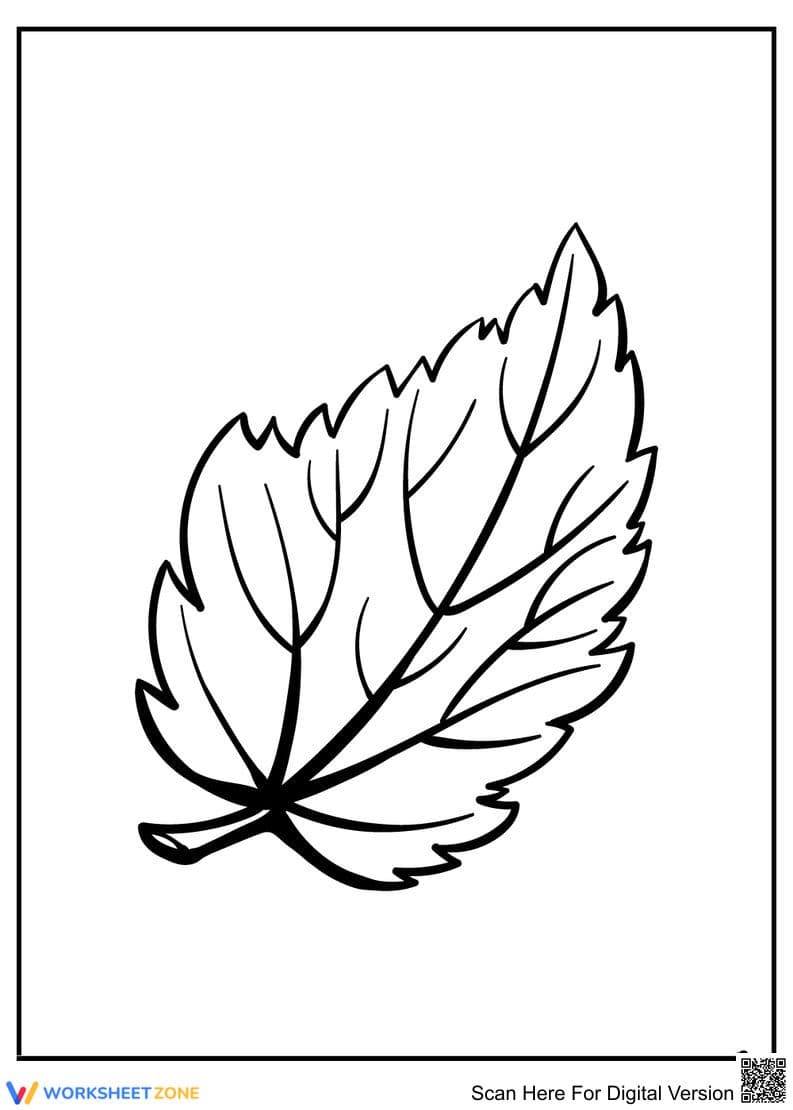

Printable Vein Leaf Coloring Page | Grade K-5 Nature
Paste this activity's link or code into your existing LMS (Google Classroom, Canvas, Teams, Schoology, Moodle, etc.).
Students can open and work on the activity right away, with no student login required.
You'll still be able to track student progress and results from your teacher account.
Nature Observation and Art
This printable vein leaf coloring page provides a focused opportunity for students to develop fine motor control while exploring the intricate patterns of nature. By coloring the detailed vein structures, learners engage in a calming activity that reinforces observational skills. This worksheet is a versatile addition to any science or art curriculum, helping students visualize plant anatomy in a hands-on way.
At a Glance
- Grade: K-5 · Subject: Arts & Nature
- Standard:
K-LS1-1— Use observations to describe patterns of what plants and animals need to survive- Skill Focus: Fine motor control and botanical observation
- Format: 1 page · 1 task · No answer key required · PDF
- Best For: Morning work or science center activity
- Time: 15–20 minutes
What's Inside
Inside this resource, you will find a single-page, high-resolution PDF featuring a large, detailed leaf illustration. The drawing emphasizes the primary and secondary veins, providing a clear map for students to follow as they color. The clean borders and minimalist design ensure that the focus remains entirely on the artistic and observational task at hand, making it suitable for crayons, markers, or colored pencils.
Zero-Prep Workflow
This worksheet is designed for a zero-prep workflow. First, print copies in under 30 seconds. Second, distribute pages during transitions or nature lessons. Finally, review by having students identify leaf parts. Total teacher preparation time is under 2 minutes, making it ideal for sub plans or enrichment.
Standards Alignment
The primary standard addressed is `K-LS1-1`, which involves using observations to describe patterns in the natural world. By focusing on the specific structures of a leaf, students begin to understand how plants are organized to support life. This activity also supports fine motor development, which is a critical precursor to writing standards in the CCSS.ELA-LITERACY.L.K.1 strand. Both standard codes can be copied directly into lesson plans, IEP goals, or district curriculum mapping tools.
How to Use It
Use this as a formative assessment during a plant unit. Observe tool handling and identification of vein structures. It works well as a calm activity after recess or for early finishers. Expect completion in 15 to 20 minutes, depending on the detail applied.
Who It's For
This resource is perfect for early elementary students, including those in Preschool and Kindergarten, but remains engaging for older students in Grades 1-5 who enjoy detailed coloring. It is particularly effective for students requiring fine motor intervention or those in special education settings. Pair this worksheet with a real leaf collection activity to create a comprehensive learning experience.
Research from Fisher & Frey (2014) emphasizes the importance of visual literacy and fine motor development in early childhood education. This vein leaf worksheet supports these developmental milestones by providing a structured yet creative outlet for students to explore natural patterns. By engaging with the intricate vein structures of the leaf, learners develop the observational skills necessary for scientific inquiry and the manual dexterity required for writing. The alignment with K-LS1-1 ensures that this activity is not merely a coloring exercise but a foundational step in understanding plant biology and structure. According to the NAEP, early exposure to nature-based art activities correlates with higher engagement in STEM subjects later in academic careers. This resource provides a high-quality, accessible way to integrate these cross-curricular benefits into any classroom setting, making it a valuable tool for educators seeking to balance artistic expression with standards-based learning objectives.


