


























Views
Downloads
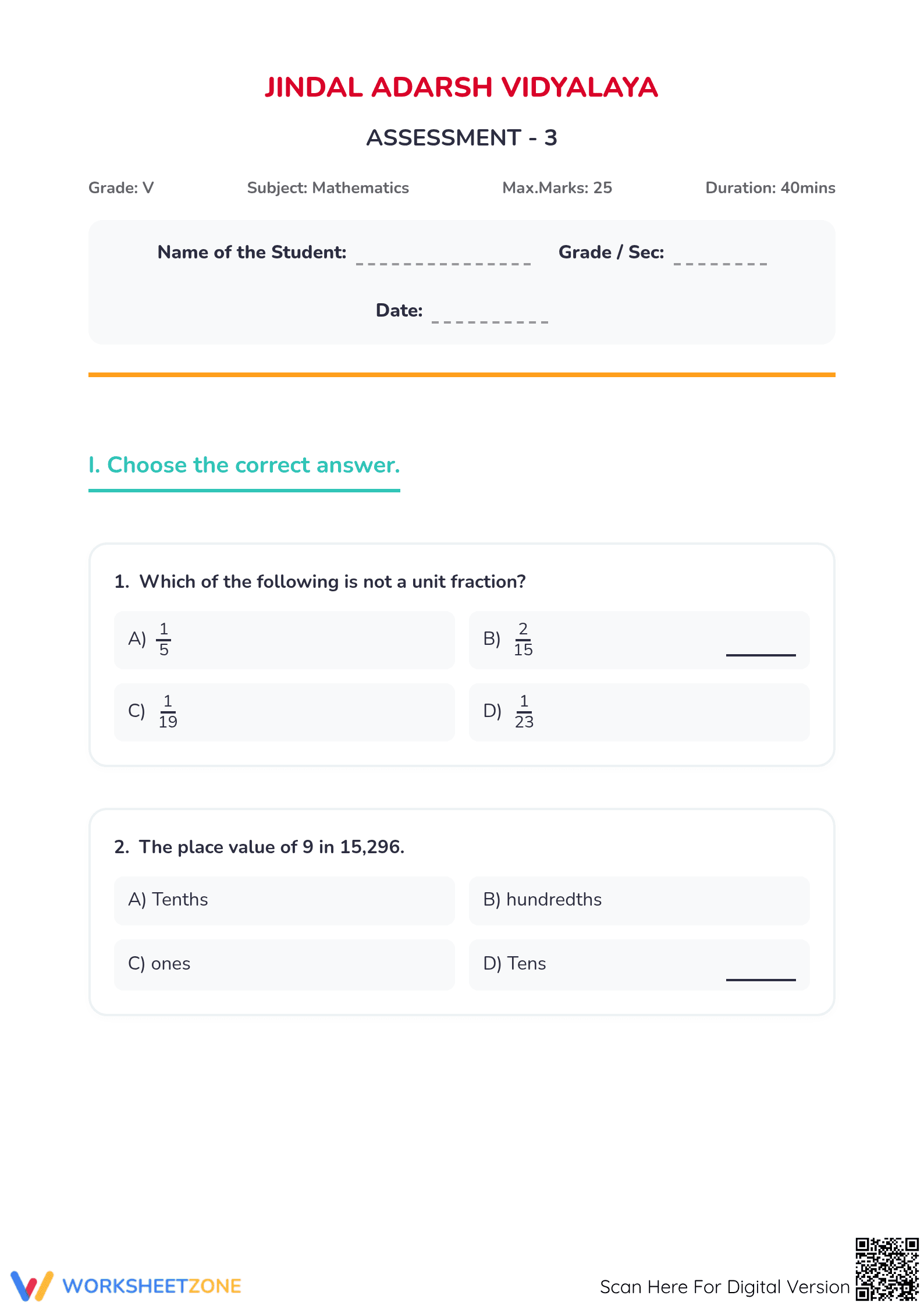
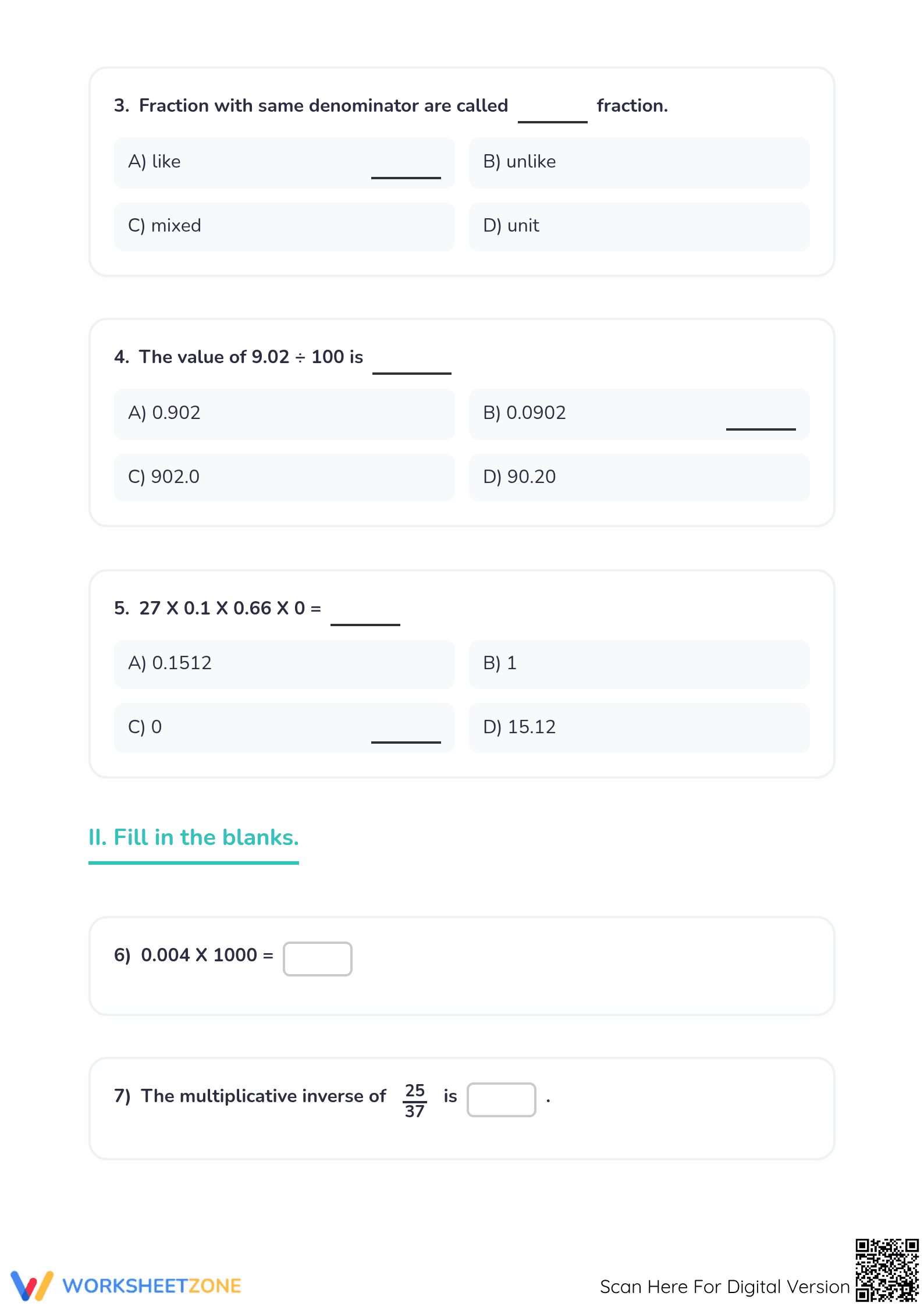
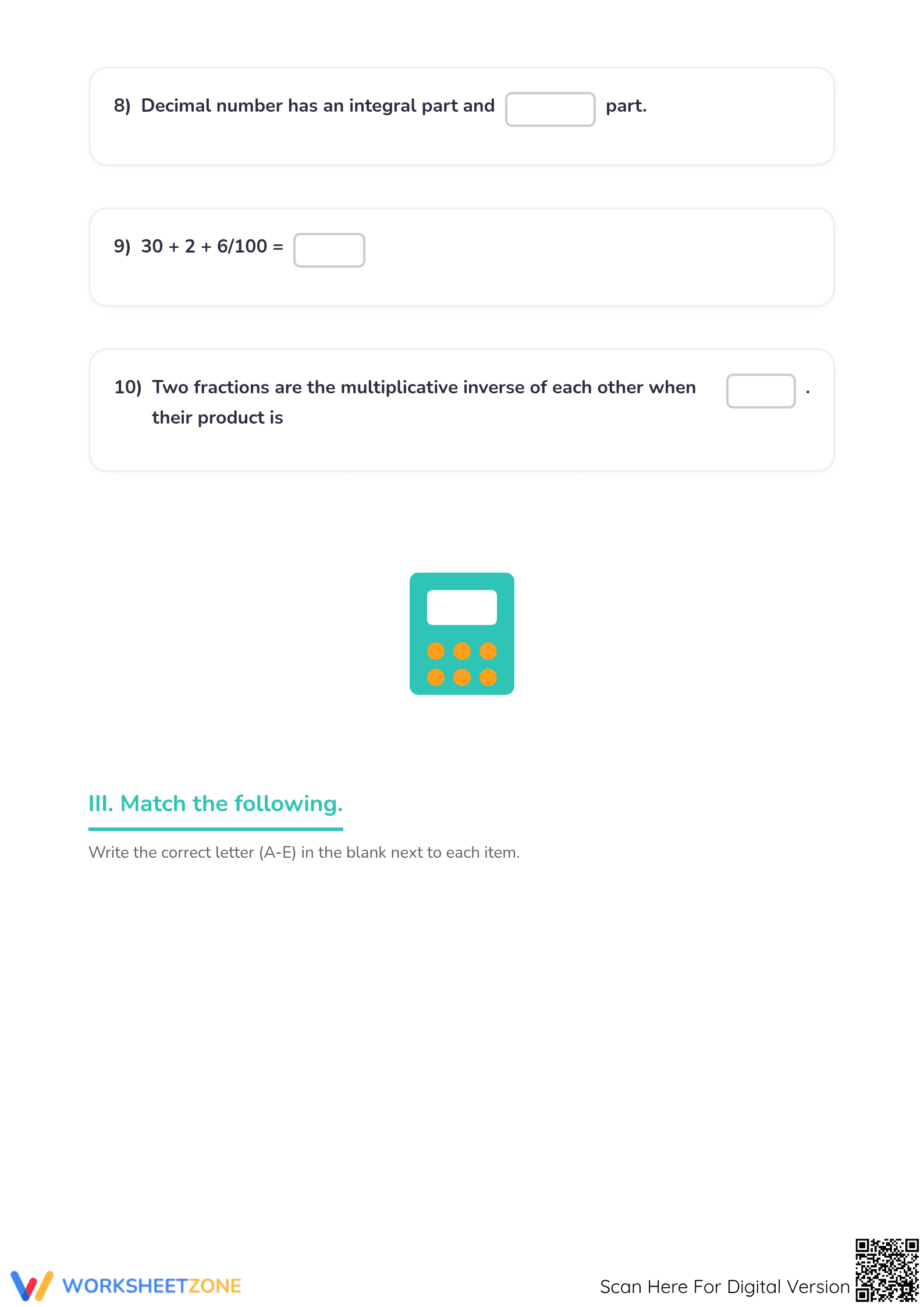
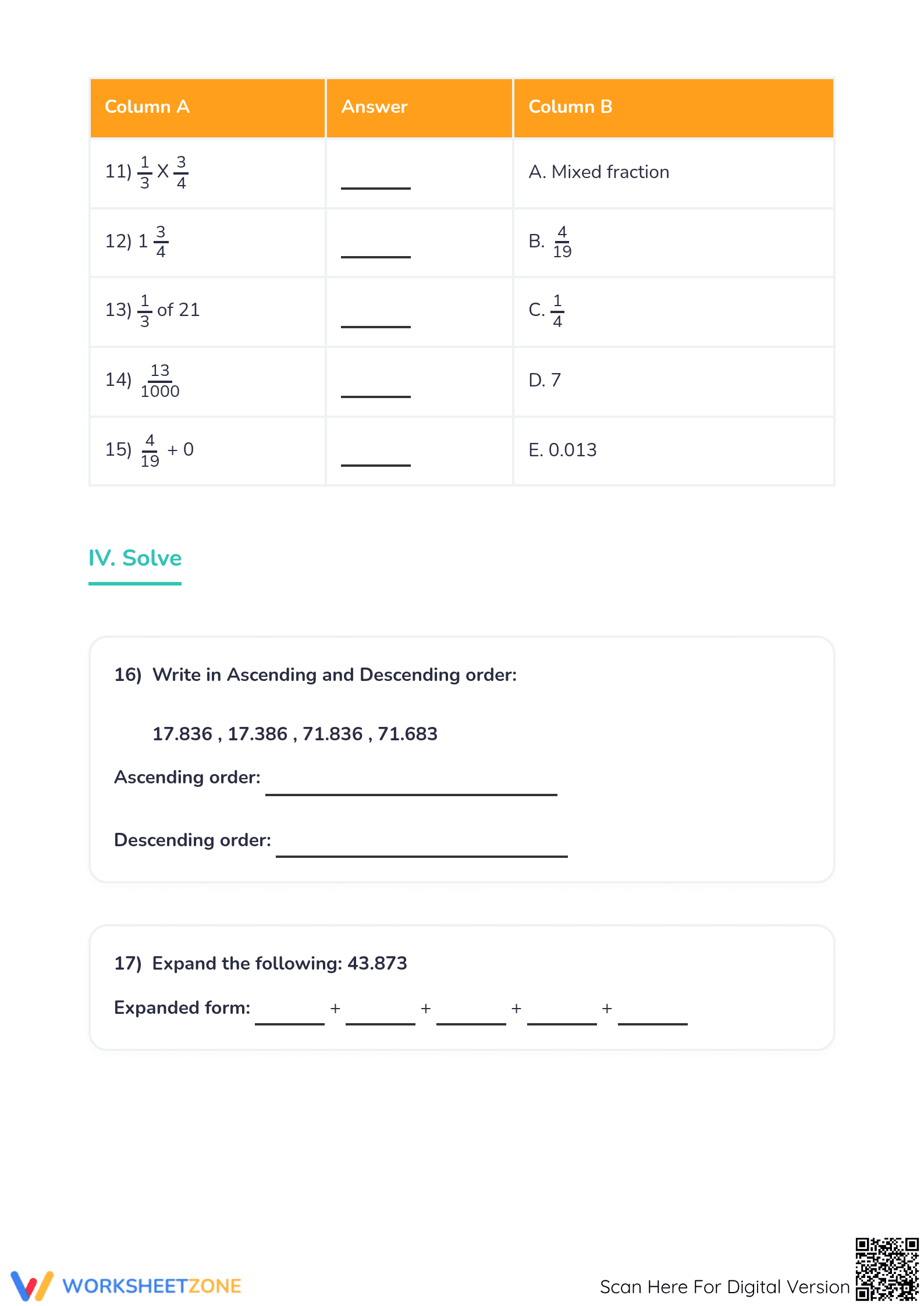

Essential Grade 5 Decimals Assessment: Aligned to 5.NBT.B.7
Paste this activity's link or code into your existing LMS (Google Classroom, Canvas, Teams, Schoology, Moodle, etc.).
Students can open and work on the activity right away, with no student login required.
You'll still be able to track student progress and results from your teacher account.
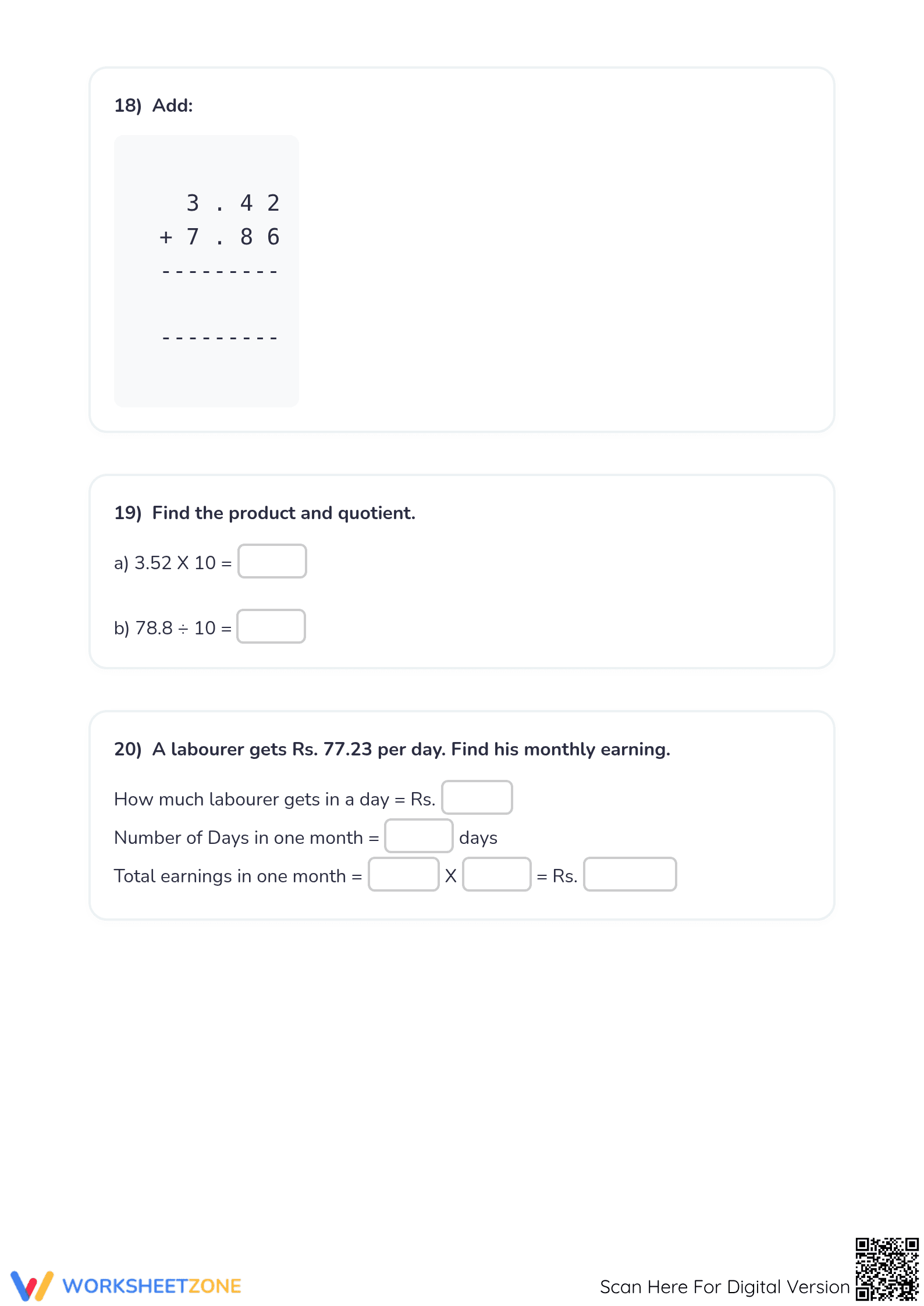
This Grade 5 math assessment provides a comprehensive evaluation of decimal operations and conceptual understanding. Students solve varied problems involving addition, subtraction, multiplication, and division of decimals to the hundredths place. It ensures students can apply decimal logic to real-world word problems and standard algorithms effectively while building mathematical fluency.
At a Glance
- Grade: 5 · Subject: Math
- Standard:
5.NBT.B.7— Add, subtract, multiply, and divide decimals to hundredths using strategies and models- Skill Focus: Decimal Fluency and Operations
- Format: 5 pages · 25 problems · Answer key included · PDF
- Best For: Summative end-of-unit decimal assessment
- Time: 40–50 minutes
What's Inside: This 5-page PDF contains 25 distinct problems designed to test the full breadth of fifth-grade decimal standards. The tasks include basic computation, comparing values, rounding to specific place values, and complex word problems involving currency and measurements. A complete, easy-to-read answer key is provided to ensure efficient grading and immediate student feedback.
Mastery Evidence: Tasks are strategically mapped to 5.NBT.B.7, ranging from basic computation to multi-step applications. This allows teachers to identify specific mastery levels: Approaching (basic computation), Meeting (word problem application), and Exceeding (complex multi-step reasoning). Detailed results from these 25 items can be entered directly into standards-based gradebooks or used to inform IEP progress notes for individualized goal tracking.
Standards Alignment: This resource is rigorously aligned to CCSS.MATH.CONTENT.5.NBT.B.7, which requires students to add, subtract, multiply, and divide decimals to hundredths, using concrete models or drawings and strategies based on place value. It also supports 5.NBT.A.3 and 5.NBT.A.4 through tasks focused on comparing and rounding. Both standard codes can be copied directly into lesson plans, IEP goals, or district curriculum mapping tools.
How to Use It: Use this as a summative assessment at the end of a decimals unit or as a rigorous pre-assessment to gauge prior knowledge. Educators can analyze student responses to form small intervention groups focused on specific operational errors identified in the word problem sections. The varied task formats make it an ideal tool for benchmark testing throughout the school year.
Who It's For: Designed for Grade 5 students mastering the Number and Operations in Base Ten domain. It provides the necessary rigor for general education classrooms and can be scaffolded for students with IEPs by using the included visual cues and clear, uncluttered formatting. It is a natural pairing for instructional units focused on decimal place value and real-world financial literacy.
Research from RAND AIRS 2024 emphasizes that structured assessments in the 5.NBT.B.7 domain are critical for developing the fluency required for algebraic transitions. By combining abstract computation with concrete word problem scenarios, this assessment aligns with Fisher & Frey (2014) methodology, moving students from guided calculation to independent mathematical reasoning. National assessments like NAEP frequently highlight decimal operations as a pivot point for middle school success; therefore, high-quality, standards-aligned practice is essential for long-term growth. This assessment provides the data points necessary for evidence-based instruction, ensuring that student outcomes are measured against rigorous national benchmarks. The inclusion of a 5-page answer key further supports immediate feedback cycles, which are proven to enhance student retention and accuracy in decimal place value logic during the critical fifth-grade bridge year.


