


























Views
Plays


Grade 3 Weather Hazards — Printable No-Prep Worksheet
Paste this activity's link or code into your existing LMS (Google Classroom, Canvas, Teams, Schoology, Moodle, etc.).
Students can open and work on the activity right away, with no student login required.
You'll still be able to track student progress and results from your teacher account.
This Grade 3 science worksheet helps students identify and describe severe weather hazards. By completing targeted fill-in-the-blank sentences using a provided word bank, learners build essential vocabulary around storms, droughts, and extreme temperatures, laying the groundwork for understanding natural phenomena.
At a Glance
- Grade: 3 · Subject: Science
- Standard:
3-ESS3-1— Identify and describe weather-related hazards and their impacts- Skill Focus: Weather hazard vocabulary
- Format: 3 pages · 8 problems · PDF
- Best For: Independent practice or science centers
- Time: 10–15 minutes
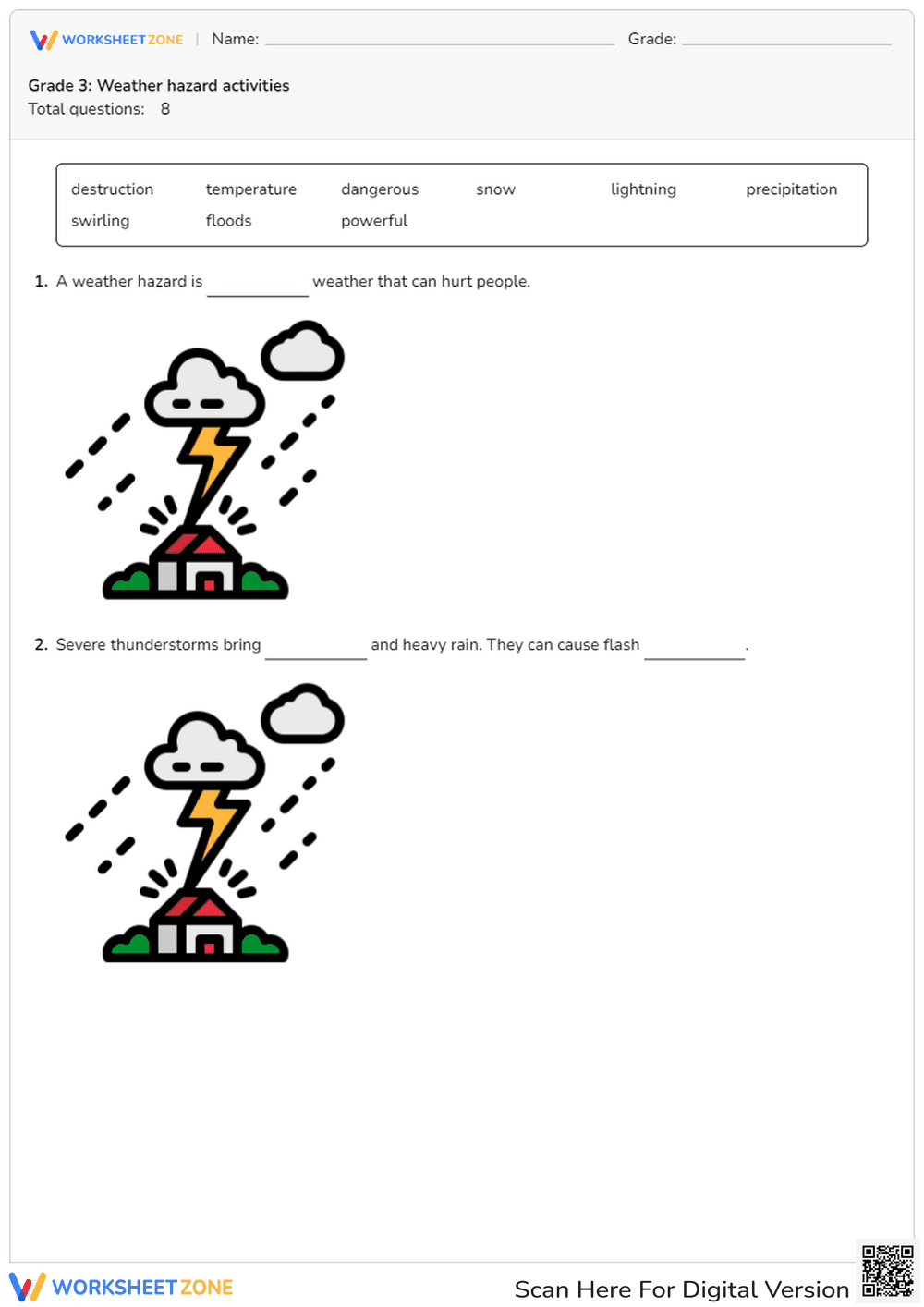
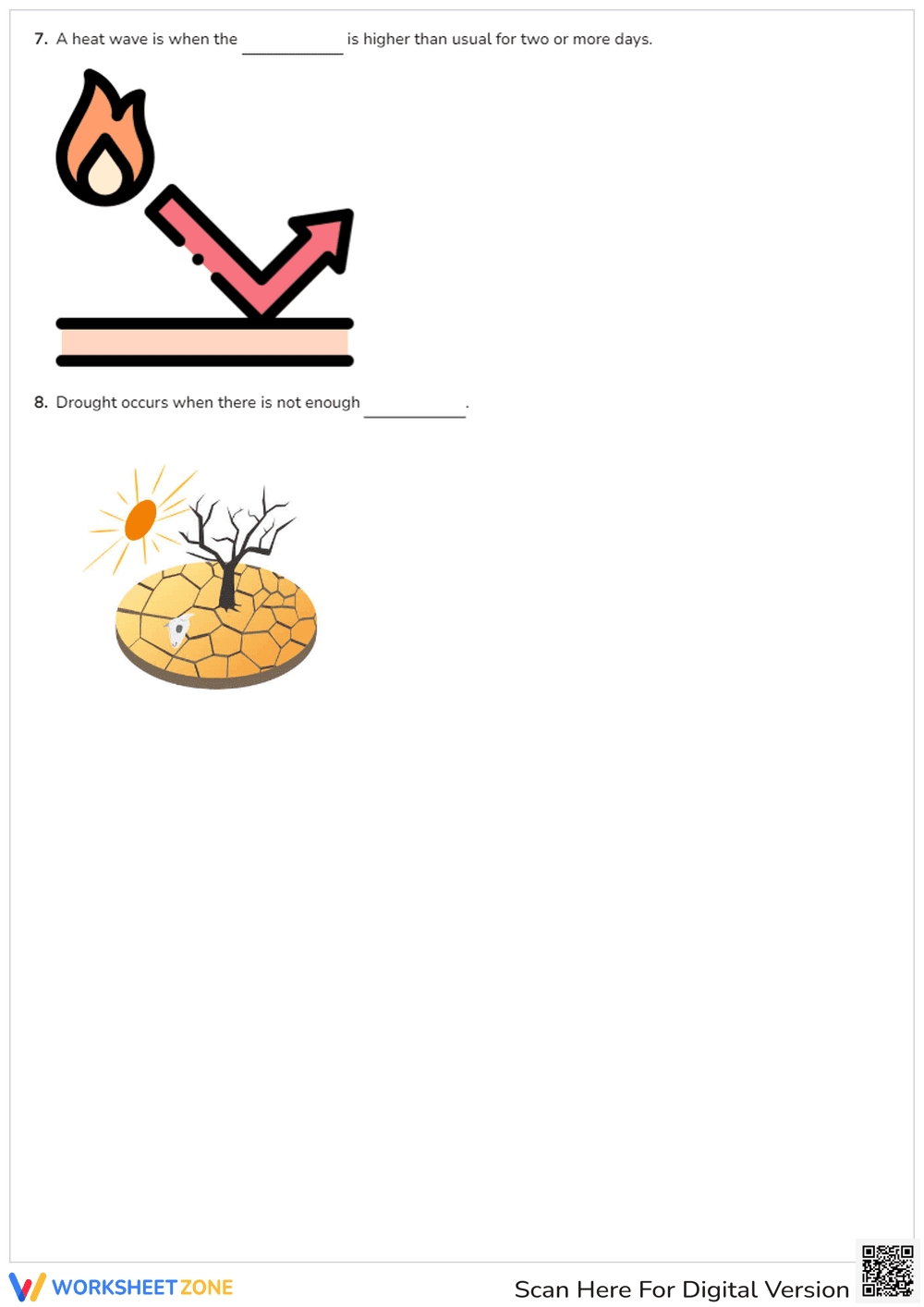
This resource features three pages of highly visual, structured practice. Students are presented with eight fill-in-the-blank statements accompanied by clear, engaging icons representing different weather events like tornadoes, blizzards, and heat waves. A comprehensive word bank at the top of the first page provides necessary scaffolding, ensuring students can confidently select terms such as "precipitation," "destruction," and "temperature" to complete each scientific description.
Zero-Prep Workflow
This worksheet is designed for immediate classroom implementation with minimal teacher setup:
- Print (1 minute): Simply download the PDF and print the three-page set for each student. The clean layout ensures high-quality black-and-white printing.
- Distribute (1 minute): Hand out the worksheets during your science block. The included word bank means students can begin working immediately without extensive pre-teaching.
- Review (3 minutes): Go over the eight sentences together as a class to reinforce pronunciation and comprehension of the new earth science vocabulary.
With under two minutes of total teacher prep time, this activity is an excellent addition to any emergency sub plan or quick science center.
Standards Alignment
This activity aligns with Next Generation Science Standards, specifically supporting 3-ESS3-1: Make a claim about the merit of a design solution that reduces the impacts of a weather-related hazard. By mastering the foundational vocabulary of these hazards, students are better prepared to discuss and evaluate potential solutions. Both standard codes can be copied directly into lesson plans, IEP goals, or district curriculum mapping tools.
How to Use It
Introduce this worksheet after a brief direct instruction lesson on extreme weather. It serves as an excellent independent practice activity to solidify new terms. Alternatively, use it as a formative assessment tool; observe which vocabulary words students struggle to place correctly to gauge their understanding of specific hazard characteristics. The entire activity should take most third graders between 10 and 15 minutes to complete.
Who It's For
This resource is ideal for third-grade general education students, as well as English Language Learners who benefit from the strong visual cues and word bank scaffolding. The clear icons next to each sentence provide excellent context clues for developing readers. Pair this worksheet with a non-fiction reading passage about extreme weather or a classroom anchor chart detailing storm safety procedures.
Effective science instruction requires students to master domain-specific vocabulary before engaging in higher-order analytical tasks. This worksheet directly supports 3-ESS3-1 by helping students identify and describe weather-related hazards. According to an EdReports 2024 analysis, providing explicit vocabulary practice with visual scaffolding significantly increases student retention of earth science concepts. By utilizing a word bank and imagery for terms like "drought," educators reduce cognitive load, allowing learners to focus on defining characteristics. This foundational knowledge is critical for subsequent lessons evaluating design solutions for natural hazards, ensuring precise language for scientific reasoning.


