


























Views
Downloads


Printable Grade 1 ABC Order Worksheet | Essential Practice
Paste this activity's link or code into your existing LMS (Google Classroom, Canvas, Teams, Schoology, Moodle, etc.).
Students can open and work on the activity right away, with no student login required.
You'll still be able to track student progress and results from your teacher account.
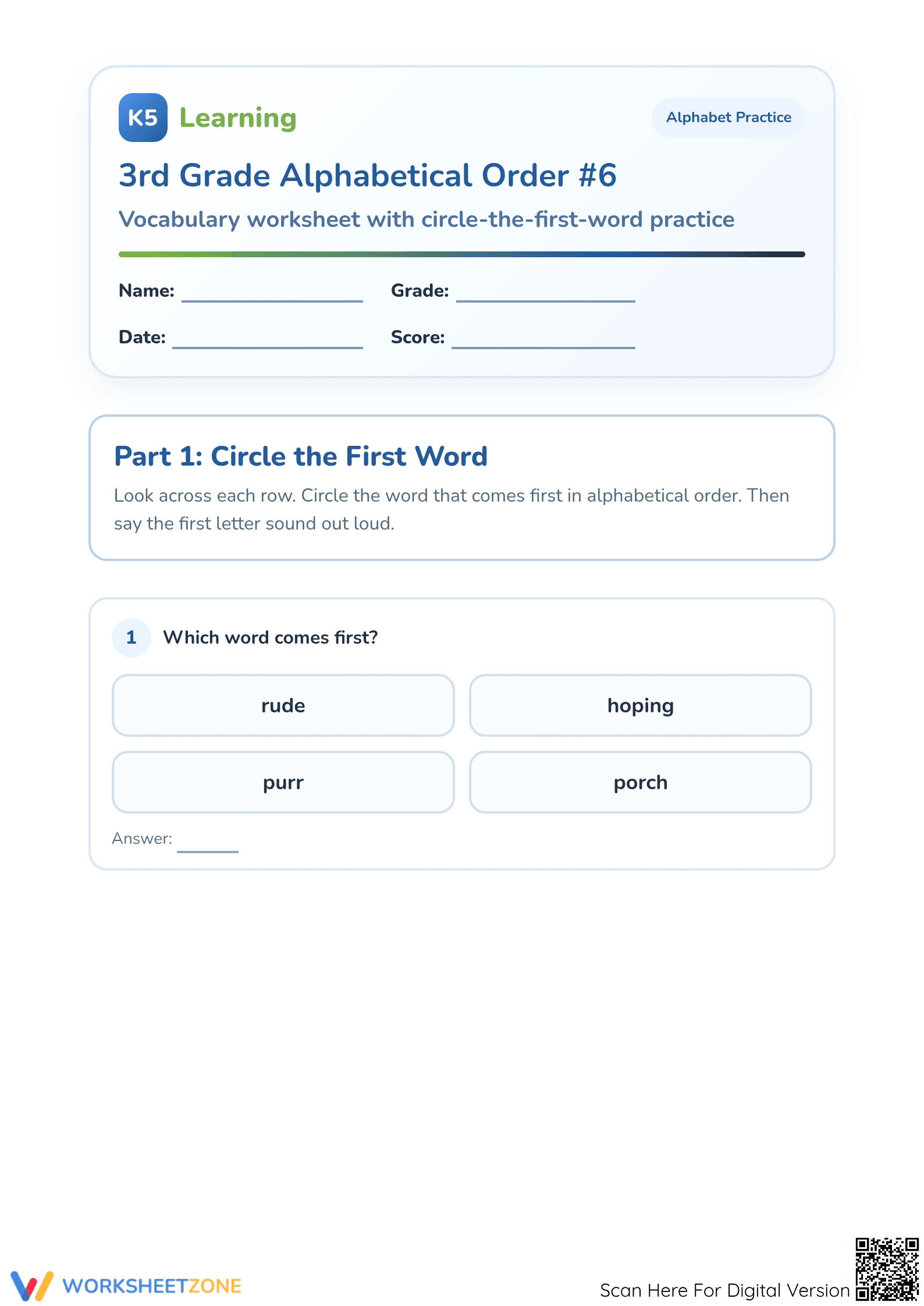
Mastering alphabetical order is a foundational literacy skill that streamlines future dictionary use and information retrieval. This Grade 1 ELA worksheet provides students with 13 structured opportunities to identify which words come first in alphabetical sequences. Students develop letter-sound recognition and sequence logic, ensuring they can organize vocabulary words with accuracy and speed.
At a Glance
- Grade: 1 · Subject: English Language Arts
- Standard:
CCSS.ELA-LITERACY.L.1.1— Organize words alphabetically using the first and second letters- Skill Focus: Alphabetical Order (First & Second Letter)
- Format: 5 pages · 13 problems · Answer key included · PDF
- Best For: Independent practice or literacy center activity
- Time: 15–20 minutes
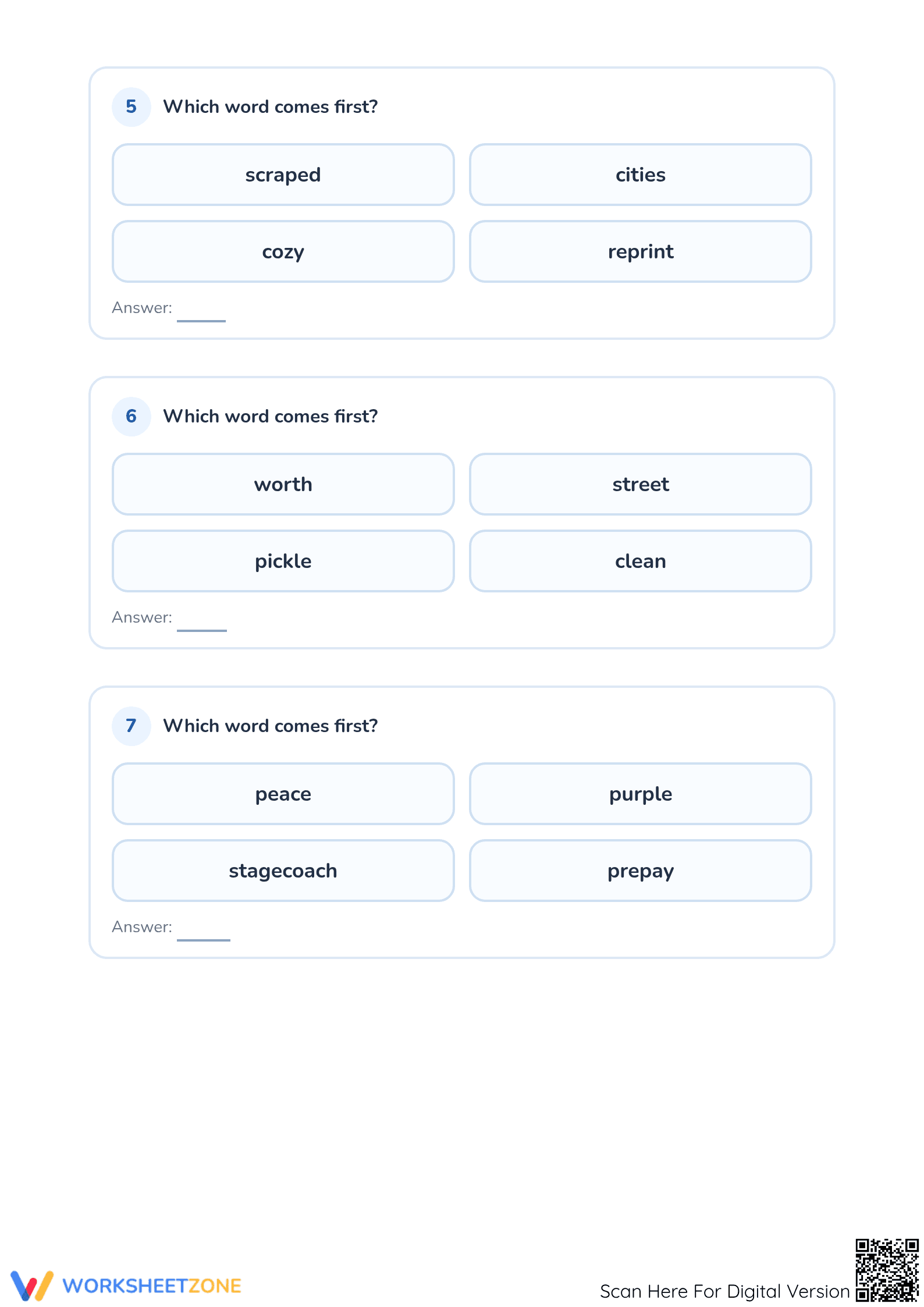
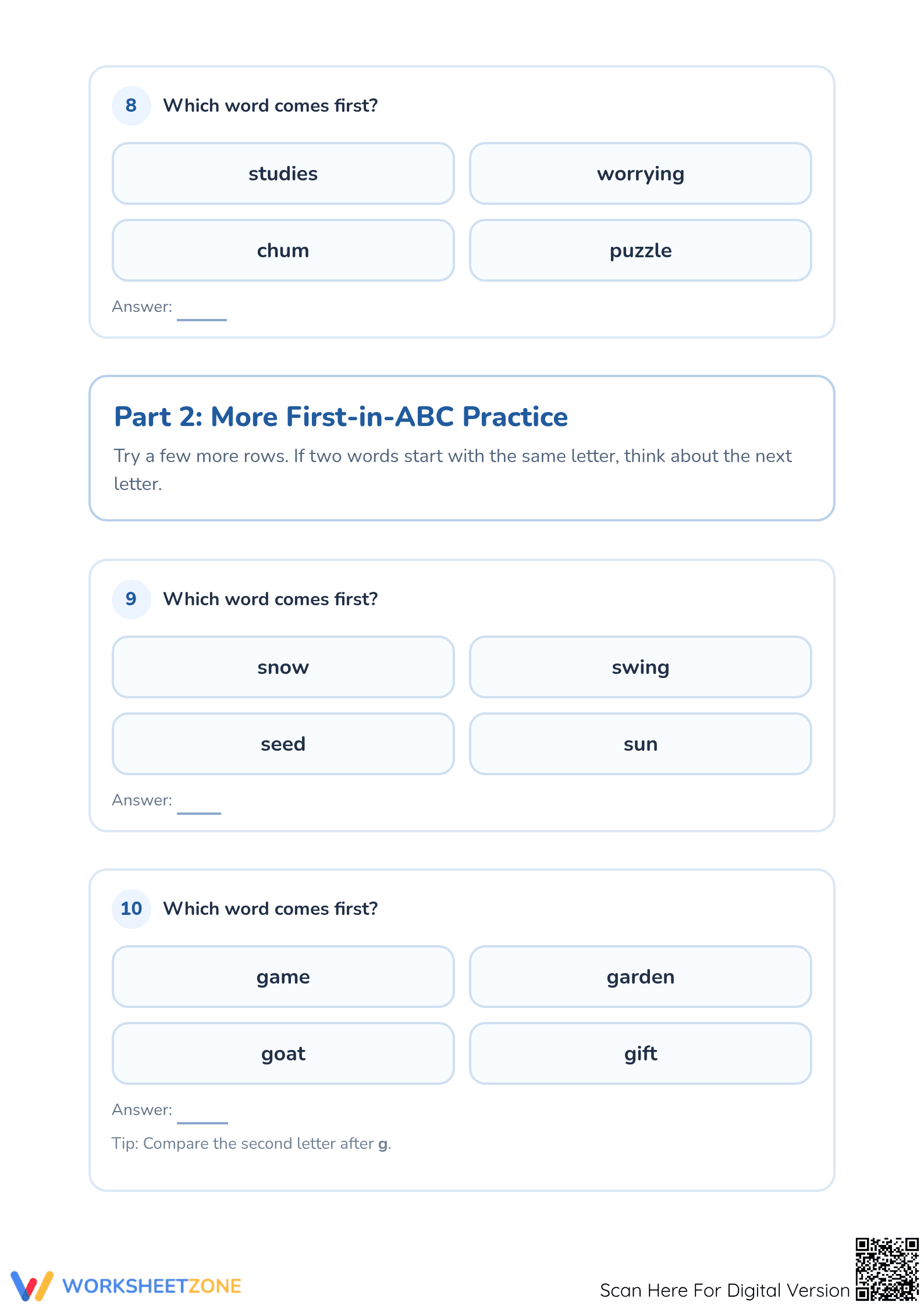
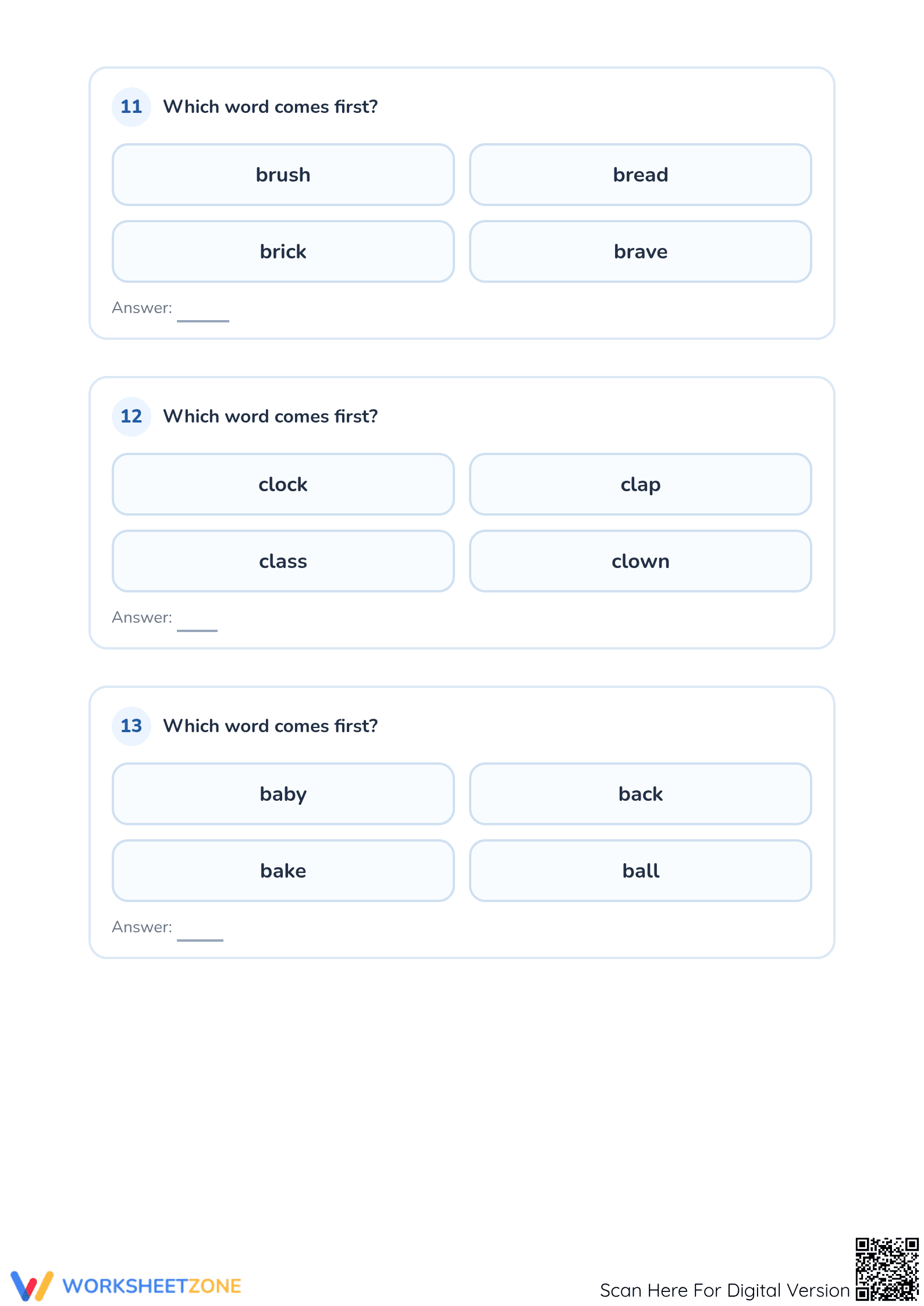
This comprehensive 5-page PDF contains two distinct practice sections designed to build alphabetical mastery. Part 1 features 8 rows where students must circle the word that appears first in the alphabet from a set of four options. Part 2 challenges students with 5 additional problems that introduce second-letter comparison, helping them transition from simple first-letter sorting to more complex organizational logic. A full answer key is provided for immediate feedback.
Zero-Prep Workflow
This worksheet is designed for maximum efficiency in the classroom or at home. Simply Print the five-page document in seconds, Distribute the sheets to students with a quick verbal instruction to find the word that starts with the earliest letter, and Review using the included answer key for either peer-grading or teacher assessment. Total teacher prep time is targeted at under two minutes, making it an ideal resource for morning work or sub plans.
Standards Alignment
The primary standard addressed is CCSS.ELA-LITERACY.L.1.1, which requires students to demonstrate command of the conventions of standard English grammar and usage. Sorting words alphabetically is a critical sub-skill of organizing language and efficiently using reference materials as students progress in their literacy journey. Both standard codes can be copied directly into lesson plans, IEP goals, or district curriculum mapping tools.
How to Use It
Use this worksheet as a formative assessment during your conventions of language unit to gauge student understanding of letter sequencing. It works excellently as a do-now activity at the start of a literacy block or as a quiet-time center task. Teachers should observe students during Part 2 to see if they naturally apply the second-letter comparison strategy. Expected completion time ranges from 15 to 20 minutes depending on the student's familiarity with the alphabet.
Who It's For
This resource is perfect for Grade 1 students who have mastered the basic alphabet and are ready to apply that knowledge to word-level organization. It is particularly beneficial for visual learners who need structured boxes and clear choices to stay focused. This worksheet pairs naturally with a classroom word wall or a primary dictionary during direct instruction to reinforce real-world application of sequencing skills.
According to the NAEP framework, organizational skills like alphabetizing are strong predictors of later efficiency in information literacy and academic research. This Grade 1 worksheet targets the CCSS.ELA-LITERACY.L.1.1 standard by requiring students to apply alphabetical logic to 13 varied tasks. Research from the Fisher & Frey (2014) study on gradual release of responsibility supports this worksheet's structure, which moves from simple first-letter identification to more nuanced second-letter comparison. By providing clear visual boundaries and a self-contained format, the resource ensures that students can focus on the cognitive load of sequencing without being overwhelmed by page layout. The inclusion of a full answer key facilitates immediate reinforcement, a key component in early childhood learning cycles. By integrating both guided and independent practice phases, the activity aligns with the RAND AIRS 2024 recommendations for systematic convention instruction.


