


























Views
Downloads
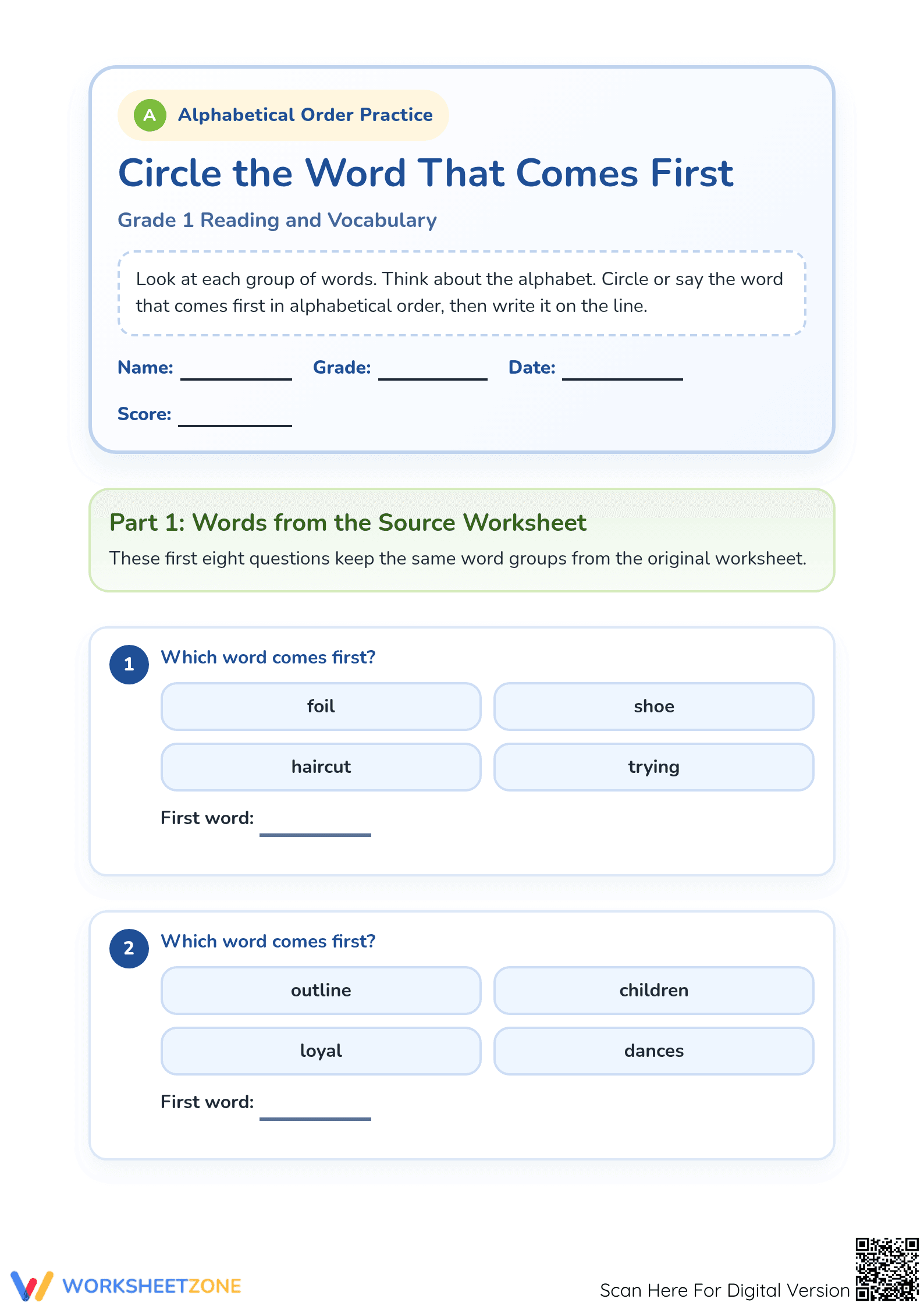
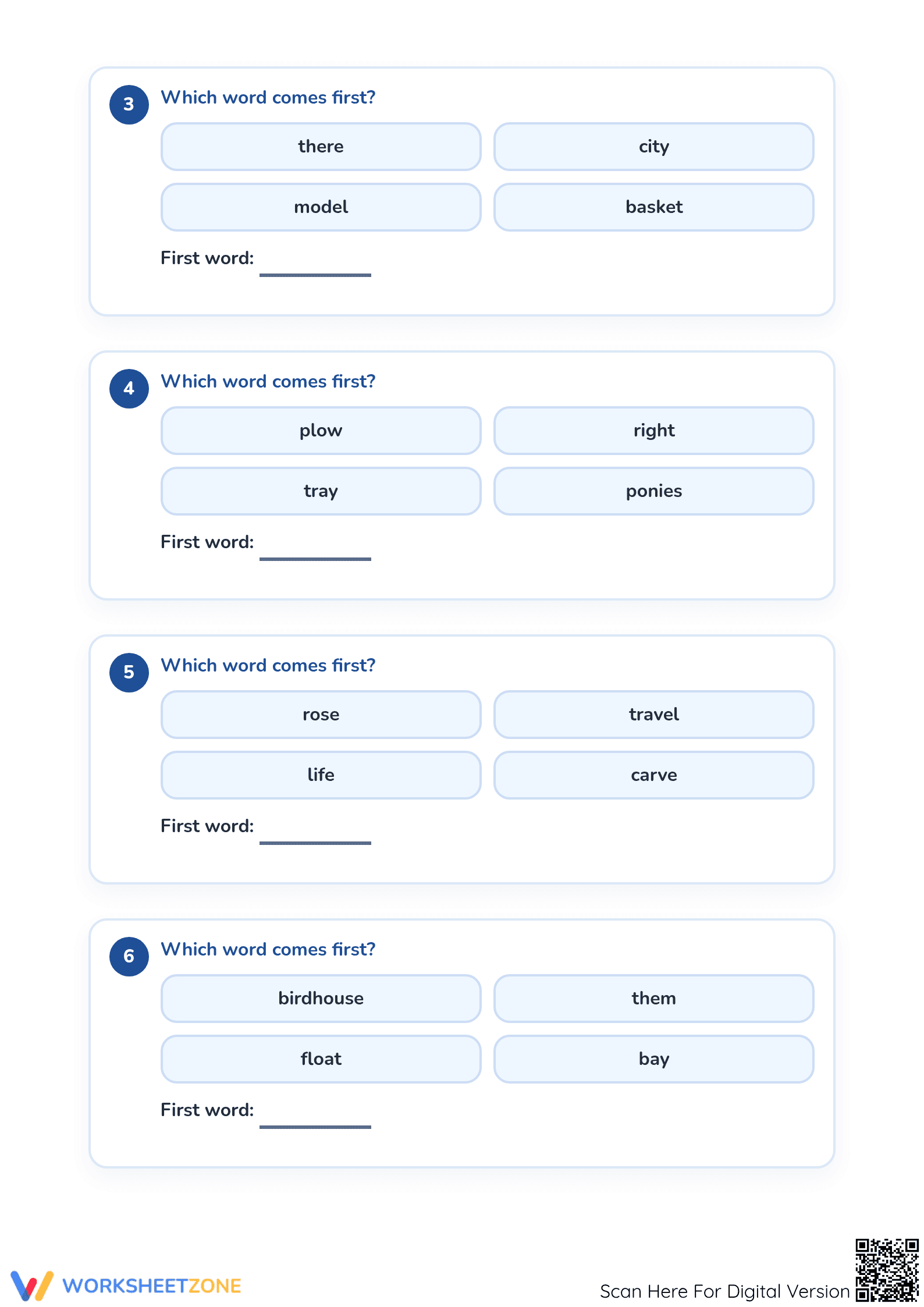
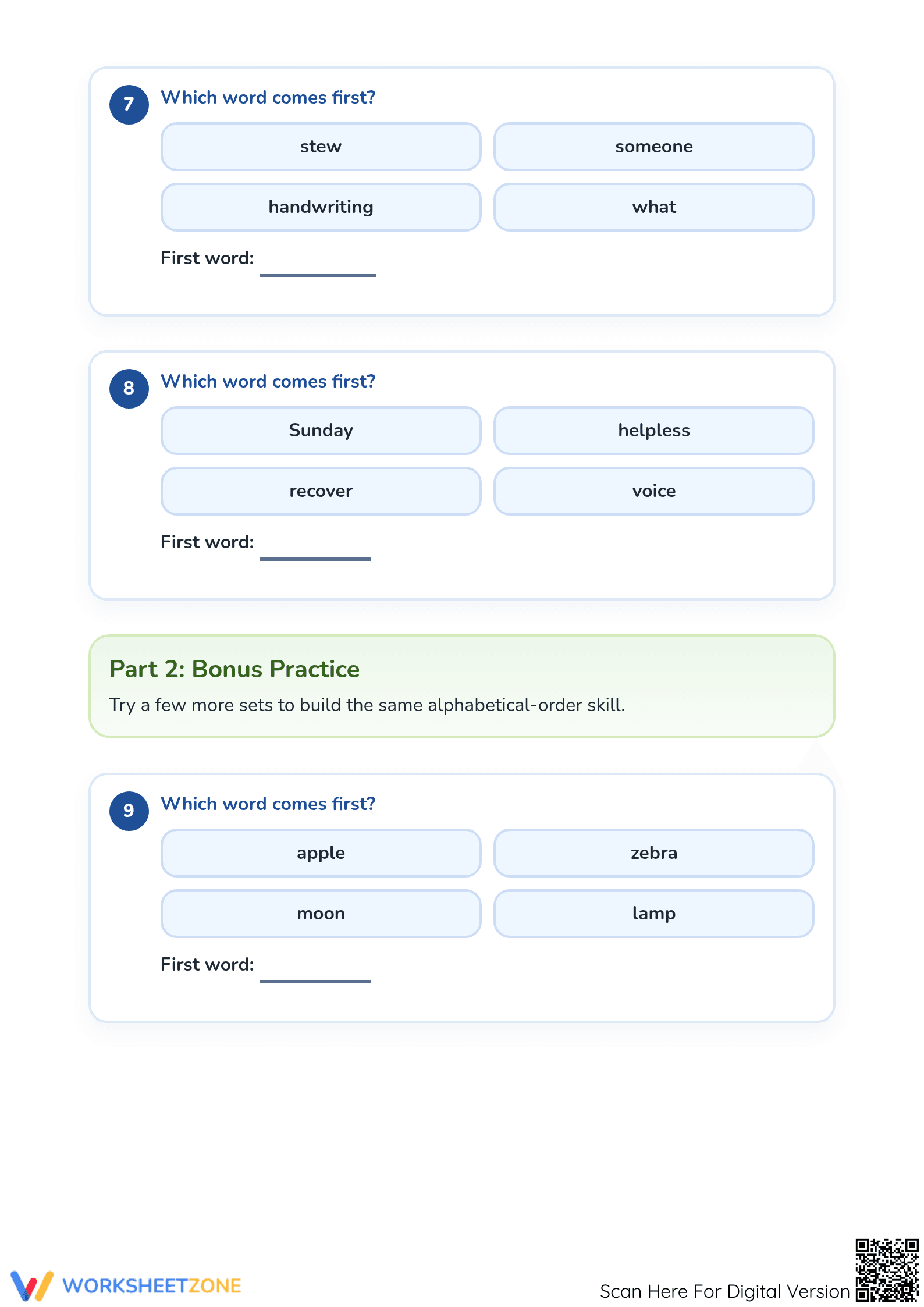
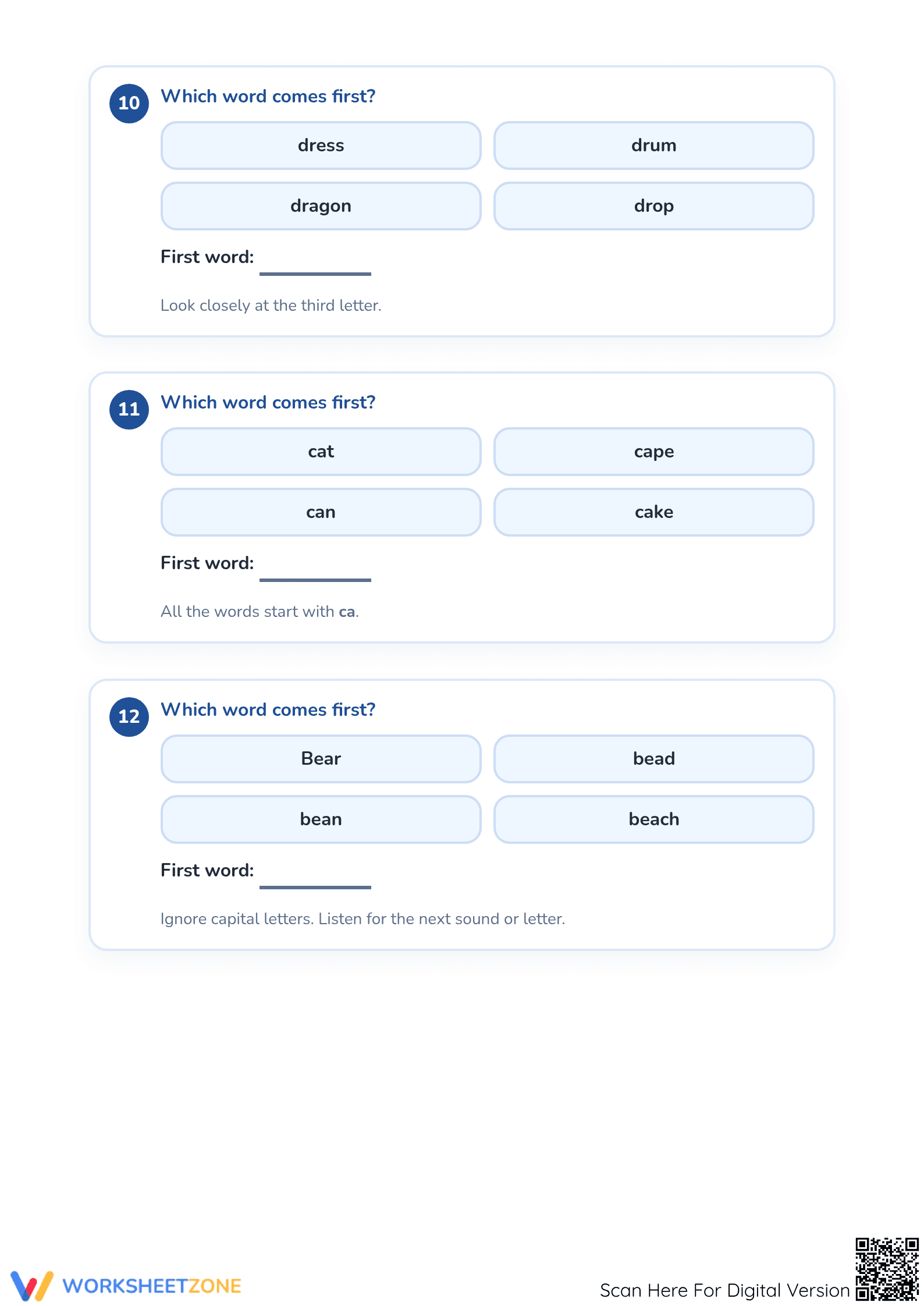

Alphabetical Order Worksheet | Grade 1 Essential ELA
Paste this activity's link or code into your existing LMS (Google Classroom, Canvas, Teams, Schoology, Moodle, etc.).
Students can open and work on the activity right away, with no student login required.
You'll still be able to track student progress and results from your teacher account.
Mastering the alphabet is a foundational step in literacy development. This Grade 1 Alphabetical Order Practice worksheet provides students with targeted exercises to strengthen their understanding of letter sequence. By comparing sets of words and determining their relative positions, learners build the cognitive pathways necessary for efficient dictionary use and information retrieval in later grades.
At a Glance
- Grade: 1 · Subject: English Language Arts
- Standard:
CCSS.ELA-LITERACY.L.1.1— Demonstrate command of the conventions of standard English grammar and usage when writing- Skill Focus: Alphabetical Order and Sequencing
- Format: 4 pages · 12 problems · Answer key included · PDF
- Best For: Literacy centers and independent skill reinforcement
- Time: 15–20 minutes
This comprehensive four-page PDF includes twelve carefully structured problems designed to guide students through the alphabetization process. The worksheet is divided into two distinct sections: Part 1 features eight sets of words drawn from primary vocabulary lists, while Part 2 offers four bonus practice sets with increasing complexity. Each problem provides a clear workspace for students to circle their choice and transcribe the correct word onto a designated line.
- Guided Practice: The first four problems use high-frequency words, allowing students to apply basic A-Z recognition with significant visual support and clear layout.
- Supported Practice: Problems five through eight transition into abstract vocabulary, encouraging students to process letter order without relying on simple word shapes.
- Independent Practice: The final four bonus questions include words starting with the same letters, requiring students to analyze the second and third letters for placement.
This gradual release model ensures that students move from simple recognition to complex sequencing tasks with confidence and accuracy.
This resource is explicitly aligned to CCSS.ELA-LITERACY.L.1.1, which requires students to demonstrate command of standard English conventions. Proficiency in alphabetical order is a prerequisite for more advanced standards like dictionary usage and organizational writing. This standard code can be copied directly into lesson plans, IEP goals, or district curriculum mapping tools to ensure instructional alignment.
Use this worksheet as a morning warm-up to activate alphabet knowledge before reading lessons. It serves as an excellent formative assessment tool during literacy centers; instructors should observe if students use a visual reference chart while completing the tasks. Most Grade 1 students will complete these 12 items within a twenty-minute instructional block.
This resource is designed for first-grade students but also suits kindergarteners ready for extension or second-graders needing remediation. Pair this worksheet with an alphabet anchor chart or a short reading passage for advanced learners. It naturally complements instruction on reference materials and organizational structures in writing and reading.
According to Fisher & Frey (2014), the gradual release of responsibility is critical in foundational literacy skills, moving from modeling to independent practice. This Alphabetical Order Worksheet embodies this research-based approach by structuring 12 problems that increase in cognitive demand. Identifying word sequences is a precursor to complex cognitive organization and executive function. By mastering CCSS.ELA-LITERACY.L.1.1 through these structured A-Z sequencing tasks, students develop mental frameworks for navigating informational texts and academic vocabulary. The inclusion of clear visual cues and handwriting lines supports integrating motor skills with linguistic processing, a method supported by educational psychology. This resource provides the empirical practice required for students to internalize alphabetical conventions as a permanent component of their literacy toolkit. The 12 tasks ensure that learners move beyond rote memorization into active application of organizational rules.


