


























Views
Downloads


Printable Grade 3 Alphabetical Order Worksheet | Essential
Paste this activity's link or code into your existing LMS (Google Classroom, Canvas, Teams, Schoology, Moodle, etc.).
Students can open and work on the activity right away, with no student login required.
You'll still be able to track student progress and results from your teacher account.
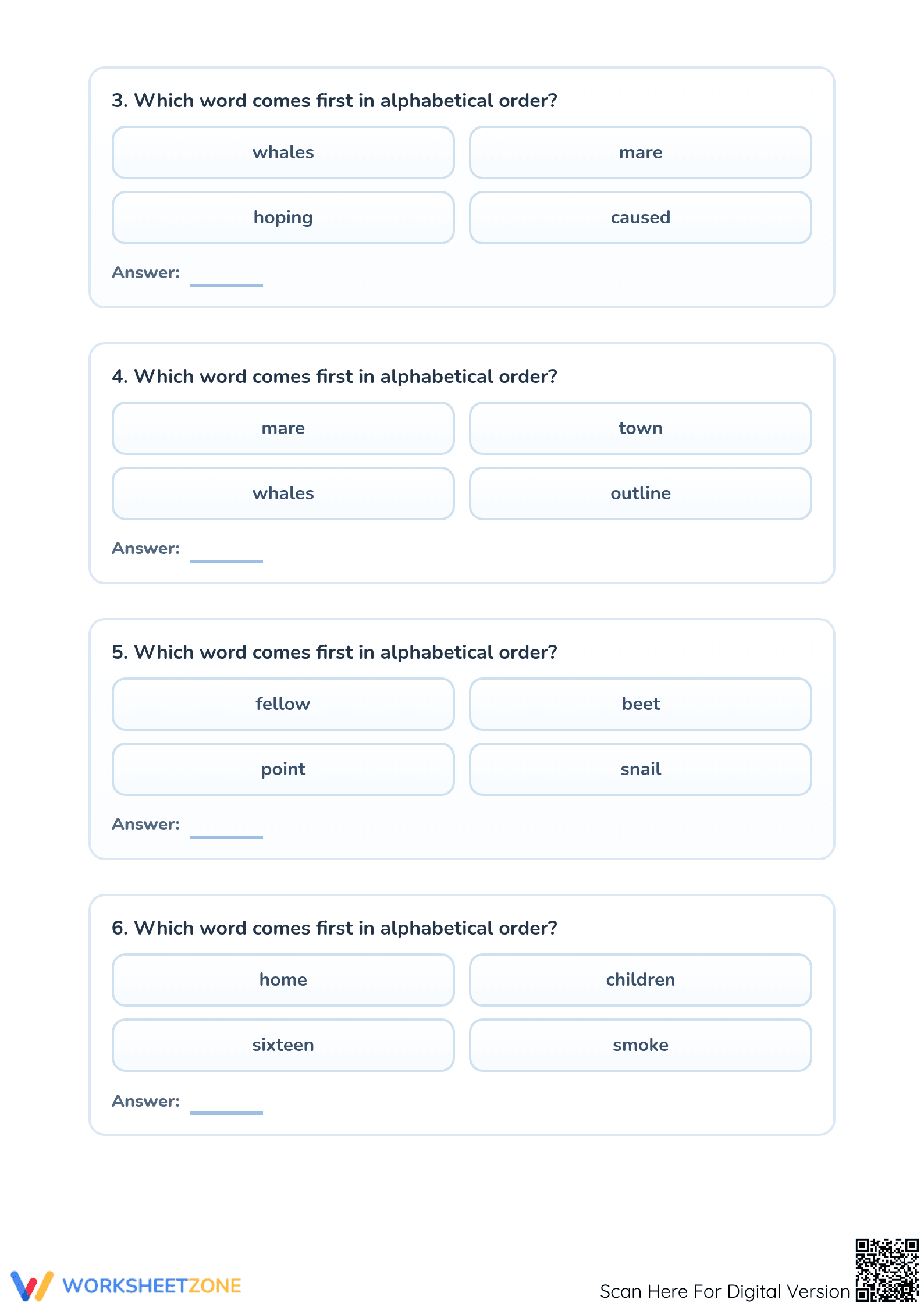
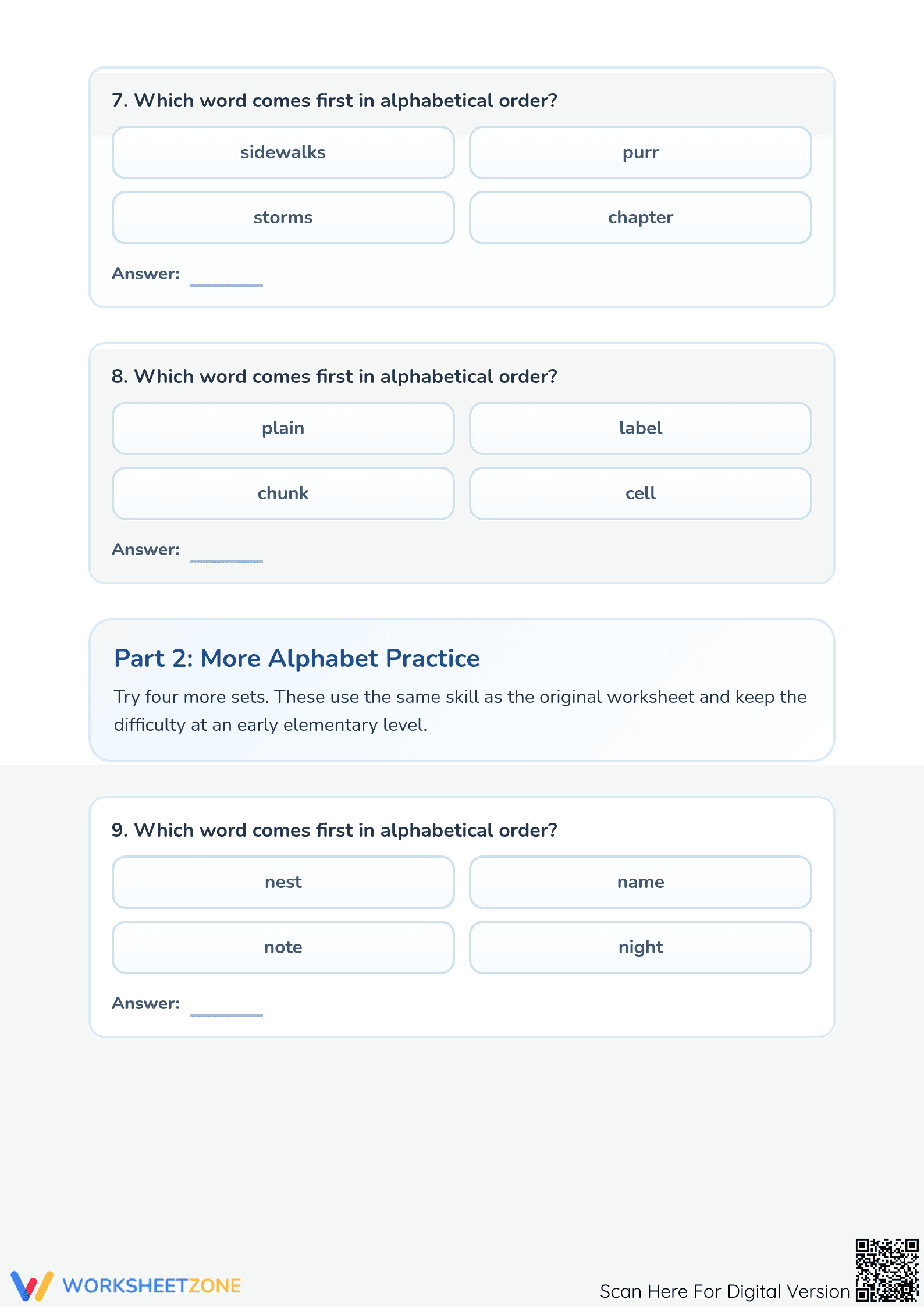
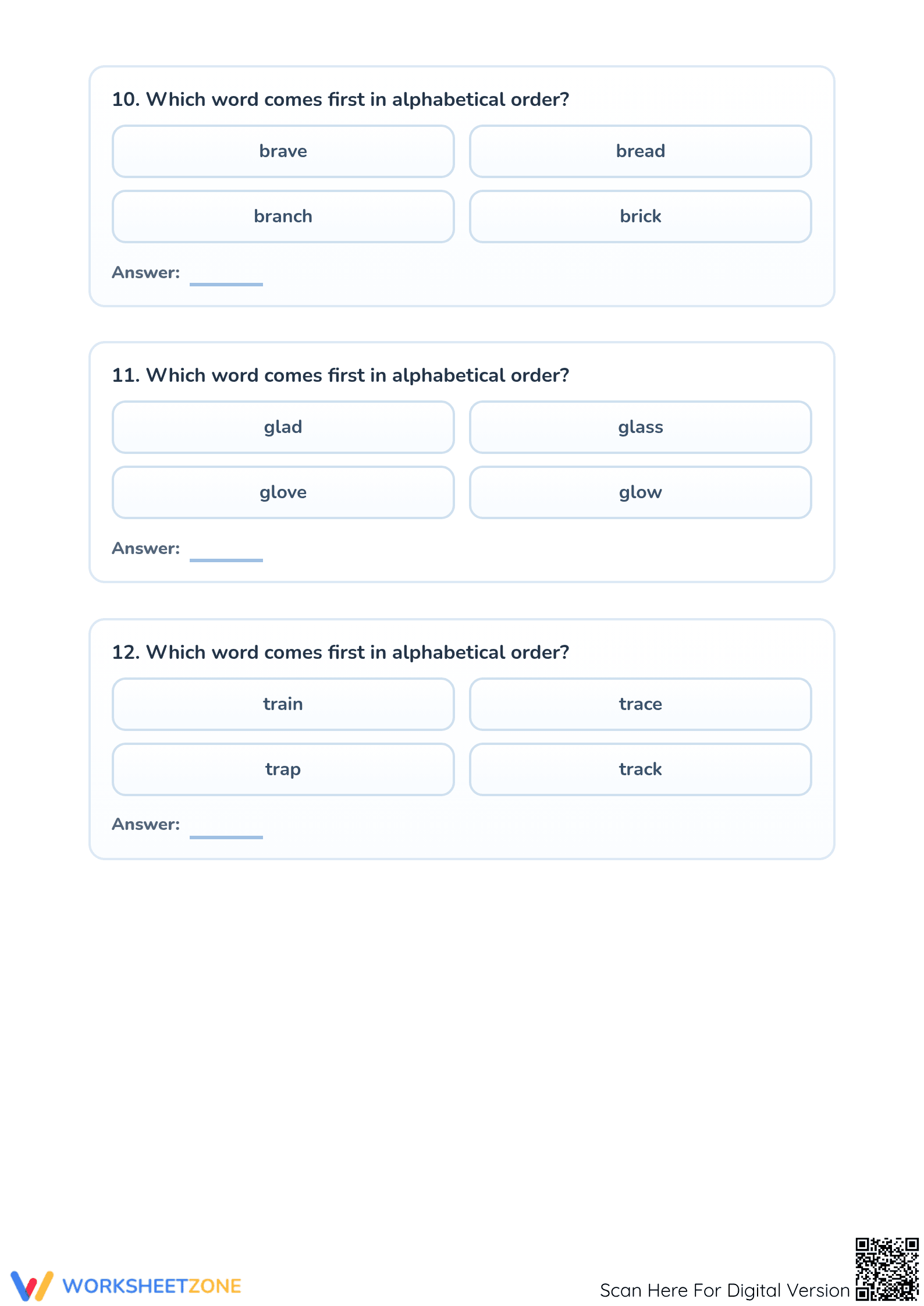
Equip students with essential dictionary navigation skills using this focused practice set. This worksheet guides Grade 3 learners through alphabetizing lists by looking beyond the first letter, ensuring they efficiently locate information in reference materials. It transforms a mechanical task into a strategic sorting exercise.
At a Glance
- Grade: 3 · Subject: English Language Arts
- Standard:
CCSS.ELA-LITERACY.L.3.4.D— Use glossaries or beginning dictionaries to determine or clarify the meaning of words- Skill Focus: Alphabetical order to the second/third letter
- Format: 4 pages · 12 problems · Answer key included · PDF
- Best For: Independent practice and dictionary skill building
- Time: 15–20 minutes
This comprehensive 4-page PDF contains 12 multi-choice word sets challenging students to identify which word appears first in alphabetical sequence. The layout is clean, featuring clear instructions that remind students to check subsequent letters when initial letters match. A full answer key is included for rapid grading or student self-correction.
Skill Progression
- Guided Practice: The first few tasks provide a helpful hint to check the second letter, establishing the fundamental rule for sorting similar words.
- Supported Practice: Mid-level problems introduce words with identical starting blends, requiring careful character-by-character comparison to ensure accuracy.
- Independent Application: The final sets present more complex word clusters where students must apply the logic without scaffolding to determine the correct order.
This gradual release model moves from basic recognition to automatic application of sorting rules.
Standards Alignment
This resource is primary aligned to `CCSS.ELA-LITERACY.L.3.4.D`, which requires students to use glossaries or beginning dictionaries, both print and digital, to determine or clarify the precise meaning of words and phrases. Proficiency in alphabetical order is the prerequisite for all dictionary-based standards. This standard code can be copied directly into lesson plans, IEP goals, or district curriculum mapping tools.
How to Use It
Introduce this worksheet after a direct instruction lesson on how to use a dictionary. Use the first task as a whole-class demonstration on the interactive whiteboard to model the 'look-at-the-next-letter' strategy. As a formative assessment tip, observe students as they work; those who skip to the third letter without checking the second may need a quick redirect. Expected completion time is 15 to 20 minutes.
Who It's For
Designed for Grade 3 general education students, this worksheet is also highly effective for older students needing foundational literacy intervention or EL learners practicing English vocabulary sorting. It pairs naturally with a classroom word wall or a grade-level glossary exercise during small-group literacy blocks.
Instructional strategies for teaching alphabetical order emphasize the transition from rote memorization to functional literacy tools. By Grade 3, the focus shifts toward utilizing these skills for dictionary and glossary navigation, a core component of reading comprehension and vocabulary acquisition. Research conducted by Fisher & Frey (2014) highlights the importance of gradual release of responsibility when teaching foundational literacy skills like alphabetizing. This worksheet utilizes that principle by providing repetitive, structured practice that moves from guided to independent application. Mastering CCSS.ELA-LITERACY.L.3.4.D through these 12 targeted tasks ensures that students can navigate complex text structures and reference materials with confidence. The use of multiple-choice formats with clear feedback loops, such as the included answer key, supports immediate error correction and reinforces the mental model of sequential sorting. This resource provides the necessary scaffolding for students to achieve proficiency in alphabetical organization before moving to advanced research tasks.


