


























Views
Downloads

Essential Grade 2 Weather Worksheet | Printable Science
Paste this activity's link or code into your existing LMS (Google Classroom, Canvas, Teams, Schoology, Moodle, etc.).
Students can open and work on the activity right away, with no student login required.
You'll still be able to track student progress and results from your teacher account.
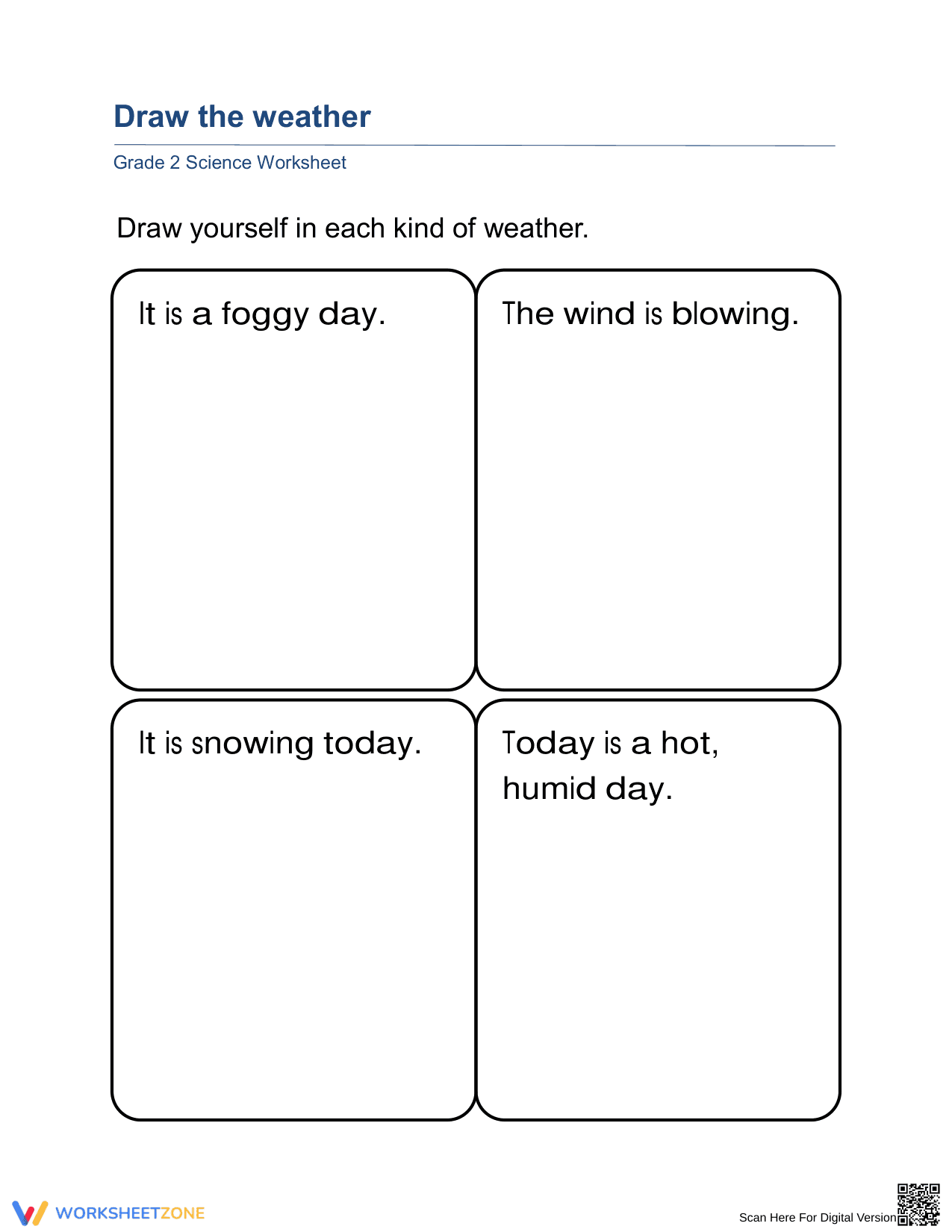
This Grade 2 Science worksheet helps young learners master weather vocabulary through creative illustration. Students practice identifying four distinct atmospheric conditions—fog, wind, snow, and humidity—by drawing themselves within each scenario. By connecting abstract terminology to personal experience, this resource ensures that students develop a concrete understanding of Earth's systems and weather patterns.
At a Glance
- Grade: 2 · Subject: Science
- Standard:
K-ESS2-1— Use observations of weather conditions to describe patterns over time- Skill Focus: Weather vocabulary and visual representation
- Format: 2 pages · 4 problems · Answer key included · PDF
- Best For: Independent practice and vocabulary reinforcement
- Time: 15–20 minutes
What's Inside
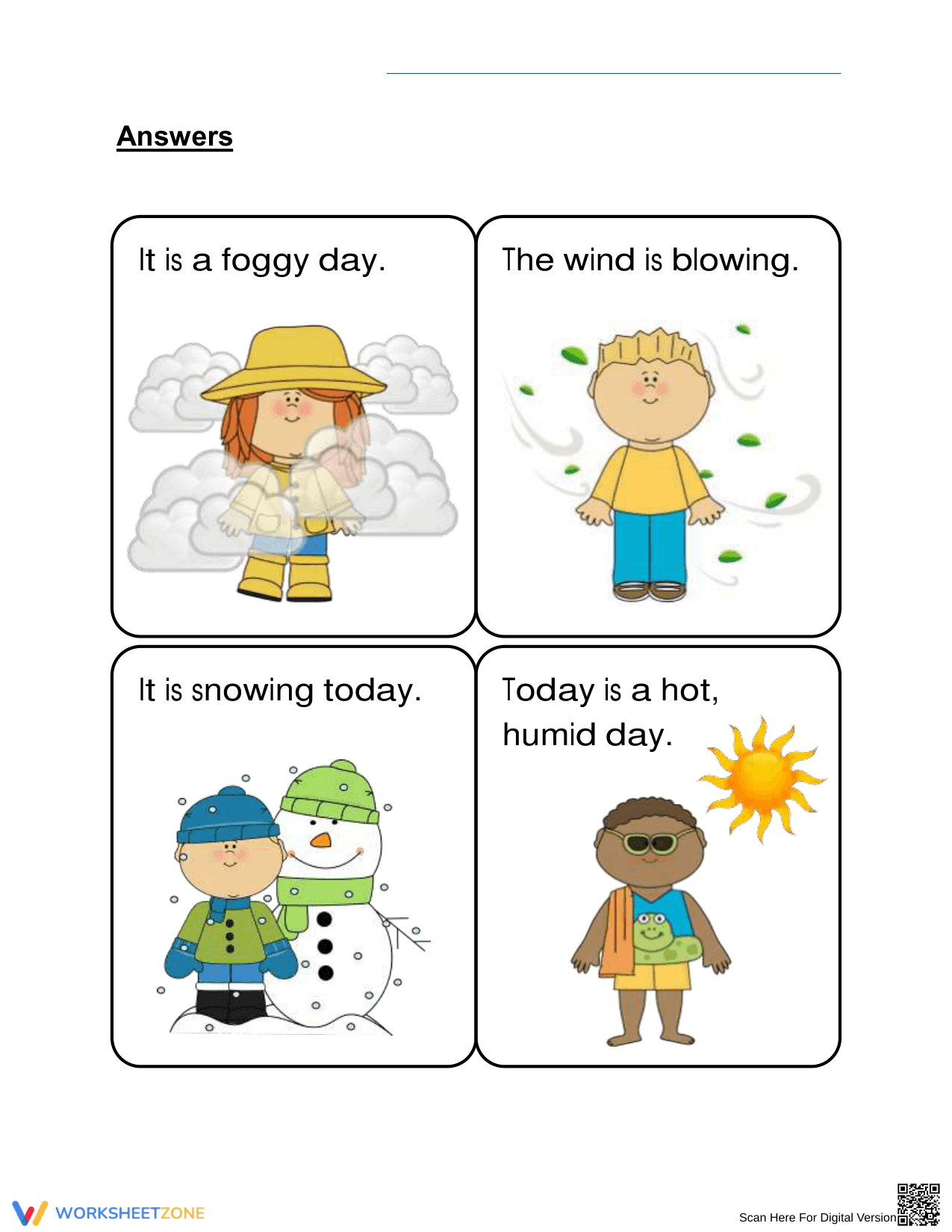
This two-page PDF includes a student activity sheet and a comprehensive visual answer key. The student page features four labeled drawing boxes for prompts like "The wind is blowing." This structure encourages students to visualize specific environmental cues, while the answer key offers model illustrations for grading.
Zero-Prep Workflow
This resource allows for immediate implementation. 1. Print (1 minute): Print copies directly from the PDF with no assembly. 2. Distribute (1 minute): Sheets are self-explanatory for Grade 2 readers. 3. Review (5 minutes): Use the visual answer key for quick grading. Total prep time is under two minutes, making this ideal for sub-plans.
Standards Alignment
The primary alignment is K-ESS2-1, requiring students to "Use and share observations of local weather conditions to describe patterns over time." It also supports CCSS.ELA-LITERACY.L.2.6 by expanding vocabulary for describing the environment. Both standard codes can be copied directly into lesson plans, IEP goals, or district curriculum mapping tools.
How to Use It
Use this worksheet as a formative assessment after a direct instruction lesson on weather instruments and vocabulary. It provides a clear window into whether students can distinguish between complex terms like "foggy" and "humid." Another effective strategy is using the sheet as a "Weather Journal" entry on days when the local conditions match one of the prompts.
Who It's For
This resource is designed for Grade 2 students but is also suitable for Grade 1 enrichment or as a review for Grade 3 learners. It is particularly helpful for English Language Learners (ELLs) who benefit from pairing vocabulary with visuals. The worksheet pairs naturally with a weather-themed passage or a classroom anchor chart displaying different clouds.
According to the RAND AIRS 2024 report on primary science education, visual representation is a critical component of scientific literacy for early elementary students. This worksheet targets the K-ESS2-1 standard by requiring students to demonstrate their understanding of weather conditions through the plain-English skill of describing environmental patterns. Research indicates that when students draw themselves into scientific scenarios, they internalize the vocabulary more effectively than through rote memorization alone. This Grade 2 resource provides a structured environment for this cognitive process, allowing teachers to assess both conceptual knowledge and fine motor skills simultaneously. By using the four specific prompts—fog, wind, snow, and humidity—the worksheet ensures comprehensive coverage of common weather phenomena encountered in the primary curriculum. It serves as a reliable tool for classroom teachers and homeschoolers alike, providing the necessary scaffolding for students to succeed in subsequent, more complex Earth science investigations.


