


























Views
Downloads

Printable Alphabetical Order Worksheet | Grade 1 ELA
Paste this activity's link or code into your existing LMS (Google Classroom, Canvas, Teams, Schoology, Moodle, etc.).
Students can open and work on the activity right away, with no student login required.
You'll still be able to track student progress and results from your teacher account.
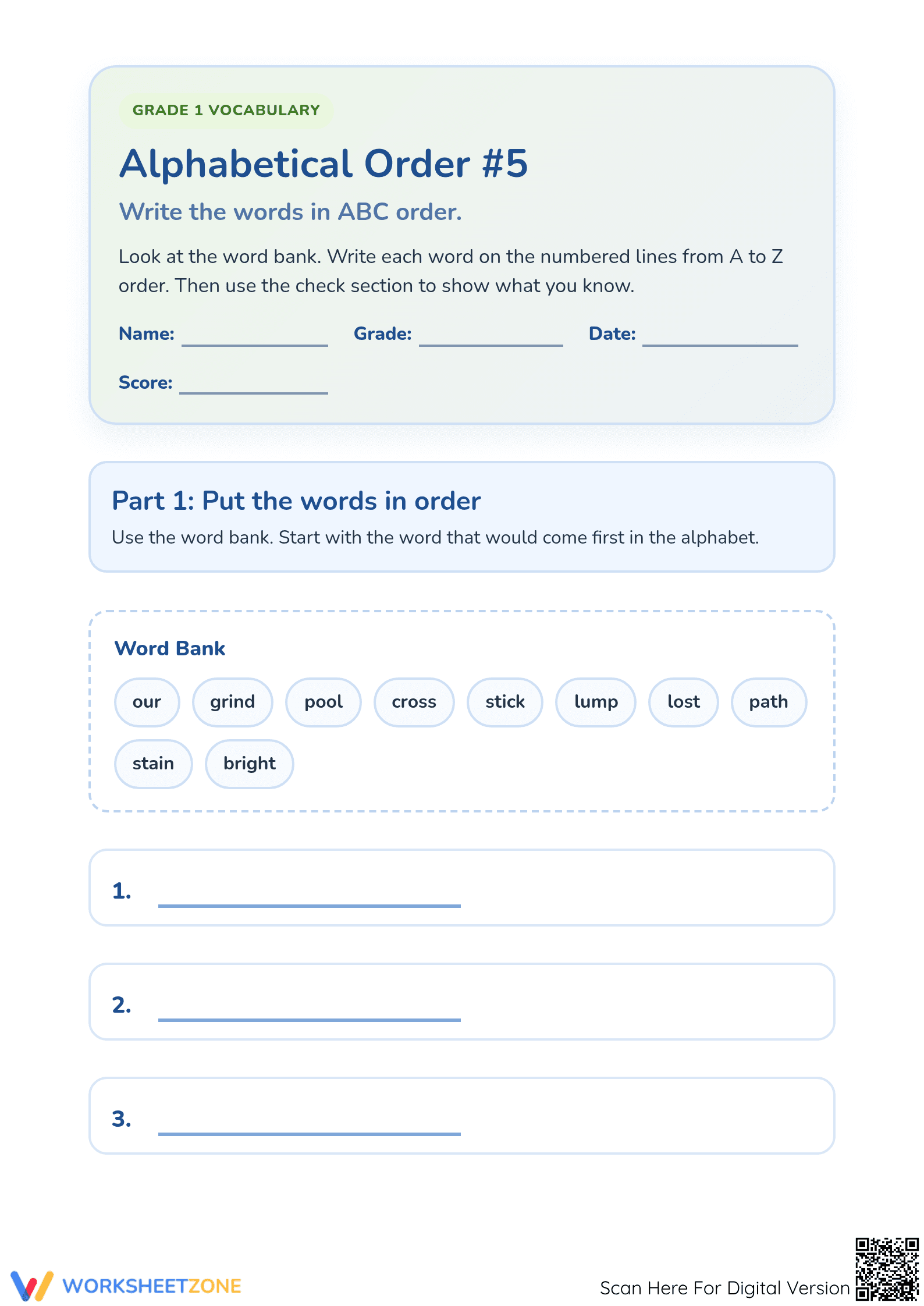
Mastering alphabetical order is a foundational literacy skill that paves the way for advanced dictionary usage and organizational proficiency. This three-page Grade 1 ELA resource provides a structured environment where students sort vocabulary words and compare letter sequences to sharpen their sequencing abilities. By completing these exercises, learners improve their word recognition and alphabetical fluency simultaneously.
At a Glance
- Grade: 1 · Subject: English Language Arts (ELA)
- Standard:
CCSS.ELA-LITERACY.L.1.1— Organize words into alphabetical sequence to support dictionary readiness and organizational skills- Skill Focus: Alphabetical Order (ABC Order)
- Format: 3 pages · 14 problems · Answer key included · PDF
- Best For: Literacy centers and independent morning work
- Time: 15–20 minutes
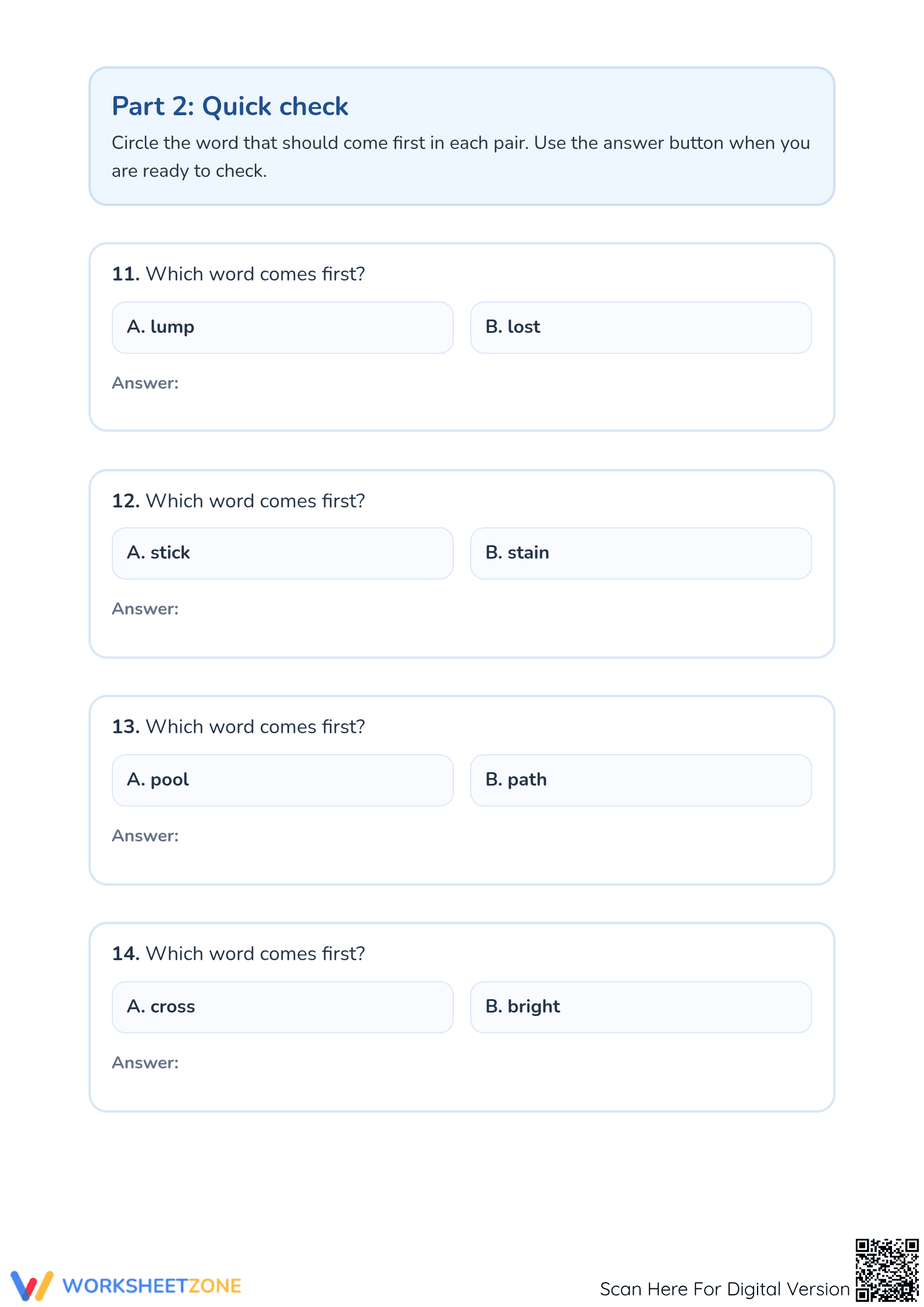
This comprehensive printable includes three distinct pages designed to build confidence through repetition and assessment. The first two pages present a word bank featuring 10 Grade 1 vocabulary words, such as "bright," "cross," and "grind," which students must sort onto numbered lines in perfect A-to-Z order. The final page serves as a "Quick Check" assessment, offering four comparative pairs to test mastery in a focused format.
Zero-Prep Workflow
This worksheet is engineered for immediate classroom utility with a simple three-step process. First, print the document (approximately 30 seconds). Second, distribute the three pages to your students with no additional instructions required thanks to the intuitive layout (30 seconds). Third, review the completed work using the included answer key (60 seconds). With a total teacher prep time under two minutes, this resource is a perfect addition to emergency sub plans or last-minute literacy rotations.
Standards Alignment
This resource is aligned to CCSS.ELA-LITERACY.L.1.1, which requires students to demonstrate command of the conventions of standard English grammar and usage. Sorting words alphabetically is a core component of this standard as it relates to vocabulary organization and the foundational mechanics of language. This standard code can be copied directly into lesson plans, IEP goals, or district curriculum mapping tools to ensure instructional compliance.
How to Use It
Incorporate this worksheet during your literacy block as an independent practice activity following a lesson on the alphabet. For a more collaborative approach, use the "Quick Check" section as a whole-group exit ticket or a formative assessment opportunity. One instructional tip is to observe how students handle words starting with the same letter, like "pool" and "path," to see if they are ready to look toward the second letter for sequencing.
Who It's For
This resource is designed for Grade 1 students who are developing their foundational reading and writing skills. It is also suitable for kindergarten students who require an extension or second-grade learners needing a quick review. This worksheet pairs naturally with an alphabet anchor chart or a classroom word wall to provide visual support for students who are still mastering letter sequences.
Standard CCSS.ELA-LITERACY.L.1.1 focuses on foundational conventions, specifically the ability to organize linguistic data like vocabulary. This worksheet builds alphabetizing proficiency through a 14-task progression that moves from word-sorting to comparative analysis. According to Fisher & Frey (2014), the gradual release of responsibility in foundational literacy—such as moving from a guided word bank to an independent assessment—is critical for long-term retention of organizational skills. This resource ensures that first-grade learners develop the systematic thinking required for future reference skill mastery, such as navigating glossaries and dictionaries. The clear, uncluttered layout minimizes cognitive load, allowing students to focus entirely on the sequencing task at hand. By integrating high-frequency vocabulary into the ABC order practice, the worksheet doubles as a vocabulary reinforcement tool, satisfying multiple instructional goals within a single, no-prep session.


