


























Views
Downloads
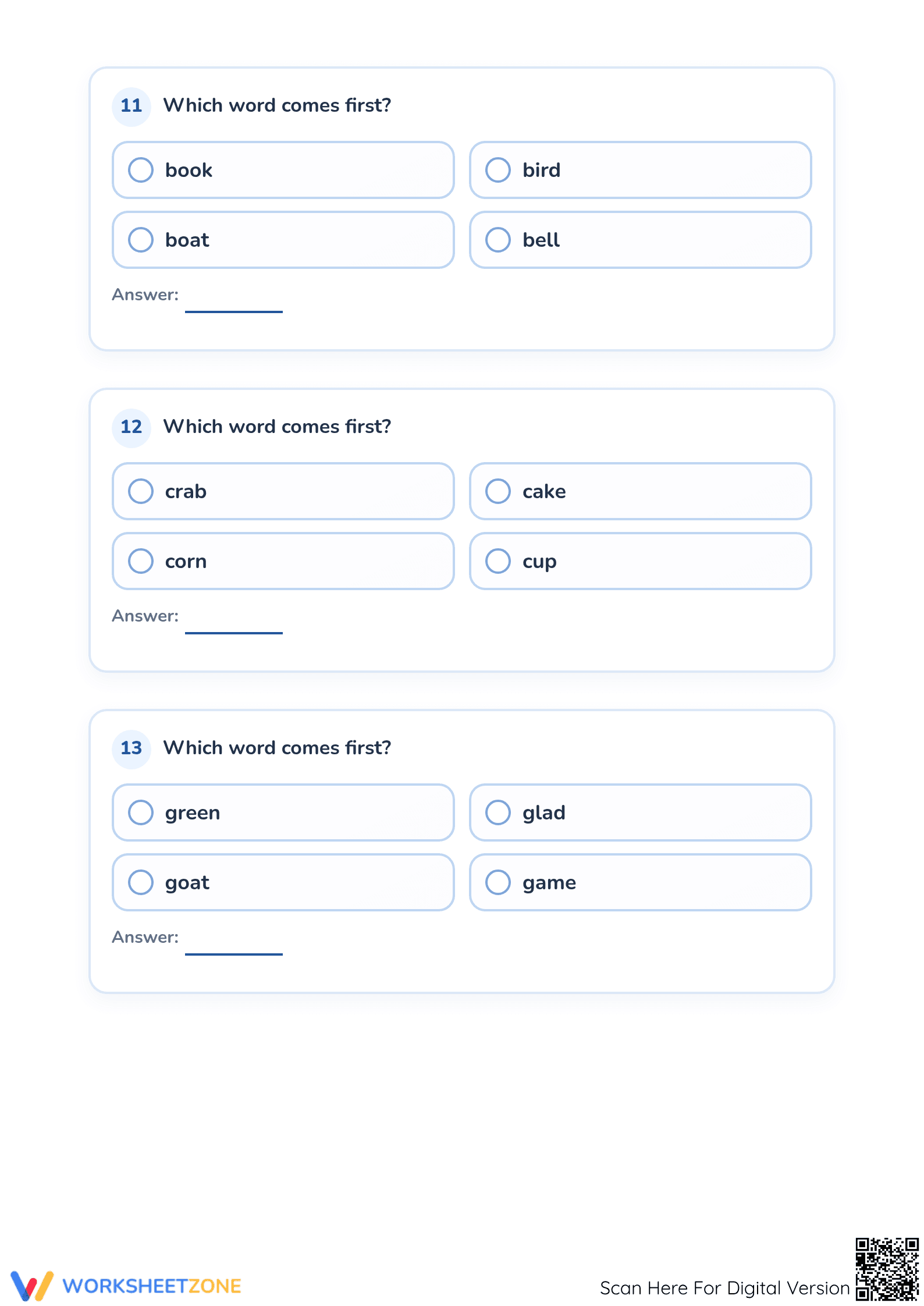

Grade 1 Alphabetical Order | Essential Printable Worksheet
Paste this activity's link or code into your existing LMS (Google Classroom, Canvas, Teams, Schoology, Moodle, etc.).
Students can open and work on the activity right away, with no student login required.
You'll still be able to track student progress and results from your teacher account.
Alphabetical Order Practice for Grade 1
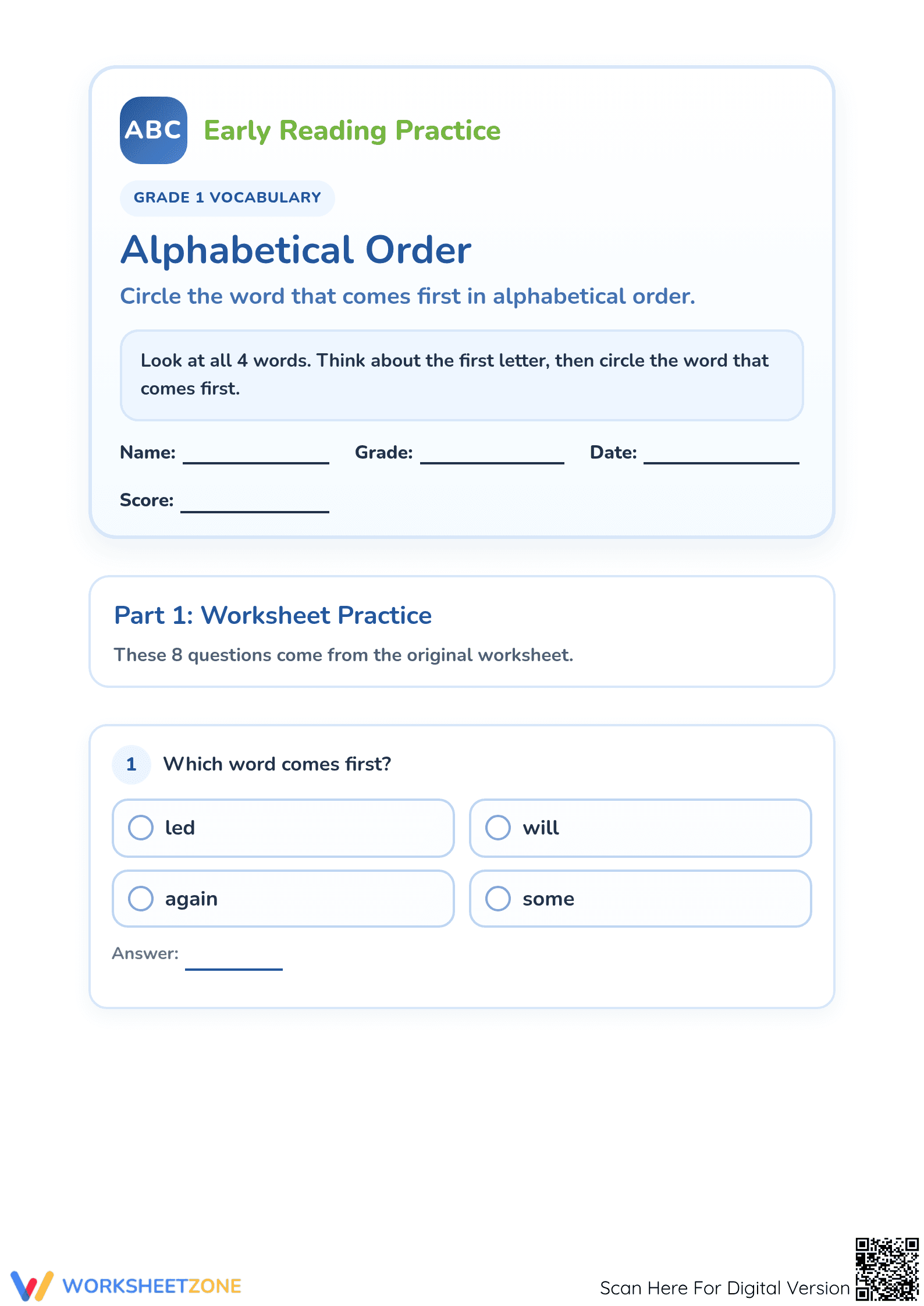
This Grade 1 Alphabetical Order worksheet provides structured practice to help young learners master the essential skill of alphabetizing words. By identifying which word comes first in a set of four, students build foundational literacy skills and improve their ability to navigate dictionaries and indices. This high-quality resource ensures learners gain confidence in letter sequencing and word recognition.
At a Glance
- Grade: 1 · Subject: English Language Arts
- Standard:
CCSS.ELA-LITERACY.L.1.1— Demonstrate command of the conventions of standard English grammar and usage when writing- Skill Focus: Alphabetizing words to the first and second letter
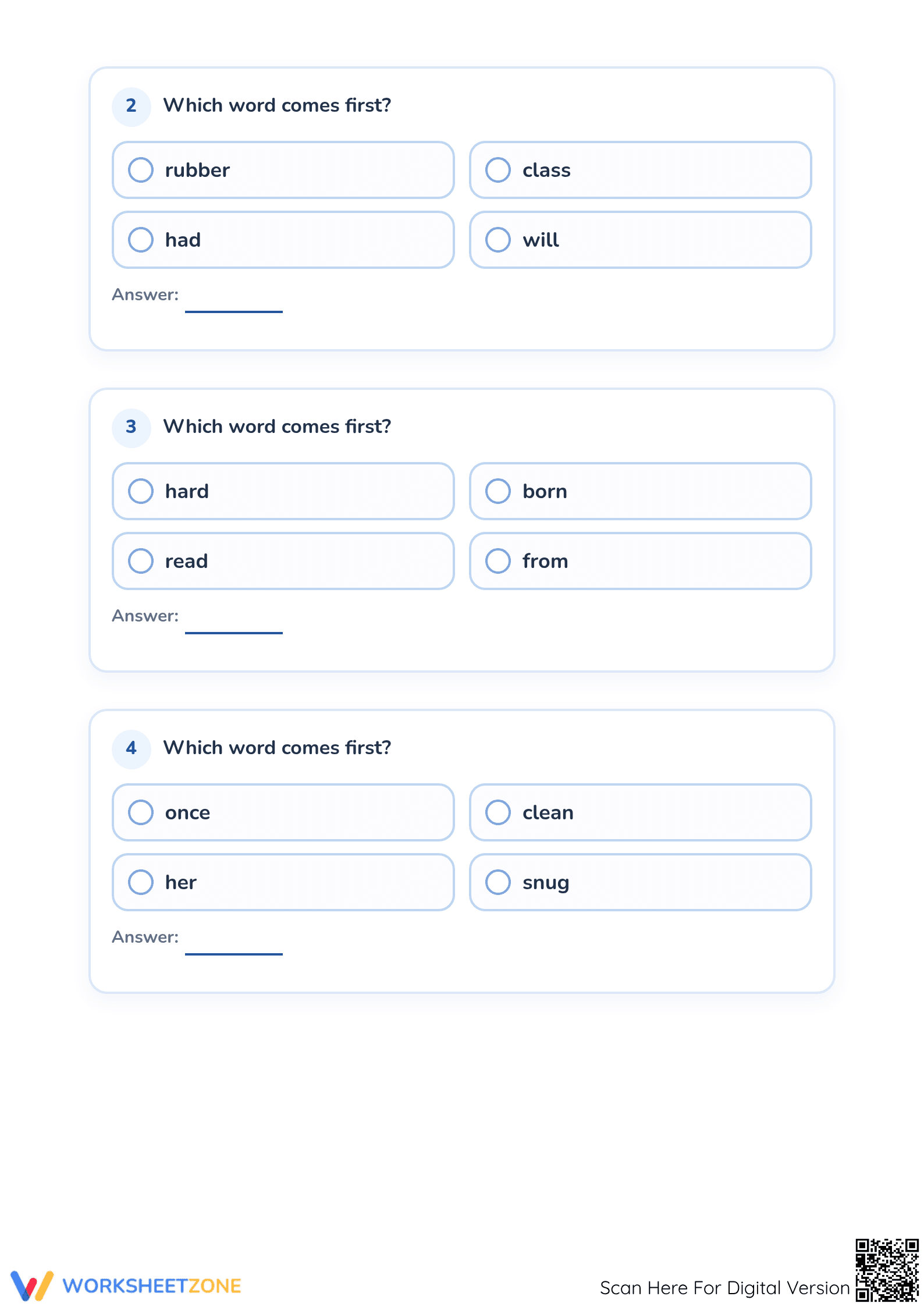
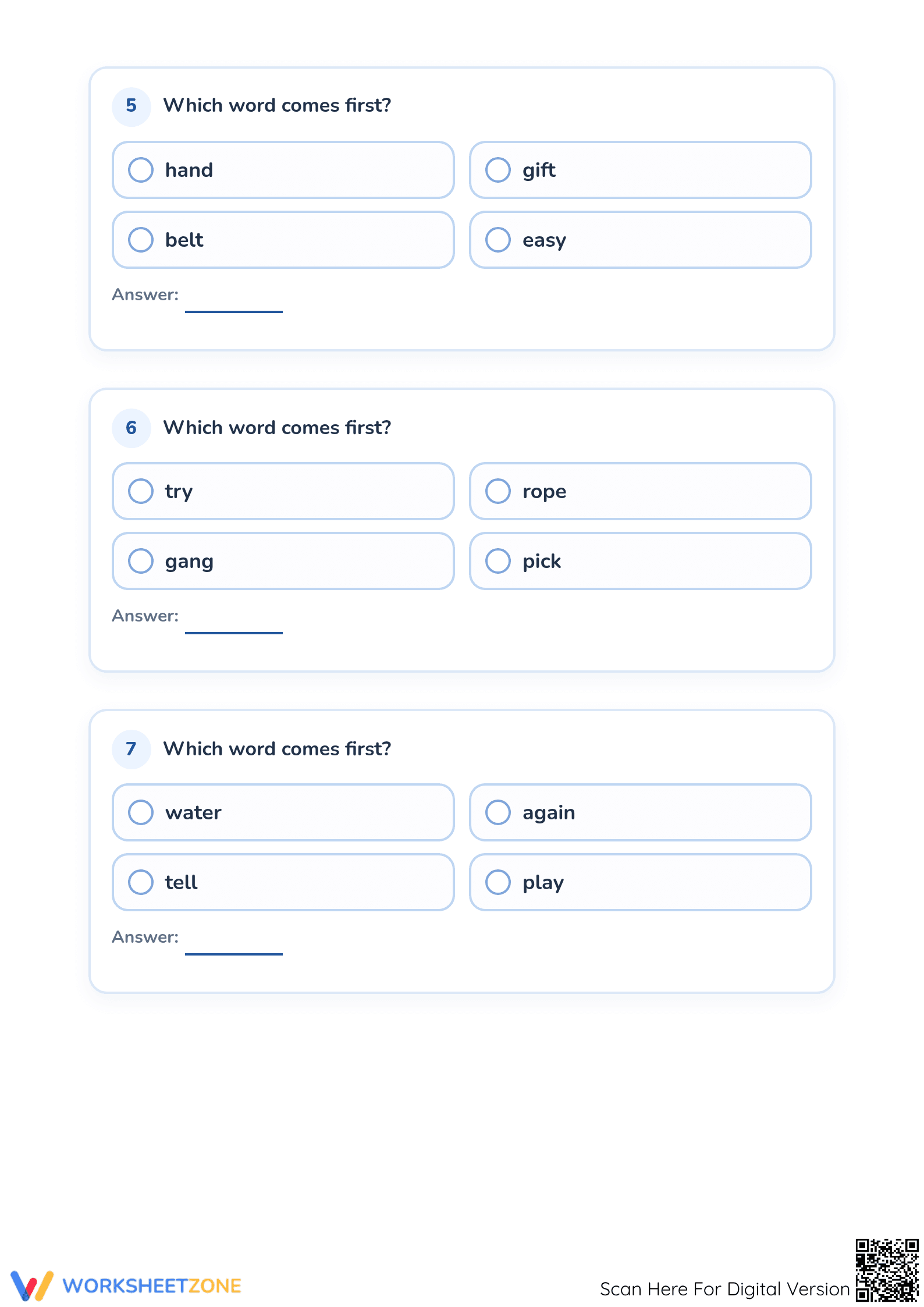
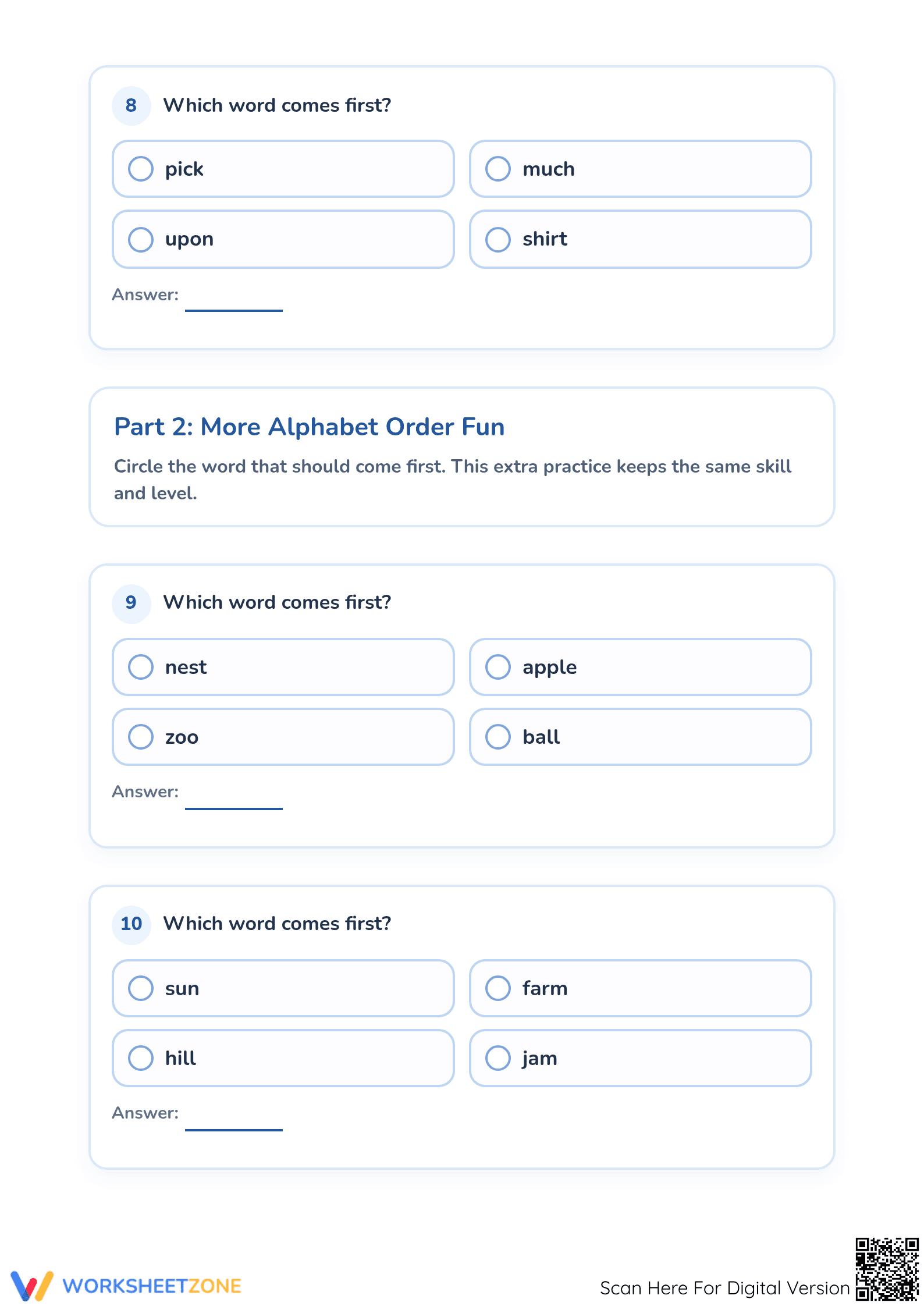
- Format: 5 pages · 13 problems · Answer key included · PDF
- Best For: Independent practice and literacy centers
- Time: 15–20 minutes
What's Inside
This comprehensive 5-page PDF features two distinct sections of practice. Part 1 includes 8 multiple-choice questions focusing on primary alphabetizing by the first letter. Part 2 adds 5 additional "Alphabet Order Fun" challenges that reinforce the skill through varied word sets. Each problem presents four words with a clear response line for the final answer. A complete answer key is provided for immediate grading and feedback.
Zero-Prep Workflow
Teachers can implement this resource in under two minutes. First, print the copies (30 seconds). Second, distribute to students with a brief verbal instruction on checking the first letter (30 seconds). Finally, review the answers using the provided key (1 minute). This no-prep design is ideal for emergency sub plans or quick filler activities.
Standards Alignment
This resource is primarily aligned with `CCSS.ELA-LITERACY.L.1.1`, which requires students to demonstrate command of standard English conventions. Sorting words alphabetically is a prerequisite for dictionary skills and advanced vocabulary organization. The standard code can be copied directly into lesson plans, IEP goals, or district curriculum mapping tools to ensure instructional compliance and tracking of foundational literacy goals.
How to Use It
Use this during the "You Do" phase of a lesson. It serves as a formative assessment to check for understanding before moving to complex sorting. Teachers should observe if students correctly identify the first letter or struggle with similar starting sounds, providing a perfect opportunity for targeted intervention and small-group support.
Who It's For
This set is for first-grade students but also works for kindergarten extension or second-grade remediation. It accommodates diverse learners with clear fonts and consistent formatting. For best results, pair it with an alphabet chart to support students still memorizing the letter sequence during independent work time.
Alphabetizing is a critical component of information literacy that facilitates cognitive organization and retrieval. According to a RAND AIRS 2024 analysis, students who master basic sorting and categorization skills in the early grades show significantly higher proficiency in digital search and physical resource navigation by middle school. This worksheet directly supports this development by requiring students to apply the CCSS.ELA-LITERACY.L.1.1 standard through 13 targeted tasks. The structured format ensures that the plain-English skill of sequencing words is reinforced through repeated practice, which Fisher & Frey (2014) identifies as essential for the transition from guided to independent literacy. By providing a clear focus on the alphabet's structure, this resource helps bridge the gap between simple letter recognition and complex language usage, ensuring that foundational standards are met with precision and measurable student outcomes in any elementary classroom setting.


