


























Views
Plays
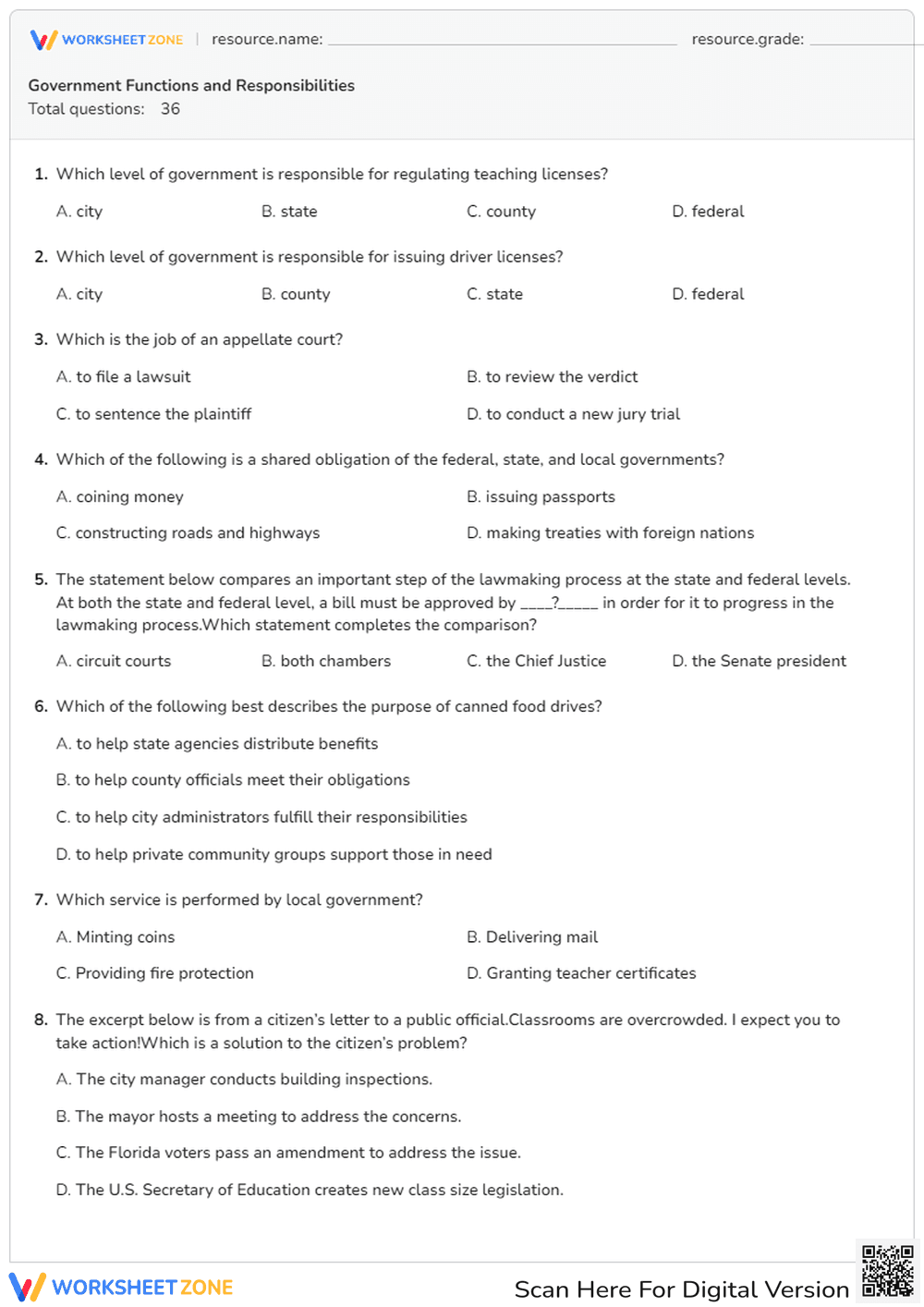
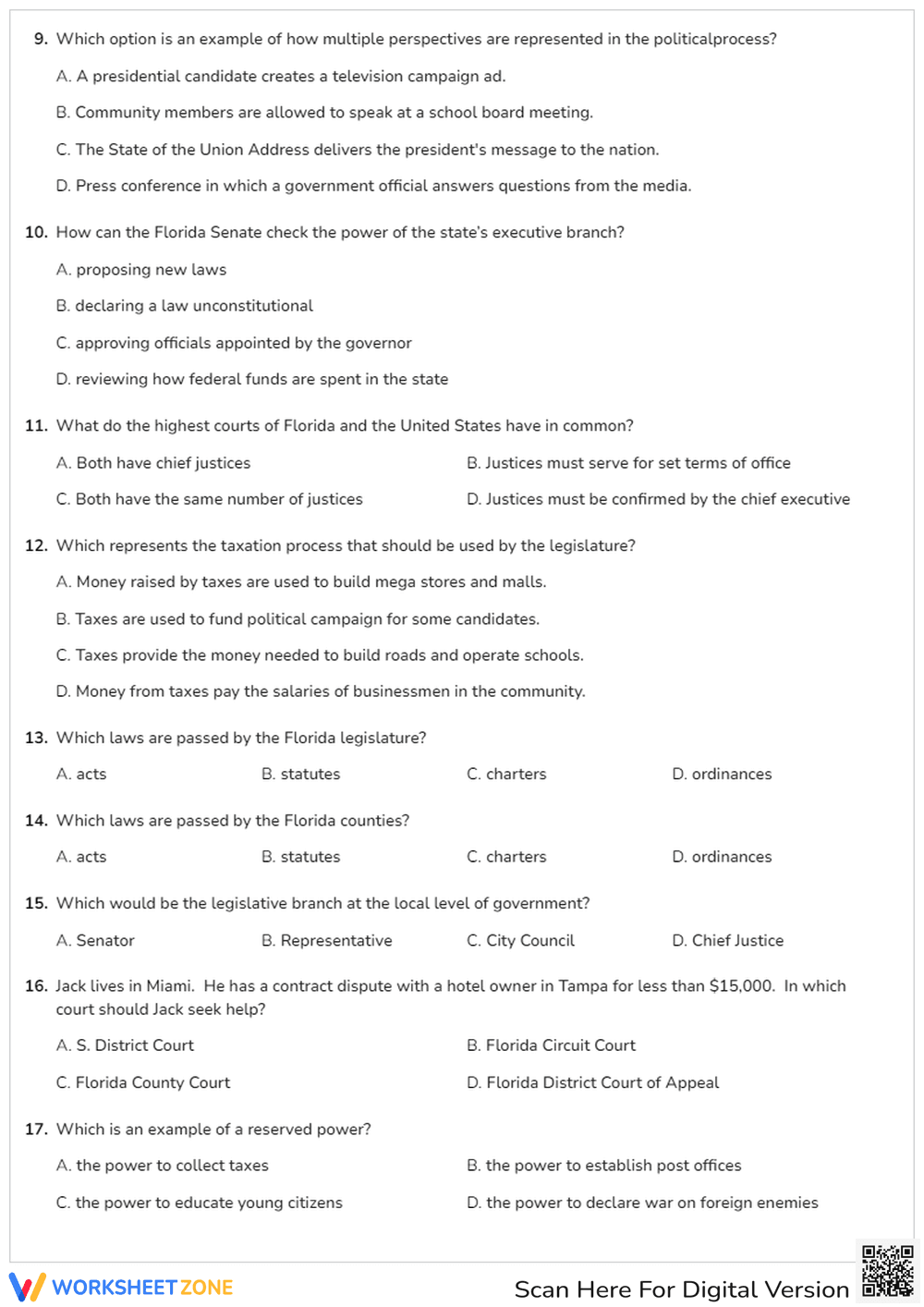
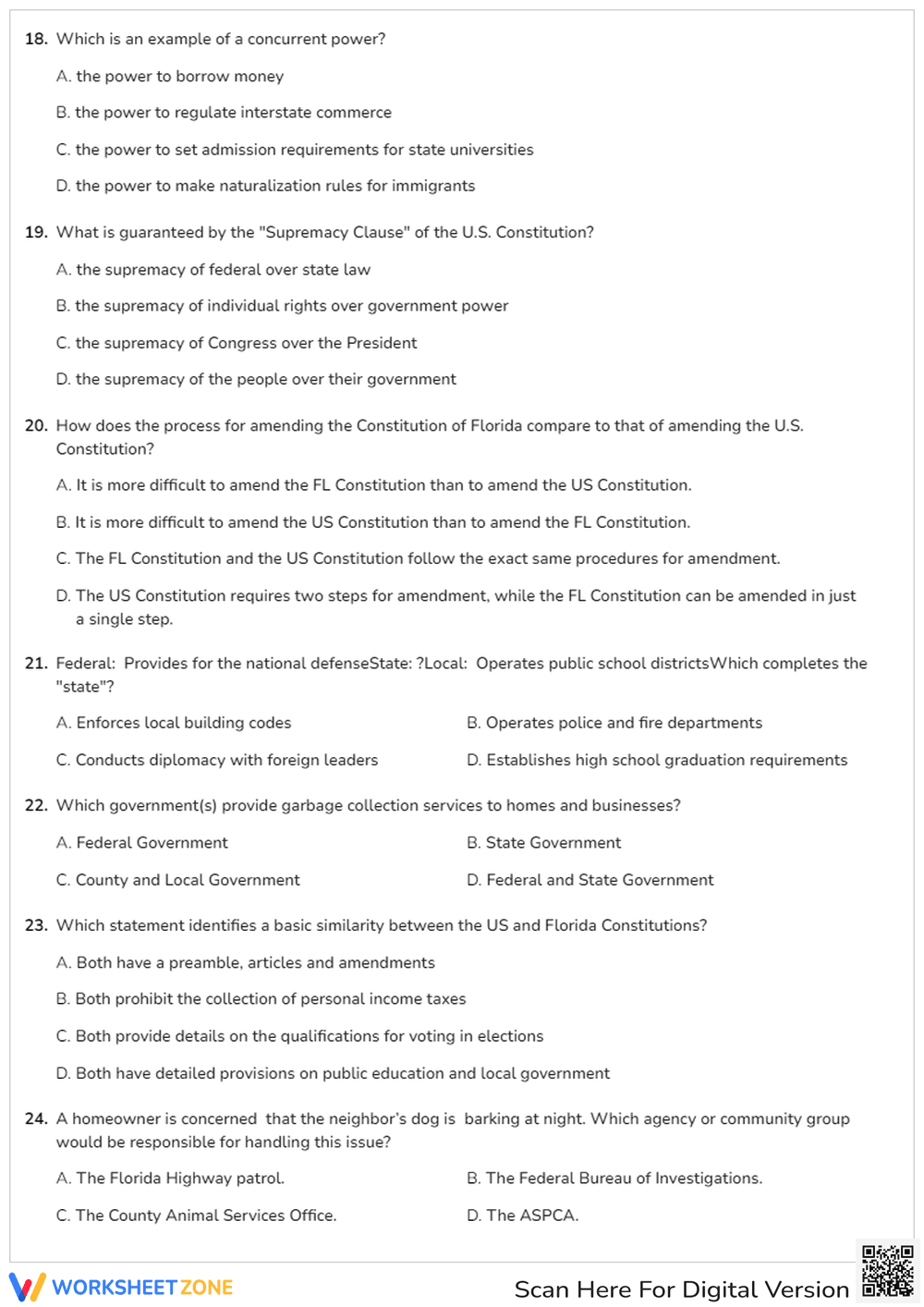
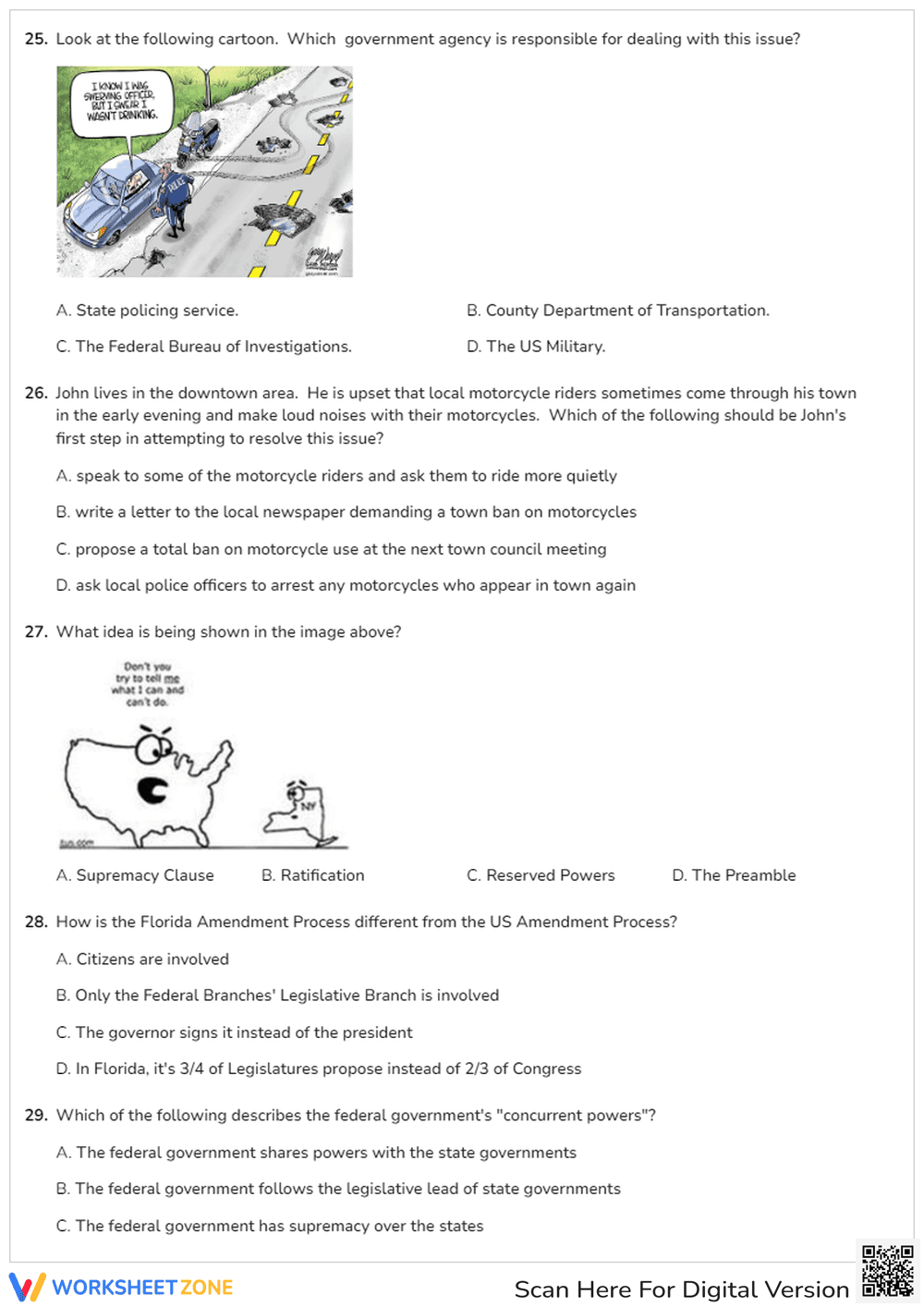
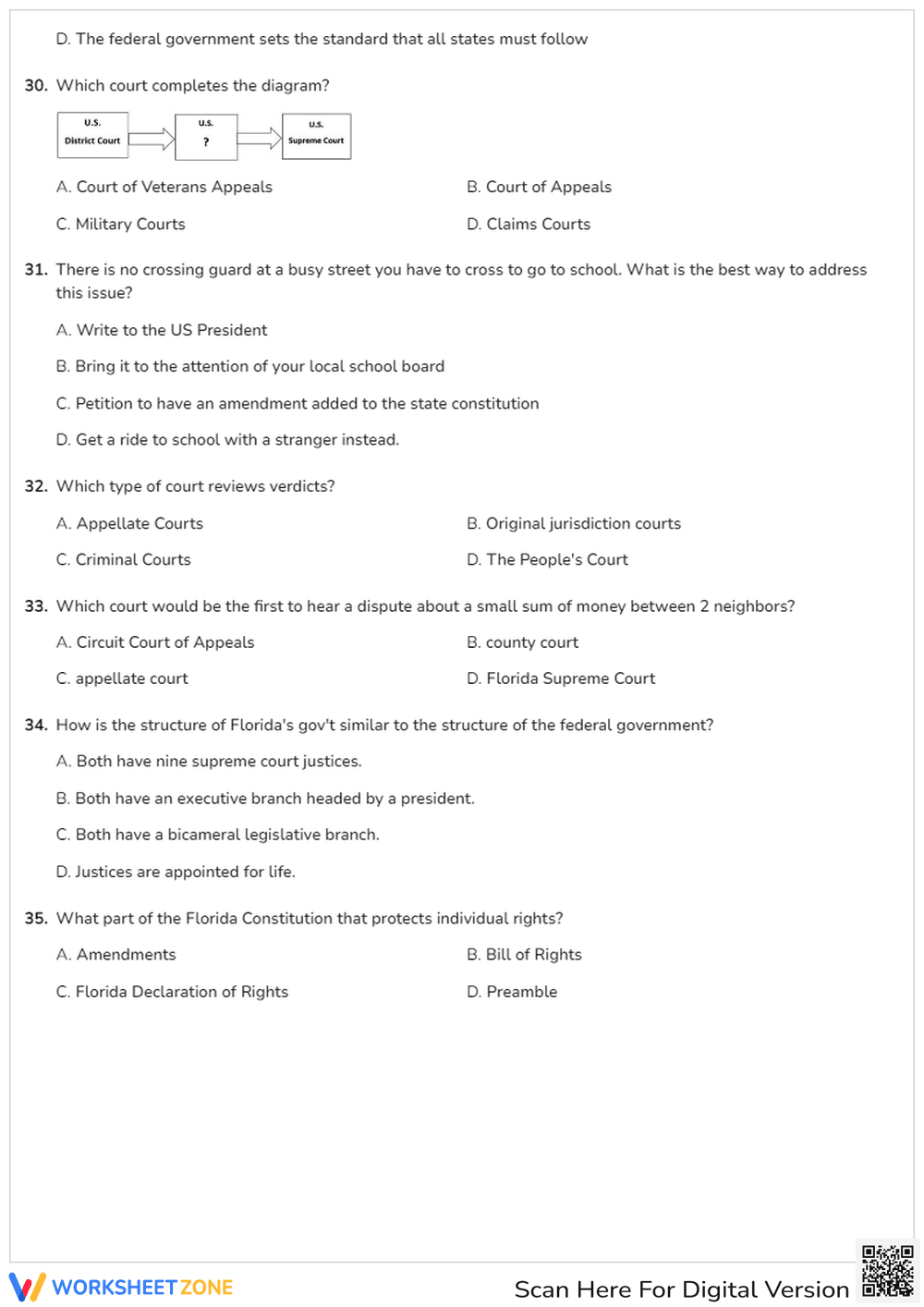
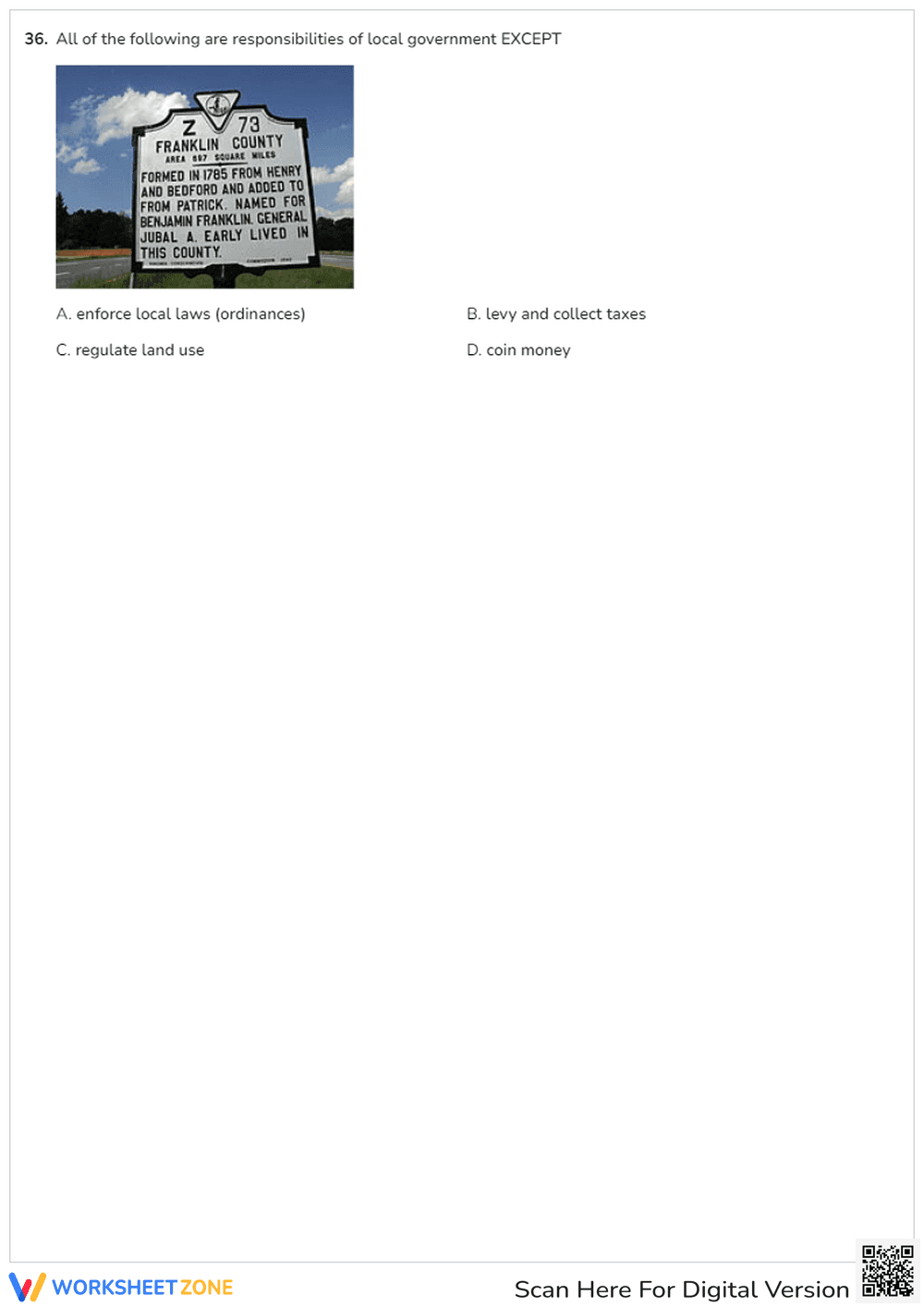

Grade 7 Government Functions — Printable No-Prep Worksheet
Paste this activity's link or code into your existing LMS (Google Classroom, Canvas, Teams, Schoology, Moodle, etc.).
Students can open and work on the activity right away, with no student login required.
You'll still be able to track student progress and results from your teacher account.
This comprehensive worksheet helps middle school students master the distinct roles and responsibilities of federal, state, and local governments. By analyzing real-world scenarios and constitutional principles, students will confidently differentiate between concurrent, reserved, and delegated powers while understanding how these structures impact their daily lives.
At a Glance
- Grade: 7 · Subject: Social Studies
- Standard:
SS.7.CG.3.4— Differentiate between local, state, and federal government obligations- Skill Focus: Federalism and Government Functions
- Format: 6 pages · 36 problems · Answer key included · PDF
- Best For: Test prep and independent practice
- Time: 30–45 minutes
This six-page resource features 36 multiple-choice questions designed to mirror standardized test formats. The task types range from direct vocabulary recall to analyzing political cartoons and applying constitutional clauses to hypothetical civic disputes. A complete answer key is provided to ensure accurate and efficient grading.
- Print (1 min): Simply download the PDF and print a class set. No special formatting or cutting is required.
- Distribute (1 min): Hand out the packets at the start of class or leave them in a highly visible spot for a substitute teacher.
- Review (5 mins): Use the included answer key to quickly grade submissions or guide a whole-class review session.
With under two minutes of total teacher prep time, this resource is an ideal emergency sub plan or end-of-unit assessment.
Aligned to primary standard SS.7.CG.3.4: Explain the relationship between state and national governments and differentiate their respective roles. It also touches upon the structure of the Florida state government and its constitution. Both standard codes can be copied directly into lesson plans, IEP goals, or district curriculum mapping tools.
Use this worksheet as a summative assessment after direct instruction on federalism, or assign it as a comprehensive study guide before a unit exam. As a formative assessment tip, monitor which specific questions students miss—if a large portion of the class struggles with concurrent powers, you can easily plan a targeted reteach session. Expected completion time is 30 to 45 minutes.
This resource is primarily designed for 7th-grade civics and social studies students. It serves as an excellent tool for general education classrooms, and the clear, multiple-choice format provides built-in scaffolding for students who benefit from structured options. Pair this worksheet with a visual anchor chart detailing the three levels of government to support visual learners.
Understanding the division of power is a cornerstone of civic literacy. This resource aligns with SS.7.CG.3.4 to help students differentiate between local, state, and federal government obligations. According to Fisher & Frey (2014), providing students with structured, independent practice opportunities significantly reinforces their comprehension of complex, abstract concepts like federalism. By engaging with these 36 targeted questions, learners move beyond rote memorization to actively analyze how different levels of government interact and function. This repeated exposure to standardized question formats not only builds content mastery but also reduces test anxiety, ensuring students are fully prepared for end-of-course exams. The clear alignment to state frameworks guarantees that instructional time is spent on high-yield civic concepts that foster informed, active citizenship in the classroom and beyond.


