


























Views
Downloads
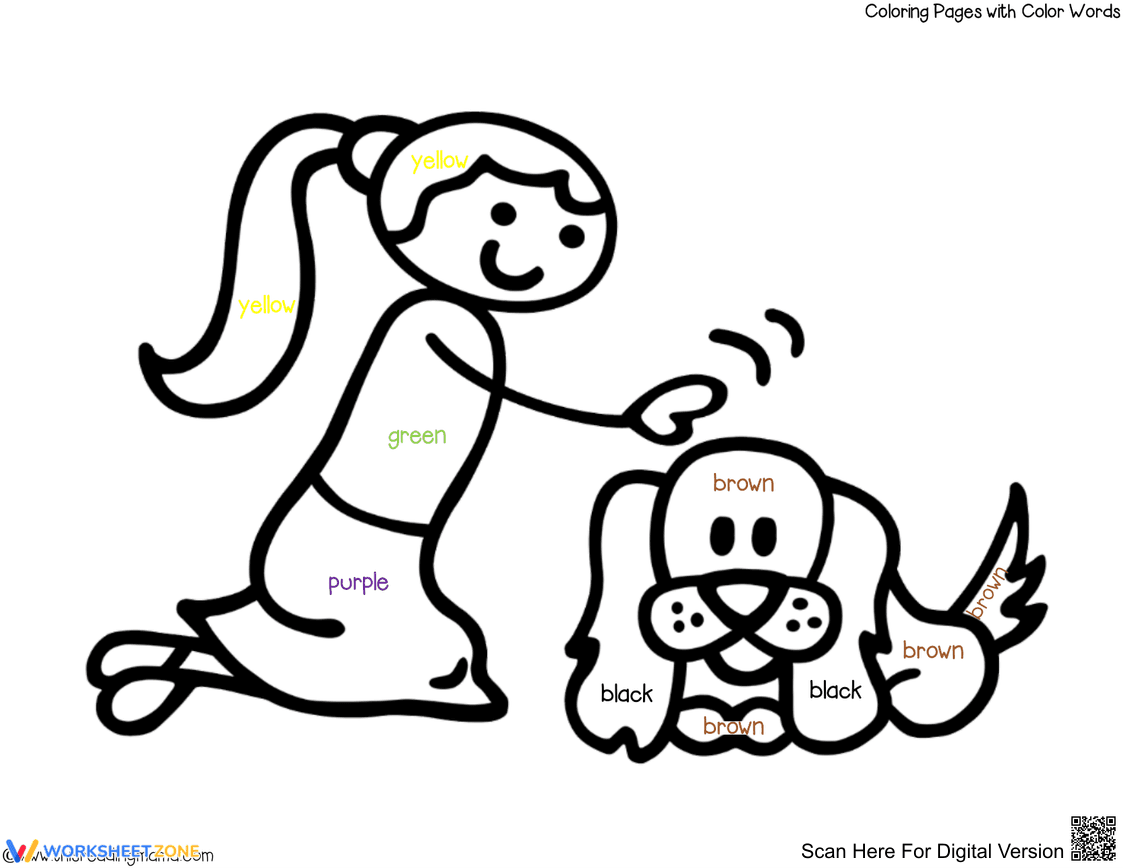

Color Word Recognition: Girl and Puppy | Essential Printable
Paste this activity's link or code into your existing LMS (Google Classroom, Canvas, Teams, Schoology, Moodle, etc.).
Students can open and work on the activity right away, with no student login required.
You'll still be able to track student progress and results from your teacher account.
This Kindergarten color word worksheet helps students identify and read high-frequency color names while developing fine motor control. By connecting text to visual cues, learners strengthen their sight word vocabulary through an engaging artistic activity. It provides a clear, structured way for young students to demonstrate reading comprehension of basic descriptive terms.
At a Glance
- Grade: Kindergarten · Subject: English
- Standard:
CCSS.ELA-LITERACY.RF.K.3.C— Read common high-frequency words by sight including color names- Skill Focus: Color word recognition
- Format: 1 page · 9 tasks · Answer key included · PDF
- Best For: Independent literacy centers and morning work
- Time: 10–15 minutes
Inside this single-page PDF, you will find an illustration of a girl and her puppy. The image is divided into 9 distinct zones, each labeled with a specific color word: yellow, green, purple, brown, and black. The text is printed in the corresponding color to provide a scaffolded reading experience, ensuring that even the earliest readers can find success while building their confidence with high-frequency English vocabulary.
The zero-prep workflow for this resource is designed for efficiency in a busy classroom. First, print the single-page PDF (30 seconds). Second, distribute the sheets to students along with a standard set of crayons or colored pencils (1 minute). Third, review the completed work by having students point to and read the color words aloud (30 seconds). The total teacher preparation time is under 2 minutes, making it an ideal choice for emergency sub plans.
This resource is aligned with CCSS.ELA-LITERACY.RF.K.3.C, which requires students to read common high-frequency words by sight. By focusing on color words, the worksheet supports the foundational reading skills necessary for early literacy. It also supports fine motor development, which is a critical precursor to writing. This standard code can be copied directly into lesson plans, IEP goals, or district curriculum mapping tools.
Use this worksheet during your morning entry routine to settle students into a focused, quiet activity. It also serves as an excellent formative assessment tool during small-group literacy rotations; observe whether students are matching the crayon color to the word or simply coloring randomly. Most Kindergarten students will complete the task within 10 to 15 minutes, depending on their artistic detail and reading speed.
This activity is specifically designed for Kindergarten and Grade 1 students who are beginning their journey with sight words. It is also highly effective for English Language Learners (ELL) who need visual reinforcement for basic vocabulary. Pair this worksheet with a color-themed anchor chart or a read-aloud book about pets to create a cohesive thematic unit on descriptive language.
According to research by Fisher & Frey (2014) on the gradual release of responsibility, providing visual scaffolds like color-coded text helps bridge the gap between word recognition and independent reading. This worksheet utilizes the CCSS.ELA-LITERACY.RF.K.3.C standard to ensure students are mastering high-frequency color words in a low-stakes, high-engagement format. By integrating 9 specific tasks into a single artistic activity, the resource promotes cognitive endurance and attention to detail. Studies in early childhood education suggest that combining fine motor tasks with literacy instruction increases retention of sight words compared to rote memorization. This printable resource offers a structured environment for students to practice these essential skills without the pressure of complex sentence structures. It serves as a reliable tool for educators seeking to meet foundational standards while maintaining student interest through creative expression and familiar, friendly imagery.


