




























Views
Downloads

Printable Enzyme Activity Worksheet | Grade 10 Biology

Paste this activity's link or code into your existing LMS (Google Classroom, Canvas, Teams, Schoology, Moodle, etc.).
Students can open and work on the activity right away, with no student login required.
You'll still be able to track student progress and results from your teacher account.
This Grade 10 biology worksheet helps students master the fundamentals of enzyme structure, function, and the environmental factors affecting reaction rates. By analyzing graphs and completing targeted prompts, learners will build a strong foundation in biological catalysts and their essential roles in the human digestive system.
At a Glance
- Grade: 10 · Subject: Biology
- Standard:
HS-LS1-1— Explain how protein structures carry out life functions- Skill Focus: Enzyme activity and reaction rates
- Format: 4 pages · 25 problems · Answer key included · PDF
- Best For: End-of-unit review or test prep
- Time: 30–45 minutes
What's Inside
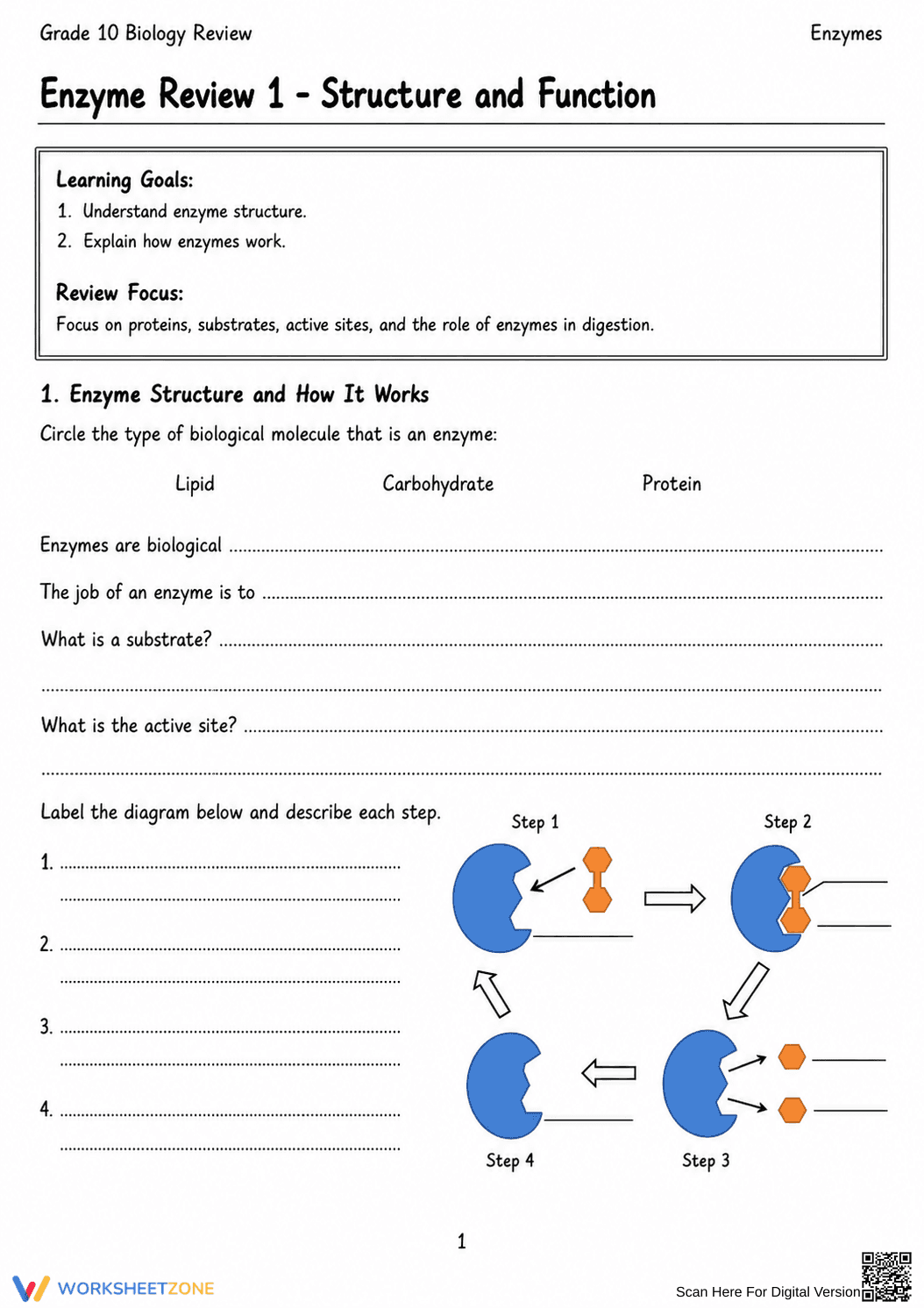
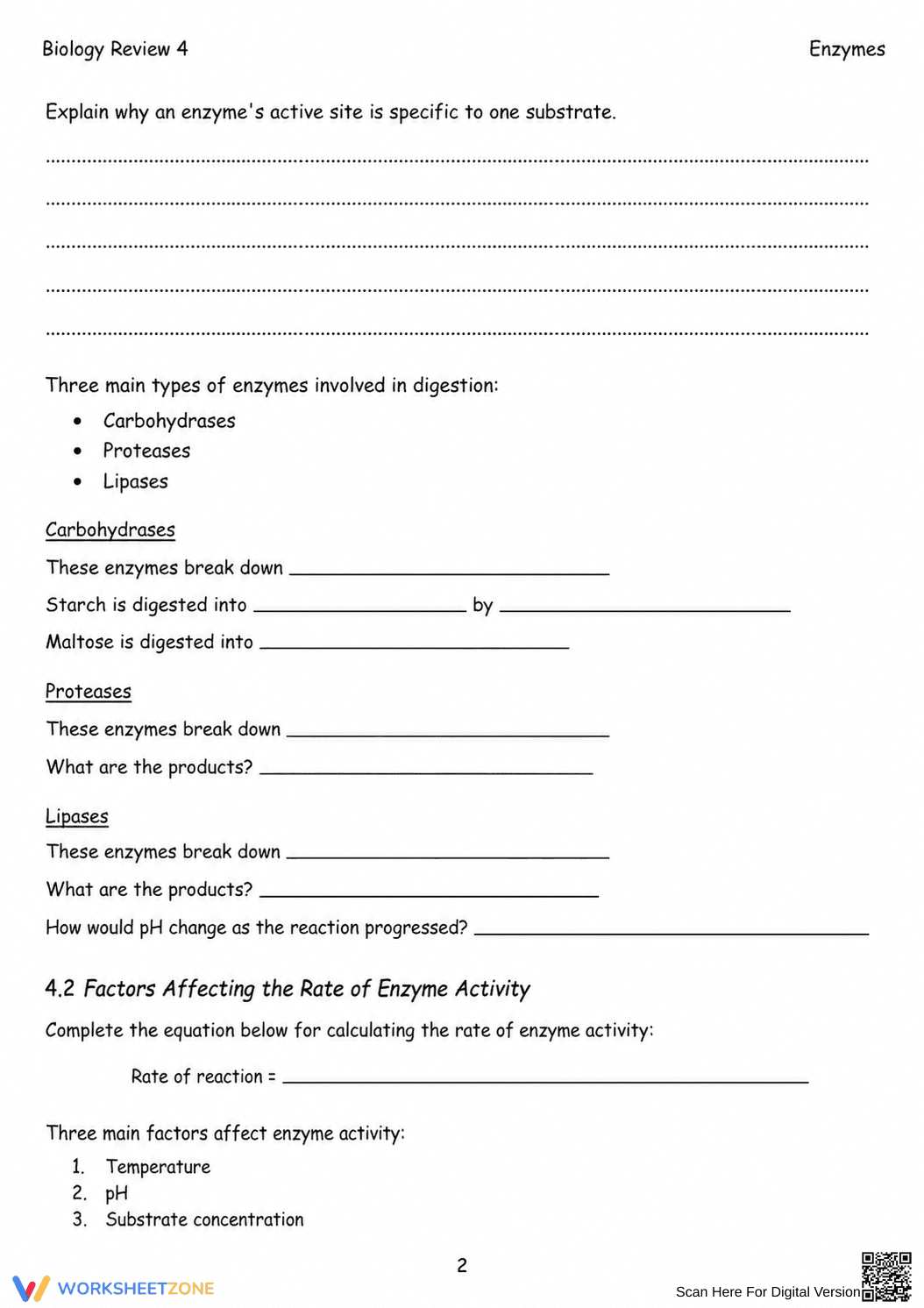
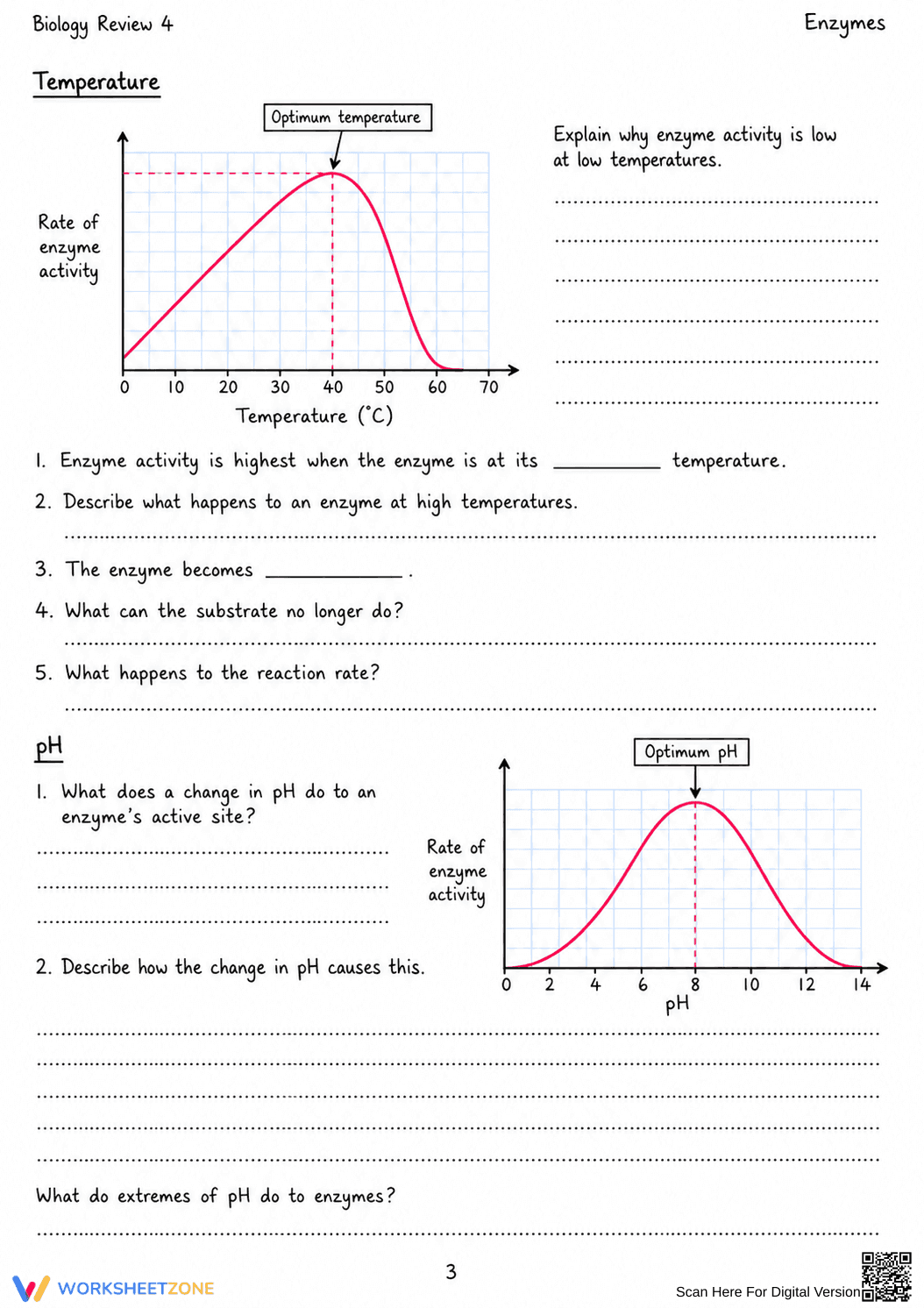
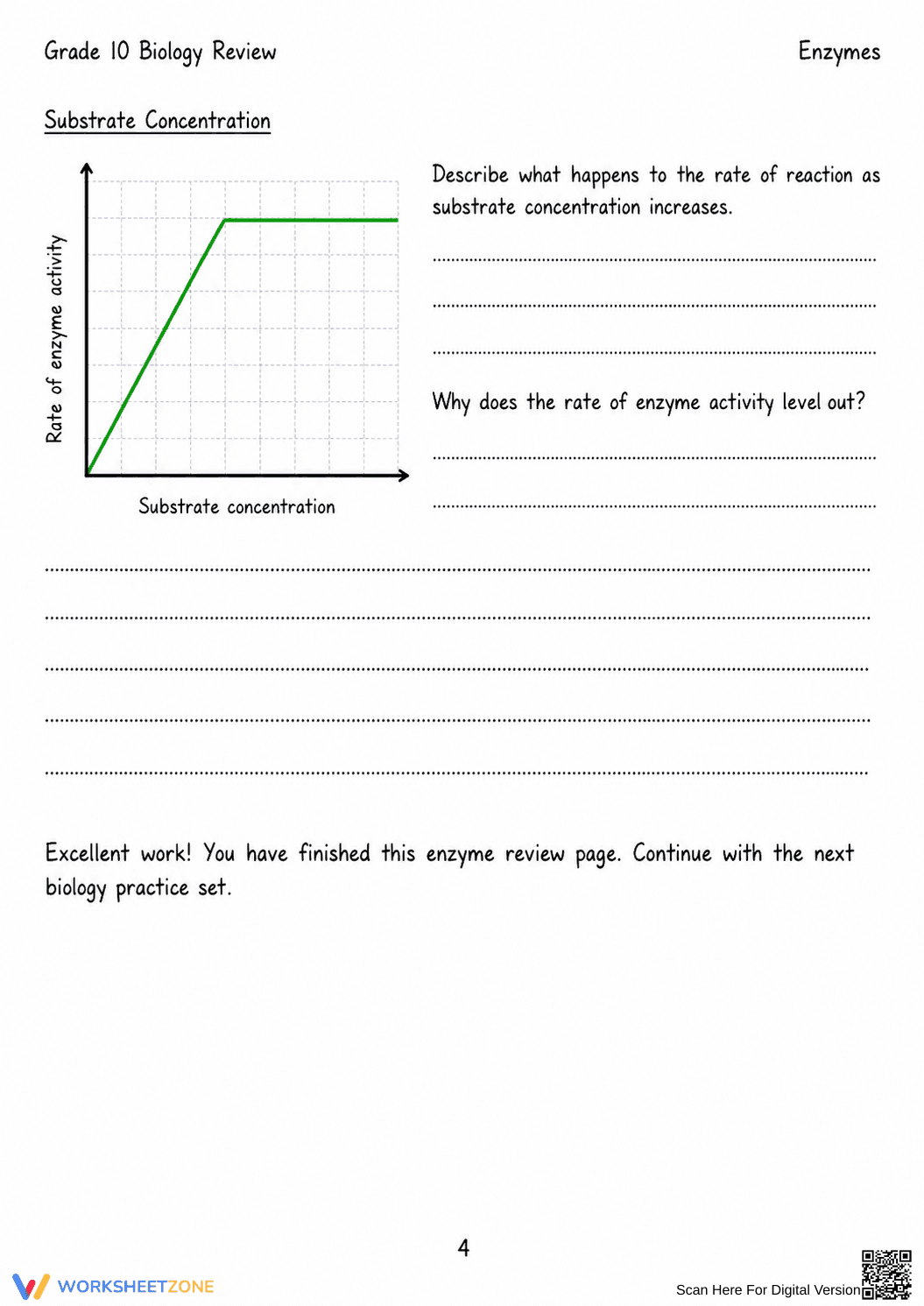
This four-page review packet features a mix of labeling exercises, short-answer questions, and graph analysis tasks. Students will identify the lock-and-key model, categorize digestive enzymes like amylase and protease, and interpret data curves showing how temperature, pH, and substrate concentration impact catalytic activity. A complete answer key is provided to streamline grading.
Skill Progression
- Guided practice: The first section introduces basic vocabulary, asking students to define active sites and substrates while labeling a clear diagram of an enzyme-substrate complex.
- Supported practice: Students connect these concepts to human digestion, identifying specific enzymes and their breakdown products with structured prompts.
- Independent practice: The final pages require higher-order thinking, challenging learners to analyze three distinct graphs and explain optimum conditions and denaturation. This gradual-release approach ensures steady comprehension.
Standards Alignment
Aligned to HS-LS1-1: Construct an explanation based on evidence for how the structure of DNA determines the structure of proteins which carry out the essential functions of life through systems of specialized cells. It also supports crosscutting concepts related to structure and function. Both standard codes can be copied directly into lesson plans, IEP goals, or district curriculum mapping tools.
How to Use It
Assign this packet as an independent review activity after completing direct instruction on cellular metabolism and digestive systems. It also serves as an excellent formative assessment tool; teachers can quickly check students' graph interpretations to identify misconceptions about denaturation before a major unit exam. Expect students to complete the packet in 30 to 45 minutes.
Who It's For
Designed for high school biology students, this resource is ideal for general education classrooms and honors-level review. For students needing extra support, pair this packet with a visual anchor chart detailing the lock-and-key model or a hands-on lab demonstrating catalase activity.
Understanding how environmental factors influence protein function is a cornerstone of high school biology. Aligned with HS-LS1-1, this resource helps students explain how protein structures carry out life functions. According to a ScienceDirect TpT Analysis, structured graph interpretation tasks significantly improve students' ability to connect theoretical biological concepts to observable data trends. By systematically breaking down the effects of temperature and pH on reaction rates, this worksheet ensures learners move beyond rote memorization to achieve genuine scientific literacy. The inclusion of 25 targeted problems allows educators to accurately measure student mastery of complex biochemical interactions. Providing clear visual models alongside data analysis questions bridges the gap between abstract cellular processes and concrete evidence, fostering the deeper analytical skills that are absolutely essential for success in advanced scientific study and future laboratory work.


