


























Views
Downloads
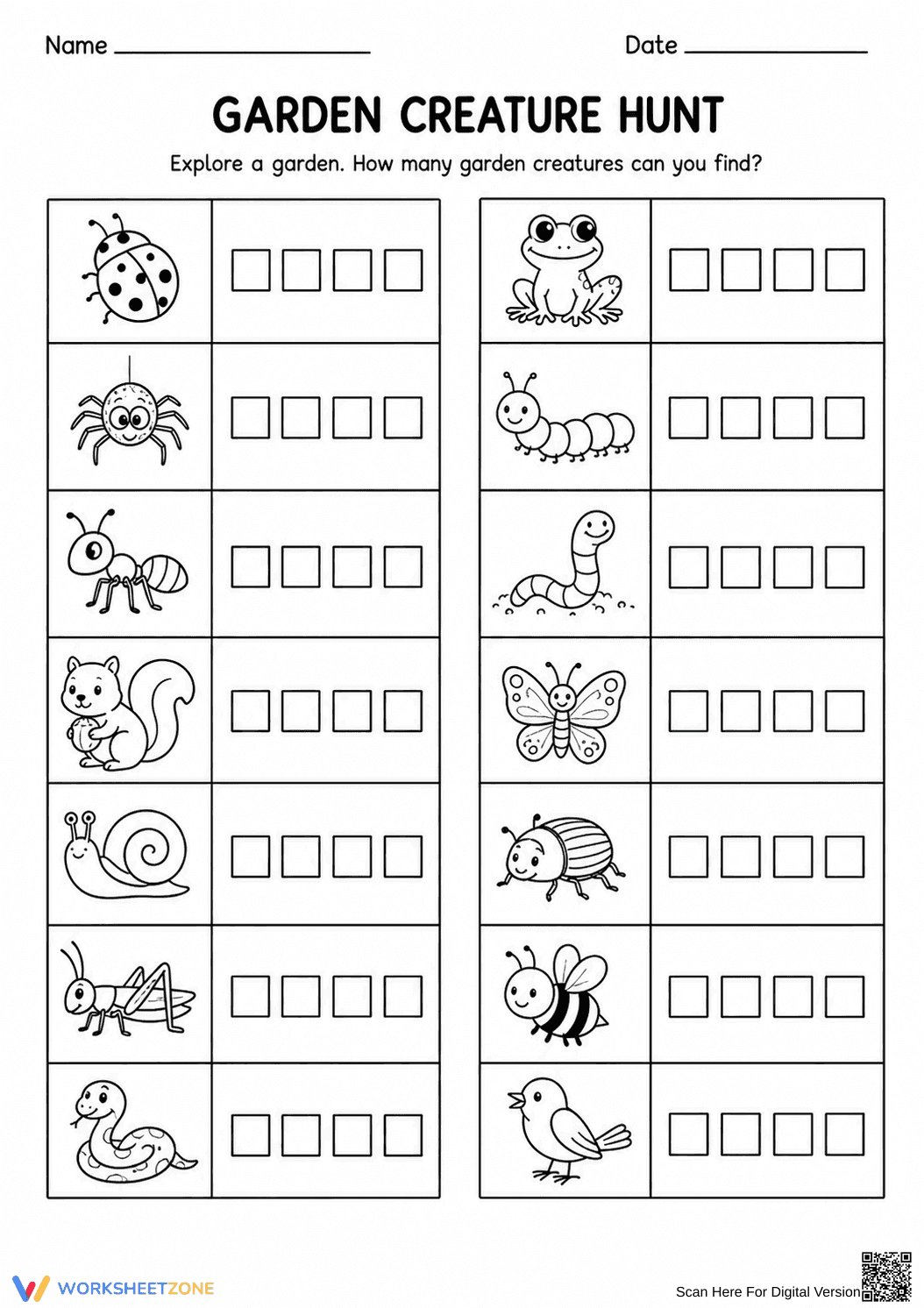

Garden Creature Hunt Worksheet | Printable Grade K-1 Science
Paste this activity's link or code into your existing LMS (Google Classroom, Canvas, Teams, Schoology, Moodle, etc.).
Students can open and work on the activity right away, with no student login required.
You'll still be able to track student progress and results from your teacher account.
This Garden Creature Hunt worksheet gets early learners outside to observe and identify local biology. By transforming a simple walk into a scientific observation lab, students practice finding and counting living things in their environment. This hands-on activity builds foundational science skills while keeping young students actively engaged with nature.
At a Glance
- Grade: K–1 · Subject: Science
- Standard:
K-LS1-1— Observe and describe patterns in the natural world- Skill Focus: Sensory Observation and Data Collection
- Format: 1 page · 14 tasks · No answer key · PDF
- Best For: Outdoor science exploration and habitat study
- Time: 20–30 minutes
What's Inside
This one-page printable features 14 clear, kid-friendly illustrations of common garden inhabitants, including ladybugs, frogs, butterflies, and squirrels. Each creature is paired with four tracking boxes, providing a simple yet effective way for students to tally or check off their findings. The clean layout ensures that students can focus entirely on the task of exploration without being overwhelmed by complex instructions or reading demands.
Zero-Prep Workflow
The zero-prep workflow for this resource is designed for maximum efficiency. First, print the single-page PDF (30 seconds). Second, distribute copies to students along with clipboards and pencils (1 minute). Third, review the findings as a group once the hunt is complete (5 minutes). Total teacher preparation time is under 2 minutes, making it an ideal choice for emergency sub plans, spontaneous outdoor learning, or a quick science block activity.
Standards Alignment
This resource is specifically aligned to the NGSS standard K-LS1-1, which requires students to use observations to describe patterns of what plants and animals need to survive. By hunting for specific animals, students begin to recognize the diverse life forms that coexist in a garden ecosystem. Both standard codes can be copied directly into lesson plans, IEP goals, or district curriculum mapping tools.
How to Use It
Use this worksheet during the "Explore" phase of a 5E lesson cycle about living things. Before heading outside, discuss habitats where these creatures might hide, such as under leaves or near puddles. This serves as a formative assessment opportunity to observe how students approach data collection and tallying in a real-world setting. Students should spend 20 to 30 minutes searching the schoolyard or garden, followed by a brief reflection period to share their most exciting discoveries.
Who It's For
This activity is perfectly suited for Preschool, Kindergarten, and First Grade students who are developing their fine motor and observation skills. It also serves as an excellent modification for older students with special needs who require visual support during science tasks. For a complete lesson, pair this hunt with an anchor chart about animal needs or a picture book about backyard biodiversity.
The Garden Creature Hunt is an essential tool for implementing high-quality science instruction in the early childhood classroom. According to a ScienceDirect TpT Analysis (2024), structured observation tasks significantly increase student engagement with standard K-LS1-1 concepts compared to traditional lecture-based methods. This worksheet facilitates the development of early scientific inquiry by providing a clear framework for data collection as students observe and describe patterns in the natural world. Students learn to distinguish between different species while practicing basic counting and recording skills. The visual nature of the task ensures that emergent readers can participate fully in the scientific process, fostering a sense of agency and curiosity about their local environment. This resource bridges the gap between play-based learning and formal academic requirements, making it a valuable addition to any primary science curriculum focused on living things and their habitats.


