


























Views
Downloads
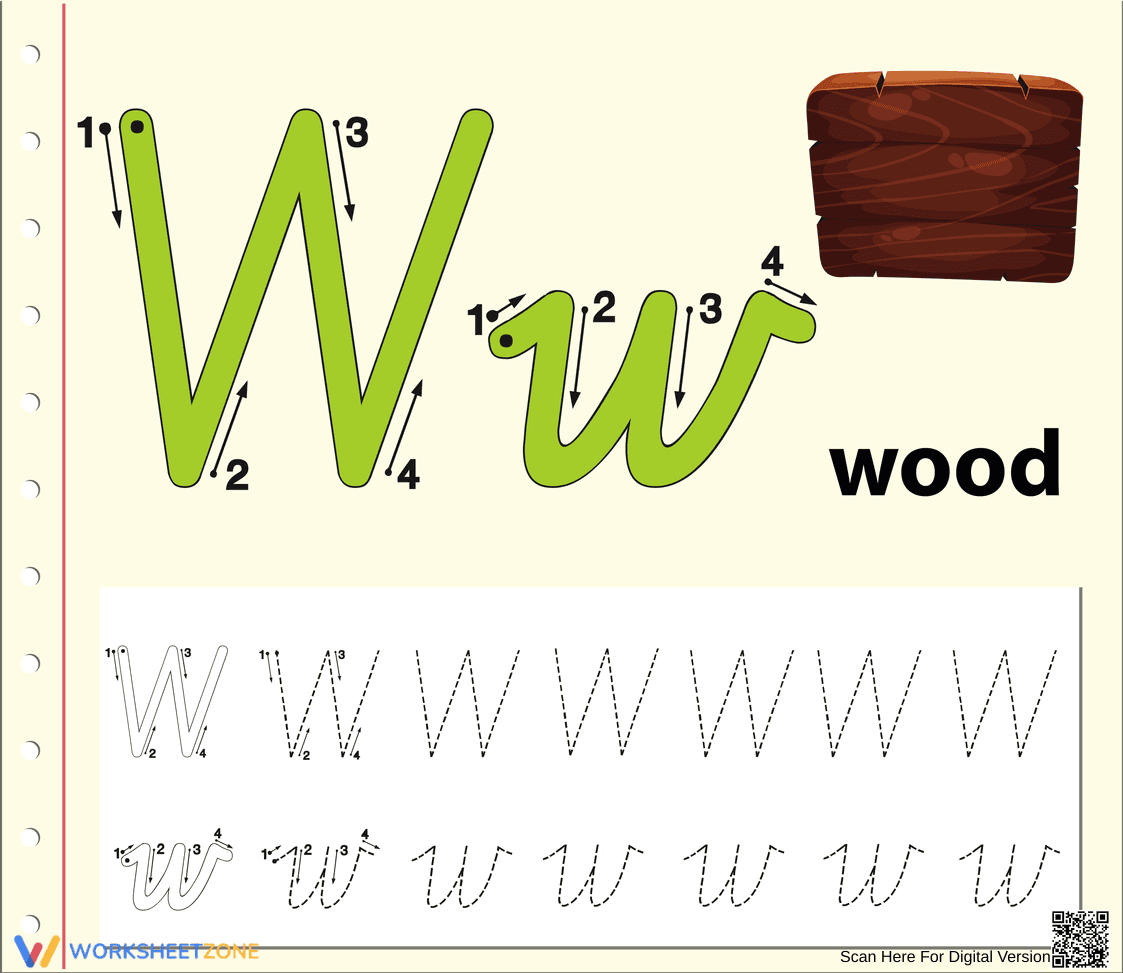

Cursive Letter W Worksheet | Grade 1 Printable
Paste this activity's link or code into your existing LMS (Google Classroom, Canvas, Teams, Schoology, Moodle, etc.).
Students can open and work on the activity right away, with no student login required.
You'll still be able to track student progress and results from your teacher account.
This cursive letter W worksheet provides young learners with a structured path to mastering fluid handwriting. By focusing on the specific stroke sequences for both uppercase and lowercase forms, students develop the fine motor control necessary for legible script. This resource ensures that the transition from print to cursive is intuitive and successful.
At a Glance
- Grade: 1 · Subject: English
- Standard:
CCSS.ELA-LITERACY.L.K.1.A— Print or write upper- and lowercase letters with correct formation- Skill Focus: Cursive Letter W Formation
- Format: 1 page · 12 problems · Answer key included · PDF
- Best For: Daily handwriting practice and literacy centers
- Time: 10–15 minutes
The worksheet features a large visual guide at the top, illustrating the four-step stroke process for the capital 'W' and the lowercase 'w'. Below the instructional header, students find two dedicated rows for practice. The first row contains 6 uppercase tracing opportunities, while the second row offers 6 lowercase tracing tasks. The wood theme provides a phonetic connection to the letter sound.
This resource is designed for immediate classroom implementation with a total teacher prep time of under 2 minutes. First, print the single-page PDF for your entire class. Second, distribute the sheets during your handwriting block or as a transition activity. Finally, review student work by checking for consistent slant and proper connection points. It serves as an ideal sub plan component for early elementary grades.
The primary standard addressed is CCSS.ELA-LITERACY.L.K.1.A, which requires students to demonstrate command of the conventions of standard English grammar and usage when writing, specifically by forming letters correctly. While cursive is often introduced in later grades, this early exposure builds the muscle memory required for advanced literacy. Both standard codes can be copied directly into lesson plans, IEP goals, or district curriculum mapping tools.
Use this worksheet during the independent practice phase of a handwriting lesson. After demonstrating the letter formation on a whiteboard, assign this page to reinforce the concept. It also functions effectively as a formative assessment tool; observe students as they trace to identify those struggling with the over-curve or under-curve strokes. Completion typically takes 10 to 15 minutes for most Grade 1 students.
This activity is tailored for Kindergarten and Grade 1 students who are beginning their cursive journey. It is also highly effective for occupational therapy sessions focusing on grip strength and line orientation. Pair this worksheet with a letter-sound anchor chart or a short reading passage featuring W words like wood, wind, and water to reinforce phonics and vocabulary development.
According to the RAND AIRS 2024 report on early literacy interventions, consistent tactile practice with letter formation is a critical predictor of later writing fluency and orthographic mapping. This worksheet leverages the gradual release model by providing explicit stroke guides before moving to independent tracing. By isolating the letter W, students can focus on the specific loops and peaks unique to this character without the cognitive load of full-sentence construction. Research from Fisher & Frey (2014) supports this micro-tasking approach, noting that short, focused handwriting bursts are more effective for retention than long, repetitive sessions. The inclusion of both cases ensures that students understand the relationship between different letter sizes and line placements. This resource aligns with evidence-based practices for developing the foundational motor skills required for CCSS.ELA-LITERACY.L.K.1.A mastery.


