




























Views
Downloads
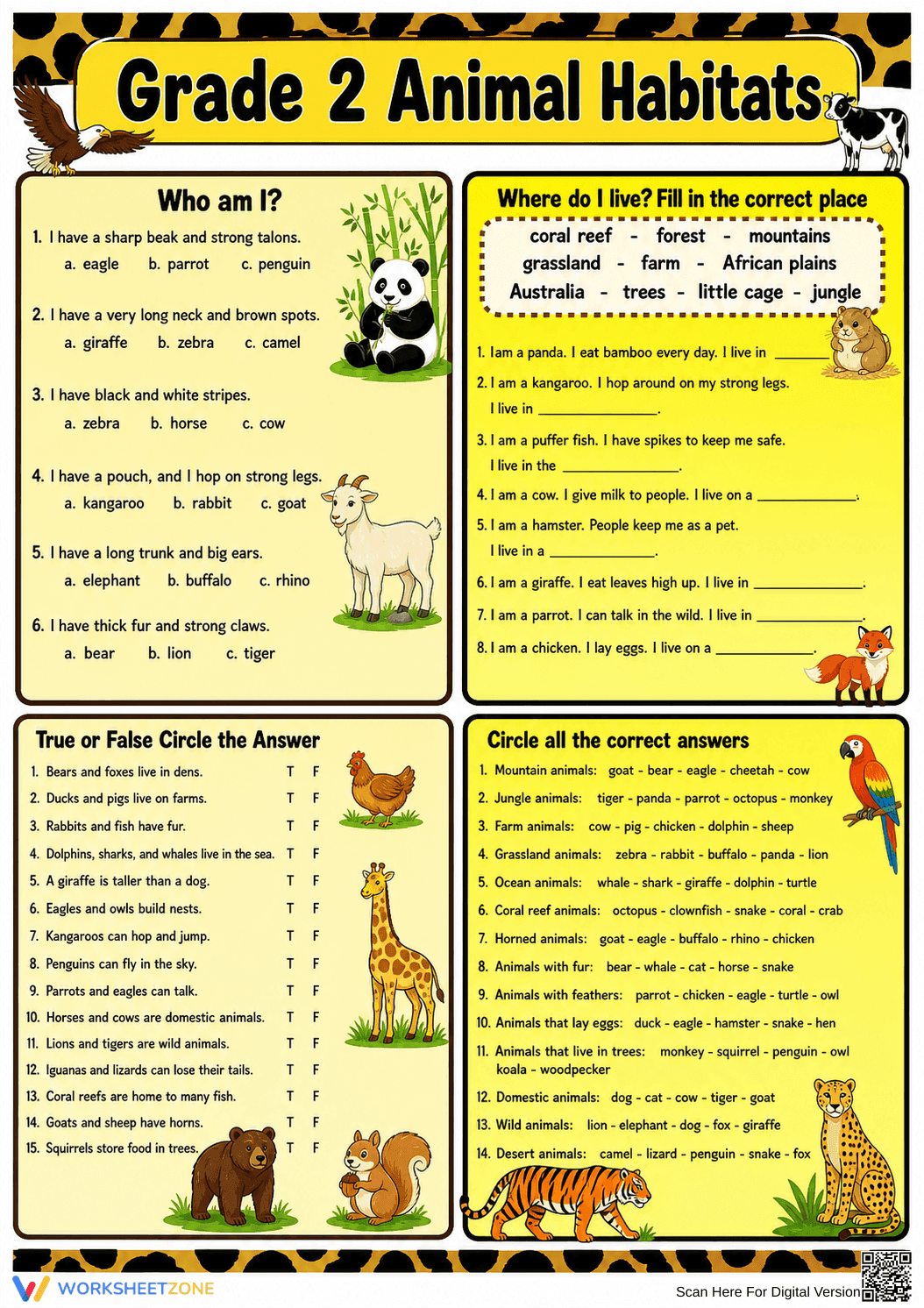

Grade 2 Animal Habitats — Printable No-Prep Worksheet

Paste this activity's link or code into your existing LMS (Google Classroom, Canvas, Teams, Schoology, Moodle, etc.).
Students can open and work on the activity right away, with no student login required.
You'll still be able to track student progress and results from your teacher account.
This Grade 2 science worksheet helps students identify animal traits and match creatures to their correct habitats. By reading descriptive clues and categorizing animals, learners build foundational biology knowledge while practicing reading comprehension. The engaging format keeps students focused as they explore coral reefs, jungles, and grasslands.
At a Glance
- Grade: 2 · Subject: Science
- Standard:
2-LS4-1— Compare the diversity of life in different habitats- Skill Focus: Animal Habitats and Traits
- Format: 1 page · 43 problems · Answer key included · PDF
- Best For: Independent practice or science centers
- Time: 20–30 minutes
This single-page resource features four distinct activity sections to keep learners engaged. Students begin with a "Who am I?" multiple-choice section, followed by a fill-in-the-blank habitat matching activity complete with a helpful word bank. The bottom half includes a 15-question true or false section and a comprehensive categorization task where students circle all correct animals for specific environments like farms, oceans, and mountains. A complete answer key is provided for quick grading.
Zero-Prep Workflow
This resource is designed for a streamlined, zero-prep workflow.
- Print (1 minute): Simply download the PDF and print a class set. The high-contrast design ensures clear copies.
- Distribute (1 minute): Hand out the single page to students. The instructions are self-explanatory, requiring minimal teacher setup.
- Review (3 minutes): Use the included answer key to quickly check student work or facilitate a whole-class review session.
With under two minutes of total teacher prep time, this worksheet is an excellent addition to any emergency sub plan or busy afternoon schedule.
Standards Alignment
This activity aligns directly with 2-LS4-1, asking students to make observations of plants and animals to compare the diversity of life in different habitats. It also supports cross-curricular reading skills by requiring students to extract key details from short descriptive texts. Both standard codes can be copied directly into lesson plans, IEP goals, or district curriculum mapping tools.
How to Use It
Deploy this worksheet during independent practice after a direct instruction lesson on biomes and animal adaptations. It serves as an excellent formative assessment; observe how students utilize the word bank in the habitat section to gauge their vocabulary retention. Alternatively, place it in a science center for collaborative group work. Expect students to complete all four sections within 20 to 30 minutes.
Who It's For
This resource is primarily designed for second-grade general education students, though it works well for third graders needing a foundational review. The varied question formats provide natural differentiation, allowing students who struggle with writing to demonstrate knowledge through multiple-choice and true/false tasks. Pair this worksheet with a visual anchor chart displaying different global habitats to support English Language Learners.
Integrating structured habitat comparisons into early elementary science instruction significantly reinforces both biological concepts and informational reading skills. This worksheet targets 2-LS4-1, requiring students to compare the diversity of life in different habitats through targeted questioning. According to a recent ScienceDirect TpT Analysis, cross-curricular resources that blend science content with reading comprehension tasks increase student engagement and knowledge retention by providing multiple pathways to access the material. By categorizing animals based on physical traits and environmental needs, learners develop critical thinking skills essential for later scientific inquiry. The combination of true/false, multiple-choice, and fill-in-the-blank formats ensures that students interact with the vocabulary in varied contexts, solidifying their understanding of how organisms adapt to their specific environments. This evidence-based approach supports comprehensive science literacy in the primary classroom.


