


























Views
Downloads
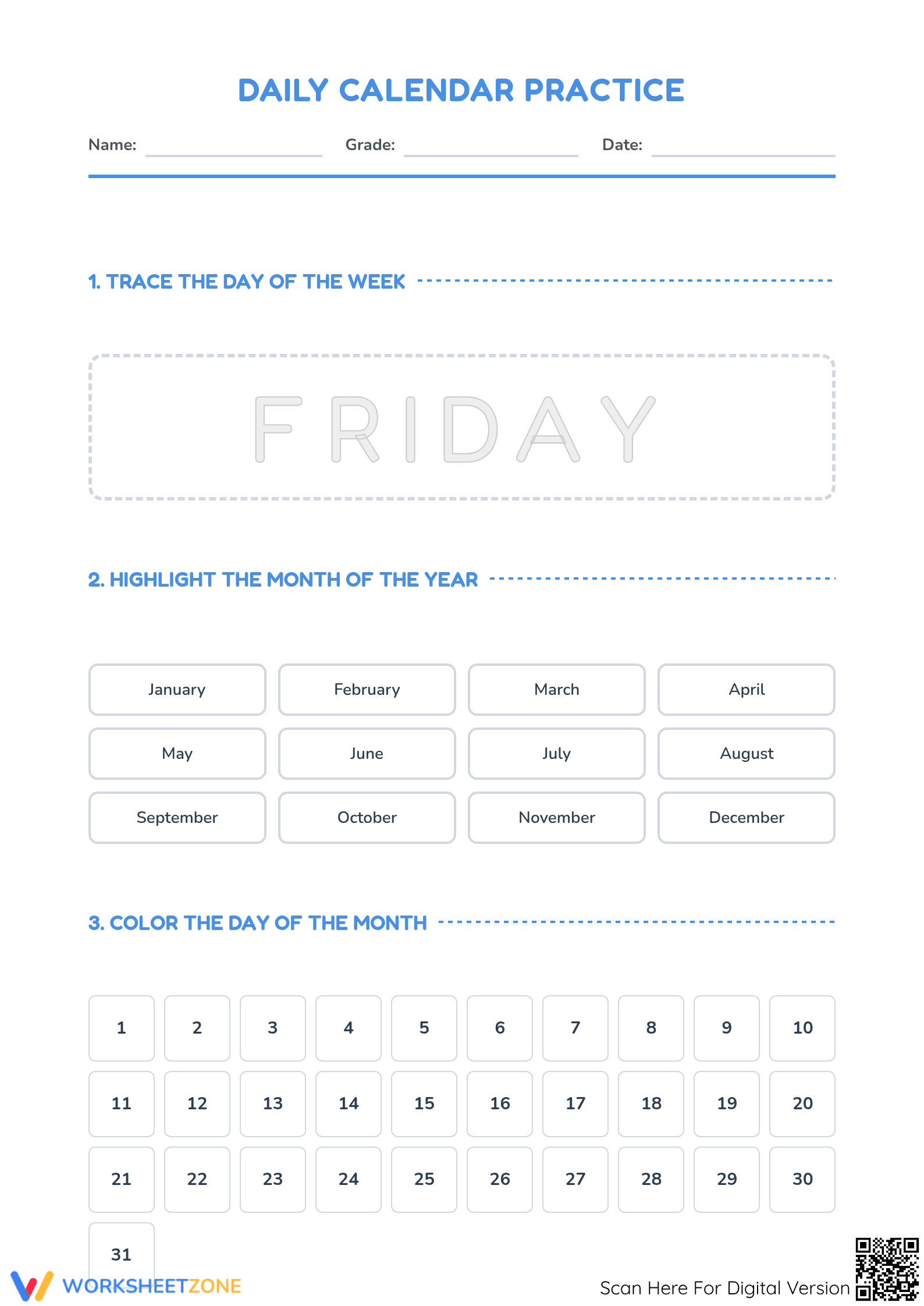


Daily Calendar Practice Worksheet | Grade 3 Printable
Paste this activity's link or code into your existing LMS (Google Classroom, Canvas, Teams, Schoology, Moodle, etc.).
Students can open and work on the activity right away, with no student login required.
You'll still be able to track student progress and results from your teacher account.
This daily calendar practice worksheet helps students master essential time-tracking vocabulary, including days of the week and months of the year. By tracing, highlighting, and identifying chronological relationships like yesterday and tomorrow, third graders build strong foundational language and sequencing skills.
At a Glance
- Grade: 3 · Subject: English Language Arts
- Standard:
CCSS.ELA-LITERACY.L.3.2— Demonstrate command of standard English capitalization and spelling- Skill Focus: Calendar Vocabulary & Sequencing
- Format: 3 pages · 7 problems · Answer key included · PDF
- Best For: Morning work or daily warm-ups
- Time: 10–15 minutes
This three-page resource features seven task types to reinforce calendar familiarity. Students will trace the days of the week, highlight the current month from a word bank, color the specific date on a number grid, and write the current year. A structured table requires learners to determine what day came before and after a target day, like Friday or Monday. A complete answer key is provided for quick grading.
Zero-Prep Workflow
This resource is designed for immediate classroom implementation with minimal teacher effort:
- Print (1 minute): Simply download the PDF and print the three-page packet. The clean layout requires no special formatting.
- Distribute (1 minute): Hand out the worksheets as students enter the classroom for a focused morning routine.
- Review (3 minutes): Use the included answer key to quickly check student responses or project it on the board for self-correction.
With under two minutes of total teacher prep time, this activity is an excellent addition to any emergency sub plan.
Standards Alignment
This worksheet is aligned to CCSS.ELA-LITERACY.L.3.2, requiring students to demonstrate command of the conventions of standard English capitalization, punctuation, and spelling when writing. By repeatedly practicing the proper spelling and capitalization of days and months, learners reinforce these essential language conventions. This standard can be copied directly into lesson plans, IEP goals, or curriculum maps.
How to Use It
This versatile resource fits perfectly into a daily morning meeting or bell-ringer routine. Teachers can assign the first page as students unpack, setting a calm and productive tone for the day. Alternatively, it serves as a reliable independent practice station during literacy centers. As a formative assessment tip, observe whether students can quickly identify "yesterday" and "tomorrow" without reciting the entire week from Sunday. Expected completion time is 10 to 15 minutes.
Who It's For
This worksheet is primarily designed for third-grade students needing reinforcement in calendar vocabulary and chronological sequencing. It is also highly effective for English Language Learners (ELLs) or students receiving special education services who benefit from structured, repetitive practice with everyday terms. Pair this activity with a large classroom wall calendar or a direct instruction lesson on proper noun capitalization for maximum impact.
Mastering calendar vocabulary and chronological sequencing is a fundamental component of early language development and daily functional literacy. Aligned with CCSS.ELA-LITERACY.L.3.2, this resource ensures students can demonstrate command of standard English capitalization and spelling when working with proper nouns like days and months. Consistent, structured routines like daily calendar practice reduce cognitive load, allowing learners to focus on mastering vocabulary conventions rather than navigating new task formats. By engaging with these seven targeted tasks, students transition from rote memorization to practical application, confidently identifying complex time-based relationships like yesterday and tomorrow. This repeated exposure builds vital automaticity, essential for reading comprehension, communication, and writing fluency. Consistent practice empowers young learners to independently manage their schedules and academic responsibilities.


